
Rabuka and Marape to ‘engage further’ with Indonesia on West Papua as special envoys 

10:14 am on 8 November 2023   

 Kelvin Anthony, RNZ Pacific Lead Digital and Social Media Journalist @kelvinfiji kelvin.anthony@rnz.co.nz 

The Melanesian Spearhead Group has appointed Fiji and Papua New Guinea prime ministers Sitiveni Rabuka and James Marape as special envoys to Indonesia to “address the West Papua issue”, a move that has been welcomed by the Pacific Conference of Churches.

The sub-regional group met for its caucus meeting on Monday (Cook Islands time) ahead of the official opening of the 52nd Pacific Islands Forum Leaders Meeting in Rarotonga, during which Rabuka proposed sending a representative to Indonesia to facilitate dialogue on the West Papua situation.

Rabuka and Marape’s mandate will be to meet with Indonesian President Joko Widodo to discuss the pressing issue of West Papua.

The MSG caucus reached a consensus that sending a ministerial envoy, as opposed to a bureaucratic-level envoy, would be the most effective approach to addressing the West Papua issue.

“Earlier today, the Melanesian Spearhead Group Caucus appointed me as a Special Envoy to address the West Papua issue,” Rabuka posted on the social media platform X (formerly Twitter).

“Alongside Prime Minister James Marape of Papua New Guinea (PNG), we’ve been tasked with meeting the President of Indonesia to discuss this pressing matter.”

In August, the MSG leaders failed to reach a consensus in Port Vila to accept the United Liberation Movement for West Papua’s (ULMWP) bid to become a full member of the sub-regional grouping, defering the issue to the Forum Leaders Meeting.

Vanuatu Climate Change Minister Ralph Regenvanu said Rabuka and Marapae’s appointment was “an additional measure” on the West Papua issue.

“This is an additional measure agreed to by the MSG which supplements the existing decisions of PIF and MSG for an independent assessment by the UN Human Rights Commissioner and an MSG Leaders visit to West Papua,” Regenvanu posted on X.

Churches welcomes move

The Pacific Conference of Churches (PCC) has said it “welcomes [the] Melanesian Spearhead Group move to engage further with Indonesia on the situation in West Papua and calls for an inclusive process of engagement that doesn’t leave West Papuans out of the talanoa.”

General secretary Padre James Bhagwan said the PCC “the engagement of ULMWP as MSG Observers will need to be secured by PMs for this process to have legitimacy.”

However, the PCC is also calling for an imminent persons group, including civil society to accompany the process, for transparency.

“The situation in West Papua will also be on the Agenda of the 12th [PCC] General Assembly, which begins in just over a week in Kanaky-New Caledonia,” Padre Bhagwan said on X.

The PCC General Assembly is expected to gather almost 200 delegates from 35 churches and 12 national councils of churches and regional faith organisations from over 18 Pacific Island countries and territories, making it the largest constituent assembly in the region, he added.

———————————

https://www.theguardian.com/world/2023/nov/08/pacific-islands-forum-australia-under-pressure-to-rein-in-fossil-fuel-subsidies

3) Pacific Islands Forum: Australia under pressure to rein in fossil fuel subsidies

A fraction of $11bn federal handouts could be used to fully fund the shift to clean energy in eight island countries, report claims

Australia is facing fresh pressure to rein in fossil fuel subsidies, with new figures showing just a fraction of that spending could fully fund the shift to clean energy in eight Pacific island countries.

The climate crisis is one of the biggest issues on the agenda at the Pacific Islands Forum’s top political gathering this week, with Vanuatu demanding “radical” action to end the world’s fossil fuel addiction.

The prime minister, Anthony Albanese, arrived in the Cook Islands on Tuesday local time (Wednesday Australian time) and acknowledged the climate crisis was “certainly felt most acutely in island states”.

In a report published to coincide with the talks, campaigners highlight how Pacific island countries are on the frontline of the climate crisis despite being responsible for just 0.23% of annual global emissions.

By contrast, the world’s 15 largest-emitting nations – led by China, the US and India with Australia in 15th place – are collectively responsible for 71.88% of annual emissions.

The report was commissioned by the Fossil Fuel Non-Proliferation Treaty Initiative, a group that is campaigning to end new development of fossil fuels and phase out existing production.

Island countries are still heavily heavily dependent on imports of diesel fuel for use in generators, says the report titled Ki Mua: Towards a Just Transition for the Pacific.

It suggests that a mix of utility-scale and decentralised renewables, dominated by solar PV and wind installations, would provide the region with “significant opportunities”.

These gains would include reducing pollution and improving public health while ending reliance on fossil fuel imports. It suggests developed countries like Australia have a responsibility to help.

“In the past year, Australia has handed out $US7bn ($AU11 bn) to the fossil fuel industry,” said Auimatagi Joe Moeono-Kolio, an adviser to the Fossil Fuel Non-Proliferation Treaty Initiative.

“That’s seven times the amount of money it would take to fund a renewable energy transition for eight Pacific countries.”

The report estimates that across eight Pacific island countries analysed, the upfront cost of replacing all existing fossil fuel electricity generation “ranges from $US691m to just over $US1bn, depending on the specific technology mix”.

The fossil fuel subsidy figure is drawn from analysis by the Australia Institute thinktank, which examined all federal and state government “spending and tax breaks to assist fossil fuel industries” in 2022-23.

The single largest share is the federal government’s fuel tax credit scheme, which gives businesses a tax credit on fuel used in machinery, vehicles over 4.5 tonnes and vehicles not used on public roads.

The Australia Institue argues this tax break “works to make fossil fuel use cheaper for energy-intensive businesses, such as coal mines”. But the mining industry has repeatedly rejected the characterisation of this as a subsidy.

Moeono-Kolio said if Australia wanted to host the 2026 UN climate conference in partnership with the region, “then the first step is to start caring for Pacific peoples and stand with us instead of blocking the Pacific’s efforts as it has done for decades”.

Vanuatu’s climate minister, Ralph Regenvanu, called for a “sustained, radical” phase out of fossil fuels because the world had run out of time for “slow and steady” action.

Tuvalu’s finance and climate minister, Seve Paeniu, added: “It is high time for wealthy, fossil fuel producing countries that are largely responsible for the climate emergency to take the lead in phasing out fossil fuels, and support our countries in the shift towards renewable energy.”

Albanese met three leaders on his first day on the island of Rarotonga, including the prime minister of Tuvalu, Kausea Natano, who described himself as “the leader of a country that is going to be under the water” if current trends continued.

Albanese promised to work with Natano and argued his Labor government was elected last year “with a platform of taking action on climate change”.

Natano was later asked by reporters how he felt about Australia approving more coal and gas projects.

“Well, it’s an issue that we are working with Australia to see that we can get them to assist because fossil fuel is the main contributor to global warming,” Natano said.
Local language revitalization triumphs: SMPN 2 Jayapura students win at Tunas Bahasa Ibu Festival 

News Desk – Local Language Revitalization

 9 November 2023

Jayapura, Jubi – Dorthea Carolien Enok, the Principal of SMPN 2 Jayapurajunior high, mother tongue or local languages hold equal importance compared to national and foreign languages. Therefore, the younger generation should not overlook the need to maintain proficiency in their mother tongue.

She emphasized the necessity of revitalizing local languages, especially among students at SMPN 2 Jayapura from a young age, encouraging them to use their mother tongue in their daily conversations.

Enok explained that local languages play a crucial role in identifying one’s cultural roots and preserving them. At their school, it’s common for children to communicate in local languages.

In light of their participation in the Tunas Bahasa Ibu (Tobati Language) Festival, Enok proudly mentioned that SMPN 2 Jayapura secured the top position in the short story and folk song categories. This achievement serves as motivation for both the school and its students to continue promoting the use of local languages, not just within the school environment but also at home.

Enok revealed that preparations for the competition took about a month, and the students will receive further training from the Papua Language Center in November 2023 to participate in the Gebyar Tunas Bahasa Ibu event in Jakarta.

Antonius Maturbongs, involved in language development at the Papua Language Center, stressed the significance of language coaching and development in supporting the revitalization of local languages, playing a direct and indirect role in the process.

He explained that this program involves various stages, including language mapping, language vitality studies, conservation, revitalization, and registration.

Antonius expressed hope that the promotion of local languages in schools would serve as a means of revitalization, beginning from elementary schools, continuing through junior high schools, and extending to high school and vocational education units. He pointed out that the use of local languages among children in Jayapura City is becoming increasingly rare in both family and community settings, indicating that there is a growing need to reintroduce and promote these languages, particularly through revitalization efforts in schools. ——————————————————————

West Papuan leaders applaud Rabuka and Marape as envoys chosen to hold talks with Indonesia

By Marian Faa Broadcast

 8h ago

West Papuan leaders say they’re putting hope in two powerful Pacific prime ministers to hold dialogues with Indonesia over alleged human rights abuses in the region.

Fijian Prime Minister Sitiveni Rabuka and Papua New Guinean Prime Minister James Marape have been appointed “special envoys” to speak with Indonesia about the issue.

FEATURED:

Octovanius Mote, ULMWP vice president

Reverend James Bhagwan, Pacific Conference of Churches general secretary

Credits Marian Faa, Reporter

https://www.abc.net.au/pacific/programs/pacificbeat/west-papua-applauds-appointment-of-pacific-special-envoy/103083128

——————————————

3)  PIFLM52 | Papua our ‘kinsmen’

ANISH CHAND9 November, 2023, 12:30 pm

The people of West Papua who are part of Indonesia are our kinsmen, says Prime Minister Sitiveni Rabuka.

He said his appointment as Melanesian Spearhead Group special envoy to Indonesia wasn’t to appease Fijians who were West Papua supporters.

“When the world looks at the Melanesian Spearhead Group, taking up the issue with the sovereign state of Indonesia, they would probably think we are partisan in what we are coming up with,” said Mr Rabuka.

“The people of the Papua, part of Indonesia are our kinsmen – they are Melanesians so they could consider that our concern from the MSG is partisan.

“It is more aligned to the needs and wishes of the Melanesians of Indonesia. But if you go as leaders of a sovereign state, entrusted with the role of talking to the leadership of Indonesia that takes on a different profile, different optics.”

The MSG leaders appointed Mr Rabuka and Papua New Guinea Prime Minister James Marape as special envoys to Indonesia at their meeting in Cook Islands yesterday.

Defamation trial witness says he warned Minister Luhut over conflict of interest

CNN Indonesia – October 30, 2023

Jakarta — Senior economist Faisal Basri has testified that he once met with the Coordinating Minister for Maritime Affairs and Investment Luhut Binsar Pandjaitan (Menko Marves) and warned him of a potential conflict of interest related to the coal extractive industry.

This was conveyed by Basri when he was presented as an expert witness during a hearing at the East Jakarta District Court on Monday October 30 in the trial of human rights activists Haris Azhar and Fatia Maulidiyanti who are defendants in a case of defamation against Pandjaitan.

“I once met with Pak [Mr] Luhut, I said that his problem is just one, namely a conflict of interest. The Pak minister manages the extractive industry, his policies have the potential to create a conflict of interest”, Basri said before the panel of judges presided over by Judge Cokorda Gede Arthana.

Faisal gave an illustration of this saying that in 2022 revenue from coal was worth more than 1,000 trillion rupiah, reaching a quarter of the total revenue from Indonesia’s exports. This increase was in the context of the war between Russia and Ukraine.

“And 100 percent of this windfall income was enjoyed by the coal tycoons. None was taken by the state [in taxes]”, said Basri.

Basri said that countries like the United States, Australian and all of the countries in the European Union apply tax policies on such “fallen durian” (windfalls). Moreover, he continued, Mongolia applies a 70 percent tax for the state on coal income.

“I proposed to the Menko Marves, the Menko Perekonomian [Coordinating Minister for Economic Affairs], the ESDM [Energy and Mineral Resources] Minister and so on that we use a ‘fallen durian’ tax”, said Basri.

“The minister [Pandjaitan] said, ‘Oh, that would be great too, yes.

Later I’ll talk to the finance minister’, Pak Luhut said to me”, added Basri.

“But, to this day there’s been nothing, because I forgot that Pak Luhut has coal [interests]. So, it was a conflict of interest that was so very real. I met with the person concerned personally, Your Honor”, he reiterated.

Aside from the tax incentive, Basri gave another example of a conflict of interest related to the extractive industry, namely revisions to regulations and laws (UU).

“[Tax incentives], among others, there are still many more. ‘I have power, I have a big influence on revisions to the law. I revised the law in the process at the DPR [House of Representatives] with a quick process so that when my coal [mining contract] expired the concession period could be automatically renewed until the coal is used up'”, said Basri.

“What law was that?”, asked Azhar and Maulidiyanti’s lawyer Nurkholis Hidayat.

“The Minerba [Mineral and Coal Mining] Law”, replied Basri.

Basri added that coal dust has created pollution and threatens people’s health.

“Coal creates pollution, emits dust. Before it was categorised as dangerous waste. The new law, the Omnibus [Law on Job Creation], removed it from the list of dangerous waste so it was no longer considered dangerous, Your Honor”, said Basri.

“My God, Your Honors, I couldn’t imagine a [legal] revision process that was so very fast, in a short space of time the law was issued in the interests of a handful of people”, he concluded.

Azhar and Maulidiyanti have been indicted under Article 27 Paragraph 3 in conjunction with Article 45 Paragraph 3 of the Information and Electronic Transaction (ITE) Law, Article 14 Paragraph 2 and or Article

15 of Law Number 1/1946, and Article 310 of the Criminal code (KUHP).

Each of these articles are in conjunction with Article 55 Paragraph 1 of the KUHP.

A number of witnesses have appeared since the trial began, including Pandjaitan who testified before the panel of judges. Azhar and Maulidiyanti meanwhile have refused to testify against each other.

(ryn/wis)

[Translated by James Balowski. The original title of the article was “Sidang Haris-Fatia, Faisal Basri Akui Pernah Bertemu & Ingatkan Luhut”.]

Kal angam-kal brings together intergenerational, untold stories of West Papua

In January 2006, 43 West Papuan people arrived on Australian shores by boat to seek asylum.

In March of that year, 42 of them were granted temporary protection visas and settled in Melbourne with the final community granted protection a few months later.

A few months later, the Lombok Treaty was established. Signed by the Australian Foreign Minister at the time, Alexander Downer, and Indonesian Foreign Minister, Hassan Wirajuda, this provided Indonesia with access to intelligence in Australia on West Papua.

“Because of the arrival of the 43, the 2006 Lombok Treaty was created, about state security and how Australia couldn’t talk about Indonesia’s internal affairs, including West Papua,” says Cyndi Makabory, a Biak and Waropen woman from West Papua.

She and fellow artist Yasbelle Kerkow (iTaukei Fijian vasu Batiki, Lomaiviti) have been working on a project for two years called Kal angam-kal: Stories from West Papua. It was initiated on 1st December 2021 — the anniversary of the unifying symbol of West Papua, the Morning Star flag.

In a series of video works, six young people interviewed West Papuans Elders as a way to reclaim that story. Some even chose to interview their parents, who were part of the original 43 West Papuans, documenting never-before-held conversations.

It’s a powerful intergenerational moment that sheds light on their journey to and within Australia.

Kal angam-kal: Stories from West Papua

Creating space for intergenerational conversations

“That’s how West Papuan culture is — we are oral storytellers,” says Makabory.

As a West Papuan Youth Leader and recent law graduate, she has played a significant role in connecting generations within her community in this project.

“Cyndi started going to Elders’ houses and getting kids in the community to interview them using her smartphone. The youngest of the kids were 12 back then [in 2021],” says Kerkow.

Makabory, Kerkow and workshop facilitator Folole Tupuola — who met through grass roots advocacy group, the Pacific Climate Warriors — developed a community-engaged process to give the young participant’s confidence in interviewing the Elders.

Photo merge of three woman side by side.
Cyndi Makabory, Yasbelle Kerkow and Folole Tupola.(Charandev Singh/Jacynta Fa’amau/Folole Tupola)

“These kids have been raised in this struggle and so it was about supporting them with the right tools to talk about this,” says Kerkow.

Through a series of workshops conducted at a youth centre, they encouraged the young people to open up and talk about their culture, while also allowing them time to connect with each other on a personal level. They were provided with media training, participated in banner-making and grew their understanding of social media and activism.

“Before going into the workshops, I would chat to Yas and Cyndi about designing activities suitable for West Papuan kids, rather than getting them to do an activity that was not relevant to them,” says Tupuola.

Kerkow says that, before long, other parents and kids started to find out about the workshops, including Papua New Guinean families.

“The broader Melanesian community were waiting for an activity like this to happen,” she says.

Two men seated at a small table and point to a picture board.
The project saw the West Papuan community share their perspective on their own terms.(Supplied)

ABC Art Works presenter Namila Benson — a Melbourne-born Tolai woman from Rabaul in Papua New Guinea — also mentored the youth on interview techniques, encouraging them to research the Elders prior to filming.

“The Elders weren’t sure about the project, but the work we had done with young people at the workshops and the film crew present made it professional and gave them reassurance in the project,” says Makabory.

Also, speaking on screen required some adjustment for the community participants.

“Being vulnerable in front of the camera was new to some of the Elders, especially those who did the interviews in front of their kids. I learnt so much from Yas and her artistic expertise.”

Self-determination through storytelling

For many communities, particularly in film, their stories are often framed by Western directors. In contrast, this ground-breaking exhibition has been led by Pasifika creatives, with the West Papuan community sharing their perspective on their terms.

“The importance of being Pacific people gives us a sense of solidarity around self-determination. That’s my motivation to do this as a Samoan person,” says Tupuola.

“There is something powerful about keeping the fight alive within the diaspora.”

There was a real sense from Kerkow, Makabory and Tupuola that Pasifika communities work with a collective mindset, and that authentic representation through community-first practices was at the heart of filming this project.

It was conducted at a gradual pace, ensuring the community was brought on the journey through regular meetings.

Three women sitting in chairs looks at photographs
The exhibition title Kal angam-Kal references the Indigenous Amungme Tribe of West Papua.(Supplied)

Even the exhibition title itself Kal angam-kal — referencing the Indigenous Amungme tribe of Timika, West Papua — was derived from consultations held during community meetings to ensure ownership over key decision-making.

As first-time filmmakers, the lead artists leant on community support to find their feet, including a residency through Melbourne’s West-based organisation Cinespace. The exhibition will be held at Footscray Community Arts, a community-engaged arts precinct with long ties to Pasifika communities through their presentation of the Contemporary Pacific Arts Festival.

“It’s an honour to work on this project. All these parents trusted us with their kids. It has been life-changing,” says Kerkow.

“I feel proud to be Fijian and work in solidarity on this project.”

It’s clear that, through their empowering approach, Kerkow, Makabory and Tupuola have established themselves as up-and-coming leaders — an inspiration to the younger generations, Elders and each other.

“When I saw Cyndi as a Melanesian woman behind the camera, it felt so inspiring,” says Kerkow.

Celebrating Melanesian artistry

The exhibition has three parts: “Roots” referring to West Papua; “Currents” about the journey to Australia; and “Ripples” depicting life in Australia.

Personal archives and news footage are featured, as well as a soundscape produced by Wantok Music’s David Bridie, featuring songs from West Papuan folk-based musical group Mambesak, pop group Black Brothers and Arnold Ap (who is the leader of Mambesak, and a notable historical figure).

A lot of care has been taken to represent the community effectively within a contemporary arts landscape.

“Islanders are inherently artistic, but we don’t see ourselves largely in the arts in Australia,” says Kerkow.

“It was an artistic choice to collaborate with professional filmmakers to ensure Melanesian people’s beauty was shown.”

Side profile of young boy in feathered headdress
“These kids have been raised in this struggle and so it was about supporting them with the right tools to talk about this,” says Kerkow.(Supplied: Charandev Singh)

Makabory and Kerkow are excited to engage with the community throughout the exhibition’s run, and to raise the awareness of the West Papuan cause.

“We are hoping there will be more talks about West Papua and conversations about the struggle within the wider Australian community. And for these conversations to keep going between the young people and the Elders,” says Makabory.

“There’s not a lot of us [West Papuans] in Australia, [but] the kids now have a deeper connection after this; this project has really brought them together. It has been a privilege to do this work.”

Posted 1 Nov 20231 Nov 2023, updated 1 Nov 2023

Govt to introduce weather-resistant tuber to tackle Papua famine 

Jakarta (ANTARA) – The government will introduce a high-quality tuber variety that is resistant to extreme weather as a permanent solution to overcome hunger in a number of regions in Yahukimo, Highland Papua province.

“The introduction of high-quality tuber variety that is weather-resistant is (to be) carried out in areas where crops have been unproductive due to extreme weather dynamics,” Coordinating Minister for Human Development and Culture, Muhadjir Effendy, informed here on Tuesday.

With tuber crops failing due to extreme weather, a famine has been reported in Amuma sub-district, Yahukimo, which has left at least 15 thousand people starving.

The government has started distributing staples to a number of affected regions as a short-term solution.

In addition to the planting of weather-resistant tubers, the government will also build food warehouses around the affected areas.

The high-quality tuber variety was developed through cooperation between the Ministry of Agriculture and Bogor Agricultural University (IPB), Effendy said.

In addition to preparing the tuber variety, he added, the government will transfer appropriate agricultural technology to the affected regions in Highland Papua.

The government expects that with appropriate technology and reliable food crops, the yearly famine can end soon.

“I have discussed this with the new (Agricultural) Minister. I hope the cooperation that was established with the old minister will not be cut off. Soon, I will visit Papua with the Minister of Agriculture and officials from the Social Affairs Ministry,” he added.

Earlier, Effendy said that the distribution of food assistance to Yahukimo, Highland Papua, has gone well.

“There were no obstacles. Not only (to Yahukimo), but (food aid distribution) to Agandugume, Lambewi, and Konawe, was also smooth,” he added.


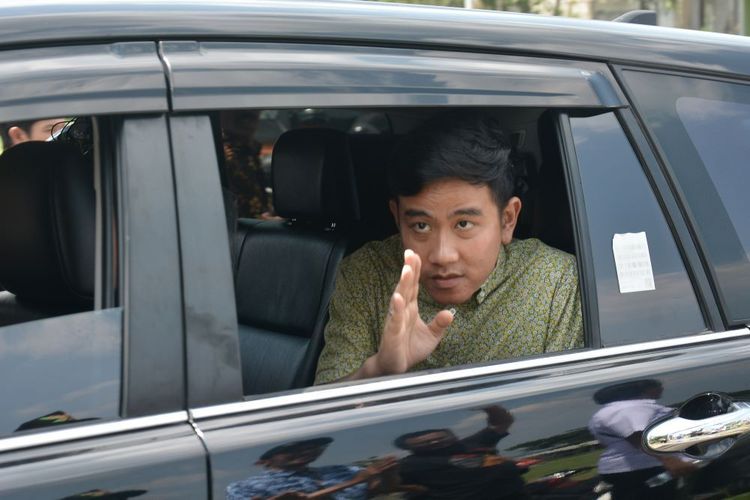
Survey finds almost half of respondents say Gibran not fit to be vice president

Kompas.com – November 6, 2023

Ihsanuddin, Jakarta — The results of a Charta Politika survey on October 26-31 show that almost half of respondents or 48.9 percent believe that Solo Mayor Gibran Rakabuming Raka is not fit to run as a vice presidential candidate (cawapres) in the 2024 presidential elections.

“We asked further about the suitability of Gibran Rakabuming become a cawapres, 48.9 percent said he was unsuitable, and there were 38.2 percent who said he was suitable”, said Charta Politika Executive Director Yunarto Wijaya on Monday November 6.

Wijaya said that out of those who said that Gibran was unsuitable as a vice presidential candidate, the majority or 55.4 percent consider him to be too young and not to have enough experience as a public official.

Gibran has only held the post of Solo mayor for less than three years before deciding to step forward as Defense Minister Prabowo Subianto’s vice presidential running mate.

According to Wijaya, this is different from the experience of Gibran’s father, President Joko “Jokowi” Widodo.

Before stepping forward in the 2014 presidential elections, Widodo already had the experience of almost two terms as Solo mayor and had been elected as the governor of Jakarta.

Wijaya continued saying that 26.7 percent of respondents felt that Gibran is unsuitable because he is part of the practice of political dynasties.

“There were 12.4 percent with more negative language again and the tone was that Gibran Rakabuming’s nomination as vice presidential candidate was a concrete form of misuse of power by President Joko Widodo”, he said.

Then, there was 3.2 percent who considered Gibran to be unsuitable as a vice presidential candidate because he is seen as ambitious and has no loyalty to a political party, while 2.3 percent of respondents do not know or do not answer.

Wijaya is of the view that the survey’s findings show that the controversy over Gibran’s nomination is not just an issue that affected the interests of the Indonesian Democratic Party of Struggle (PDI-P) as the party abandoned by Gibran.

Because, the public’s attitude that Gibran is unsuitable as a vice presidential candidate is more based on an assessment of Gibran’s lack of experience and the practice of political dynasties.

“The assessment of Gibran’s lack of experienced and also the formation of a political dynasty and the abuse of power appear to be far greater than framing it as if the criticism that emerged against Mas [Brother] Gibran and the MK [Constitutional Court’s] ruling [that allowed him to run] was only because of groups that were offended or just the PDI-P”, said Wijaya.

Electability burden for Prabowo

The same survey also showed that Gibran has in fact become a burden for Prabowo. This is reflected by Prabowo’s electability that in fact declined after announcing Gibran as his running mate.

“We can see or speculate and make a hypothesis that the inclusion of the name Mas Gibran as a cawapres has instead become a liability, not an asset”, said Wijaya during a press conference on Monday.

Wijaya said that based on the results of a survey on 13-17 October, head to head Prabowo’s electability was superior to the PDI-P’s presidential candidate former Central Java governor Ganjar Pranowo with a difference of 9.8 percent, namely 49.4 percent compared to 39.6 percent.

However Prabowo’s electability in fact declined to 44.4 percent based on a survey for the period October 26-31 after Gibran was announced as his running mate.

In the same period, Pranowo’s electability, who is running with Coordinating Minister for Security, Politics and Legal Affairs Mahfud MD as his vice presidential candidate, actually increased to 40.8 percent.

The difference in electability between Prabowo and Pranowo based on the latest survey has also narrowed to 3.6 percent.

“Even though Mas Gibran confidently said, ‘Stay calm Pak [Mr] Prabowo, I’m here’, it turns out that if we read it electorally, on the contrary in statistically quantitative terms it is in fact a burden for Pak Prabowo”, said Wijaya.

The survey was conducted on October 26-31 by conducting interviews with

2,400 respondents from 38 provinces in Indonesia. The survey had a 2.0 percent margin of error.

[Translated by James Balowski. The original title of the article was “Survei Charta Politika: Hampir Separuh Responden Anggap Gibran Tak Layak Jadi Cawapres”.]

Source: