

26 JUNE 2025
This article is reproduced courtesy of University of Melbourne’s unit Indonesia at Melbourne
The controversy over nickel mining in Raja Ampat, Papua, is a telling example of how capitalist-driven planetary urbanisation is reshaping the world we live in.
Today, urbanisation occurs on a global scale. It is taking place not only within cities and urban areas but even in many non-city zones that serve as ‘operational landscapes’ for supplying cities’ demands. This concept of ‘planetary urbanisation’ explains how non-urban realms in the Global South have played a strategic role as operational landscapes supporting cities in the Global North.
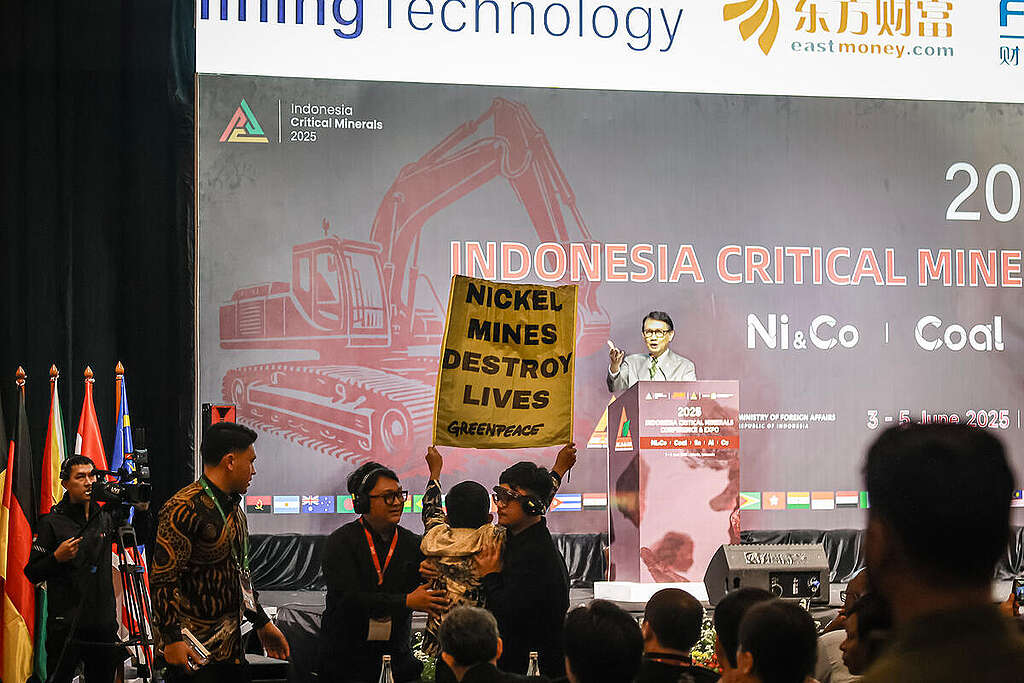
Environmentally destructive nickel mining activities within the Raja Ampat UNESCO Global Geopark, a global tourism site widely known for its idyllic scenery and marine biodiversity, is a case in point. It shows how the current global demand for urban environmental sustainability has incentivised policymakers in the Global South to provide the materials needed for the cities in the North to be more sustainable.
It also tells the disturbing story of how Indonesia, in a nutshell, is willing to destroy its invaluable green islands for the sake of ‘greening’ cities in China and Europe.
Colonial origin of planetary urbanisation
Indonesia’s rich natural resources have been a source of vital global commodities since the colonial era. In the 15th century, high demand for commodities from Europe encouraged exploration in tropical countries, paving the way for colonialism.
Resource exploitation by colonial powers played a critical role in the growth of cities in Indonesia and Europe, since the extraction from Indonesia funded the growth of the Netherlands and its cities. This is one of the first examples of planetary urbanisation — where the South was squeezed to provide for the North.
During colonial times, most Indonesian cities were basically just ‘operational landscapes’ of Dutch cities. By the late 18th century, for example, Makassar and Ternate were important cities in the global spice route and became hubs for the ‘local government’ of the VOC (Vereenigde Oost-Indische Compagnie, the Dutch East India Company). A similar trajectory also happened to Pangkalpinang, with its tin mining on Bangka Island, and Padang, a port city that supplied gold powder from the Minang kingdom.
The locations of Indonesia’s new ‘cities’ later expanded beyond those determined by geographical localities (resources sites). In the inland of Java, cities grew organically around train stations as a result of the expansion of transportation networks and the extensive exploitation of plantations in many different locations.
This process of planetary urbanisation continues today, as nickel becomes the latest commodity sought after by major cities in the northern hemisphere.
Nickel boom and resource nationalism
The global demand for renewables such as wind turbines, solar panels and EV batteries has fuelled excessive extraction of nickels in many countries including Indonesia, where more than half the world’s nickel supply is located. According to US Geological Survey, Indonesia has as many as 55.000.000 metric tons of nickel reserve.
Under former president Joko “Jokowi” Widodo, Indonesia introduced a series of policies aimed at downstreaming its nickel mining industry. These included banning nickel ore export and promoting domestic nickel processing industry.
However, this seemingly nationalistic policy is not necessarily beneficial for the Indonesian people. Scholars have argued that “resource nationalism” is in fact a pseudo-nationalism, because it is plagued by rent-seeking practices. A revealing Watchdoc investigative documentary has shown that the nickel industry in Indonesia largely benefits just a few mining oligarchs. To make matters worse, more than 90% of nickel processing infrastructure is owned by Chinese companies.
Nickel mining and environmental degradation
Nickel mining activities in the eastern part of Indonesia are embodiments of ‘operational landscapes’ in ‘planetary urbanisation’. This is indicated by the spatial and social concentration of capital in the forms of infrastructural facilities and the influx of migrant workers, some of whom are from China, in the region.
Look at the private airports in the Indonesia Morowali Industrial Park (IMIP) and on Gag Island, Raja Ampat. At IMIP alone, there are 91,581 Indonesian workers and 11,615 foreign workers working in the industry. Or look at Teluk Weda’s smelters and port, which serves as a hub for vessels carrying nickels from small islands in the eastern part of Indonesia.
It remains to be seen, however, if these new ‘operational landscapes’ will eventually lead to the creation of new local cities as it was the case during colonial times, or if they will only destroy the environment in Indonesia to support cities in other countries.
The reality is that nickel mining sites are believed to have caused anthropogenic disasters (floods and landslides), and environmental degradation (air, land, and water pollutions), adversely affecting the local communities.
Floods in Morowali, for example, are attributed by many observers to IMIP industrial zones replacing local forest that previously served as a catchment area. In Teluk Weda, for example, Forest Watch Indonesia has found that the expansion of nickel industry encroaching into nearby forested areas has increased the flood risk in the surrounding areas.
In Obi Island, North Maluku, local media reported that mining activities had directly dumped their waste into the ocean. In Teluk Weda, nickel mining allegedly polluted the river and groundwater, affecting the lives of the locals in Halmahera.
The Watchdoc documentary also emphasises the impact of the mining industry on Teluk Weda’s public health. Levels of the heavy metal arsenic have been detected in blood samples taken from residents, mining workers, and fishermen in the area. This demonstrates how the nickel mining industry can have fatal consequences.
Sustainable for whom?
Capitalism can be cruel. Yet, there is no denying that capitalist-driven Dutch colonialism, which heavily relied on plantations, played a role in the making of major cities in Indonesia with less severe environmental degradation. The ongoing process of mining activities in eastern part of Indonesia seems much more ominous.
We need to ask who really benefits from the global campaign for’ sustainable development’. Of course Indonesia should tap this economic opportunity, but we cannot let it happen at the expense of our own natural habitat and our society’s wellbeing.


 Australia West Papua Association Adelaide