Indigenous Papuans look to the new pope with hopes

 By Ryan Dagur, 16 May 2025

Pope Francis did not visit the Christian-majority region of Papua during his Asia tour last September; however, his concerns and gestures regarding the plight of Papuans have provided them with a renewed perspective on the Church.

The first Jesuit and the first Latin American pope, during his 12-year papacy, achieved something that no other pope has done for the Papuans, the Christian-majority indigenous people of the western half of New Guinea Island, which is part of Indonesia.

Pope Francis became popular among Papuans as they began to see him as a champion for the cause of poor, marginalized, and oppressed people like them worldwide. They expect the next pope to follow in his footsteps.

Papuans expect the next pope to build on Pope Francis’ two actions, which have left an indelible mark on their conflict-torn region, regarded as the most underdeveloped part of Indonesia.

In a historic first, Francis appointed two native Papuan priests as bishops — Yanuarius Teofilus Matopai You of Jayapura in 2022 and Bernardus Bofitwos Baru of Timika — just two months before his death.

The appointments followed years of demand for native bishops in the region, where the Catholic faith arrived more than a century ago.

The demand has grown louder in recent years, as many Papuan Catholics feel that their bishops from other parts of Indonesia, and even the Vatican, do not care enough about their aspirations, plight, and challenges.

Most Indonesian bishops assigned to Papua have remained silent about human rights violations and social injustices in light of the Indonesian government’s apparent disregard for Papuans’ rights.

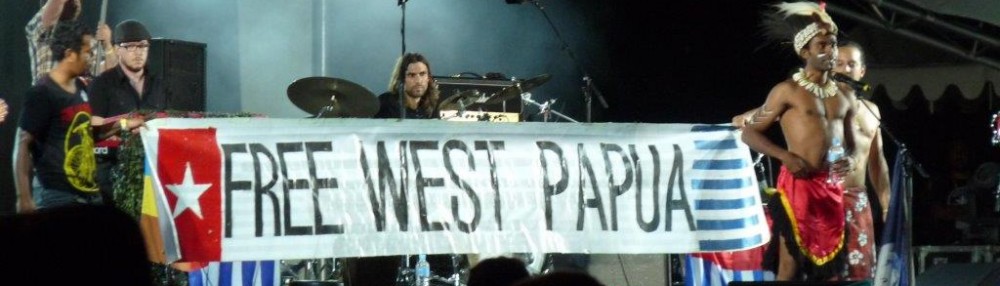
The violations are linked to the government’s efforts to suppress the Free Papua Movement, which has persisted in the region since the 1960s and advocates for self-determination.

Baru, a leading rights activist advocating for an end to violence between security forces and armed rebels in Papua, is scheduled to be ordained as bishop on May 15.

The Papuans felt abandoned as the local Church hierarchy, based in the Indonesian capital, consistently aligned with the government.

“The official stance of the Catholic Church on the Papua issue is very clear, namely to support the government’s stance, because it is guaranteed by international law,” the hierarchy’s de facto head, Cardinal Ignatius Suharyo Hardjoatmodjo of Jakarta, said once.

A recent example is Archbishop Petrus Canisius Mandagi of Merauke supporting the controversial state-backed food projects in southern Papua, despite the Papuans’ rejection of the initiative. The projects reportedly aim to seize land from Indigenous people, including members of the archdiocese.

Francis’ visit to Asia last September marked a second defining moment for Papuans and offers lessons for the Indonesian hierarchy and the heads of the Vatican bureaus.

Many Papuans believe that Francis expressed his love for the indigenous people by visiting Vanimo in Papua New Guinea, just across the border from Indonesian Papua. This visit enabled many Papuans to cross the border to see the pope.

Francis’ visit to Indonesia did not include a stopover in Papua or even mention Papua, apparently due to the insistence of Indonesian bishops, who did not want to upset the government.

Papuans who could not afford the flight to Jakarta to see the pope found Vanimo to be the closest place where they could meet him. He chose Vanimo to feel the pulse of the Papuans.

He also did not upset the Muslim-majority Indonesia, where he was widely popular for fostering Christian-Muslim harmony, a hallmark of his pontificate.

Francis proved that church leaders can find ways to understand and communicate with their marginalized communities, even if exploitative systems attempt to block them.

The tragedy is that Indonesian bishops remain confined within their narrow nationalistic views, which prevent them from recognizing Papuans as equal individuals and Christians deserving of dignity and rights.

The Papuan Church, which has long been dominated by Indonesian clergy, has done little to protest the state’s exploitation of this resource-rich region’s forests and minerals, disregarding the fundamental rights of Papuans to live on their land.

Just as Francis stood for the rights and dignity of the poor and oppressed, the new leader of the Church has a responsibility to confront the timidity of the Indonesian hierarchy, who believe that supporting the oppressed would make them targets of the state.

The Vatican must also support the two native Papuan bishops in representing their Papuan Catholics without permitting them to be overshadowed by the other 36 non-Papuan bishops in the country.

With thanks to Union of Catholic Asian (UCA) News and Ryan Dagur, where this article originally appeared.

Militarization in West Papua: the disrupted life of indigenous peoples

Jayapura (Agenzia Fides) – The sudden occupation of forest areas and villages of indigenous peoples by the massive deployment of military units in the Indonesian region of Papua is becoming a constant that marks the life of an entire region with its human and natural heritage. 

This is what happened to the inhabitants of five villages in the Oksop district (in central Papua, in the territory of the diocese of Jayapura), who fled to other areas, such as the neighboring Oksibil district, at the end of November due to the deployment of military units. “The presence of the military in the Oksop district has caused fear and insecurity in the community. Various actions by the military, such as setting up posts in churches and using public facilities without permission, have further aggravated the situation,” says Father Alexandro Rangga (OFM), Friar Minor and Director of the “Justice, Peace and Integrity of Creation” Commission in Papua. 

According to the Franciscan Commission, 300 people have been displaced to other villages, while many are hiding in the forests. “The fundamental problem in Papua is the way in which the Indonesian central government pursues national projects with a military approach. 

In addition, the massive presence of the military also brings with it activities promoted by the military itself, with conflicts of interest and operations on the edge of legality,” notes the Franciscan. As an official statement from the Diocese of Jayapura confirms, “the security situation in Oksop district remains unfavorable.” Indeed, “the refugees are reluctant to return to their home villages because they are afraid.” The presence of more and more troops – three troops were sent between January 13 and 15, 2025 alone – has increased tensions.

 “The displaced people have had traumatic experiences when they had to leave their homes,” reports the Franciscan. In response to this emergency, the Church of Jayapura and the Justice, Peace and Integrity of Creation Commission are calling on the government to “withdraw the armed forces from Oksop district and open a space for dialogue to find a peaceful solution” and, in the meantime, “provide adequate humanitarian assistance to the refugees.” The path of dialogue, says the Franciscan, “is the only way to end the violence and create a sustainable peace in Papua.

” Assessing the overall situation, Father Rannga notes that “the situation has worsened in recent years.” “Although the Indonesian government has moved from a ‘security’ approach to one that speaks of ‘welfare’ on a verbal level, in reality soldiers are still being deployed to carry out all kinds of programs on the ground,” he explains. 

“This is worrying because people have already had a long and traumatic experience with the military. In total, there are between 60,000 and 100,000 internally displaced people in Papua, mainly from Maybrat, Kiwirok and Intan Jaya.” In addition, the Indonesian government “has been creating food plantations in West Papua since 2020 (often for palm oil plantations, editor’s note) without obtaining the consent of the indigenous peoples, who feel cheated of their land: they use the local authorities or the army to take over the land by force, and this approach leads to clashes and discontent,” he continues. 

“As the Commission for Justice, Peace and the Integrity of Creation, we have drawn the attention of the UN Committee on Economic, Social and Cultural Rights (CESCR) to these problems: ancestral ownership of land, inequalities between indigenous Papuans and migrants, access to health and education facilities,” said the religious. Tensions in the area date back to the controversial 1969 referendum that incorporated Papua into the Republic of Indonesia, inaugurating a long period of progressive impoverishment and marginalization of the indigenous Papuans. 

The rise of separatist armed groups (such as the West Papuan National Liberation Army (TPN-PB), the armed wing of the Papua Liberation Movement) sparked a low-intensity conflict that forced thousands of people to flee and further complicated life in a region already characterized by underdevelopment. In addition, projects to exploit Papua’s enormous natural wealth (palm oil, copper, gold, timber, natural gas) do not benefit the indigenous population, who instead bear the negative impacts such as land destruction, contamination of water sources and the resulting health problems. 

In the meantime, the internal migration program (“Transmigrasi”) promoted by Jakarta changed the demographic composition of Papua, weakening the socioeconomic status of indigenous Papuans and limiting their employment opportunities. Locals complain that they have “become foreigners in their own country”. (PA) (Agenzia Fides, 17/1/2024)

Church leaders slam Indonesian forces’ denial of Papua refugees

Around 327 people remain displaced, many others hiding in forests in Oksop district, they say

Church officials in Indonesia have rejected Indonesian security forces’ claims of normalcy in a conflict zone in Papua, expressing concerns about the situation of displaced people and their safety.

The Church leaders said the security situation in the five villages in Oksop district is not yet normal, according to reports from pastoral officers of the Church in the field.

Bishop Yanuarius Theofilus Matopai You of Jayapura, based in Papua, and Father Alexandro Rangga of the Franciscans’ Justice, Peace, and Integrity of Creation Commission Papua expressed the Church’s concerns in a statement.

“As of today, an estimated 327 people remain displaced, with many others choosing to hide in the forest,” they said in their Jan. 17 statement.

It refuted the security forces’ claim in the media that residents who were displaced because of the conflict had returned to their villages.

Security forces spokesperson Yusuf Sutejo told the media that people have returned and are “carrying out normal activities in four villages. Only Mimin village is still under the supervision of security forces.”

Bishop You said they have detailed data on the number of displaced people, including by gender, age, and village of origin.

“However, for the safety of the displaced people, we cannot share this data with the public,” he explained.

The Church leaders said the security claims raise “deep concern,” and hence, “the Catholic Church felt compelled to clarify the real situation.”

Father Rangga said they want the joint security forces to withdraw from the Oksop district.

“The presence of troops is increasing. The deployment of additional troops on Jan. 13-15, 2025, has only increased the community’s anxiety,” he said.

The Church leaders said the security forces setting up their posts inside church compounds and using community facilities without permission worsened the situation.

Father Rangga told UCA News that residents of the five affected villages fled the area due to the increasing presence of security forces since late November last year.

“Fear of armed conflict prompted them to flee to safer places,” he said.

The security forces are targeting members of the West Papua National Liberation Army, which is allegedly working to free Papua from Indonesian control.

The renewed violence has displaced hundreds.

A displaced person from Atenar village, who did not want to be named because of security concerns, said he witnessed security forces setting up posts in community properties in his village as well as neighboring Mimin village.

“They dismantled an Evangelical church to make a fire pit. Church facilities are regularly used as security posts,” he said.

He also reported hearing gunshots day and night. “We don’t know whether they are shooting at their opponents or not,” he added.

The Catholic Church has urged the Indonesian government to form an independent team to investigate the causes of the conflict and ensure accountability for human rights violations.

“Firstly, withdraw military troops from Oksop district and open up space for dialogue to find a peaceful solution,” they said.