A security force raid in the Bibida District, Paniai Regency, has caused the internal displacement of an estimated more than 5,000 persons from 15 villages in Bibida and Paniai Timur District on 14 June 2024. Only elderly people who could no longer walk and sick people reportedly stayed. Churches have seized operations in the affected villages. Simultaneously, joint police and military forces established checkpoints and controlled passing vehicles in Enarolati town and Madi Village on 12 June 2024.
The districts Bibida and Paniai Timur are inhabited by the indigenous Moni and Me tribes. People fled their houses in fear of the security force operations and armed violence between the West Papua National Liberation Army (TPNPB) and Indonesian security forces. The operation was launched after TPNPB members shot dead a civilian Non-Papuan in the Kopo Village, Paniai Timur District, on 11 June 2024.
According to information from local sources, security forces entered the Bibida District with ten trucks around 8.00 am and began searching houses. The operation was accompanied by four helicopters circulating over Bibida. One of them reportedly released multiple shootings during the raid causing thousands of people from the villages Bibida, Dama-Dama, Kolaitaka, Kugaisiga, Odiyai, Tuwakotu, and Ugidimi to flee their homes. In the Paniai Timur Districts, people from the villages Amougi, Timida, Kopo, Wouye Butu, Uwibutu, Madi, Ipakiye, and Pugotadi (see table below)……….
On Friday June 7, 2024, several hundred people demonstrated in front of the French Embassy in Vanuatu regarding the situation in New Caledonia. France understands and respects the legitimate concerns of the people of Vanuatu regarding the situation in New Caledonia. In this article, I would like to respond to the demands expressed in the petition that the president of the Malvatumauri, who led the march, submitted to us on June 7.
Firstly, decolonisation cannot be reduced to independence. As the relevant resolutions of the United Nations Organisation (UN) (res. 1541 and 2625) remind us, decolonisation is first and foremost self-determination: it means letting the people choose what they prefer, and this can be the creation of an independent state, integration with an independent state, free association or any other formula chosen by the people. They alone must decide what they wish to do with their future.
And this is precisely what the French State has been accompanying in New Caledonia for the past 36 years: securing a process of self-determination, the organisation and the conduct of which have been commended by the United Nations Decolonisation Committee called C24, and two auditing reports.
In 1998, the Nouméa Accord – negotiated between pro and anti-independence parties – provided for a high degree of autonomy for New Caledonia, with gradual and irreversible transfers of powers to establish shared sovereignty. The Accord was adopted by popular consultation in New Caledonia with 72 % of positive votes. As provided for by the Accord, the State organised up to three self-determination referendums, if the previous ones had not resulted in a pro-independence vote.
The process provided voters with repeated occasions to cast their ballots, and political stakeholders to act (the local Congress was the one responsible to call for the organisation of the 2nd and 3rd referendums). Repeatedly, a majority of New Caledonians on a special electoral roll opposed independence: 56.67% of voters in 2018 (with a 81.01% turnout), 53.26% in 2020 (with a 85.69% turnout), and 96.50% in 2021 (with a 43.87% turnout). Votes were organised in the presence of the United Nations.
In accordance with democratic principles and the constant will of the people, who have been consulted three times since 2018, and who have therefore been able to exercise their right to self-determination, New Caledonia remains part of France.
Today, as a result of the decolonisation process engaged in 1988, New-Caledonia enjoys a high degree of autonomy, with the local Government and the provinces having all powers except those of a sovereign nature (defense, security, currency, for instance) and those they have not asked to be transferred (rules governing the administration of local authorities, higher education and research, audiovisual communication).
Secondly, what can one say to those who claim that the process described above is invalid because the last referendum was partially boycotted? Boycotting the referendum was the choice of the independentist parties, but it does not invalidate the referendum.
The legitimacy of this vote has not been called into question by the UN and the independentist parties participated to the general elections organised right after.
Thirdly, what can one say to those who believe that the process described above is invalid because only the Kanaks should have taken part, as the only legitimate people? That the 1998 Nouméa Accord – which was signed by all stakeholders, including the pro-independence parties – establishes the existence of a dual legitimacy: not only that of the Kanak people as the first occupants, whose identity and cultural heritage have been recognised and promoted, but also that of other communities “who live in the territory [and] have acquired, through their participation in the building of New Caledonia, a legitimacy to live there and to continue to contribute to its development. They are essential to its social equilibrium and to the functioning of its economy and social institutions”. This is an important point: it means that, together with the Kanaks (41.2% of the population according to the 2019 census), not only Europeans (24%), but also Wallisians and Futunans (8.3%) and many other communities (Tahitians, Indonesians, Ni-Vanuatu, Vietnamese, Chinese, etc. accounting together for 8%) have made Caledonia what it is today.The Nouméa Accord also presents decolonisation as an objective consisting in founding “a new sovereignty, shared in a common destiny”. Common, that is, for all the above-mentioned populations, together.
And that’s only fair, because a New-Caledonian, who has always lived and worked there and contributed to New Caledonia’s development, is fully part of this community, no matter the origins of his or her ancestors.
Fourthly, with regard to discrimination, there are indeed discrepancies, particularly in terms of standard of living, access to employment and education. This is a statistically documented fact, and the State has long been taking steps to correct it, notably through the redistribution of tax revenues between provinces; executive training (for which the state has provided 90% of the 6 million euros in annual funding since 1998); a mining and metallurgy policy (contrary to popular belief, the French state has no jurisdiction over the extraction, processing or export of nickel; these powers have all been transferred to local authorities; but it is the State that is absorbing the losses of the New Caledonian mining industry: since 2016, it has paid out more than 700 million euros in aid to the nickel industry); financial aid for business start-ups; a land policy that has considerably increased the surface area of Kanak land; and the defense and promotion of Kanak culture, as demonstrated by the use of local Kanak languages in the education system or the creation of the Tjibaou Cultural Center, which today remains the territory’s leading cultural institution.
These measures have produced results – the GDP/capita gap has narrowed and a Kanak middle and higher classes have developed – but unbalances remain, as President Macron acknowledged on May 24: “rebalancing has not reduced economic and social inequalities, they have even increased”. While major progress was achieved when it comes to economic and social progress or access to public service, we need to do better. One must note, however, that this public policy issue is not unique to New Caledonia.
In any case, fires, looting, blockades and violence will not solve the problem. On the contrary, by reducing several decades of economic development to ashes, they have undermined the social and economic rebalancing efforts made in favor of the Kanak populations, and destroyed thousands of jobs.
Fifthly, the petition calls for “the immediate cessation of military operations” and “the withdrawal of troops”. I must state clearly that there are no military operations in New Caledonia: there are law enforcement operations by internal security forces (police and gendarmerie), to protect the population and public infrastructure, strictly respecting the principle of proportionate use of force. The rioters are armed and have robbed several gun shops. Their roadblocks paralysed certain neighborhoods and cut off access to the international airport.
Some inhabitants were short of food and medicines and no longer had access to medical care. More than nine hundred businesses have been destroyed or vandalised, thousands of jobs have been lost and the damages are estimated at over a billion euros. Law offenders are being dealt with by independent courts following due legal process, therefore there is no reason to call for “international independent investigations”. Had the State – whose primary responsibility is to protect the population – not rapidly deployed reinforcements, there would have been many more victims, and the socio-economic damage would have been even greater with more lasting effects.
In conclusion, we must be careful not to ethnicise the events in New Caledonia. Many articles, commentaries and fake news portraying the riots as one community against another just simplify and distort reality. Since 1988 and the first Matignon-Oudinot agreements, followed by the Nouméa agreement in 1998, a continuous dialogue has been carried out leading to the setup of new institutions, the transfer of meaningful power to local governing bodies, the acknowledgement of the Kanak identity and promotion of Kanak culture, and to policies dedicated to the social and economic rebalancing.
Our priority is now to resume dialogue as the political path remains to be invented to continue building this “common destiny” in a more inclusive and peaceful way. France will continue to work in the coming months with regional partners including Vanuatu, the Melanesian Spearhead Group, and the Pacific Islands Forum, in order to achieve this dialogue essential to the future of New Caledonia.
Dani tribe Warriors. May 15, 2012 The Baliem Valley, Indonesian, New Guinea
There’s nothing profound about the Biblical quote; variations are embedded in many religions and cultures.
So it needs no prophet, seer or conman to make this prediction: After a war like the current one in Gaza has cooled, the survivors will be bent on revenge.
The ancient tragedy is underway just next door in Papua, bleeding now and for years to come as the hate goes on.
Canberra expresses its horror at the Middle East conflict 14,000 km distant and calls for peace, but looks away from what’s happening in the neighbourhood just 250 km to the north.
Last year the late NZ journalist John McBeth reported that Papua independence leader Egianus Kogoya’s determination to fight for freedom started after his father, Daniel Yudas Kagoya was killed by Indonesian troops.
Many in his group of armed partisans have become guerrillas for the same reasons.
They’re now old enough to confront those they blame for the slaughter of their parents, relatives and friends and the destruction of their homes and livelihoods; so they’ve started killing and are getting killed.
The ore-rich province with the world’s fifth largest gold mine reserves has been a simmering low-level civil war zone since Jakarta took over the western part of New Guinea from the Dutch colonists. That was in 1969 following a staged ‘referendum’ using 1,025 hand-picked voters who unanimously supported integration.
One estimate has half a million indigenous Papuans dying in the past half-century through starvation and resisting Indonesian control.
No one knows if the figure is correct as journalists are banned. Thousands of soldiers from across the archipelago are in Papua. How many is not publicised, though last year it was reported that ‘an additional 2,355 military members’ had been deployed.
The conflict shows no signs of lessening. In 2014 when President Joko ‘Jokowi’ Widodo took office he told the Australian media he intended to give Papua “special attention”.
It was benignly assumed that this meant peace talks because Jokowi was not a gung-ho militarist but a civilian, his wife Iriana had been named after the island’s old title and his visits were regular and friendly.
However his “special attention” was infrastructure, not independence: Roads, health services and education – all necessary, but secondary to the self-rule the rebels demanded. Pacifying the insurgents and listening to their emotional concerns wasn’t on the agenda.
In 2022, Jokowi started carving up the territory confusing locals and outsiders by amplifying bureaucracy and control. The four new provinces are Papua Selatan (South Papua), Papua Tengah (Central Papua), Papua Pegunungan (Mountain Papua) and Papua Barat Daya (South-West Papua).
For this story, we’ll use ‘Papua’ to cover all. The population of 4.4 million is largely Melanesian and Christian. However transmigration programmes bringing in poor farmers from Java who are mainly Muslim, has been diluting the indigenous population for decades.
Jokowi’s predecessor, former general Susilo Bambang Yudhoyono said he’d “take quick and appropriate steps to deal with Papua” after violent clashes. His ‘solution’ was force. More died but little changed.
At the time the SMHreported that “(SBY’s) money and good intentions were squandered by corruption, cronyism and bureaucratic dysfunction.”
After a decade in office, Jokowi’s legacy is “a better armed, better resourced, more coordinated pro-independence insurgency,” according to a Jakarta research group the Institute for Policy Analysis of Conflict.
“(There are) higher civilian casualties; and the failure after a year to secure the release of a New Zealand pilot held hostage by the guerrillas.”
(Phillip Mehrtens, then 37, was seized on 7 February last year and his Cessna used for ferrying construction workers and owned by an Indonesian company was torched. It’s believed he’s still alive.)
The IPAC report said Jakarta’s approaches can be characterised as: “Get them to like us”, “Hit them without mercy”, “Divide and rule”, “Give them money”, “End their isolation” and very occasionally, “Talk to them”.
It recommends that “(Jokowi’s) successor needs to radically change course.” But that’s Prabowo Subianto a general who served in Papua before being cashiered for insubordination in 1998 and fleeing to exile in Jordan.
In his new leadership role he’s offered to send a peacekeeping force to Gaza if there’s a ceasefire.
The idea is saturated in irony: Indonesia has no relationship with Israel. All remnants of Jewish life during the Dutch era – including cemeteries – have been trashed. Most troops are Muslims, and Prabowo has allegedly committed human rights abuses on the island last century.
Veteran Australian journalist Hamish McDonald, author of Demokrasi: Indonesia in the 21st Century has written that in 1984 Prabowo “led troops from Kopassus, the army’s Special Forces Command, across the border into Papua New Guinea to search for fighters from the Free Papua Movement Organisasi Papua Merdeka – OPM.
“In 1996, he led a Kopassus operation to free World Wildlife Fund hostages taken by the OPM. The mission was controversial because soldiers travelled via a white helicopter previously used by Red Cross negotiators”
Indonesia is still far from winning the hearts and minds of its Papuan citizens or erasing its image as a ruthless neo-colonial power. It’s treating the OPM much as the Dutch handled the Javanese partisans during three centuries of European rule – split, discredit, threaten, arrest, kill.
That didn’t work and Indonesia is now an independent republic, largely because the Western world – including Australia, turned against the colonials and demanded change. Weapons and money were denied to a Netherlands weakened by World War II.
That’s unlikely to happen in Papua in the lifetimes of our readers. The mines are too rich and involve influential international players. Indonesia is the world’s fourth-largest nation with more Muslims than any other country.
Australia speaks strongly about human rights but does little; there’s a deep reluctance to advocate a break in the circle of violence in Papua and infuriate Jakarta.
Much like the situation with Jerusalem and the Gaza war.
Duncan Graham has been a journalist for more than 40 years in print, radio and TV. He is the author of People Next Door (UWA Press). He is now writing for the English language media in Indonesia from within Indonesia. Duncan Graham has an MPhil degree, a Walkley Award, two Human Rights Commission awards and other prizes for his radio, TV and print journalism in Australia. He lives in East Java.
Nahdlatul Ulama (NU)(revival of the scholars) is Indonesia and the world’s largest Islamic organisation claiming almost 100 million members. If it digs coal it could become mega-rich. How dirty work marries with sending souls to paradise only Allah knows.
President Joko ’Jokowi’ Widodo has four months left in office, enough time to sow division before handing the job on to the elected former cashiered general Prabowo Subianto.
In May, Jokowi signed a decree letting religious groups apply to be the first shovel in the ore for special mining concessions. Not quite a gift from the gods as the Republic is supposed to be monotheistic, but pretty close.
This allows him to make good on an old promise to religious groups to take over mining concessions to raise funds. What the hell has coarse commerce got to do with matters of faith?
One answer: Politics, or as TheJakarta Post described it clumsily because pig meat is taboo to Muslims, “halal-certified state-sponsored pork barrelling”.
It added: “The government has come out with one of the most ridiculous policies in the history of this nation … It’s now up to the country’s largest Muslim organisation to back out on moral grounds.”
But will the lure of lucre prevail over Islam’s obligations to be honest, fair and righteous?
NU supported the Prabowo ticket in the February presidential election as did Jokowi who was constitutionally barred from taking a third five-year term.
Instead, he engineered for his eldest son Gibran Rakabuming to contest as number two. He’s now Vice-President elect.
The lead-up to the inauguration is a time to settle debts and cement alliances. If enough minor parties join the Prabowo-Gibran winning team, opposition will be left to NGOs.
Most are poor and poorly equipped to do more than their narrow roles, like advocating for human rights.
The churches have already knocked back Jokowi’s offer saying that fossil fuels are not their job and they’re better at consulting holy books than mining manuals. The mosques are dithering.
Second behind NU is Muhammadiyah (followers of Muhammad) with 60 million members. It tends to attract the better-educated middle class.
At present it’s pondering the Jokowi offer, but observers reckon nothing will happen as the gift has been pegged only for the NU.
The six government-approved religions, Islam, Protestantism, Catholicism, Hinduism, Buddhism and Confucianism have charity wings. They run schools, hospitals, clinics and retirement homes principally for their members and could probably improve their work with mining profits.
But supping with this devil will need a long-arm excavator.
Investment Minister Bahlil Lahadalia was reported as saying the handout was “in return to their past services during and after the country’s struggle for independence … you are investing for the hereafter.” That’s something most religions have been doing for millennia.
The government says any faith group that accepts the deal has to run the show themselves. This means they can’t flog off a mining permit or farm out business to an established company, even though it has the gear and expertise.
That rule crimps expectations of the beneficiaries only needing bigger truck parks and tips to take Haulpaks of rupiah.
A few right-wing congregations believe the earth is for exploitation; the rest take a more environmentally conscious position accepting that despoiling nature is not part of any Deity’s plan.
The better read will know that most responsible nations are moving away from fossil fuels to renewable energy sources.
Indonesia is the world’s largest coal exporter and third biggest producer; to the distress of those worried about global warming it shows no sign of slowing down; the compound annual growth rate has been seven per cent since 2019. This year it expects to produce 710 million tonnes.
There are precedents for Jokowi’s generosity though unfair and distressing.
Last century then president Soeharto gave forestry concessions. Tens of thousands of hectares of virgin growth mainly in Kalimantan (Borneo island) to relatives and mates, particularly army generals, establishing vast business enterprises.
Many wield enormous power today and are part of the oligarchy. We’ve yet to hear how the profiteers feel about sharing their spoils with the pious.
Duncan Graham has been a journalist for more than 40 years in print, radio and TV. He is the author of People Next Door (UWA Press). He is now writing for the English language media in Indonesia from within Indonesia. Duncan Graham has an MPhil degree, a Walkley Award, two Human Rights Commission awards and other prizes for his radio, TV and print journalism in Australia. He lives in East Java.
Jayapura — The Papuan people reject a plan by the acting Jayapura regent Purnomo Triwarno to move the grave of Papuan independence leader and national hero Dortheys Hiyo Eluay. Theys Eluay’s grave, which is located at the Sere Sentani field in front of the traffic lights at the entrance to Sentani airport, is slated to be moved to Obhe Heleybhey Wabouw in Sere Village, Sentani sub-district, Jayapura regency. Eluay is the former Chairperson of the Papuan Presidium Council (PDP) who was found dead near the border in Skouw in November 2001 after being murdered by the Army’s Special Forces (Kopassus). West Papua National Committee (KNPB) spokesperson Ones Suhuniap said he rejects the relocation of Eluay’s grave saying that Eluay does not just belong to the Eluay family clan, nor does he just belong to the Sentani people, but he belongs to all Papuans from Raja Ampat to Merauke. According to Ones, Eluay’s was buried in the Sere Sentani field with the approval of the Papuan people as a form of respect for his services in defending and fighting for the rights of the Papuan people, but also as the great Ondofolo — the highest customary leader of the indigenous people of Sentani. “His struggle ideologically was for Papua to be independent in terms of economic rights, customs and the cultural rights of the Papuan people. Meanwhile, one of the outcomes of his struggle was Special Autonomy for Papua which today is enjoyed by the Papuan people, both indigenous Papuan people as well as non-Papuan people in this land”, said Suhuniap in a statement in Jayapura on Saturday May 11. Therefore said Suhuniap, the Papuan people reject the relocation of Eluay’s gave from the Sere Sentani field to Obhe Heleybhey Wabouw. “We the Papuan people reject the plan to move Dortheys Eluay’s grave for any reason. We know very well that on November 10, 2021, Dortheys was abducted along with his driver by Kopassus led by [Major General] Hartomo, and 11 days after the murder then President Megawati [Sukarnoputri] signed the 2021 Papua Special Autonomy Law.” This means, said Suhuniap, the murder was orchestrated and planned. Because of this therefore, regional officials must understand this and not arbitrary move the grave of the deceased to another place. Thus the Papuan people reject this plan and for whatever reason. – The Papuan people reject the plan to move Eluay’s grave for any reason. – As a form of respect for developments, including Papuan Special Autonomy that is enjoyed by Papuans and non-Papuans and was paid for with his blood. Therefore, before any relocation it must first obtain approval from the Papua People’s Council (MRP), the House of Representatives (DPR), all Ondoafi and Ondofolo in the land of Tabi and the Papuan Traditional Council (DAP). – Referring to points one and two, as a form of respect for Dortheys Eluay, the Jayapura regency government must immediately built a monument or statue of Eluay in front of the grave using Special Autonomy funds, because he was a fighter for Special Autonomy. – The reason for moving the grave of hero Theys Eluay by the Jayapura regency government does not make sense. It is as if Eluay’s grave is a trash can that has to be cleaned up. The Jayapura regency government should repair damaged roads and build shop houses in various places that damage the face of the city of Sentani, instead of moving Eluay’s grave. – The relocation of Dortheys Eluay’s grave is not just an insult to the dignity of the Papuan people, but also a form of harassment against the social structure of the Sentani community. Because he is one of the great figures, including the great Ondofolo of the Sentani community. – Eluay’s grave does not belong to the families of his biological children alone, but to the entire Papuan people. Therefore, it needs to be questioned by all Papuan people. – A call to the Papuan people to consolidate and mobilise to reject the plan to move Theys Eluay’s grave. Earlier, Papua Legal Aid Foundation (LBH) Director Emanuel Gobay condemned the plan to move Eluay’s grave saying that the basis for the plan needs to be questioned. Moreover they will not hesitate to legally challenge the move if the Jayapura regency government goes ahead with the plan. [Translated by James Balowski. The original title of the article was “Rakyat Papua Menolak Pemindahan Makam Tokoh Besar Papua Dortheys Eluay”.]
he disparity is vast and immoral. Emotional language touches souls, but in Indonesia it should also grab economics and politics. The new government could demand reform. It wont.
We’ll call her Siti. Real name usage might threaten the uni graduate’s fragile job as an English teacher at a government school. She earns less than Rp 400,000 a month for working three days a week and being on call – with other time spent on higher study. For rough Oz dollar conversion divide by 10,000.
Survival is by living with her parents though she’s in her mid-20s. She could get more in a private school – though not much – but farewell pension entitlements.
Every year the national government lists basic wages for more than 500 cities. The monthly rate in Malang where Siti teaches is supposed to be a slither above Rp 3.1 million. That’s AUD 330.
Being a woman doesn’t help: The UN Gender Development Index reports the average Indonesian guy gets almost double the pay of his female colleagues even though rates are for humans whatever their sex.
Bureau of Statistics figures show women’s workforce participation rate is 53 per cent, compared to 82 for men. In parliament only 21 per cent of elected members are women.
Experience with Indonesian stats reveal official and unofficial figures jostle for inaccuracies. One marginally more reputable source reckons grads start at around Rp 5 million in Jakarta. Just across the 16 km Singapore Strait their mates pull in at least ten times more.
The published under-24 unemployment rate is above 14 per cent. Over-supplied markets keep wages down unless the worker is in medicine, IT or management.
Teachers are treated seriously in Europe where salaries can reach AUD 6,000 a month – and now chalkies are striking for more.
The Jakarta Post says that the Republic holds sixth place in the world for inequality and that the four richest men have more dosh than the combined total of the poorest 100 million:
‘An excessive concentration of wealth is considered a risk for democracy as those at the top have too much bargaining power to influence the course of public policies. Even though extreme poverty in the country has declined, income disparity last year was the worst in the last five years.’
When independence from Dutch colonial control was declared in 1945 the expectation was for a Republic of equals in a ‘Unitary State‘. Constitutionally the kampong battler has rights equal to the idle oligarch but in fact the gulf in government support is unbridgeable.
One gets next to nothing, and the other tax breaks, concessions, business opportunities, special dealings and often the chance for a hand in the till.
The issue briefly surfaced during the Presidential election campaign in February. However none of the three major contenders treated inequality as a priority to be fixed for the sake of the people, the economy and security.
Last year new employment laws seemed to give workers more rights like overtime pay, maternity leave and social service benefits. But exercising these isn’t easy away from international corporates with HR teams and watchful shareholders.
Stirring isn’t recommended in a culture where open dissent is only for the grimly determined backed by many of the like-minded.
Universities and unions have traditionally been where anger ferments into action. However, only 50,000 students and workers in and around Jakarta bothered to march on 1 May (International Labour Day), a number too small to bother politicians in a nation of 275 million.
Will anything change? That’s unlikely. The poor and poorly paid will remain – along with coal and mineral exports – as the source of the Indonesian economy.
The well is flooding at the top (5.05 growth last year) but little overflow is trickling down.
Despite being mega-rich (a declared AUD 240 million) the new president-elect, disgraced former general and current Defence Minister Prabowo Subianto knows how to kill but not nurture.
He’ll have to rely on the public service for financial advice and his colleagues in the upcoming right-wing government for direction.
There’s also no charismatic leader fronting any opposition. Three years ago the Partai Buruh (Workers’ Party) surfaced but has struggled to stay afloat.
Some losers in the last general election have already decided pragmatism trumps ideology.
Media mogul Surya Paloh and head of NasDem (National Democratic) Party endorsed academic Dr Anies Baswedan as a presidential candidate.
The former Jakarta Governor scored second place behind Prabowo and his populist Gerindra (Great Indonesia Movement) Party. Surya has now kicked out Anies and wants to nestle with the winner.
If this goes ahead opposition will be further reduced leaving dissent to the NGOs and maybe the PDI-P (Democratic Party of Struggle) led by fourth president Megawati Soekarnoputri (2001-04).
Personal animosities are currently keeping her out of the coalition – though that may change as the magnetic pull of status and money intensifies.
So far there’s no indication that workers’ needs will be addressed when the Prabowo administration is sworn in come October.
Teacher Siti has a limited career future. Foremost is staying at the blackboard and hoping to slowly climb the promotion and reward ladder.
Alternatively she can use her language talents to get into an international trader hoping it might apply the standards it has to follow overseas.
But that would negate the advantage of a company investing in a country where wages are a minor cost of doing business.
Duncan Graham has been a journalist for more than 40 years in print, radio and TV. He is the author of People Next Door (UWA Press). He is now writing for the English language media in Indonesia from within Indonesia. Duncan Graham has an MPhil degree, a Walkley Award, two Human Rights Commission awards and other prizes for his radio, TV and print journalism in Australia. He lives in East Java.
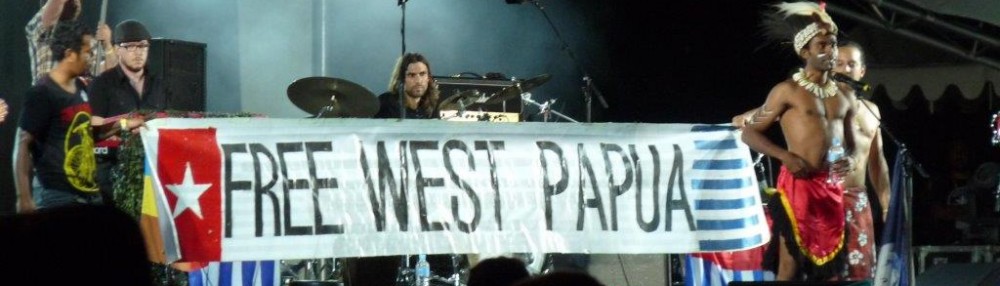
While Prime Minister (PM) Charlot Salwai is engaging with the Ministry of Foreign Affairs and State Law Office on the historical demand for West Papua freedom, he said the question that needs to be clarified is that the United Liberation Movement for West Papua (ULMWP) is a political organisation and not a country to represent the people of West Papua.
The PM made the hint to the members of Vanuatu Free West Papua Committee (VFWPC) that met with him at his Office last week, to brief him on the West Papua issue.
He indicated that this seems to be the handicap for all member countries of MSG all voting to support ULMWP’s Application for full membership.
But he said the original stand for Vanuatu as declared by the late Prime Minister, Father Walter Lini, remains unchanged for West Papua to enjoy the same political freedom, that Vanuatu is enjoying today following its freedom which was achieved approximately 24 year ago on July 30 of 1980.
However following his presentation of the summary of the West Papua Struggle and where the VFWPC is, regarding its efforts to rally all member countries to stand for ULMWP’s Application for full membership of MSG, the Prime Minister replied that in line with the original spirit for full political freedom for West Papua, Vanuatu has its own position but that it would be the only member country to support such a stand (if it voted on it).
Vanuatu’s Special Envoy to West Papua, Mr. Morris Kaloran said ULMWP recognises PM Salwai for his outstanding contribution towards enabling ULMWP’s historic birth at the Malvatumauri National Council of Chiefs’ Nasara in Port Vila over nine years ago.
“We view your vital contribution to the birth of a West Papua boy in Port Vila going ten years ago with utmost respect,” Mr. Kaloran said.
“We made our appointment to meet you Mr. Prime Minister and you availed your valuable time to come down to our level to listen to us.
“We tried our utmost best to organise a similar meeting with your predecessor to meet with him just before the MSG Summit last year, but he was too busy to meet us.
“Now we take this opportunity to thank you for your positive response despite your busy schedule. We thank your Private Secretary, Mr. Victor Rory, for facilitating this meeting.”
The Special Envoy said the Legislative Council of ULMWP under Interim President, Mr. Benny Wenda, has set up three roadmaps for West Papua.
(a) ULMWP issue with MSG to become a full member.
(b) Importance of lobbying for Indonesia to allow the United Nations (UN) Human Rights Commissioner to visit West Papua on a fact-finding mission to West Papua.
(c) For the issue of West Papua to reach the UN General Assembly to enable a Resolution to be carried on it and finally
(d) For the Vanuatu Government to furnish the Office of West Papua in Port Vila. Basically the office lacks relevant furniture and equipment to operate as an international office.
While PM Salwai “is holding the MSG spear still” until it is handed over to the Fiji PM, Mr. Sitiveni Rabuka, to host the next MSG Summit, the Special Envoy appealed to the PM to consider supporting ULMWP’s Application to become a full member of MSG or to support the call to suspend or cancel Indonesia’s Associate Membership of MSG.
In addition, the Special Envoy briefed PM Salwai on Mr. Wenda’s lobbying internationally with the West Papua International Committee in England and an increasing number of countries in Europe on reports of continuing alleged human rights abuse on the population of West Papua, and to support ULMWP’s call for the freedom of West Papua.
“It is most unfortunate that for the last 60 years or so, the Dutch who were the former colonisers of West Papua, had been silent on the issues of the Melanesian country,” Mr. Kaloran said.
“However it looks as if the Dutch parliament is opening up and International Parliamentarian for West Papua and ULMWP President, Mr. Wenda, have had the opportunity to meet with a (Dutch) body called Foreign Affairs Parliamentary Committee.
“Finally Mr. Prime Minister, ULMWP is a child of Vanuatu born at the Malvatumauri National Council of Chiefs in Port Vila in 2014.
“At the time when Mr. Joe Natuman was Prime Minister, he spent approximately Vt15 million to fund the arrival and formation of the ULMWP represented by different warring factions from within West Papua, on behalf of our Malvatumauri National Council of chiefs.
“ULMWP was born and Vanuatu achieved a historic milestone no one had believed possible because the warring factions ceased their differences and became united under the ULMWP umbrella.”
Jayapura — Eight civil society organisations from the Papuan People’s Front (FRP) held a peaceful demonstration on Jalan Gunung Fanindi in Manokwari, West Papua province, on Wednesday to commemorate 61 years since the annexation of the Papuan nation (May 1, 1963 to May 1, 2024).
The eight movement organisations that that make up the FRP are the West Papua National Committee (KNPB), the Papua Student and Youth National Front (FNMPP), West Papua Youth and Student National Solidarity (SONAMAPA), the Papuan People’s Struggle Movement (GPRP) and the West Papua Independent Student Forum (FIM-WP), along with other student and Papuan people’s groups.
The demonstration was held at three points, the first being in front of the Mansinam student dormitory, the second in front of the Amban Village head’s office and the third in front of the Papua Manokwari University campus entrance.
The peaceful actions to commemorate Annexation Day, which the Indonesian government calls integration day, took up the theme “Give the right of self-determination to the Papuan nation and the military emergency in the land of Papua”.
field coordinator Lotty Selak said the action commemorating the annexation of Papua into the Unitary State of the Republic of Indonesia
(NKRI) was to include a long-march to the West Papua Regional House of Representatives (DPR) offices.
The action began at 7.25 am when protesters moved out carrying protest materials such as pamphlets, megaphones, speakers, rafiah ropes to keep the demonstrators together and KNPB flags. Following this, they began moving to the individual gathering points.
“The protesters at the gathering point in front of the Mansinam student dormitory began to move off towards the location of the action accompanied by yells of ‘We are not the red-and-white’, ‘Indonesia is killing-killing the people’ and speeches while marching”, explained Selak.
Selak said that at 8.25 am a police car, two water cannon, a patrol car and a truck carrying police personnel took up a position to block the protesters at the Manokwari Makalo Monument.
At 9.15 am, before they had a chance to negotiate with police, the protesters were confronted by a water cannon in the middle of the road.
At 9.20 am protesters from the gathering point in front of the Amban Village head’s office arrived and joined the demonstrators in front of the Mansinam student dormitory at the Makalo Monument.
At 9.43 pm the demonstrators advanced by around five metres but security personnel block them again.
“The security forces did not allow the long-march to the West Papua DPRD offices. The demonstrators were asked to express their aspirations by using transportation provided by the security forces to go to the West Papua DPRD. Negotiations stalled, so the demonstrators sat down in the middle of the road”, he explained.
“At 11.04 am the security forces brought a DPRD representative. At 12.05 pm we were directed to deliver political speeches from each organisation. At the end of the political speeches a statement was read out”.
In the statement they said that the claims made by the Indonesian government about the status of the land of Papua as an integral part of the Republic of Indonesia are invalid, because they did not have authentic, real and true historical evidence, and that since December 1, 1961, the West Papuan nation have had genuine sovereignty as an independent nation that is equal to other nations on earth.
The West Papuan people firmly reject the results of the 1969 Pepera (the UN sponsored referendum on West Papua’s integration into Indonesia) because it was carried out on the basis of the New York Agreement that was legally and morally flawed and was conducted in an atmosphere of oppression beyond the limits of humanity.
The Papuan nation has the right to determine a future that is independent politically, legally and economically. West Papua is currently an emergency military zone, and therefore military operations must be halted immediately. May 1 is International Labour Day, so the Papuan nation supports the struggle of workers in Indonesia and the entire world.
[Translated by James Balowski. The original title of the article was “Aksi Hari Aneksasi di Manokwari Dihadang Aparat, Pernyataan Dibacakan di Jalan”.]
April 18, 2024 18:03 GMT+700 Denpasar, Bali (ANTARA) – Central Papua’s Puncak Jaya has lost most of its glaciers, whose thickness had been recorded at only 0.23 square kilometers by April 2022, according to the Meteorology, Climatology, and Geophysics Agency (BMKG).
“The probable cause is the 2022-2023 El Nino phenomenon,” BMKG’s research and development department coordinator, Donaldi Permana, stated at a webinar on the 74th World Meteorology Day observed here on Thursday.
Permana remarked that the agency conducted a long-term observation of the glacier coverage in Indonesia’s highest peak from 2009 to 2023.
The agency found the snow thickness, which by December 2022 was recorded at six meters, had reduced to two meters on December 2023. Meanwhile, the average reduction in ice area from 2016 to 2022 was recorded at 0.07 kilometers annually.
Permana pointed out that climate change-induced global warming was the primary cause of the gradual disappearance of Indonesia’s only eternal snow.
The department chief stated that by 1850, Puncak Jaya’s snow coverage was 19 square kilometers. However, by 2020, the ice cap shrank to an estimated 0.34 square kilometers.
He said that such glacial thinning had not solely occurred in Puncak Jaya, as glaciers in other mountains in tropical regions, such as Mount Kilimanjaro in Tanzania, Quelccaya in Peru, and Naimona’nyi in Tibet, China, had also been affected by climate change.
The climate change made 2023 the hottest year recorded, and the average global temperature in 2014-2023 had increased by 1.20 plus-minus 0.12 degrees Celsius, Permana remarked.
The department head accentuated the need to reduce carbon emissions through mitigation and adaptive measures to reduce climate change effects and ensure the longevity of ice caps in tropical areas, such as Puncak Jaya.
Planting more trees, reducing plastic use, and using green energy will be simple steps to mitigate climate change, Permana stressed.
“If not mitigated or reduced, carbon dioxide will stay in the atmosphere, and even after 100 years, the concentration will remain at 33 percent,” he stated.
A Russian tourist, Mr Shmatov Ivan Aleksandrovich, was arbitrarily arrested by Indonesian security forces in the town of Enarotali, Paniai Timur District, Papua Tangah Province, on 11 March 2024 (see photo, source: Suara Papua). The arrest occurred while Ivan was photographing community activities at a local market. Local informants confirmed that Mr. Aleksandrovich visited the town as a tourist to document the cultural activities of the Mee tribe. Indonesian soldiers conducted the arrest because they suspected him of being a foreign journalist. Mr Aleksandrovich was detained and questioned for several hours before being released.
On 11 March 2024, at approximately 12:00 pm, Indonesian security forces apprehended Mr Aleksandrovich at the traditional market in Enarotali. The arrest followed reports of Ivan taking photographs at the market, prompting authorities to detain him for questioning. Thereupon, Mr Aleksandrovich was taken to the Paniai Police Station, where members of the police Intelkam Unit interviewed him. During the interrogation, he disclosed that he had traveled from Nabire to Paniai to capture images of the indigenous people’s way of life. Despite having a valid passport and visa, police officers claimed Mr Aleksandrovich did not possess a travel document from the Directorate of Intelkam of the Papua Regional Police (‘Surat Jalan’), permitting him to visit the area.
Lieutenant Dwi S, Legal Officer of Task Force Yonif 527/BY, responded to Mr Aleksandrovich’s arrest, stating, “Our members never secured the tourist. The tourist was secured and taken by the police to the nearest police station.” He refuted claims that Mr Aleksandrovich was detained and interrogated by military personnel, emphasizing that the police were responsible for handling the situation.
The arrest raises significant concerns regarding freedom of movement and ongoing reports of arbitrary detention in West Papua. The case highlights the restrictions individuals, particularly foreigners, face when visiting the region. The incident underscores broader issues related to the ongoing armed conflict and the human rights crisis in West Papua, which remains isolated from access by foreign journalists.
Background
The Indonesian government restricts access to West Papua for foreign journalists and international observers. Indonesian government agencies hinder foreign journalists from conducting media coverage in West Papua. Authorities use various repressive strategies against foreign journalists, including intimidation, bureaucratic obstruction, and physical attacks, to prevent journalists from covering politically sensitive events. This picture contradicts President Joko Widodo’s statement on 10 May 2015 that West Papua would be open to foreign journalists. President Joko Widodo reiterated the opening of West Papua during his official speech on Indonesia’s Independence Day on 14 August 2015.
Jokowi’s ambitious statements were never put into practice. The Indonesian government requires foreign journalists to fulfill a large number of requirements. The Indonesian Ministry of Foreign Affairs supervises the so-called clearing house process. The requirements included detailed information on persons to be interviewed, time schedules, and locations. Moreover, government agencies clarified that reporting on human rights-related or political issues in West Papua was prohibited.
President Joko Widodo’s statement was never followed up with a presidential instruction, which may be a major reason for the ongoing confusion regarding its implementation. Contradictory information given by multiple state representatives and security force commanders indicates a lack of coherent and unified government policy to repeal restrictions on foreign media access to West Papua.
However, on the 17th June 2015, the general director of information in the Ministry of Foreign Affairs, Ms. Esti Andayani, said during an interview with Radio New Zealand that the government had abolished the clearing house system without providing any clear information on the new procedures which had replaced the former control mechanism. She further stated that foreign journalists would still be screened with regard to the fulfillment of visa requirements. The Foreign Ministry emphasized that all foreigners, including foreign correspondents, would still need a permission letter (‘Surat Jalan’) from the police intelligence unit if they intend to travel to West Papua.
Possible changes in bureaucratic procedure have little impact on the situation in the field, as the arrest of Mr Aleksandrovich illustrates. If foreign journalists receive permission to cover West Papua, they still face obstructions by local government agencies and strict surveillance by the local police and intelligence. Persons interviewed by foreign journalists are at risk of being interrogated, arrested, and prosecuted, particularly if journalistic coverage includes political and human rights-related issues.




 Australia West Papua Association Adelaide