Treason suspects in Manokwari to face trial in Makassar Court

News Desk – Treason Suspects 

19 February 2023

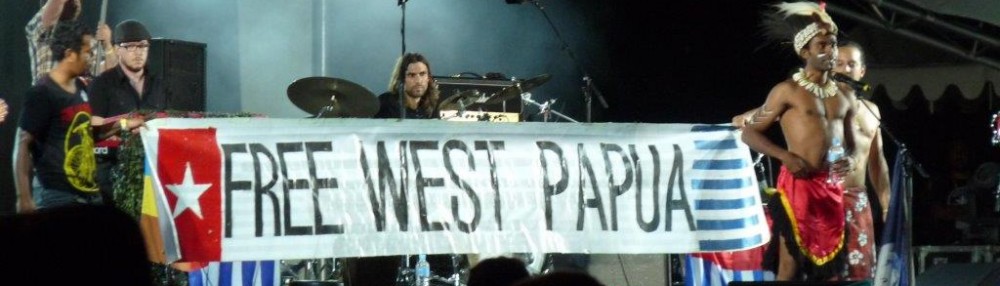
Lawyer team and three treason suspects – Doc of lawyers

Manokwari, Jubi – Three suspects of treason, Hellezvred Bezaliel Soleman Waropen, Andreas Sanggenafa, and Kostan Karlos Bonai have been handed over by Manokwari Police investigators to the Public Prosecutor of the Manokwari District Attorney’s Office on Thursday, February 16, 2023.

The delegation was written in a letter submitted by the head of the Manokwari District Attorney, Teguh Suhendro, to the head of the Makassar Class I A Penitentiary.

The three were named suspects by the police for allegedly committing treason when holding a commemoration for West Papua’s independence on November 19, 2022 in Ambon Village, West Manokwari District, Manokwari Regency.

“Today we handed over three suspects of treason to the Manokwari District Attorney’s Office,” said Manokwari Police’s head of Criminal Investigation Unit First Insp. Arifal Utama.

The three were detained at the Manokwari Police detention center for 120 days before being handed over.

Head of Intelligence of the Manokwari District Attorney’s Office Ihsan Husni also confirmed the delegation. “The police has handed over the files. The suspects will be tried in Makassar Class 1 A District Court, South Sulawesi, as per the Supreme Court’s decision,” said Ihsan.

Meanwhile, Yan Warinussy, legal counsel of the treason suspects, questioned the delegation of case files. “What is the legal reason that prompted the Manokwari District Attorney’s Office to transfer the case files to be tried in Makassar?” said Yan Warinussy.

According to Yan, his party did not find any fundamental reason or factor that encouraged the transfer of case files. He said a trial in Manokwari would not endanger public order in the city of Manokwari and its surroundings.

“That is why we suspect discrimination and racism behind the scenario to bring our three clients along with their case files to be tried in Makassar,” he said.

Yan asserted that his three clients were ordinary civilians, unarmed, with their families in Manokwari. “Most of them are also over 50 years old. From either law or human rights perspective, it is not fair to take them far from their home only to be tried for alleged actions that have never caused any turmoil in Manokwari and West Papua Province even until today,” he said.

The three suspect were charged with Article 106 jo Article 55 or Article 110 paragraph 2 to 1 jo 106 of the Criminal Code. (*)

————————-

Jayapura-Wamena road heavily damaged, hundreds of trucks stuck since November 2022

‘The pilot also eats potatoes’: Papuan separatists say kidnapped NZ pilot is living in jungle with independence fighters

Papuan separatists have told Crikey a New Zealand pilot was taken hostage as a representative of the Pacific Nations family.

Sian Powell

Feb 17, 2023

Give this article

NZ pilot Philip Mehrtens and Papuan separatist fighters (Image: Supplied)NZ pilot Philip Mehrtens and Papuan separatist fighters (Image: Supplied)

The New Zealand pilot kidnapped by independence fighters in Indonesia’s restive easternmost province of Papua is now living in the jungle with the separatist fighters and eating what they eat, a separatist has told Crikey

Independence fighters from the West Papua National Liberation Army (TPNPB) seized Susi Air’s small propeller plane when it landed at an airport in the mountainous district of Nduga last week. The separatists, from the armed wing of the Free Papua Organisation (OPM), set the plane on fire and captured the pilot, Philip Mehrtens, who was then spirited away to a hiding place somewhere in the dense jungle of the area. 

A video sent to Crikey from Papuan separatists, featuring the Susi Air plane they set on fire (Source: Supplied)

“He stays in the jungle, he eats in the jungle,” said the army’s spokesman Sebby Sambom, adding that many Western missionaries had been able to adjust to Papuan food in the past. 

“If the TPNPB troops eat potatoes, the pilot also eats potatoes.”

Mehrtens can easily communicate with his captors, Sambom said: “This New Zealand pilot can speak Indonesian and for him this action is normal.”

TPNPB independence fighters want to negotiate with the governments of the US, Europe, Australia and New Zealand, Sambom told Crikey in a WhatsApp voice message recorded in Indonesian.

“We arrested that pilot depending on politics. We want to negotiate with the governments of New Zealand, the US, Australia, Europe and the people,” he said.

Indonesian military chief gets an AO as West Papua human rights crisis deepens

Read More

He added that these nations had been sending weapons to Indonesia and training Indonesian police and military troops for decades, and that those Indonesian forces kill the people of West Papua. 

“We do not need to negotiate with the Indonesian army or the police,” Sambom said. “What is the goal of those military and police? They are the enemy, it’s not possible. We cannot speak with the army or the police, they are accountable to Jakarta.”

The TPNPB separatist fighters this week posted photos on Facebook and released videos showing Mehrtens in the jungle, surrounded by several men, a few armed with semi-automatic weapons and others with bows and arrows. 

In one video, an independence fighter is seen in the cockpit of the Susi Air plane before it was set alight.

In another video, Mehrtens is wearing what appears to be a “Free Papua” T-shirt and appears well and calm. He speaks first in Indonesian and then in English.

A video sent to Crikey from Papuan separatists, featuring Captain Philip Mehrtens and Papuan separatists (Source: Supplied)

“The Papuan military have taken me captive in their efforts to fight for Papuan independence,” he says. “They ask for the Indonesian military to go home, back to Indonesia. If not, I will remain captive or my life is threatened.” 

Sambom sent the videos and images to Crikey and said Mehrtens was not taken hostage as an enemy but as a representative of the Pacific Nations family, including New Zealand and West Papua. He claimed that 80% of Australians and New Zealanders support West Papua’s struggle for independence. 

Meanwhile, dozens of heavily armed and helmeted Indonesian police and military officers have arrived in the rugged hills of Nduga to search for Mehrtens, according to the Indonesian press.

Despite using often heavy-handed tactics, Indonesia’s large military forces have failed to stamp out elements of determined resistance in West Papua over the years, and Jakarta’s bid to subdue the province by shipping in large numbers of non-Indigenous Indonesians has bred entrenched resentment.

Indigenous Papuans are mostly Melanesian and Christian, unlike the racially different Muslim newcomers, many from Java and Madura, who now outnumber locals in many districts. 

West Papua has seen sporadic conflict for many decades. Most of Indonesia achieved independence when the Dutch colonisers departed soon after World War II. But West Papua, which abuts Papua New Guinea, remained Dutch until the early 1960s. After a struggle, authority for the province was transferred to Indonesia, which promised an “Act of Free Choice” — a UN-supervised ballot on independence. 

In 1969, just over 1000 Papuans selected by Jakarta voted to keep the province within Indonesia. The vote was accepted by much of the world, but it is disputed by many indigenous Papuans who continue to insist on independence. 

About the Author

Sian Powell

Contributor

Sian Powell has lived in Sydney, Jakarta, Bangkok and Hong Kong, where she has worked as a reporter, an editor and a foreign correspondent.

Topics

Four soldier-defendants in Mimika mutilation sentenced differently

  News Desk – Mimika Murder And Mutilation Trial 

17 February 2023

Jayapura, Jubi – Four soldiers of the Raider 20/Ima Jaya Keramo Infantry Brigade, who were defendants in the murder and mutilation of four Nduga residents in Mimika Regency, were sentenced differently by the Military Court III-19 Jayapura.

In the trial, the panel of judges chaired by Col. l Chk Rudy Dwi Prakamto sentenced First Pvt. Rahmat Amin Sese and First Pvt. Risky Oktav Mukiawan to life imprisonment, with an additional sentence of dismissal from the Army service.

Meanwhile, First Pvt. Robertus Putra Clinsman was sentenced to 20 years in prison and Chief Pvt. Pargo Rumbouw 15 years. Both were also dismissed from the Army service.

“The defendants Rahmat and Risky were sentenced to life imprisonment because they played more roles, both planning and mutilating. While the defendants Putra and Pargo were involved in the middle of the planning and were not involved in the mutilation even though they were at the scene,” chief judge Rudy said in Jayapura City on Wednesday, February 15, 2023.

Last year, in August, four civilians were found dead with their bodies already mutilated in Mimika on Friday, August 26, 2022. This case involved six TNI soldiers and four civilians, respectively Maj. Helmanto Fransiskus Dakhi, First Pvt. Rahmat Amin Sese, First Pvt. Risky Oktav Mukiawan, First Pvt. Robertus Putra Clinsman, and Chief Pvt. Pargo Rumbouw. The civilian perpetrators consist of Andre Pudjianto Lee or Jack, Dul Umam, Roy Marthen Howai, and Rafles.

Maj. Helmanto Fransiskus Dakhi is already sentenced to life imprisonment by the Surabaya Court Panel of Judges, and dismissed from the Army Service as of Tuesday. (*)

————————————-

Campus Coalition launches three books on stories of indigenous peoples of Sowek, Wambon and Demenggong Bay

News Desk – Book Launching 17 February 2023

Jayapura, Jubi – Head of the Campus Coalition for Papuan Democracy Marudut Hasugian said his team had conducted field research on politics of natural resource management and the livelihoods of indigenous peoples, especially Papuan women in changing situations. The research is conducted in Kendate Village (Jayapura Regency), Aiwat Village (Boven Digoel Regency) and Rayori Village (Supiori Regency).

The results of the research were written by Cenderawasih University lecturers Elvira Rumkabu, Apriani Anastasia Amenes, Asrida Elisabeth, and I Ngurah Suryawan, and published as books, namely “Hidden Villages Thriving: Livelihood Strategies and Change in Demenggong Bay”, “Seizing Control of Life: The Struggle of the Wambon People in Boven Digoel against Massive Investment”, and “Facing Vulnerability: The Livelihood Challenges of the Sowek People in Supiori”.

During his speech at the book launch held on Wednesday, February 15, 2023, Hasugian said the books highlighted the presence of investors who came to utilize natural resources but in reality, creating problems in the community.

“The community has been committed to upholding natural resources for generations through farming and hunting. Now they must do that in the midst of the rapid investment in the Land of Papua,” he said.

The indigenous communities are expected to provide input for the local government on natural resource management, including how to create policies that can protect the rights of indigenous peoples in Supiori, Boven Digoel, and Jayapura regencies.

The research has revealed various efforts of indigenous peoples to strategize in seizing control of their lives in the midst of various policies, investments, migrant influx of non-Papuan people to Papua, as well as exclusion of indigenous peoples and vulnerabilities that continue to emerge due to narrowing livelihood space and other ecological changes.

“We hope the government can provide protection and investors can take a stand to protect the community according to existing local wisdom,” said Hasugian.

Meanwhile, secretary of the Campus Coalition for Papuan Democracy Elvira Rumkabu said the findings of the study conducted by her party reinforced the critical reflections published by Benny Giay in his book “Let’s Take Control: Fighting for the Recovery of this Country”.

“In the book Giyai said that ‘changing ourselves to seize the future is very difficult … We [Papuans] need strength and energy. Therefore, there needs to be internal consolidation efforts in the Papuan community in order to regain control of their lives,” he said. (*)

Politics holds Papua hostage

Editorial board (The Jakarta Post) 

Jakarta   ●   Thu, February 16, 2023 

Alas Papua has yet again come under international scrutiny amid the latest chapter in the violence that the country’s easternmost territory has grappled with for decades. This time around the West Papua National Liberation Army (TNPB), an armed wing of the Free Papua Organization (OPM) rebel group, has taken hostage a pilot working for Susi Air, Phillip Mark Mehrtens of New Zealand, after burning his aircraft in Nduga regency last week. 

As security forces deploy to track down the armed group, the TNPB released on Tuesday photos and video, which appeared to show that the foreign pilot was alive and well. “He is safe with our boys in the field, and everything is okay. He’s staying with our friends and family at the […] headquarters. He has good skills, and we will look after him and he will train our soldiers how to fly an aircraft,” a spokesman for the group, Sebby Sambom, told RNZ Pacific. 

At one point in the video sent to the media, including The Jakarta Post, the pilot said the rebel group would keep him in captivity for the rest of his life unless Indonesian Military (TNI) personnel are withdrawn from Papua. Coordinating Political, Legal and Security Affairs Mahfud MD said the government was seeking every path to release Mehrtens. 

Mahfud asserted that the government would take a persuasive approach in dealing with the abductors, but would remain open to “other options”. A team comprising the Nduga regent and several members of the local legislative council have been dispatched to the outlying district of Paro to negotiate with the group for the pilot’s release, with the police expecting the mission to be accomplished sooner rather than later. 

But looking back at the way the government has dealt with the OPM, or popular dissent in general in Papua, there are reasons for us to worry about the endgame of this hostage taking. In 1996 the government entrusted the Army’s Special Forces (Kopassus), led by their commander at the time Brig. Gen. Prabowo Subianto, to launch a military operation to release 11 researchers, including four Britons and two Dutch, in Mapenduma district in the Jayawijaya highlands, now part of Nduga. Two of the hostages were killed in the operation, which marked a bloody end to a 130-day drama. 

To quell the low-intensity rebellion in Papua the government, except under then-president Abdurrahman “Gus Dur” Wahid who briefly served in 1999-2001, has consistently maintained a security approach, which is marked by the deployment of military and police.

With two military commands (Kodam) and an Army Strategic Reserves Command (Kostrad) brigade, plus military taskforces assigned along the borders with Papua New Guinea and a number of vital state facilities, such as a gold mine and gas refinery, the military deployment in Papua far exceeds that in other provinces. 

At the same time, the government has continued to force its will on the Papuans, as most recently evident in the formation of new provinces and regencies there without proper and meaningful consultation with local people. Unless this decades-long approach changes, conflict will continue to plague Papua and other hostage takings will recur and the cycle of violence will persist.

 Last November, without much fanfare the government reached an agreement in Geneva with the rebel groups on a humanitarian pause in Papua. But the deal, which aims to temporarily stop hostilities and violence in Papua, has not worked, which rights groups have blamed on a lack of transparency and a failure to involve all stakeholders. 

The negotiations to release the Susi Air pilot should serve as a precursor to another initiative toward a dialogue to end the ongoing violence in Papua and bring peace back to the land. 

One of the conditions for such dialogue to take place must be the government’s willingness to curtail its ego and listen to the grievances of the local people. For a long time Jakarta has opted to make compromises with the local political elites, which has meant that Papua remains mired in poverty despite the billions of dollars in special autonomy funds transferred to the territory. A genuine, dignified dialogue will free Papua from poverty and hence violence.

——————————————————

Kidnapped pilot a frightening reminder of forgotten war on Australia’s doorstep

Ben Bohane Journalist

February 24, 2023 — 7.00pm 

“Wah Wah Wah!” came the jungle cry as I watched dozens of OPM (Free West Papua) guerrillas stream down mountain ravines towards our village, adorned in cassowary feathers, smeared in pig fat (to stay warm in the mountain air) and armed with bows and arrows.

They descended for an independence flag-raising ceremony and pig feast in Mapenduma village, in the Nduga highlands of West Papua. They had come to hear speeches from their commanders, including Daniel Kogeya and to meet me, the first journalist to ever venture there.

Nearly 30 years ago, I reported for this masthead on their struggle for independence which had many of the characteristics of neighbouring East Timor’s quest, but none of the publicity. Today their situation remains much the same: a long-running guerrilla war, an estimated 200,000 dead since Indonesia’s invasion in 1963, plus tens of thousands of refugees both internally displaced and along the Papua New Guinea border. Forgotten.

West Papua remains the most significant war in our immediate region, yet few hear about it. That’s because Indonesia forbids all foreign media from visiting, or any INGOs from operating there. It continues to target local journalists. In fact, across the entire Asia Pacific region there is only one other place so deliberately cut off from the world – North Korea. The war undermines Indonesian claims of support for democracy and a free press, while also highlighting the hypocrisy of Australia’s claims to support peace and the “Pacific family” in our region.

Australia continues to back Indonesian forces there. Yet for all the new concentration on Australia’s defence, the only war in our actual neighbourhood is never mentioned in “white papers” or “defence reviews”. Why? It’s the only real war in the Pacific that continues at a time everyone is focused on China.

In late 1995, it was Commander Daniel Kogeya and his men who took seven Europeans hostage some weeks after I left them. An Indonesian special forces operation intervened after three months. While the Europeans were rescued, two Indonesian students – who got caught up in the stand-off – were shot and killed. Afterwards, many villagers were murdered in payback by Indonesian forces.

Kogeya was eventually captured, tortured and killed by Indonesian forces. But his movement continues with the OPM Central Command in the mountains above Freeport mine and is responsible for the latest kidnapping of New Zealand pilot Phillip Mehrtens.

The pilot, who has flown for Jetstar and other airlines in Indonesia and Hong Kong, is reportedly unharmed, but there are risks if Indonesian forces attack his OPM captors like they did in 1996. Amid negotiations, the New Zealand government has intervened to stop one Indonesian rescue operation, fearing a violent outcome, perhaps with the 1996 situation in mind. West Papuan leader Benny Wenda has called for his release and blames the situation on Indonesia continuing to block a visit by the UN Human Rights Commissioner for the past three years.

While international attention has focused on the pilot, another “kidnapping” last month went largely unreported: the arrest of West Papua’s Governor Lukas Enembe.

Kidnapping can never be condoned, but context is important. In a region completely cut off from international media and scrutiny, West Papuans have few avenues to publicise their struggle. This is another desperate cry for international intervention since the UN and regional powers have failed them. The UN bears much responsibility since its fraudulent Act of Free Choice in 1969 officially handed West Papua to Indonesia.

More than 50 years later, it appears we can never offend Indonesia even as its military operates with impunity in West Papua. Why are we forging closer defence ties with Indonesia, which maintains strong military and security links with Russia, attacks regional interests and undermines our Pacific “step up”?

Locals believe Indonesia was most likely behind a massive cyberattack on Vanuatu recently which brought down the entire government’s intranet, paralysing its ability to function online for six weeks. This was the most serious cyberattack on any Pacific nation so far and feels like an “Estonia moment” – when that Baltic country became the first nation to come under a sustained cyberattack, by Russia.

For decades Jakarta, Washington and Canberra have been complicit in the greatest injustice found in our immediate region – allowing Indonesia to continue its brutal occupation of West Papua unhindered so as to profit from its considerable resources, mainly by US-owned Freeport which operates the world’s largest gold mine there.

In the end, American corporate interests in West Papua should not be allowed to trump legitimate Australian and Pacific security interests at a time when building a regional Pacific alliance to counter China (and Russia) is the main game. Indonesia seems not to have got the memo and does not appreciate how much criticism Australia gets in Melanesia because of its appeasement of Indonesian aggression. Thus, Pacific nations seek to minimise Indonesian influence while welcoming Chinese engagement.

At a time Australia is pushing its climate change credentials, it seems unconcerned the most significant ecocide going on in our region is the destruction of West Papuan rainforests by oil-palm conglomerates. This is happening in the second-largest wilderness area in the world after the Amazon basin.

Just across the sea from us, 4 million West Papuans remain hostages to war, greed and timid diplomacy. No-one comes out of this long-running tragedy looking good; not Indonesia, not the UN, America, Australia or the paralysed Melanesian Spearhead Group (MSG), supposed to represent Melanesian interests.

Some see West Papua as “the Ukraine of the Pacific”. So it’s ironic that Australia is helping faraway Ukraine but not the one next door to us whose struggle is equally justified and ultimately more consequential for us.

In West Papua, we remain on the wrong side of history, and humanity.

Ben Bohane is a Vanuatu-based photojournalist and producer who has reported the Pacific since 1994. He is co-founder of the Australian war photography collective DegreeSouth.

—————————————————

Denying OPM links, former Papua Governor Lukas Enembe reaffirms loyalty to Jakarta

Detik.com – February 10, 2023

Yogi Ernes, Jakarta — Non-active Papua governor Lukas Enembe has spoken out about the issue of Free Papua Organisation (OPM) figure Benny Wenda coming to his defense and allegations that money from his alleged corruption has flowed to the OPM.

He denies that any money had flowed into OPM. “There isn’t any”, said Enembe at the Corruption Eradication Commission (KPK) building in Kuningan, South Jakarta, on Friday February 10. He was responding to the issue of the flow of proceeds from his alleged corruption to the OPM.

Enembe says that he does not have any links with the OPM and that he is loyal to Indonesia. “There’s isn’t [any link]. Note what I say, NKRI [the Unitary State of the Republic of Indonesia] is non-negotiable”, explained Enembe.

Enembe also claimed that he is not acquainted with Wenda or the Indonesian pilot Anton Gobay who was recently arrested in the Philippines over the trafficking of firearms.

Enembe again insisted that NKRI is non-negotiable. “There’s no link, I don’t know [Wenda or Gobay]. For me NKRI is non-negotiable”, he said.

Potential flow of funds to OPM

United Liberation Movement for West Papua (ULMWP) leader Benny Wenda’s defense of Enembe has triggered suspicions. The KPK subsequently said that they are ready to investigate whether or not there has been a flow of funds from Enembe to the OPM.

Wenda’s statement in defense of Enembe was initially conveyed in a posting on his Twitter account. He said that Enembe is in danger and must be released. He also claimed that the corruption case that has ensnared Enembe is fabricated.

“Indonesia must immediately release Governor Lukas Enembe who was arrested on false corruption charges. Governor Enembe is paralysed and needs immediate medical attention. Meanwhile he is being detained by Indonesia, his life is in danger”, tweeted Wenda on Thursday January 12.

The KPK then investigated the potential flow of funds from Enembe to the OPM. The KPK is currently gathering evidence.

“Regarding the flow of funds we are gathering evidence, we are of course following the money. So of course we will then investigate the flow of money, we are also studying if other articles can be applied aside from the articles on bribery and gratification”, said KPK spokesperson Ali Fikri at the KPK building on Friday January 13.

Enembe has been declared a suspect in a bribery and gratification case valued at 11 trillion rupiah. KPK investigators are in the process of tracing Enembe’s assets that may have originated from corruption.

“We assure you the KPK is also investigating the flow of funds in the form of converted assets or where the money flowed, if it was given to another party after allegedly being received by the suspect LE (Lukas Enembe), we assure you this is also being delved into”, said Fikri.

(ygs/haf)

[Translated by James Balowski. The original title of the article was “Lukas Enembe Bantah Dugaan Aliran Duit ke OPM: NKRI Harga Mati”.]

Source:

https://news.detik.com/berita/d-6562274/lukas-enembe-bantah-dugaan-aliran-duit-ke-opm-nkri-harga-mati

—————————————————————

INDOLEFT News service

If you are not already subscribing to this news service, you can do so by sending a blank e-mail to <subscribe-indoleft@riseup.list.net> and you will be automatically added to the list.

To view the archive of Indoleft postings since 2003 visit:

<https://www.indoleft.org>.

Army chief backs Prabowo’s plan to expand Suharto era territorial military command

Kompas.com – February 10, 2023

Nirmala Maulana Achmad, Jakarta — Army Chief of Staff (KSAD) General Dudung Abdurachman says that every province in Indonesia will have a regional military command (Kodam) headquarters.

This includes establishing regional military commands in the four new provinces in Papua, namely the provinces of South Papua, Central Papua, Papua Highlands and South-West Papua.

“In line with the order by the Menhan (Defense Minister Prabowo Subianto), and the TNI [Indonesian military] commander (Admiral Yudo

Margono) we agree, later each province will have a Kodam. Later we will propose to the TNI commander, it’s already been proposed. The commander will later propose this to the Kemhan [Department of Defense]”, said Abdurachman following an Army leadership meeting at the Army’s headquarters in Jakarta on Friday February 10.

After being agreed to by the Defense Department and the TNI commander, the next step in the process is to submit the proposal to the Ministry of Administrative and Bureaucratic Reform (Kemenpan-RB).

“Of course it will also be discussed with the Finance Minister (Sri Mulyani), because it’s related to the budgetary issues”, said Abdurachman.

It is planned, continued Abdurachman, that the proposal for a Kodam in every province can be agreed to this year.

“This year, it’s just a matter of transfers. For example, at the Lampung Korem [Sub-Regional Military Command] the one-star Danrem [military commander] becomes a Pangdam [regional military commander], later the Danrem becomes a Kasdam [Jakarta Military Command Chief of Staff]”, said Abdurachman.

The TNI currently has 15 Regional Military Commands throughout Indonesia. They are the Kodam I/Bukit Barisan (Medan, North Sumatra), the Kodam II/Sriwijaya (Palembang, South Sumatra), the Kodam III/Siliwangi (Bandung, West Java), the Kodam V/Brawijaya (Surabaya, East Java), the Kodam VI/Mulawarman (Balikpapan, East Kalimantan), the Kodam IX/Udaya (Denpasar, Bali) and the Kodam XII/Tanjungpura (Kubu Raya, Central Kalimantan).

Then there is the Kodam XIII/Merdeka (Manado, Central Sulawesi), the Kodam XIV/Hasanuddin (Makassar, South Sulawesi), the Kodam XVI/Pattimura (Ambon, North Maluku), the Kodam XVII/Cenderawasih (Papua), the Kodam XVIII/Kasuari (West Papua), the Kodam Jayakarta (Keramat Jati, Jakarta) and the Kodam Iskandar Muda (Banda Aceh, Aceh).

[Translated by James Balowski. The original title of the article was “Sepakat dengan Menhan dan Panglima TNI, KSAD Sebut Setiap Provinsi Akan Punya Kodam”.]

Source:

https://nasional.kompas.com/read/2023/02/10/19554581/sepakat-dengan-menhan-dan-panglima-tni-ksad-sebut-setiap-provinsi-akan-punya

—————————————————————

INDOLEFT News service

If you are not already subscribing to this news service, you can do so by sending a blank e-mail to <subscribe-indoleft@riseup.list.net> and you will be automatically added to the list.

To view the archive of Indoleft postings since 2003 visit:

<https://www.indoleft.org>.

700 residents of Jayapura City evacuated following earthquake: BNPB

News Desk – Earthquake In Jayapura City 

10 February 2023

Yogyakarta, Jubi – At least 700 residents fled to four different locations after a 5.4 magnitude earthquake shook Jayapura City on Thursday, February 9, 2023. This was stated by the Acting Head of the Center for Disaster Data, Information and Communication of the National Disaster Management Agency (BNPB), Abdul Muhari through a written statement on Thursday.

Abdul stated that the BNPB Control and Operations Center (Pusdalops) recorded that 50 families fled to the CV Thomas Complex, Entrop. In addition, there were 50 families who fled to the BTN Bank Office in Jayapura City.

Some 200 residents fled to Christ the King Catholic Church in Dok 5. There were also 400 residents who fled to Bhayangkara I. The residents evacuated because a number of aftershocks occurred in Jayapura City on Thursday afternoon and evening.

An earthquake with a magnitude of 5.4 occurred in Jayapura City on Thursday at 3:28 p.m Papua time. The shallow earthquake with an epicenter of 10 kilometers deep and located at coordinates 2.60 South Latitude and 140.66 East Longitude caused four people to die and injured five people.

As of Thursday night, the BNPB’s Pusdalops recorded the damage of at least five houses (three of which heavily damaged and two moderately damaged). In addition, a cafe collapsed and fell into the sea, while the building of Jayapura’s Dok 2 Hospital, two churches, a mosque, and a hotel were damaged.

The earthquake also caused the top part of the Cendrawasih University Postgraduate Building to collapse. The Jayapura Mall building in the city center also suffered cracks on the left side of the building, and the roof of the right side of the 4th floor of the building collapsed.

“As an effort to handle the disaster emergency, the Jayapura City Disaster Management Agency together with the Papua Province BPBD and related agencies have set up emergency tents, provided evacuation sites, public kitchens and basic support for the evacuees. The urgent needs are emergency tents and generators for electricity,” Abdul Muhari said, as quoted from his press statement. (*)

——————————————————

300 patients treated in tents following earthquake in Jayapura City

. 300 patients treated in tents following earthquake in Jayapura City  

News Desk – Earthquake In Jayapura City 

10 February 2023

Jayapura, Jubi – Director of Jayapura’s Dok 2 Regional General Hospital Anton Mote said about 300 inpatients were evacuated from the hospital after a 5.4 magnitude earthquake shook Jayapura City on Thursday, February 9, 2023. They are now being treated in tents set up on the hospital grounds.

“There are six tents that we set up, and all patients are treated in the tents because the hospital rooms were cracked by the earthquake. The patients accommodated in the tents are from the baby care and the intensive care unit. There is also an obstetrics tent and a mixed tent of internal medicine and pediatrics,” Mote told Jubi on Thursday.

Mote said there were four people from Jayapura City who died in Thursday’s earthquake. They were taken to Dok 2 Hospital but could not be saved.

“There were no fatalities among the hospital’s patients. The victims were from outside,” he said.

Mote said that on Thursday afternoon he had contacted the Meteorology, Climatology and Geophysics Agency (BMKG) to check the condition of Dok 2’s treatment room. The establishment of tents in the yard of Dok 2 Hospital followed the recommendation of BMKG Region V Jayapura.

“The BMKG suggested that several rooms not be used due to cracks caused by the earthquake, therefore we evacuated 300 patients to six tents,” he said.

Mote said the BMKG Region V Jayapura also did not recommend the use of the Emergency Room (IGD) at the hospital. The hospital will soon build tents to provide emergency services.

Mote said he received tent assistance from BPBD Papua Province and the Ministry of Social Affairs. “We are still coordinating with them, if we need tents, we will contact them again. For now, it is sufficient,” he said.

According to him, a number of services at Dok 2 Hospital were disrupted because the earthquake damaged a number of medical facilities and equipment. “Radiology and laboratory examinations are inside the buildings that collapsed due to the earthquake, so the equipment is not functioning. We will do another mapping,” he said.

Nevertheless, Mote emphasized that Dok 2 Hospital would remain open and accept patients. “We will always be ready to accommodate people who come to Dok 2 Hospital seeking health services,” he said. (*)

————-

Separatist Group in Papua Reveals Reason Behind Pilot Hostage Situation

Translator Ricky Mohammad Nugraha Editor Laila Afifa 1

0 February 2023 12:57 WIB

TEMPO.COJakarta – A spokesperson for one of Indonesia’s most notorious separatist groups known as the West Papua National Liberation Army (TPNPB) Free Papua Movement (OPM), Sebby Sambom, in a written statement on February 7, explained the reason behind the recent hostage situation. He wrote the reason they took hostage of New Zealander Philips Max Marthen – who piloted a Susi Air plane that was arson by the separatists – is because of foreign countries’ contribution to supporting the Indonesian military. 

Sambom claimed countries such as Australia, New Zealand, the United States, and European nations must be held responsible for providing arms and training the Indonesian army (TNI) and Police in fighting Papuans. 

“Due to this reason, the pilot will be the collateral for the UN, Europe, America, and Australia to talk. Because they sent war equipment to Indonesia and trained them to murder us for 60 years. This is why one pilot has been taken hostage,” said Sambom in a voice recording on February 7.

X

Representatives of the United States in a reply to Tempo’s email regarding Sambom’s demand did not mention weapons and training sessions. The US Embassy did not answer whether they are in communication with the New Zealand pilot. Emails were sent to representatives of the UN, Australia, and European Union in Jakarta but have yet responded to. 

Indonesian Armed Forces (TNI) Commander Yudo Margono on Tuesday said the joint law enforcement team mobilized in Papua has detected the location of the missing Susi Air pilot. He was reportedly taken hostage by local Papuan separatists – identified by Indonesian law enforcement as an armed criminal group (KKB) – at the Paro District in Nduga Regency, Papua, on February 7. 

The pilot who operated the Susi Air plane – which was burned by separatists at the airport runway – was Philips Max Marthin. Prior to that incident, the plane lost contact on Tuesday morning. 

“Not yet [being evacuated] but [they] have been detected. After we managed to evacuate 15 [local community health center workers], now the priority is to look for the pilot,” said Yudo Margono to journalists on Wednesday, February 8.

However, he rebutted that the Kiwi pilot had not been taken hostage by separatists but had escaped capture after the plane was burned by the Free Papua Movement (OPM).

“The pilot was threatened but eventually was likely rescued by a local resident,” he explained. 

The hostage situation was assumed after the separatist group led by Egianus Kogoya claimed responsibility for the incident with the plane and the hostage situation. 

Moreover, the separatist leader also demanded that the construction that had been carried out by the Indonesian government on Ndugama land be completely stopped. If development activities are still found, said Sebby, they will threaten to wipe out all existing developments.

“Jakarta cannot play games with us. We are ready personally, physically, mentally, and geographically, we are ready. TPNPB will take over our land again through a total revolution. Jokowi still wants to ‘play’ with us,“ said the Papuan separatist in the audio recording on February 7.

NAUFAL RIDHWAN