
Indigenous rights group highlights increase in land grabs under Jokowi’s watch

CNN Indonesia – September 18, 2023

Jakarta — The Nusantara Traditional Community Alliance (AMAN) and the Nusantara Traditional Community Defense Association (PPMAN) have highlighted the polemic over the forced relocation of residents from Rempang Island, Batam, in the Riau Islands, to make way for the Eco City national strategic project (PSN).

AMAN Deputy Secretary General for political and legal affairs Erasmus Cahyadi believes that safety and identity of Malayu (Malay) traditional communities who have lived for generations in 16 ancient villages on Rempang is currently under serious threat.

“This is because the state is more pro-foreign investment, which takes refuge in the name of national strategic projects and is backed by [government] policies and oppressive state officials”, Cahyadi said in a written statement on Monday September 18.

According to Cahyadi, the government through the Batam Free Port Agency (BP Batam) has arrogantly mobilised the armed forces and is attempting to forcibly remove the indigenous peoples on Rempang Island Batam from their land and cultural roots that they have inherited from their ancestors for hundreds of years or at least since the beginning of the 18th century.

Cahyadi believes that this incident adds to the black list of cruelty by the state towards indigenous peoples, particularly over the last 10 years of President Joko “Jokowi” Widodo’s rule.

Under the administration of president Widodo, said Cahyadi, incidents of land grabs of traditional community lands has increased in concert with the implementation of national strategic projects and other investments.

“In the name of investment, the government does not hesitate to seize, displace and commit violence against indigenous peoples who have lived for hundreds of years on customary lands”, he said.

The National Human Rights Commission (Komnas HAM) has reported that 692 agrarian conflicts occurred over the last eight months of 2023.

Meanwhile, said Cahyadi, AMAN has also noted that there had been 301 cases related to the deprivation of customary land in 2019-2023.

“The various cases that have occurred show that the government has been playing with its power, is arrogant and shameless because it violates the basic principles of the country and does not meet the aims of Indonesia’s independence”, he said.

Cahyadi believes that the current government has forgotten that the state is obliged to advance public’s welfare and protect every drop of Indonesia’s blood as aspired to in the country’s struggle for independence.

“Meaning, all of the administration’s actions should refer to the aims of the country. That is also the reason why an independent country should be different from its colonisers”, he said.

Cahyadi said that AMAN condemns, opposes and is urging both the government and investors to stop the seizure of indigenous communities’

land and all acts of violence against the residents and indigenous peoples of Rempang Island.

“We also urge the government, especially BP Batam to avoid escalating the conflict that will result in even more casualties by not continuing to pursue the relocation target of September 28, 2023”, said Cahyadi.

President Widodo has spoken out about residents’ opposition to being relocated to make way for the Eco City project on Rempang Island.

According to Widodo, the opposition that ended in a clash between residents and police occurred because of a lack of communication.

He said that the residents that will be affected have already been provided with compensation in the form of land and houses. In relation to the location however, there was a lack of good communication.

“This is just a miscommunication, there’s been a miscommunication.

They’ve been given compensation, given land, given houses but maybe the location is not right yet, that should be resolved”, said Widodo during an event in Jakarta titled “Eight Years of National Strategic Projects”

on Wednesday September 13.

Thousands of Rempang Island residents are threatened with having to leave their villages to make way for the Eco City strategic national project.

The project, which is being worked on by the company PT Makmur Elok Graha (MEG), will use 7,572 hectares of land or around 45.89 percent of a total of 16 hectares of land on Rempang Island for the project.

The thousands of residents however do not accept that they had to leave the land they have lived on long before Indonesia proclaimed independence. They are determined to defend their land even though TNI (Indonesian military) and police have been deployed so that they will agree to be relocated.

A clash was inevitable. On September 7 and 11 clashes broke out. Police fired teargas, some of which landed in a school, and children had to be rushed to hospital. So far, 43 people opposing the relocation have been arrested and accused of being provocateurs. (yla/pmg)

[Translated by James Balowski. The original title of the article was “AMAN Soroti Rempang dan Lonjakan Perampasan Wilayah Adat Era Jokowi”.]

Papua urged to commit to low-carbon development by Greenpeace

News Desk – Low Carbon Development

 22 August 2023

Jayapura, Jubi – Greenpeace Indonesia calls on the Papua Provincial Government to make a commitment to a low-carbon development strategy in Papua. The organization emphasizes that the government’s dedication is pivotal to ensure the sustainability and preservation of Papua’s natural forests.

Nico Wamafma, the Forest Campaigner for Greenpeace Indonesia, highlights that achieving the low-carbon development plan hinges on the government’s willingness to acknowledge the land, forest, and natural resource rights of indigenous people.

Additionally, the government needs to shift away from its exploitative development approach, which includes reducing the issuance of licenses for activities like mining, Industrial Plantation Forests (HTI), Forest Concession Rights (HPH), and oil palm plantations.

Greenpeace, in collaboration with the Institute for Development of Economics and Finance (INDEF), has uncovered that oil palm plantation licenses in Papua cover a vast area of 1.88 million hectares. Wamafma underlines that without concrete implementation of this commitment, the low-carbon development plan will stay as empty rhetoric on documents.

Wamafma reflects on Papua’s development trajectory over the past 23 years, citing it as a lesson on the pitfalls of a non-participatory approach that neglects the rights of Indigenous Papuans and damages the natural environment. According to Greenpeace Indonesia’s research, Papua has lost 641.4 thousand hectares of natural forest between 2000 and 2020.

Integrating indigenous territories into the Papua Spatial and Regional Plan (RTRW) is a crucial step, according to Wamafma. The Customary Territory Registration Agency (BRWA) has registered 107 maps of customary territories in Papua Province spanning 3,547,259 hectares. Of these, nine territories have gained recognition from the local government, covering an area of 26,972 hectares.

Wamafma asserts that incorporating indigenous territories into the RTRW document facilitates development planning within these areas, ensuring their protection and sustainability. He emphasizes that the active involvement of indigenous peoples is essential for this safeguarding process.

He stresses the importance of the Free, Prior, and Informed Consent (FPIC) process as a prerequisite for spatial designations. Wamafma argues that involving indigenous people guarantees their participation in managing and safeguarding land, forests, water, and natural resources in Papua. (*)

Investigation by rights groups finds numerous rights violations in Rempang

Inilah.com – September 18, 2023

Vonita Betalia — Nine human rights organisations calling themselves the “National Solidarity for Rempang” have published the results of a preliminary investigation into the September 7 riots on Rempang Island in Batam, Riau Islands. The investigation found a number of human rights volitions.

The publication, titled “Flawed Justice on Rempang Island”, is the result of a joint investigation by the Indonesian Legal Aid Foundation (YLBHI), the Pekanbaru Legal Aid Foundation (LBH Pekanbaru), the Indonesian Forum for the Environment (Walhi) National Executive, Walhi Riau, the Commission for Missing Persons and Victims of Violence (Kontras), Amnesty International Indonesia, the Agrarian Reform Consortium (KPA), the Nusantara Indigenous Peoples Alliance (AMAN) and Trend Asia.

“We concluded that alleged human rights violations occurred during the violent incident in Rempang on September 7, 2023 and therefore it must be declared as a human rights violations as stipulated under Law Number

39/1999 on Human Rights”, read a section from the report published on Monday September 18.

In the report it said that these rights violations can be seen from a number of things such as the excessive deployment of security forces, the use of violence and minimum participation and access to information on the Eco City project on Rempang Island.

This included arbitrary arrests by the Barelang municipal police

(Polresta) following protests by residents, the violation of the rights of women and children related to the social conflict, the loss of a sense of security and widespread fear among Rempang residents.

In addition, the series of violations that occurred in Rempang were violations of national and international human rights instruments including Law Number 39/199 and the International Convention on Civil and Political Rights which Indonesia has ratified through Law Number 12/2005.

“Thus, this is enough for the National Human Rights Commission (Komnas

HAM) to declare the tragedy in Rempang on September 7, 2023 as a human rights violation”, read the report.

As reported earlier, residents on Rempang Island opposing the Rempang Eco City project held a protest that ended in a clash with joint units of the TNI (Indonesian military) and police on September 7.

The Coalition is asking security forces to end the repressive actions against Rempang Island resident and stop the development of the Rempang Eco City.

The act of violence, according to the Coalition, resulted in the local indigenous people falling victim to the ambitions of the national strategic project.

“The Indonesian military and the police were used as a tool by the state to facilitate the development of the Rempang Eco City area requiring the eviction of people from 16 ancient Malayu [traditional Malay communities] villages which have existed since 1834”, read the Coalition’s report.

The clash between the local peoples and the authorities occurred at around 10 am. The joint force of TNI and police using tactical vehicles attempted to force their way onto Rempang Island to install boundary markers and conduct land measurements.

At the time, residents were gathered at the entry point onto Rempang Island at the Barelang IV Bridge. A clash was inevitable and during the incident police arrested at least six people. Scores of other suffered injuries, several children were traumatised and one child was injured after police fired tear gas into their school.

The Rempang Eco City will an industrial area resulting from investment commitments by a glass and solar panel company from China, namely the Xinyi Group. Later, Batam will have the second largest glass and solar panel factory in the world after China.

[Translated by James Balowski. The original title of the article was “Laporan Investigasi 9 Lembaga HAM: Peristiwa di Pulau Rempang Adalah Pelanggaran HAM”.]

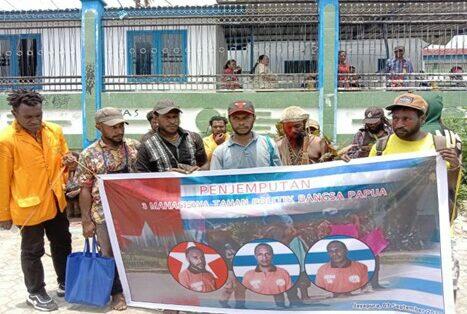
Three Papuan students convicted of treason released 

 8 September 2023

Jayapura, Jubi – On Thursday, September 7, 2023, three students of the Jayapura University of Science and Technology (USTJ) who had been convicted in a treason case, were released from the Abepura Prison in Jayapura City. They were picked up by a group of student activists in Jayapura City.

The three students, namely Yoseph Ernesto Matuan, Devio Tekege, and Ambrosius Fransiskus Elopere, had been charged with treason due to their involvement in a free speech held at the campus on November 10, 2022. At that time, they were spotted carrying the Morning Star flag while expressing their rejection to the Papua peace dialogue plan initiated by the National Commission on Human Rights (Komnas HAM).

Police then dispersed the event, leading to the arrest of several participants, including Matuan, Tekege, and Eloperer. Subsequently, they were accused of treason and faced trial at the Jayapura District Court.

On August 8, 2023, the Court found them guilty of treason and sentenced them to a 10-month prison term,deducted from their detention period, resulting in their release on Thursday.

The release was facilitated by the Papua Legal Aid Institute (LBH Papua), who was part of the Papua Law Enforcement and Human Rights Coalition, the legal team representing the three students during the treason trial.

Outside the Abepura Prison, several student activists wearing USTJ jackets had gathered since 9 a.m Papua time. Marwa Wayne, the field coordinator, expressed her surprise at the early release of the three students, as the initial release date had been set for September 12, 2023. Wayne conveyed their happiness for the students’ freedom and thanked the authorities for the expedited release.

Persila Heselo, the attorney for Matuan, Tekege, and Elopere, also expressed gratitude at the early release. The three were welcomed by dozens of student activists, as well as their legal team, who gathered in front of the prison to pray together.

During this gathering, Yoseph Ernesto Matuan expressed his gratitude to the court for their early release and reaffirmed their commitment to continue their advocacy on behalf of their land.

There was a dispute with the police when the pick-up team intended to march the three convicts to the Tauboria Catholic Student Dormitory, which was about 2.6 kilometers from Abepura Prison. The police cited concerns about disrupting traffic flow and offered a police vehicle. Eventually, the pick-up team agreed to hire public transportation for the students’ journey to the dormitory.

Yustina Haluk emphasized that Yoseph Ernesto Matuan, Devio Tekege, and Ambrosius Fransiskus Elopere should not have been convicted of treason. Haluk argued that the students were merely exercising their right to peaceful expression, a right guaranteed by Law No. 9/1998 on Freedom of Expression in Public. He further highlighted the limited freedom of expression in Papua.

Haluk hopes the government will take action to clarify the status of the Morning Star flag in order to prevent the wrongful criminalization of peaceful expression, as exemplified by the cases of Matuan, Tekege, and Elopere.

El Niño leads to more fires and toxic air pollution in Indonesia

Mongabay Series: Indonesian Palm Oil

El Niño leads to more fires and toxic air pollution in Indonesia

by Hans Nicholas Jong on 15 September 2023

* Indonesia saw an increase in land and forest fires recently as the El Niño weather phenomenon brings a prolonged dry season.

*  Official data show a fourfold increase in hotspots up to September, compared with the same period last year.

* Residents in some major cities like Palembang have fallen ill due to toxic smog from the fires.

* Carbon-rich peatlands, which have been protected and partly restored through government policies and measures, are also burning, with more than 14,000 hotspots detected in peat landscapes in August alone.

JAKARTA — Parts of Indonesia are covered with toxic air pollutants from burning lands and forests as this year’s fire season is intensifying amid the El Niño weather phenomenon, which brings drier conditions.

The Ministry of Environment and Forestry identified 3,788 hotspots from Jan. 1 to Sept. 5 this year, a fourfold increase from 979 hotspots during the same period last year.

Most of the hotspots occurred in 10 provinces that are historically prone to fires — North Sumatra, Riau, Jambi, South Sumatra, West Kalimantan, Central Kalimantan, South Kalimantan, East Kalimantan, North Kalimantan and Papua.

These provinces had 2,608 hotspots from January to September 2023, a nearly sixfold increase from 441 hotspots during the same period in 2022.

Environment and Forestry Minister Siti Nurbaya Bakar said September is a make-or-break time for Indonesia, as land and forest fires usually peak during the month.

“I’m always anxious during Sept. 6 to 16,” she told a parliamentary hearing in Jakarta on Sept. 6. “From my experience in the past eight years, those dates are the peak [of the fire season].”

The burning had emitted toxic smog, making it dangerous for people to breathe the air in major cities, such as Palembang, the capital of South Sumatra, which is home to large swaths of industrial plantations.

According to data from the country’s meteorological agency, BMKG, air quality in Palembang had been worsening recently.

Readings for PM2.5, a class of airborne pollutants so fine that they can be inhaled and cause respiratory disease, have been hovering around 60 micrograms per cubic meter (µg/m3) since the beginning of September, reaching 322 µg/m3 on Sept. 15 — 21 times higher than what the World Health Organization considers safe.


Air quality in Palembang, South Sumatra, during fire episode on September 15, 2023. Image courtesy of BMKG.
According to the standard by the U.S. Environmental Protection Agency (EPA), air quality in this range is hazardous with the entire population more likely to be affected by serious health effects.

This bad air quality has affected 37-year old Adi Surya Dirgantara, who lives in Palembang.

He said he and his three children had fallen ill from the thick smog that blanketed his neighbourhood.

“[Our] throats feel dry, [our] eyes are a bit burning and our noses are blocked,” Adi told BBC News Indonesia. “[I] have suffered from fever for the past one week.”

Official data show a recent increase in upper respiratory tract infections, with 4,000 more cases in August compared with July.

The BMKG said the land and forest fires had been exacerbated by El Niño, which is making a return this year after being absent since 2019, when the weather phenomenon brought a prolonged dry season and major fire season in Indonesia.

BMKG deputy on climatology, Ardhasena Sopaheluwakan, said this year’s dry season itself isn’t the cause of fires, as it only exacerbates the conditions.

“The dry season and El Niño are only climate conditions that serve as a backdrop,” he said. “Forest fires are obviously caused by human.”

Burning peat
The issue of fire is particularly critical in peatlands, carbon-rich ecosystems that emit large amounts of CO2 when they are burned and thus contribute substantially to Indonesia’s greenhouse gas emissions.

Fire monitoring done by peat watchdog Pantau Gambut found 14,437 hotspots in peat landscapes, or peat hydrological areas, in August.

According to data from Pantau Gambut, there were fires in 271 peat hydrological areas in 89 districts and cities and 19 provinces.

Another analysis done by environmental NGO Madani also found 45,000 hectares (111,197 acres) of peat ecosystems indicated to have been burned from January to August 2023.

“Fires on peatland need to be immediately handled because they could create smog that’s hazardous to the public health and could lead to economic loss,” Madani forest and climate program officer Yosi Amelia said.

Protected peat landscapes are not safe from fires as well, despite their protected status and ongoing restoration efforts, with 6,700 hotspots detected by Pantau Gambut there in August.

Many of the hotspots are in concessions, with 3,816 hotspots detected in 208 concession areas, such as oil palm and pulpwood plantations.

“The presence of hotspots in company areas indicates land and forest fires and brings the question on how serious are permit holders committed to preventing fires in their areas?” Pantau Gambut campaigner Abil Salsabila said.

Besides questioning companies’ commitment, Abil also questioned the government’s policies in preventing fires in concession areas.

Instead of strengthening efforts in upholding the law against unruly companies that fail to prevent their concessions from burning, the government instead plans to pardon illegal concessions, including palm oil plantations, inside forest areas.

This, Abil said, increases the risk of peat degradation, which in turn will increase the risk of fires.

Scale of fires
While this year’s fire season is likely to be more severe than previous years, it hasn’t yet matched the intensity of the fire seasons in 2015 and 2019.

Data from the environment ministry show that 90,000 hectares (222,400 acres) of land — an area larger than Jakarta — have burned so far in this year’s fire season.

Meanwhile, the analysis by Madani found 262,000 hectares (647,400 acres) of areas that have apparently burned from January to August 2023.

The majority of the areas that appear to have burned, 40,000 hectares (98,800 acres), were in oil palm concessions, followed by industrial forest concessions with 22,700 hectares (56,100 acres) and oil and gas concessions with 20,300 hectares (50,200 acres).

Meanwhile, in 2015 and 2019, fires burned 2.61 million hectares (6.45 million acres) and 1.64 million hectares (4.05 million acres) of lands, respectively.

The 2015 and 2019 fire episodes were so severe that they sent huge volumes of smoke billowing into Malaysia and Singapore.

Ardhasena from the BMKG said the risk of fires this year is still lower than that of 2015 and 2019, despite the return of El Niño.

“This is because the dry season [this year] is not as severe as 2015 and 2019, and the mitigation [efforts] have also improved,” he said.

Suharyanto, the head of the country’s disaster mitigation agency, BNPB, said there won’t be a repeat of the transboundary haze problem this year, despite the increasing number of hotspots.

“There are indeed fires but if [people] said the haze is tremendous and could disturb or blow to neighboring countries, I could assure that it’s not true for today,” he said on Sept. 12.


Repeat offenders
Some of the burning occurs in areas that had previously been burned, according to monitoring by the Indonesian Forum for the Environment (Walhi), the country’s largest environmental NGO.

“In Central Kalimantan, South Sumatra and Jambi, we found fire spots in locations that were burned in 2015 and 2019. It means the fires are reoccurring,” Walhi forest campaigner Uli Arta Siagian said.

One example is the oil palm concession of PT Waringin Agro Jaya (WAJ) in South Sumatra.

Data from the forest monitoring platform Nusantara Atlas, run by technology consultancy TheTreeMap showed WAJ to be the concession with the largest number of detected hotspots in the beginning of September, with 627 fire alerts.

The company’s concession had previously burned in 2015.

In 2019, the country’s highest court found WAJ guilty of the 2015 fires, ordering the company to pay 466 billion rupiah (more than $30 million) in fines.

The repeat burning of concessions shouldn’t happen if the government strictly enforces the law and evaluates existing concessions, Uli said.

“The government fails to do strict monitoring, permit evaluation and law enforcement,” she said.


Banner image: Excavators try to curb the spread of fires in South Sumatra in September 2023. Image courtesy of the National Disaster Mitigation Agency (BNPB).

Navigating policy and power – Indonesia and Australia’s energy transition

By Ruddy Gobel

Indonesia and Australia have more to gain from energy transition – and more to lose from inaction – than any two countries in the world. But the Indonesian government must navigate significant policy challenges to attract the capital it needs for a swift, just and orderly transition.

When Indonesian President Joko Widodo visited Australia recently he came with a vision for long-term cooperation in the renewable energy sector. This vision is shared by Australian Prime Minister Anthony Albanese, who while in Jakarta for the ASEAN and East Asia summits, voiced similar sentiments. Albanese used the occasion to launch Australia’s renewed Southeast Asia economic strategy, which highlighted the renewable energy industry as a core focus for investment and collaboration.

Both countries have made clear their ambitions to rapidly decarbonise and shift away from fossil fuels. It seems we stand on the brink of a green industry revolution in Southeast Asia.

But Indonesia’s ambitious plans face significant hurdles. Modernising Indonesia’s energy system poses technical challenges, and securing an estimated US$1 trillion to transition by 2060 will mean building confidence among investors, not just in the technical feasibility of the enormous project, but in its enduring social licence and the policy settings that surround it.

To understand the challenges Indonesia faces requires some context. Indonesia’s energy policy has two core goals that, at times, have been in conflict.

The government aspires to reach 100% electrification nationwide. Despite their progress to date, about 8% of the population are still without access to electricity. This translates to roughly 7.8 million households in the dark, primarily due to lacking local transmission networks. Bridging this gap requires investment in both generation capacity and transmission infrastructure.

On the other hand, the country is planning for a swift transition to renewables under mounting domestic and global pressure. The intermittent nature of renewable energy sources also demands transmission upgrades to integrate dynamic flows from renewable sources, as well as investment in battery storage to stabilise the grid and enhance the overall reliability of the energy infrastructure.

While significant progress has been made in expanding renewable energy infrastructure, coal remains a dominant player, with a planned 20 GW of new capacity set to come from coal-fired plants. Plans for an early retirement of certain coal facilities are plagued by the uncertain financial framework of the massive US$20 billion Just Energy Transition Partnership (JETP).

Adding to these factors is Indonesia’s reliance on subsidised coal power. In 2022 alone, nearly 20% of the national budget was dedicated to fossil fuel subsidies. This hefty support makes renewable energy solutions less competitive and hinders the shift from fossil fuels to greener alternatives. Oversupply in certain areas, such as the Java-Bali grid, keeps wholesale energy prices suppressed. While the government is open to introducing more renewable energy, they can’t afford the political backlash that may come from cost increases, especially in an election year.

So where to from here? How can Indonesia overcome these challenges to both rapidly decarbonise and build itself up as a green industry superpower?

Firstly, Indonesia needs to level the playing field so that renewable energy is able to compete in a market dominated by coal-fired power. While sources like solar and geothermal could be cost-competitive, fossil fuel subsidies keep coal as the cheaper energy choice, stifling renewable investments.

Secondly, the challenges in drawing capital and securing financing largely stem from uncertain political regulations concerning renewable energy support. Since large-scale renewable projects and transmission infrastructure builds represent long-term investments, it’s crucial for investors to trust that the market conditions and regulatory environment will remain consistent.

Lastly, informing the public about the negative impacts of coal on the environment and health can decrease its social acceptance. By boosting support for renewable energy, this education can make the switch to cleaner energy more politically favourable, even if costs rise. This is particularly pertinent in light of recent issues around worsening air quality in Jakarta.

Taking these steps to address the policy and regulatory difficulties will be vital if Indonesia hopes to attract the investment needed to reach its emission reduction and energy transition goals, but doing so can open up a world of opportunities.

Indonesia has the track record to pull off large scale projects, such as the $7 billion post-Tsunami Aceh and Nias reconstruction which built 150,000 homes, roads, ports, and airports in five years. This success was based on strong regulation, decisive leadership, and bureaucratic innovation. Given a longer timeline for the Net Zero Emissions goal by 2060, Indonesia can utilise these past insights to enhance the energy transition.

As Indonesia addresses the policy obstacles, the technical challenges and the quest for investment present an ideal opportunity for collaboration with Australia. Notably, Australian fund managers have shown interest in Indonesia and could provide the essential investment to fuel the energy shift.

Beyond finance, Australia stands as a valuable partner for knowledge sharing. With its substantial expertise in developing and managing renewable energy infrastructure, Australia can impart crucial insights and best practices to Indonesia.

Australia and Indonesia, both global coal giants, have the potential to become world leaders in decarbonisation and green industry through their joint efforts, but it will require ongoing collaboration and engagement to ensure that any hurdles are overcome. Platforms such as the Australia-Indonesia Energy Transition Policy Dialogue are vital to bring together senior officials, regulators, business and non-government experts from Australia, Indonesia and the region to come up with solutions to these challenges and continue to momentum.

While the global renewable tide is in their favour, navigating the inherent complexities of Indonesia’s energy landscape will require political will, and, more importantly, an unwavering commitment to a sustainable future.

Ruddy Gobel is a Senior Policy Adviser at the Centre for Policy Development and Co-chair of the Energy Transition Policy Development Forum in Indonesia.

Ruddy Gobel

Ruddy Gobel has more than 25 years of experience in the public and private sector, UN agencies, and government. He has extensive experience in working with high-level government officials not only in policy design and advocacy but also in policy implementation. He has been involved in various important issues and policies in Indonesia including the rehabilitation and reconstruction of Aceh-Nias after the 2004 Tsunami, the Jakarta Mass Rapid Trans (MRT) project, poverty reduction, social protection, energy subsidy policy reform, and development of renewable energy.

Court ruling spares Papua forest from further clearing for palm oil

by Hans Nicholas Jong on 11 September 2023

  • An Indonesian court has rejected lawsuits filed by two plantation companies operating in the Tanah Merah mega oil palm plantation project in the country’s Papua region.
  • The ruling means the companies are legally required to stop clearing forest in their concessions and preserve what remains.
  • Activists and Indigenous Awyu people living in the area have welcomed the ruling, but point out that communities in the concession areas still don’t have legal recognition of their ancestral rights to these forests.
  • They’ve called on the government to formally recognize their ancestral rights and ensure the companies’ permits to the concessions are revoked.

JAKARTA — An Indonesian court has upheld a government decision to curb the expansion of a multibillion-dollar oil palm plantation project in the country’s easternmost region of Papua.

In its Sept. 9 ruling, the Jakarta State Administrative Court rejected lawsuits filed by two plantation companies that are part of the Tanah Merah mega plantation project, PT Megakarya Jaya Raya (MJR) and PT Kartika Cipta Pratama (KCP).

The project, divided into seven concessions, sits on an immense block of primary forest spanning 280,000 hectares (692,000 acres) of rainforest — an area nearly twice the size of New York City — in the province of South Papua. Earmarked for oil palm plantations, it would be the single largest bloc of oil palms in Indonesia, the world’s top producer of palm oil.

Development has begun on some of the concessions, including those operated by MJR and KCP, which have been linked to Pacific Inter-Link, a holding of the Yemeni-based Hayel Saeed Anam conglomerate.

The two companies had cleared 8,828 hectares (21,814 acres) of rainforest for oil palm plantations, but a government evaluation of both concessions found that the plantations had been left mostly idle, with no reports of production or harvesting carried out yet.

As a result, the Ministry of Environment and Forestry included both MJR and KCP on its list of concessions to be revoked.

The list consisted of nearly 200 corporate entities targeted in a mass cancellation of permits in January 2022. President Joko Widodo announced the mass revocations on the basis that the companies that were awarded the concessions were deemed to be moving too slowly in exploiting natural resources.

When the announcement was made, experts predicted that the government’s decision would lead to lawsuits filed by affected companies. In the case of MJR and KCP, the environment ministry stopped short of revoking the permits for both concessions. Instead, it issued decrees removing the two companies from the 2022 list, and ordered them to stop clearing rainforest.

This allowed both companies to continue cultivating the 8,828 hectares of land that have been cleared, but also required them to preserve the remaining 65,415 hectares (161,644 acres) of rainforest in their concessions.

The two companies were also required to apply for a new permit for environmental-based businesses, like carbon trading, so they could generate a profit from forest conservation.

In March 2023, the companies decided to challenge the ministry’s order by filing suit at the Jakarta court. They argued that the ministry’s decision had harmed their business. MJR said the ministry had overlooked the investment the company had made into developing the plantation, totaling 660 billion rupiah ($43 million).

MJR also said it had every intention of developing the plantation as it was in the process of acquiring a right-to-cultivate permit, or HGU, from the land ministry — the last in a series of licenses that palm oil companies must obtain before being allowed to start planting.

MJR said it submitted its HGU application in December 2020, and that it had paid 1.91 billion rupiah ($124,500) for the demarcating and mapping process. It said all these investments are for the development of palm oil, not for environmental-based businesses like carbon trading. As such, the company said it felt forced to switch its business model from palm oil to carbon trading.

Lastly, MRJ said the environment ministry didn’t have the authority to issue the order as its concession area was zoned as a non-forest area, meaning it falls under the authority of the land ministry.

The environment ministry, in responding to the lawsuit, said its order for the companies to refrain from further forest clearing was a follow-up to the president’s order to review existing concessions across the country. The order is also necessary to reduce deforestation as a part of a greater government effort to turn the country’s forests into a net carbon sink by 2030, it said.

Totok Dwi Diantoro, an environmental law expert from Gadjah Mada University, who testified for the government in the lawsuit, said the environment ministry was well within its authority to order the two companies to halt forest clearing.

Members of the Awyu Indigenous community, who live in a forested area that overlaps with the two companies’ concessions, have thrown their support behind the environment ministry in the case.

Testifying in court on July 11 this year, two Awyu community members explained the importance of their forest for their livelihood and culture. The Awyu forest is home to rare species such as iconic birds-of-paradise as well as many tree species that the community members use for various purposes, such as food, spice, medicine and construction. One example is the Oncosperma tigillarium palm tree, known locally as nibung.

“A nibung tree can have many uses,” Hendrikus Woro said in his testimony. “The inside of its stem can be used for cough syrup. The stem can be used for flooring.”

Fellow Awyu Gergorius Yame said his people rely on the forest as a water source.

“Whenever we go to the forest, we don’t need to bring water because we can just drink from the river,” he said. “We are worried that the oil palm plantations will destroy our river.”

The court ultimately ruled in favor of the environment ministry, reasoning that the ministry had the right to order the two companies to protect the remaining forest in their concession and to switch their business model.

Activists say the court ruling is a win for the environment and Indigenous peoples as it effectively bans the two companies from further clearing forest, and thus has the potential to save 65,415 hectares of pristine rainforest, six times the area of the city of Paris.

“This is the decision we’ve been waiting for,” Gregorius said. “Enough is enough. Companies must stop destroying forests and customary lands. What else do these companies want to do to our customary land? Obey this decision and let us take care of our Indigenous land ourselves.”

But the fight doesn’t end here, as the Awyu people still don’t have formal recognition of their ancestral rights to the forest. The process to get their rights recognized by the government has been slow due to lack of commitment from the local government, according to Tigor Gemdita Hutapea, a member of the legal team for the Awyu community.

This leaves the Awyu people vulnerable to being pushed off their land, he said.

“We’re afraid that the government policy [on the concessions] will change again in the future,” Tigor said. “Until when will the forest conservation policy remain?”

2018 investigation by Mongabay and The Gecko Project showed how permits in the Tanah Merah project were issued by an official in jail on corruption charges.

Officials from the Papua provincial investment agency also alleged that permits for the seven concessions in the Tanah Merah project were falsified at a critical stage of the licensing process. While the permits bore the signature of the former head of the agency, he has reported in writing that it was forged. The allegations were uncovered in a follow-up investigation by Mongabay and The Gecko Project.

“Hopefully with this lawsuit, the Ministry of Environment and Forestry will know that the companies have no good intentions, and will immediately revoke permits for PT KCP and PT MJR,” Gergorius said. “Our hope is that we can resume control of our customary forest, so we can manage it for future descendants of the Awyu tribe.”

Science has demonstrated that forests and other biomes are healthier when Indigenous and local communities are in charge, even though their customary rights aren’t always recognized.

So even if the environment ministry wants to turn the oil palm concessions into concessions that provide environmental services that can be traded, such as carbon sequestration, the lands should be managed by the Indigenous people there, Tigor said.

“The Awyu are best placed to continue to protect and manage their own forest, and have the right to determine their own livelihoods and future,” said Sekar Banjaran Aji, a forest campaigner at Greenpeace Indonesia.

Banner image: Hendrikus Frangky Woro (right) and Gregorius Yame (left) from the Papuan Indigenous People of the Awyu Tribe, prepare to take part in the hearing on the case of revocation of forest area permits at the Administration Court (PTUN), Jakarta. Hendrikus Frangky Woro and Gregorius Yame became witnesses for the defendant in relation to a lawsuit filed by two oil palm plantation companies in the Boven Digoel area, PT. Kartika Cipta Pratama (KCP) and PT. Megakarya Jaya Raya (MJR) against the Ministry of Environment and Forestry (KLHK) for the Revocation of Forest Area Permits. Image courtesy of Muhammad Adimaja / Greenpeace.

——————— 

Land recognition: Bintuni Bay regent designates 6,262 ha for indigenous communities in West Papua  

News Desk – Indigenous Communities 11 September 2023 The Regent of Bintuni Bay Regency in West Papua Province, Petrus Kasihiw, has officially recognized the ancestral lands of three clans within the Moskona tribe: Masakoda, Yen, and Yec clans, totaling 6,262 hectares. This decision was made following the issuance of a Decree during a meeting on Saturday, September 9, 2023 in Waraitama Village, Manimeri District.

Kasihiw expressed his satisfaction and pride in recognizing these indigenous communities, particularly the customary law communities of the Masakoda, Yen, and Yec clans.”Since the establishment of Bintuni Bay Regency until 2019, we have witnessed the presence of the Regional Regulation on the Recognition and Protection of Indigenous Peoples of 7 Tribes,” said the regent on Sunday.He highlighted the significance of this recognition as a concrete step in safeguarding the cultural heritage and traditional values that these communities have held for centuries in the Sisarmatiti area.Kasihiw emphasized the importance of this achievement, portraying Bintuni Bay Regency as a forward-looking region in acknowledging the rights of indigenous peoples. He also stressed the need to continue documenting such decrees for future reference.This recognition resulted from an extensive study and collaboration among the indigenous people’s committee and the NGO Panah Papua.Piter Masakoda, a youth representative from the Masakoda clan’s indigenous community, expressed gratitude for the decree’s issuance. According to the decree, approximately 6,262 hectares of land have been officially designated as the territory of the Masakoda, Yen, and Yec clans’ indigenous communities.Furthermore, the Masakoda clan intends to request customary forest management rights from the Ministry of Environment and Forestry (MoEF). This would potentially change the status of forests claimed by the state in their area to customary forests.They also plan to promote local commodities, such as sweet Masyeta pineapples and traditional red fruits, to generate income and foster self-sufficiency within their community. ————————–

Frustration over Komnas HAM’s failure to declare Munir murder gross rights violation

Kompas.com – September 7, 2023

Singgih Wiryono, Jakarta – Solidarity Action Committee for Munir (KASUM) Secretary General Bivitri Susanti has expressed frustration with the National Human Rights Commission (Komnas HAM), which has made no move to declare the assassination of renowned human rights activists Munir Said Talib a gross human rights violation.

This was conveyed by Susanti in a speech marking 19 years since Munir’s death that was held in front of the Komnas HAM offices in Central Jakarta on Thursday September 7.

Susanti said that on dozens of occasions they have enquired about what steps Komnas HAM has made on Munir’s assassination, but there has been no point of clarity on the case.

“KASUM, Cak [brother] Munir’s family, Mbak [sister] Suci (Suciwati, Munir’s wife) and all of us. We don’t just stand here every September 7, we have met with Komnas HAM, who knows, dozens of times. Perhaps informally hundreds of times”, she said.

And they have not just met with Komnas HAM. KASUM has also held audiences with the police and the Attorney General’s Office in order to provide assurances to Komnas HAM.

The Jentera Legal Academy (STH) lecturer said that the fight has not just ended there. KASUM has also taken part in various court hearings into the Munir case which have never touched on the mastermind behind the assassination.

KASUM has even conducted a study so that Komnas HAM can work more easily to determine if the case is a gross human rights violation.

“Lacking a study, we conducted a study, we drafted a legal opinion, we brought in experts from outside, even to say that this it is clear, Cak Munir, on September 7, 19 years ago, was not only murdered, but also tortured”, she said.

“This is because the poison that was administered into his body tortured him for hours and in the end Cak Munir left all of us. We are also talking about a figure who was very inspirational who became a motor for the fight for human rights in this country”, concluded Susanti.

Munir’s assassination

Munir died on September 7, 2004 on Garuda Indonesia flight GA-974 from Jakarta to Amsterdam via Singapore.

A report in the September 8, 2004 Kompas Daily said that Munir died around two hours before the flight landed at the Schipol Airport in Amsterdam, Holland, at 8.10 am local time.

The autopsy results showed that there was arsenic in the body of the former chairperson of the Commission for Missing Persons and Victims of Violence (Kontras).

Legal proceedings against the people involved in Munir’s assassination have already been carried out. A court sentenced former Garuda Indonesia pilot Pollycarpus Budihari Priyanto to 14 years in prison for the murder.

The courts also sentenced then Garuda Indonesia Executive Director Indra Setiawan to one year in prison for assigning Priyanto to the same flight as Munir.

A number of facts that came out in the court hearings even mentioned the alleged involvement of the State Intelligence Agency (BIN) in the assassination.

However no senior BIN officials have ever been found guilty by the courts. On December 13, 2008, former BIN deputy Muchdi Purwoprandjono, a defendant in the case, was acquitted of all charges.

Notes

On September 7, 2022, the Munir case reached its 18 year statute of limitations for a murder case, making it legally impossible for the state to reopen the case should it continue to treat it as an ordinary crime. Human rights groups have long been urging the Komnas HAM to declare Munir’s assassination as a gross human rights violation, which has no statute of limitation. It is widely suspected that Komnas HAM is reluctant to do this because of the alleged involvement powerful figures such as former BIN chief HM Hendropriyono in Munir’s assassination.

[Translated by James Balowski. The original title of the article was “Kekesalan Kasum Ratusan Kali Bertemu Komnas HAM Bahas Kasus Munir, Tak Ada Kemajuan”.]

Source:

PNG leader Marape says Papua human rights comments were not his

Papua New Guinea Prime Minister James Marape has backtracked on his comments that PNG had no right to comment on human rights abuses in West Papua and has offered a clarification to “clear misconceptions and apprehension”.

Last week, Marape met with the Indonesian President Joko Widodo at the sidelines of the 43rd ASEAN summit in Jakarta.

According to a statement released by Marape’s office, he revealed that he abstained from supporting the West Papuan bid to join the Melanesian Spearhead Group Leaders’ Summit held in August because the West Papuan United Liberation Movement “does not meet the requirements of a fully-fledged sovereign nation”.

However, on Saturday, his office again released a statement, saying that the statement released two days earlier was “released without consent” and that it “wrongfully” said that he abstained on the West Papua issue.

“Papua New Guinea never abstained from West Papua matters at the MSG meeting,” he said.

He said PNG “offered solutions that affirmed Indonesian sovereignty over her territories”, adding that “at the same time [PNG] supported the collective MSG position to back the Pacific Islands Forum Resolution of 2019 on United Nations to assess if there are human right abuses in West Papua and Papua provinces of Indonesia.”

Marape said PNG stressed to Widodo its respect for Indonesian sovereignty and their territorial rights.

“But on matters of human rights, I pointed out the collective Melanesian and Pacific resolutions for the United Nations to be allowed to ascertain [human rights] allegations.”

According to Marape the four MSG leaders have agreed to visit the Indonesian President “at his convenience to discuss this matter”.

“President Widodo responded that the MSG leaders are welcome to meet him and invited them to an October meeting subject on the availability of all leaders. He assured me that all is okay in the two Papuan provinces and invited other PNG leaders to visit these provinces.”

Marape has also said that his deputy John Rosso is also expected to lead a delegation to West Papua to “look into matters in respect to human rights”.

Meanwhile, he believes the presence of Indonesia on MSG as an associate member and ULMWP as observer at the MSG “is sufficient for the moment”.

——————–