Between the earthquake at the beginning and the communiqué kerfuffle at the end, the 53rd Pacific Islands Forum Leaders Meeting (PIFLM) ran smoothly enough and presented as a largely harmonious affair. It was one of the biggest, with over 1,000 delegates, activists, observers, and journalists travelling to Nuku’alofa from across the world. Of the 18 Forum member countries, all were present bar one: President Taneti Maamau of Kiribati was unable to attend as his country is in the midst of elections.
In his opening address to the meeting, Forum Secretary-General Baron Waqa stated “the time for talking is now over – we need to see action”. While these words were largely directed to Forum partners, they also provide a benchmark against which the outcomes of the PIFLM can be judged.
As reported by Kalafi Moala, one of the most significant action points for the PIF was the establishment of the Pacific Resilience Facility (PRF). But attempts to persuade extra-regional partners to contribute to the capitalisation of this facility are meeting with mixed results. The European Union remains a non-starter – the EU Commissioner for International Partnerships, Jutta Urpilainen, said “we are exploring opportunities” to be able to contribute to the PRF and, according to a senior UK official, “the UK has committed technical assistance to the value of £1.3 million (US$1.72 million) to setting up and structuring the PRF … UK funding and budgetary processes prevent us from a direct pledge to the PRF until it is fully established, and financial formalities are finalised”.
There were several additions to the Forum’s agenda at this meeting. The situation in New Caledonia was high profile and has been discussed extensively elsewhere. Perhaps less headline-grabbing was the addition of both health and education as standing agenda items, as proposed by the incoming chair, Prime Minister Siaosi Sovaleni of Tonga. The communiqué’s only substantive action point in these areas was an agreement to “develop a comprehensive region-wide health workforce strategy that focuses on quality training and retention measures for consideration by Pacific Health Ministers” (s.16).
There is no denying the importance of these issues in the Pacific. However, loading them onto the leaders’ agenda appears to go against the spirit of the Morauta review of 2013, which was to use this annual summit for issues that required collective political decision-making at the highest level. It should be recalled that in 2015, as part of the implementation of the Framework for Pacific Regionalism (FPR), the submission and filtering process for agenda items was such that a group of just five made the cut: climate change, fisheries, West Papua, ICT, and cervical cancer.
It is not surprising that the elements of the leaders’ agenda have changed in the years since then. Cervical cancer has faded away. Many other items have made their way through a variety of officials’ and ministerial processes to end up in front of the leaders. However, if Morauta’s principles are to be preserved, there should be a renewed commitment to handing off issues – including those that are the pets of the chair – to better homes. They could be pursued through an appropriate ministerial meeting or as part of the work program of a more technical regional agency such as the Pacific Community.
The creeping flabbiness of the agenda, combined with the disruption caused by geopolitical competition, has led to important issues not being progressed in a timely manner. Last year in Rarotonga, leaders requested that the Review of Regional Architecture be concluded for their consideration this year; this has not been achieved. Also last year, leaders considered the idea of a “Zone of Peace” as put forward by Prime Minister Sitiveni Rabuka of Fiji and tasked the Secretariat to further develop it for their consideration in 2024. Come this year’s communiqué and the concept has advanced little. It is now termed the “Ocean of Peace”, and the Secretariat is requested to develop a draft concept for consideration ahead of the gathering next year in Solomon Islands.
As these deferrals and timeline extensions accumulate, the ability of the Pacific Islands Forum to maintain focus and achieve political outcomes is undermined. The case of West Papua provides a striking example. In this year’s communiqué, it merits just one line in which the report of the special envoys (prime ministers James Marape of PNG and Rabuka of Fiji) was “noted”. At the closing press conference, the troika (comprising the leaders of Cook Islands, Tonga and Solomon Islands) said that they were “planning to make sure” a visit to West Papua by Forum special envoys took place before the next meeting. The details of how they are going to make that happen have not yet been disclosed.
by Johni Korwa and Barrisen Rumabar 18 September 2024
Towards the end of Indonesian President Joko Widodo’s tenure, he and Papua New Guinean Prime Minister James Marape stepped up cross-border cooperation between Indonesia and PNG by signing four Memoranda of Understanding (MoUs), on 15 July 2024.
Two of the MoUs are particularly attention-grabbing: the agreements on Cross-Border Movement for Commercial Buses and Coaches, and on Cross-Border Transport of Goods by Motor Vehicles. They are unprecedented in the history of bilateral relations between Indonesia and PNG, overcoming a long-standing reluctance to permit public transport across the border. However, the agreements are limited to the cities of Jayapura and Vanimo, located on either side of the border in the northern part of New Guinea.
These MoUs undoubtedly pave the way for increased cooperation between the two countries, offering significant benefits to the people living in Jayapura and Vanimo, who now have access to public transport for crossing the border.
From a regional perspective, these agreements reflect Indonesian foreign policy under the Jokowi administration, which sought to strengthen ties with the Pacific community, with PNG serving as a notable example. From a local perspective, this breakthrough marks a significant step in the sister-city cooperation between Jayapura and Vanimo, which has been renewed for a second term since 2016.
While this breakthrough represents progress, several challenges remain. First, road conditions pose a challenge, particularly on the PNG side, between the Wutung border post and Vanimo city, a journey which takes approximately 1.5 hours by taxi. Several bridges along this route are susceptible to river water flowing over the upper surface — worse during the rainy season — which can make driving hazardous for those without the special skills to navigate safely.
Another important consideration is transnational crime. Local news often reports on smugglers transporting marijuana from Vanimo to Jayapura using unofficial land routes, boats, or even attempting to cross via the official border posts. While we often hear about those who are apprehended, there is concern about those who slip through. With these MoUs increasing interaction between the two communities and making cross-border public transport more frequent, security measures need to be strengthened — both before boarding public transport and at the border — to deter smugglers effectively.
The new cross-border public transport agreement will significantly increase the flow of people. An increased number of individuals from PNG will travel to Indonesia through Jayapura for various reasons, including family visits and sightseeing — though shopping will likely be the primary allure. The Skouw market at the border is already a popular destination, and this new cross-border transport option is expected to attract even more PNG visitors to Jayapura.
To ensure mutual benefits to both countries, this new transport arrangement should embrace the concept of reciprocity. A much larger traditional market near the Wutung border post would attract more people from the Indonesian side. Additionally, there is an opportunity to develop more tourist attractions in Vanimo City to appeal to more Papuans and Indonesians, offering more than the mere purchase of items such as sausages, cornets, or Twisties.
Travel documentation is another crucial consideration, as crossing the Indonesian-PNG border requires either a type of border crossing pass — commonly known as the red and yellow cards — for individuals residing along the border, or a passport for those not classified as border residents. The border crossing pass is typically used for traditional purposes and within specific distances. However, with the new MoUs permitting commercial buses and motor vehicles to enter Jayapura or Vanimo, it is essential to establish clear immigration arrangements to manage the movement of people and goods effectively. Additionally, reducing visa fees from both countries would help facilitate this new cross-border public transport arrangement.
While these two MoUs on cross-border movement by public transport have yet to be implemented, there is no doubt that they represent a significant breakthrough in Indonesia-PNG relations. What needs to happen now is the effective implementation of these agreements, taking into account the more critical issues along with any other considerations, to ensure tangible benefits for both Jayapura and Vanimo, as well as Indonesia and PNG more generally.
The Indonesian government’s ambitious plan to create a one-million-hectare rice field in the Merauke Regency, Papua Selatan Province, is moving forward without proper consultation with indigenous communities and despite significant environmental risks. On 12 July 2024, the Minister of Environment and Forestry (MoEF), Siti Nurbaya, issued Minister of Environment and Forestry Decree No. 835 of 2024 on Approval of Forest Area Use for Food Security Facilities and Infrastructure Development Activities in the Framework of Defence and Security on behalf of the Indonesian Ministry of Defence covering 13,540 hectares of Protected Forest Area, Permanent Production Forest Area and Convertible Production Forest Area in Merauke Regency.
The project, part of the National Strategic Project (PSN), has seen the arrival of hundreds of excavators and heavy equipment, raising alarm among human rights and environmental organisations. According to the information received, the project coordinator, the Indonesian entrepreneur Mr Andi Syamsuddin Arsyad aka. Haji Isam, ordered a total of 2,000 excavators from China to implement the project. HRM received photos and videos showing the arrival of excavators in the project area by ship. One video shows the excavators clearing large areas of land (see videos and photos below, source: independent HRDs).
The project gravely violates the principle of Free, Prior, and Informed Consent (FPIC), a fundamental right of indigenous peoples. According to press relese published on 13 September 2023 by the Indonesian foundation ‘Pusaka Bentala Rakyat’ (PUSAKA), local indigenous Malind communities, including the Gebze Moywend and Gebze Dinaulik clans, report that their lands, hamlets, and customary forests have been seized without any prior deliberation or consensus. This blatant disregard for indigenous rights is further exacerbated by the presence of armed military personnel securing the project implementation.
The indigenous Malind people, holding the customary land rights in the project area, have firmly rejected all forms of corporate investment on their customary lands. This unified stance was declared by various Malind communities in response to the Indonesian government’s National Strategic Project aiming to establish sugar and bioethanol self-sufficiency and a food barn project spanning millions of hectares in Merauke. Indigenous communities have expressed deep concerns about the potential loss of their lands, forests, and cultural heritage to large-scale development projects.
This rejection highlights the ongoing struggle for indigenous rights and environmental preservation in West Papua. The communities’ concerns stem from past negative experiences with corporate interventions and fears of marginalisation and cultural erosion. The call for intervention from the South Papua People’s Assembly and the Merauke Regional Government emphasizes the need for government accountability and respect for indigenous rights in development planning, urging a re-evaluation of national strategic projects that potentially violate human rights.
Environmental concerns are equally pressing. The project area overlaps with 858 hectares of natural forests and peatlands, as indicated in the Indicative Map of the Termination of Business Licensing (PIPPIB). The large-scale destruction of these ecosystems will significantly increase carbon emissions, directly contradicting Indonesia’s commitments to reduce greenhouse gases. The lack of transparency and the absence of an FPIC-based consultation with indigenous communities support allegations that the project lacks proper environmental impact assessments and approvals. Affected communities and environmental organisations have not been involved in discussions or received information on environmental documents.
The Merauke Food Estate project exemplifies a worrying development trend at the expense of indigenous rights and environmental sustainability. It is crucial for the Indonesian government to reevaluate the project, prioritizing inclusive, just, and sustainable development that respects the rights of indigenous peoples and preserves critical ecosystems. Failure to do so will inevitably undermine global efforts to combat climate change and preserve biodiversity on our planet.
Arrival of first excavators in Merauke in mid-August 2024
West Papuan independence advocate Octo Mote is in Aotearoa to win support for independence for West Papua, which has been ruled by Indonesia for over 60 years.
Mote is the vice-president of the United Liberation Movement for West Papua (ULMWP), and is being hosted in New Zealand by the Green Party, which Mote said had always been a hero for West Papua.
ULMWP president Benny Wenda has alleged more than 500,000 Papuans have been killed since the occupation, and millions of acres of ancestral forests, rivers and mountains have been destroyed or polluted for “corporate profit”.
The struggle for West Papuans
“Being born a West Papuan, you are already an enemy of the nation,” Mote said.
“The greatest challenge we are facing right now is we are facing the colonial power who live next to us.”
If West Papuans spoke up about what was happening, they were considered separatists, Mote said, regardless of whether they were journalists, intellectuals, public servants or even high-ranking Indonesian generals.
“When our students on the ground speak of justice, they’re beaten up, put in jail and [they – Indonesians] kill so many of them,” Mote said.
Mote is a former journalist and said, while he was working, he witnessed Indonesian forces openly fire at students who were peacefully demonstrating their rights.
“We are in a very dangerous situation right now. When our people try to defend their land, the Indonesian government ignores them and they just take the land without recognising we are landowners,” he said.
The ecocide of West Papua
The ecology in West Papua was being damaged by mining, deforestation, and oil and gas extraction. Mote said Indonesia wanted to “wipe them from the land and control their natural resources”.
He said he was trying to educate the world that defending West Papua meant defending the world, especially small islands in the Pacific.
West Papua is the western half of the island of New Guinea, bordering the independent nation of Papua New Guinea. New Guinea has the third-largest rainforest after the Amazon and Congo and is crucial for climate change mitigation as they sequester and store carbon.
Mote said the continued deforestation of New Guinea, which West Papuan leaders were trying to stop, would greatly impact the small island countries in the Pacific, which were among the most vulnerable to climate change.
Mote also said their customary council in West Papua had already considered the impacts of climate change on small island nations and, given West Papua’s abundance of land, they said by having sovereignty they would be able to both protect the land and support Pacific Islanders who needed to migrate from their home islands.
In 2021 West Papuan leaders pledged to make ecocide a serious crime and this week Vanuatu, Fiji and Samoa submitted a court proposal to the International Criminal Court to recognise ecocide as a crime.
Support from local Indonesians
Mote said there were Indonesians who supported the indigenous rights movement for West Papuans. He said there were both NGOs and a Papuan Peace Network founded by West Papuan peace campaigner Neles Tebay.
“There is a movement growing among the academics and among the well-educated people who have read the realities, among those who are also victims of the capital investors, especially in Indonesia when they introduced the omnibus law.”
The omnibus law was passed in 2020 as part of the president’s goals to increase investment and industrialisation in Indonesia. The law was protested because of concerns it would be harmful for workers due to changes in working conditions, and the environment because it would allow for increased deforestation.
He said there was an “awakening” especially in the younger generations who were more open-minded and connected to the world, who could see it both as a humanitarian and an environmental issue.
The ‘transfer’ of West Papua to Indonesia
“The Dutch [traded] us like a cow,” Mote said.
The former Dutch colony was passed over to Indonesia in 1963 but ULMWP calls it an invasion.
From 1957, the Soviet Union had been supplying arms to Indonesia and, during that period, the Indonesian Communist Party had become the largest political party in the country.
The US engineered a meeting between both countries, which resulted in the New York Agreement, giving control of West Papua to the UN in 1962 and then Indonesia a year later.
The New York Agreement stipulated that the population of West Papua were entitled to an act of self-determination.
The ‘act of no choice’
This decolonisation agreement was titled the 1969 Act of Free Choice, which is referred to as “the act of no choice” by pro-independence activists.
Mote said they witnessed, “how the UN allowed Indonesia to cut us into pieces, and they didn’t say anything when Indonesia manipulated our right for self-determination.”
The manipulation Mote refers to is for the Act of Free Choice. Instead of a national referendum, the Indonesian military hand-picked 1,025 West Papuan “representatives” to vote on behalf of the 816,000 people. The representatives were allegedly threatened, bribed and some were held at gunpoint to ensure a unanimous vote.
Leaders of the West Papuan independence movement assert that this wasn’t a real opportunity to exercise self-determination as it was manipulated. However, it was accepted by the UN.
Pacific support at UN General Assembly
Mote has came to Aotearoa after the 53rd Pacific Island Leaders Forum meeting in Tonga and has come to discuss plans over the next five years. Mote hopes to gain support to take what he calls the “slow-motion genocide” of West Papua back to the UN General Assembly.
“In that meeting we formulated how we can help really push self-determination as the main issue in the Pacific Islands,” Mote said.
Mote said there was focus on self-determination of West Papua, Kanaky/New Caledonia and Tahiti. He also said the focus was on what he described as the current colonisation issue with capitalists and global powers having vested interests in the Pacific region.
The movement got it to the UN General Assembly in 2018, so Mote said it was achievable. In 2018 Pacific solidarity was shown as the Republic of the Marshall Islands, Tuvalu and the Republic of Vanuatu all spoke out in support of West Papua.
They affirmed the need for the matter to be returned to the United Nations, and the Solomon Islands voiced its concerns over human rights abuses and violations.
What needs to be done
He said in the next five years Pacific nations needed to firstly make the Indonesian government accountable for its actions in West Papua. He also said President Joko Widodo should be held accountable for his involvement.
Mote said New Zealand was the strongest Pacific nation that would be able to push for the human rights and environmental issues happening, especially as he alleged Australia always backed Indonesian policies.
He said he was looking to New Zealand to speak up about atrocities taking place in West Papua and was particularly looking for support from the Greens, Labour and Te Pāti Māori for political support.
The coalition government announced a plan of action on July 30 this year, which set a new goal of $6 billion in annual two-way trade with Indonesia by 2029.
“New Zealand is strongly committed to our partnership with Indonesia,” Foreign Affairs Minister Winston said then.
“There is much more we can and should be doing together.”
Pope Francis’ milestone tour from 2-13 September includes Papua New Guinea, the nation that has long hosted the largest number of refugees in the Asia-Pacific region, as well as Indonesia, the country from which those asylum seekers fled.
Nowadays, PNG is better known for its colourful dance troupes, rugby league players and World War II sites, but back in the early 1980s it was in the headlines for a different reason, the influx of thousands of Melanesian people fleeing Indonesian rule in the neighbouring province of West Papua, then known as Irian Jaya.
The great bulk of those refugees, estimated to number up to 10,000, are still in PNG today, spread out along the north-south border, living in camps that have become villages, fearful of returning to Indonesia where conflict between the military and local resistance continues to play out. Like the PNG population, they are almost universally Christian.
Jason Siwat, director of the refugee program for the Catholic Bishops Conference of PNG and the Solomon Islands, says, ‘The West Papuans have conflict with local landowners, so they can’t farm and consequently face food insecurity. They’re unable to pay school fees, and even suffer untreated snake bites when they move about to gather firewood or hunt for food.”
These people live far away and out of sight of the media. The latter condition also applies to dozens more West Papuans who have made it to PNG’s capital of Port Moresby where Siwat’s team has gone house to house, or more accurately shanty to shanty, documenting conditions and needs, including hygiene and nutrition shortcomings, and lack of educational and work opportunities.
They “live in one of the most unhygienic and destitute conditions that you can find anywhere in Oceania and the Pacific that host refugees”, the report for the Bishops reads.
The many privations included 21 families sharing one toilet and one tap, with people sleeping on cardboard. Foraging for recyclable cans and bottles in ditches or rubbish bins was a major earner – for AUD$2.00 per day. Many children did not attend school and most adults have only rudimentary education or skills.
The Pontiff has frequently voiced sympathy for refugee concerns, and before leaving on this trip he reaffirmed his call for safe migration pathways for people fleeing their own countries for fear of persecution, describing any refusal to harbour asylum seekers as a “grave sin”.
Saying, “Even at this moment people are crossing seas and deserts to reach a land where they can live in peace and security”, the Pope added, “migrants cannot be deterred from those deadly crossings through more restrictive laws, nor through the militarisation of borders, nor through rejections”.
He urged the expansion of “safe and legal avenues for migrants, by facilitating sanctuary for those fleeing wars, violence, persecution and many calamities; we will achieve it by fostering in every way a global governance of migration based on justice, fraternity and solidarity”.
However, it seems unlikely the pontifical party will check in on the West Papuans in Port Moresby, let alone those in the remote sites, although included on the itinerary is a stopover in the border town of Vanimo, near the site of the first refugee camp, gloomily called Blackwater.
The Pope’s first stop was Jakarta, Indonesia’s capital, which now occupies an unusual place in the refugee galaxy. No longer a source of asylum seekers, Indonesia now hosts a good many people who have found their way to the country in the hope of transiting to Australia, whether by air or sea.
No sinner in the Pope’s eyes, then, Indonesia allows them to stay, rather than face mandatory return home, refoulement in UN-speak, living in cheap hotels as far as possible from the coastline where they might find people selling passages on un safe boats. They lead a sad existence, with minimal living costs paid by the UNHCR and, to an extent, by Australia, which maintains a watchful eye.
In Port Moresby, a sometimes-violent place, Pope Francis is also unlikely to encounter the 50 or so asylum seekers who were moved there from the Australian-run Manus Island detention camp in a still-secret agreement in 2021 between the then-Morrison government and its equally opaque PNG counterpart.
These people hail from a range of dangerous places, including Afghanistan, Sri Lanka and Iran, and have now been in PNG for more than a decade, unable to work, with insecure housing, failing health, including severe psychological disorders, seeing little hope of proper resettlement and relying on financial support from church charity groups in Australia.
In a strong letter to the Australian Government, the PNG Bishops Conference said these people “are in PNG because of an Australian policy, and not PNG’s… This is an arrangement that must never be repeated anywhere in the world, let alone in the Pacific and PNG”.
The Australian Government admitted recently that the “Independent Management Arrangement” had been “confidentially negotiated” with PNG and that disclosing the dollar value of Australia’s support could compromise PNG’s ability to manage the residual caseload. Apparently, openness about the funding would have the potential to “cause significant damage to the Australia/Papua New Guinea bilateral relationship”.
The asylum seekers’ situation has prompted numerous representations to Canberra from groups, including the Refugee Council of Australia, Australian Catholic & Migrant Refugee Office, the Catholic Alliance for People Seeking Asylum and St Vincent de Paul Society.
The key demand is for them to be offered relocation to the mainland for medical care, proper status assessment and assistance to resettle, whether in Australia or in a safe and willing third country.
St Vincent de Paul Society is also calling for an adequate safety net for all asylum seekers in Australia and a fairer process for all affected by the unjust “fast track” process, along with the holding of a Royal Commission into immigration detention, both offshore and onshore. The ALP’s 2023 national conference endorsed the holding of a parliamentary inquiry into immigration detention, but no progress has been made.
The pressures experienced by asylum seekers in the bureaucratic limbo of long-term bridging visas were highlighted by the recent public suicide in Melbourne by 23-year-old Mano Yogalingam, a Tamil from Sri Lanka.
A new report on Sri Lanka by the UN High Commissioner for Human Rights has highlighted “concerning trends with potentially far-reaching impact on the enjoyment of fundamental rights and freedoms in the country”. Deaths in custody and the brutal torture of Sri Lankan Tamils in detention were among the practices described.
In response, the Refugee Council of Australia has written to the Minister for Home Affairs and Immigration, Tony Burke, urging a reassessment of the protection needs of those rejected through the “fast track” process, the largest cohort being Sri Lankans Tamils.
‘There is a shift in welfare costs and responsibilities from federal to state agencies and community-based organisations, at an estimated cost of between $80 million to $120 million per year. Charities are being left to fill the gaps and it is not sustainable,” St Vincent de Paul Society national president Mark Gaetani adds.
The cost of Australia’s offshore detention program has reached an astronomical $12.1 billion, with the PNG deal still clouded in secrecy. Nauru is again closed to outside scrutiny, with the formerly decommissioned facility now holding around 100 people.
Pope Francis will be home before Sunday, 29 September, the World Day of Migrants and Refugees, no doubt vitalised by his experiences in the countries neighbouring Australia, including Timor-Leste, once a major source of Catholic refugees due to the Indonesian occupation.
His earlier words will continue to echo: “God does not remain at a distance, no. He shares in the migrants’ drama, God is there with them, with the migrants. He suffers with them, with the migrants, he weeps and hopes with them.”
It must be hoped that the Pontiff’s plea for accepting asylum seekers as members of the global human family will be received warmly, not least by our own supposedly compassionate country.
August 20, 2024 18:43 GMT+700 Makassar (ANTARA) – The Indonesian government is committed to building Merauke in South Papua Province as a food barn.
Merauke is expected to become the main source of national rice stock in the next two years, according to Agriculture Minister Andi Amran Sulaiman.
“We are optimistic that the next two years of self-sufficiency will start from here,” he remarked after a two-day working visit to Wanam District, Merauke, on August 18-19.
During the visit, he evaluated the progress in optimizing 40 thousand hectares of swamp land spread across six districts.
To date, he highlighted that construction has reached more than half, with land cultivation and planting having reached 6,500 hectares.
The rice planting process would continue along with the completion of the harvest and construction of agricultural infrastructure, such as canals, bridges, and roads.
Sulaiman also reviewed the construction of a 135.5 km road from Ilwayab to Ngguti, which supported the 1 million hectare rice field program. The road was expected to be completed in the next three months.
The minister checked the volume of water channels along the road and instructed to increase the width and depth to optimize irrigation.
“We design it as long storage to irrigate the one million hectares of rice fields that we are preparing,” he explained.
In addition, Sulaiman instructed to create one hectare of rice planting plot along the road at a distance of every five kilometers. This plot will be proof of the suitability of land in Merauke to support rice growth.
The first stage of land optimization in the districts of Merauke, Tanah Miring, Semangga, Kurik, Janggebob, and Malind will be expanded from 40 thousand hectares to 100 thousand hectares.
To accelerate the realization of the target, 70 excavators have been mobilized from Wanam to those districts, and an additional 20 large combine harvesters and seeds will be readied this month.
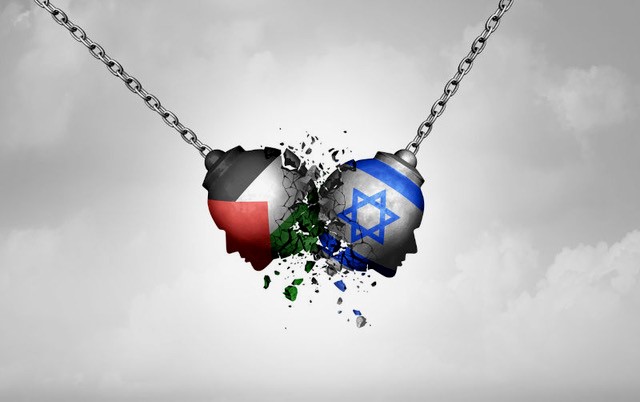
In trying to Palestine’s prospects of independence and peace with Israel, one is reminded of Tolstoy’s observation that ‘All happy families are alike; each unhappy family is unhappy in its own way’. This is to say that, successful claims to independence share common features, but the circumstances of Palestine’s aspiration for independence are distinctively its own.
Despite this, comparisons have been, perhaps, inevitable. In this, some key principles appear to be universal to successful independence movements; they reflect a bonded political identity, they occupy a relatively clearly delineated territory, and they share a common grievance. These criteria apply to Palestine.
Two specific comparisons of, so far, unresolved claims to independence that are sometimes cited as similar to Palestine are those of Western Sahara and West Papaua. Where Western Sahara, West Papua and Palestine are similar is that their territories have been occupied by another, numerically large population.
In Western Sahara, under the banner of the Polisario Front, the Sahrawi people fought to achieve independence from colonial Spain when, in 1975, their territory was invaded by neighbouring Morocco and Mauritania. In this respect, Western Sahara bears closest similarity to East Timor and its invasion by neighbouring Indonesia as it underwent its own process of decolonisation from Portugal. The United Nations did not recognise Indonesia’s incorporation of East Timor, paving the way for an eventual referendum on independence in 1999.
Similarly, the UN also did not to recognise Morocco’s incorporation of Western Sahara (Mauritania having withdrawn in 1979). But a planned UN supervised referendum on independence in 1991 was thwarted when Morocco insisted on the dominant, transplanted Moroccan community in Western Sahara be included in the vote.
West Papua was nominally allowed a vote on independence in 1969, by a little over 1,000 hand-picked village leaders, at Indonesian gunpoint. Unsurprisingly, that sham vote – subsequently ratified by the UN – was for incorporation within Indonesia. The territory has since seen a significant influx of non-Melanesians, now comprising more than 40 per cent of the territory’s population.
By comparison, following the UK’s 1917 promise of a Jewish homeland, Mandatory Palestine saw increased Jewish immigration. With growing conflict between Jewish settlers and Palestinians and, following World War II, an influx of Jewish refugees, without Palestinian agreement, in 1947 the UK proposed to the UN that the territory be divided between Jews and Palestinians. As a result of the ensuing civil war, the UK withdrew and the state of Israel was unilaterally declared.
In response, Israel’s Arab neighbours invaded, sparking the first Arab-Israel War. Israel prevailed and Palestinians were largely expelled or forced to flee the Israeli state in what has been termed ‘the Catastrophe’ – ‘Nakba’. Subsequent war has only entrenched Israeli control over its own recognised territory as well, functionally, as over the Palestinian territories of the Gaza Strip and the West Bank.
As with Western Sahara, a 1995 agreement to transition towards Palestinian ‘final status’ – independence – for the remnant territories was subverted by Israel, in particular through establishing permanent settlements in the West Bank. Palestinian unity was also complicated by the civil war between the Fatah in the West Bank and Hamas in the Gaza Strip, when Fatah refused to recognise Hamas’ victory in the 2006 Palestinian Authority elections. The unity of independence movements has, historically, been critical to their success. The West Papuan independence movement is similarly afflicted by internal, if not fratricidal, divisions.
Perhaps another example of colonial occupation, if with a somewhat better outcome, is that of New Zealand. Under the 1840 Treaty of Waitangi, the indigenous Maori population agreed to British sovereignty in exchange for protection and recognition of ownership of their lands.
The critical differences are that, despite problems inherent in all post-colonial entities, New Zealand was established as a moderately progressive and inclusive state based on civic principles. By comparison, Israel was established as a largely exclusive state in which its civic principles are subordinated to largely ethno-nationalist principles. New Zealand incorporates its indigenous population within a civic democracy; Israel largely excludes the wider Palestinian population from what is, in effect, an ethno-state.
These two foundational state principles, of progressive civic nationalism and regressive ethno-nationalism, are, in the final analysis, mutually exclusive. Both Israel and the Palestinian resistance have increasingly redefined themselves in such ethno-nationalist rather than civic terms.
They key losers of this redefinition have been tolerance for the other and the status representative and accountable government. The other loser is, of course, the prospects of a peaceful resolution.
Damian Kingsbury is the author of ‘Separatism and the State’ and co-editor of ‘How Wars End’ (Routledge).
Activists from the West Papua National Committee or the KNPB returned to the streets for their 14th action on Thursday August 15, to commemorate the 1962 New York Agreement, the day when power over West Papua was transferred from the Netherlands to Indonesia.
Several locations where demonstrations were to be held, both in Jayapura city and Jayapura regency, were blocked by police. Even though the KNPB claimed to have obtained a permit for the action from police.
As many as 36 protesters emerged from the direction of Buper Waena where they marched in six lines carrying KNPB flags and written demands on A4 carboard placards.
“No room for racism” and “The Indonesian state must be immediately held accountable for human rights violations in Papua” read the placards. The demonstration was tightly guarded by dozens of police officers with water cannons.
KNPB field coordinator Mesias Silak, after negotiating with police, was finally given permission to gives speeches and convey their demands.
The speeches proceeded peacefully, during which the KNPB members remained in line cordoned off by raffia rope. At around 1.45 pm the action was joined by around 50 people who arrived from the direction of the Abe Expo Waena Bridge.
Simultanious rallies by the KNPB marking the New York Agreement were held in several other parts of Papua.
Students in Jayapura protest New York Agreement and racism
Hundreds of students from various universities in Jayapura city held a protest on the Cenderawasih University (Uncen) campus on Thursday in which they took up two main issues: “The injustice of the 1962 New York Agreement and rejecting the racism experienced by the Papuan people”.
Action coordinator Enis Dapla emphasised that the 1962 New York Agreement was legally flawed because it did not involve the Papuan people.
“The agreement became the basis for the annexation of Papua by Indonesia through the 1969 Pepera [The 1969 UN sponsored referendum on West Papua’s integration with Indonesia], which we consider illegal and ridden with manipulation”, said Dapla.
In addition, Dapla also highlighted the issue of racism that continues to be felt by the Papuan people.
“Racism is not only the enemy of Papua, but also the enemy of the world. This action is a form of student resistance against all forms of racism, not only in Papua but throughout the world”, he explained.
The protest action that was initially planned to last until late afternoon was limited by the police to 12 noon, however the students continued the action on the grounds of the Uncen Faculty of Teacher Training and Education (FKIP) secretariat.
“We didn’t violate anyone’s rights, but the police continue to limit the action. In fact they entered the campus area, which should not be allowed according to the law”, said Dapla.
The students emphasised that during the action they conveyed their aspirations peacefully and without anarchic acts. “Freedom of expression and expressing opinions in public is the right of every citizen, including students”, he said.
Laba Heluka, a student activist from the Uncen Faculty of Law, emphasised that the issue of racism was a major focus during the action.
“Racism is a global enemy. We demand that there is no more racial discrimination against the people of Papua, both in the world of education, work and health services”, he said.
Heluka also criticised the restrictions on freedom of expression that continue to occur in Papua, especially with regard to peaceful protest actions. “Even though Law Number 9/1998 guarantees freedom of expression in public, in fact Papuan students are often restricted and silenced”, he said.
Give Papua the right to self-determination
The KNPB along with indigenous Papuan communities and various organisations in Greater Sorong also commemorated the New York Agreement in Sorong city on Thursday.
Wespa Papwes Gombo, a representative of the Independent Indigenous People of Papua (MAI-P) said the action was to remember the New York Agreement which was made unilaterally without involving the Papuan nation which a year earlier, on December 1, 1961, had issued a manifesto of independence to stand alone as a nation and a state.
Gombo said that Indonesia manipulated the mandate of the New York Agreement on self-determination through the 1969 Act of Free Choice. Out of the 809,337 West Papuans who had the right to vote, only around 1,026 people were selected and quarantined, and just 175 people were then forced at gunpoint to vote to join Indonesia.
In Indonesia’s report to the UN, the reason given for this was that Papuan people were still “primitive and backward”. “This racist view was used by Indonesia to gain international support for its colonisation of West Papua”, said Gombo.
A similar view was expressed in a speech by Eskop, a law student from the Sorong Muhammadiyah University, who said that today the Papuan nation is marking 62 years of colonisation by the Indonesian colonialists.
Meanwhile Indonesia is celebrating its 79th anniversary of independence with the spirit of colonising West Papua. Yet on the one hand Indonesia claims to be an anti-colonial country, but on the other it also plays an active role in robbing the Papuan people of their right to self-determination.
Eskop said that Papuan Special Autonomy (Otsus), territorial expansion and all forms of enforced and brutal exploitation in the Land of Papua, were a continuation of racist colonialism that begun with the Trikora operation in 1961, the New York Agreement in 1962 and Pepera in 1969.
Eskop explained that Indonesian colonialism, which is ridden with racism, has resulted in reducing the number of indigenous Papuans to only 2,971,340 people out of a total population 5.4 million.
Even more tragic, the number of non-Papuan residents is now larger, with an annual growth rate 6.39 percent per year. Meanwhile the poverty and low life expectancy of Papuans continue to place Papua in first place in negative indicators for Indonesia.
Meanwhile, from the cities to the villages, migrants with company and military support dominate all productive sectors. “Our customary forests, the last fortresses against the threat of global warming, are now threatened. Of the 34.3 million hectares of primary forests in the land of Papua, 793,623 hectares were lost in 2021-2022 alone”, he said.
Action coordinator Appull Heluka added that Indonesian colonialism with its militarism, continues to massively invade the entire land of Papua. The goal is to secure military businesses and investment.
He said that Indonesia’s colonial military operations had created around 76,919 internally displaced people in seven regions, forcing them to leave their hometowns and live in uncertainty.
“The peaceful solution and humanitarian pause proposed by the Papuan Council of Churches and the ULMWP (United Liberation Movement for West Papua) were rejected by Jakarta, which prefers bloody [military] operations. We demand that they immediately leave our land, West Papua”, he said.
The action proceeded safely and peacefully under the close guard of dozens of police personnel. During the action, the demonstrators read out a number of statements and demands, including rejecting all the forms of colonisation and oppression by the Indonesian colonialists in Papua.
They also asked Indonesia to respect the right of the Papuan people to determine their own future.
Two protesters injured by rubber bullets in Nabire
A KNPB demonstration protesting the New York Agreement in Nabire, Central Papua, on Thursday was confronted with violence by security forces.
KNPB Nabire Regional Management Board Secretary Zadrak Kudiyai told Jubi that two demonstrators, Andrias Gobay (a Dogiyai regional KNPB member) and Yosua Pigome, were struck by rubber bullets fired by security forces.
“They were shot at the resettlement beside the Nabire River, Karang Market. A rubber bullet was found in Andrias Gobay’s thigh and the bullet has been removed, while Yosua Pigome was shot in the calf, the bullet has not been removed yet and he is currently still being operated on at Nabire District General Hospital (RSUD) emergency room”, said Kudiyai on Thursday afternoon.
Kudiyai explained that hundreds of demonstrators who are members of the KNPB throughout the Meepago region held a peaceful demonstration centred in Nabire. “The demonstrators were shot, arrested, shot at with tear gas, and beaten. During the action one police officer was also injured in Siriwini”, he said.
According to Kudiyai, they started the protest at 7 am at several different points. Protesters in front of the Satya Wiyata Mandala University (USWIM) campus were then taken away by police from the Nabire District Police using a crowd control vehicle.
Meanwhile protesters at the SP point were also picked up by police using two crowd control vehicles and taken to the Nabire District Police station.
“Meanwhile the demonstrators at the Siriwini point, police officers fired teargas and dispersed the demonstrators and one KNPB member was arrested by police”, he said.
The protesters who were taken away by the police, said Kudiyai, are still at the Nabire Police station. “They have not been sent home yet”, he added.
According to Kudiyai, the attitude of the police and TNI (Indonesian military) was very indiscriminate in handling the peaceful KNPB mass action. “This is very unreasonable, because this country guarantees democratic freedoms, but that’s not like what we experienced in the field today”, he said.
Protesters in Meepago dispersed with teargas
KNPB members throughout the Meepago region were deployed in a joint action on Thursday centred in Nabire. They came from the Paniai, Dogiyai, Deiyai and Intan Jaya regencies and from Nabire itself.
The protesters, who had gathered at Karang Tumaritis Market in the morning were scheduled to hold a long-march to the Central Papua Regional House of Representatives (DPRD) and the Papua People’s Council (MRP) offices located in Kali Bobo.
Upon arriving in front of the Karang Barat Gel-Gel Workshop, they were stopped by security forces who ordered them to disperse. Shortly after they began firing teargas to disperse the demonstrators.
SD, a resident of Karang Barat who witnessed the incident, said the demonstrators were marching peacefully in rank cordoned off by a rope. “When security forces using two Barracuda and crowd control trucks arrived at the location, [they] fired teargas and the crowd dispersed”, they said.
Then, said SD, the protesters fled into residential alleys and the security forces chased after them firing teargas. “I saw them running away and one person was put in a police car and taken to the Nabire police station”, they said.
Speaking at a cafe in Nabire, Nabire District Police Chief Assistant Superintendent Wahyudi Satrio Bintoro told reporters that based on his observations at several locations the situation was under control.
When Jubi.id asked about the use of rubber bullets and teargas, Bintoro said that police used standard operating procedures (SOP) in accordance with National Police Chief Regulation Number 1/2029 on the Use of Force during Police Actions.
“We implemented this from the start of our presence, right, we made an appeal, conveyed this, we encourage them, but it turns out that their position was to carry out anarchic actions, throwing stones. Even our members who were in position there were hit by stones, injured”, he said, adding that because of this, they used firm but measured actions using teargas.
Police disperse protest in Abepura with water cannon
Police used water cannon to disperse a peaceful action commemorating 62 years since the New York Agreement at the Abepura intersection in Jayapura city.
The action, which took place between 12:30 and 3:21 pm, was coordinated by the KNPB. Police personnel from the Jayapura city district police broke up the action before representatives from the protesters could read out their statements.
KNPB General Chairperson Warpo Sampari Wetipo said their demonstration was peaceful and open, therefore breaking up the action was an example of the practices of colonialism in the land of Papua.
“The colonialists will never give the slightest bit of space (freedom) to the people they colonise. They feel superior so they treat the Papuan nation arbitrarily”, said Wetipo.
However, he continued to call on all Papuan people not to be weak, let alone retreat from the ranks of resistance against this oppression. They must continue to gather their strength and become a new spirit for the struggle of the Papuan nation.
“The Papuan people must not be weak, let alone retreat. (The dispersing of protesters) will (in fact) provide new strength and spirit so that (the Papuan people’s struggle will) become more advanced and radical”, said Wetipo.
Jayapura City Deputy Police Chief Senior Commissioner Deni Herdiana said they broke up the action because in their view the coordinator was unable to control the situation. According to Herdiana, there were indications that the protesters intended to commit vandalism, such as burning used tyres on the road that could disrupt security and public order in Jayapura city.
“We coordinated (agreed) with the korlap (field coordinator), namely giving one to two hours (for the masses to give speeches). However, the korlapwas not committed so we took measured law enforcement efforts”, said Herdiana.
In Jayapura city, around 700 security personnel were deployed to secure the 1962 New York Agreement commemoration events consisting of Indonesian Police (Polri) and TNI personnel.
“Polri and the TNI are safe guarding (securing the action) because it is approaching August 17 (Indonesian Independence Day). Currently, we have not secured (arrested) any demonstrators”, added Herdiana.
— Reporting by Ratty Auparai, Aida Ulim, Gamaliel Kailele, Hengky Yeimo and Pes Yanengga
[Abridged translation by James Balowski based on five articles by Jubi Papua on August 15. The original title of the lead article was “Aksi KNPB Protes New York Agreement Dihadang Pihak Keamanan”.]
Pope Francis’ visit to Indonesia from 3 to 6 September 2024 should be a momentum to urge Indonesia to stop gross human rights violations and provide redress for past atrocities or injustices resulting from socially and environmentally unfriendly development policies, such as those in Papua and Rempang, Amnesty International Indonesia said today.
“The messages of peace, love, and dialogue that Pope Francis always conveys are highly relevant to a world facing division and intolerance. This visit is crucial to reaffirming every nation’s obligation to uphold the values of human dignity and social justice,” said Usman Hamid, Executive Director of Amnesty International Indonesia.
“Pope Francis is scheduled to meet with the President and other key officials. This is an opportunity to urge Indonesia to fulfil its commitments in the field of human rights, including providing a remedy for past gross human rights violations and protecting communities, including Indigenous Peoples, from misguided economic policies.”
“This visit also provides an important platform to advocate for an end to repressive policies in response to protests and demonstrations, call for peace in Papua, and prevent discriminatory practices against religious minority groups. The assassination of human rights activist Munir, which marks 20 years since his death, also needs attention.”
Indonesia is currently an active member of the United Nations Human Rights Council (UNHRC), but it has yet to implement several key recommendations related to stopping gross human rights violations resulting from development policies and protecting religious minority groups from attacks on their freedom to practice their beliefs and establish places of worship.
Amnesty International Indonesia has recorded several unresolved cases of gross human rights violations, including the 1965/66 mass killings, the 1984 Tanjung Priok incident, the 1989 Lampung incident, the July 27, 1996 attack, the 1997/98 abduction and forced disappearance of activists, the Trisakti, Semanggi I, and Semanggi II shootings, the May 1998 riots, the Munir case, and extrajudicial killings in Papua.
Amnesty has also recorded at least 123 cases of intolerance between January 2021 and July 2024, including the rejection, closure, or destruction of places of worship and physical attacks. The perpetrators are suspected to come from various backgrounds, including government officials, residents, and civil society organizations.
On 30 June 2024, a village head, along with a group of people, stopped a Sunday service at a Pentecostal church in Sidoarjo, East Java. They argued that the church did not have a building permit (IMB). According to the local pastor, the church building was registered as a prayer house on December 7, 2023, and obtaining an IMB is not easy as it takes two years. However, the village head insisted on the IMB requirement.
To build a place of worship, the 2006 Joint Decree of the Minister of Religious Affairs and the Minister of Home Affairs requires the approval of at least 60 local residents, endorsement by the village head, and a written recommendation from the Department of Religious Affairs and the Forum for Religious Harmony. This process has the potential for conflict in areas where minority religious communities face rejection from the local community.
On 5 May 2024, a group of people led by a neighbourhood head attacked a number of Catholic students who were holding a Rosary Prayer event at a house in South Tangerang. They forced the participants to worship in a church instead of at home.
On 2 July 2024, the Garut Regency government in West Java sealed off a place of worship for Ahmadiyah Muslims. Indonesia continues to record cases of restrictions on the rights and freedoms of religious communities.
Amnesty International hopes that Pope Francis’ visit will highlight these issues to ensure the protection of religious freedom in Indonesia.
“The Pope’s visit plays a crucial role in encouraging Indonesia to end intolerance and discrimination against all minority groups. Religious freedom is a right protected by Indonesia’s constitution,” said Usman Hamid.
“This guarantee must be effectively enforced through laws and regulations that are in line with international human rights standards.”
Amnesty also hopes that Pope Francis’s visit to Indonesia will draw attention to the implementation of National Strategic Projects (PSN), which are often carried out using coercive approaches without meaningful consultation with Indigenous Peoples. Many large-scale infrastructure projects under the PSN have had serious impacts on the lives of Indigenous Peoples, whose rights to land, culture, and the protection of Indigenous scientific knowledge are frequently neglected.
Many Indigenous Peoples still do not have their land rights recognized by the government, making them vulnerable to agrarian conflicts and often becoming victims of development projects, as has happened in Rempang, Wadas, and Mandalika.
Meanwhile, Indigenous Peoples who speak out critically against the government in defending their rights in agrarian conflicts often face attacks. Amnesty International Indonesia recorded at least eight cases of attacks against Indigenous Peoples from January 2019 to March 2024, with at least 84 victims, including criminalization, intimidation, and physical violence.
“Pope Francis, who is known for his commitment to social justice, environmental preservation, and the protection of Indigenous rights, is expected to voice his concerns over these violations during his visit to Indonesia,” said Usman.
Call to End Human Rights Violations in Papua
Pope Francis’ visit to Indonesia is also expected to highlight the situation in Papua, where conflict continues, and the rights of Indigenous Papuans and other civilians are under constant threat.
“Papua, which has experienced violence for decades, must be addressed. The escalation of violence, militarization, and suppression of dissent in Papua has resulted in many civilian casualties, displacement, and a humanitarian crisis that requires urgent attention,” said Usman.
Civilians in Papua, including Indigenous Peoples, have suffered due to large-scale military operations resulting in extrajudicial killings by state and non-state armed groups, torture, internal displacement, and other violations.
From 3 February 2018 to 20 August 2024, Amnesty recorded 132 cases of extrajudicial killings resulting in at least 242 civilian deaths. Some of these cases were carried out by security forces (83 cases with 135 victims), while others were by pro-independence armed groups (49 cases with 107 victims).
In addition to local civilians, victims also included a New Zealand helicopter pilot, Glen Malcolm Conning, who was killed while transporting four civilians in Alama District, Mimika Regency, Central Papua, on 5 August 2024. It is still unclear who was responsible for the killing, prompting Amnesty to call for a full investigation.
Another New Zealand citizen, Phillip Mehrtens, has been held hostage since 7 February 2023, by a faction of the pro-independence armed group in Papua. Between January 2019 and February 2024, there were at least 17 cases of torture involving 50 victims, allegedly committed by security personnel and state officials in Papua.
“Therefore, Pope Francis must also emphasize the importance of peaceful dialogue and resolutions that respect human rights and the aspirations of the Papuan people,” said Usman. (*)
Members of the Indonesian mobile police (Brimob) fatally shot Tobias Silak, a 24-year-old Papuan employed by the local election supervisory agency (Bawaslu) and seriously injured 17-year-old Papuan, Naro Dapla, in Dekai, Yahukimo District, West Papua, on August 20.
These Papuans were shot on the same day that Indonesian Defence Minister and President-elect, Prabowo Subianto — notorious for his human rights abuses — was in Canberra to seal a security agreement with the Australian government. Prime Minister Anthony Albanese described it as a “historic treaty”.
For some Western leaders in Canberra who welcomed this versatile, enigmatic and notorious 72-year-old military figure, Prabowo represents an essential component of the West’s confrontation with China.
The fate of Indonesia, Papua New Guinea and other nations caught up in the power dynamics in the Indo-Pacific region is inextricably linked to the influence of the West — which seeks to preserve its regional hegemony — and China and its emerging allies, which seek to challenge the status quo.
Prabowo embodies the modern face of geopolitics — a decisive player in between two superpowers. As long as he continues to serve the interests of both, he will remain in their favour.
In this geopolitical game, there is one nation whose history — although central to the reshaping of the West, the East and Indonesia — has been relegated to insignificance: West Papua.
More Papuan lives will be sacrificed, like those of millions of people caught between the competing interests of powerful nations, such as the Ukrainians, Palestinians, and many others.
Without a significant re-configuration of the current geopolitical landscape soon, the sovereignty and fate of those entangled in the current world’s order appear quite grim.
As long as the sovereignty of the Papuan land, nation and state remains suppressed within Indonesia, all agreements and treaties signed between Indonesia and foreign powers will inevitably spell disaster for the Papuan people. This was illustrated by the shootings on August 20, which happened under Prabowo’s leadership as defence minister and president-elect.
Human rights abuses under Prabowo’s watch
There have been a number of human rights violations and shootings throughout West Papua this year.
New Zealand pilot Glen Malcolm Conning was shot and killed after landing his helicopter in the remote Alama district of West Papua, on August 5. Indonesian authorities initially blamed the West Papuan National Liberation Army (TPNPB). However, the TPNPB denied any involvement and accused the Indonesian military of being behind the killing.
Benny Wenda, an international icon of the West Papuan independence movement, based in England, accused Indonesia of lying about the pilot’s death and “urge[d] the world to listen to the categorical denial by the West Papua National Liberation Army”.
Papuans across West Papua peacefully commemorated one of the most important historical events in their national calendar on August 15: the infamous “New York Agreement”, a treaty signed between the Netherlands and Indonesia under the auspices of the US that sealed Papua’s fate with Indonesia. Protests called for a review of the agreement. Once again, Indonesian security forces cracked down on this commemoration.
The Indonesian military opened fire in Kalome village, Puncak Jaya regency, on July 16, while pursuing TPNPB member Terinus Enumbi. Innocent Papuan bystanders were shot and injured in this indiscriminate attack.
The Indonesian army accused three men in the village of being TPNPB fighters. This claim was immediately refuted by the TPNPB and a local community leader, who clarified that they were all civilians. One of the trio — Murib — is a village head.
Prominent Papuan human rights lawyer Yan Christian Warinussy was shot at an ATM in the coastal town of Manokwari, on July 17, while his children waited in the car. Luckily, he survived.
In March, a harrowing video emerged showing a group of Indonesian soldiers torturing a young West Papuan man later identified as Defianus Kogoya. In the disturbing footage, Kogoya can be seen with his hands tied and shaking as he is submerged in a vat of bloody water while Indonesian soldiers take turns punching, kicking and beating him.
According to the United Liberation Movement for West Papua (ULMWP), as at April, more than 76,000 people have been displaced due to the Indonesian crackdown, which started in 2018.
These displacements, killings, shootings, torture and deaths are just the tip of the iceberg of what is happening in the tightly-controlled military operational areas of West Papua.
These atrocities took place during Prabowo’s presidential campaign this year. Furthermore, despite having visited West Papua more than 18 times, outgoing President Joko Widodo has failed to address these serious issues.
Prabowo seeks advice from PNG on how to ‘respect Indigenous Papuans’
Prabowo stopped in PNG’s capital, Port Moresby, on his way from Canberra to Jakarta. With all the talk of security, trade and business, Prabowo is reported to have asked the PNG government for cultural advice on how to “respect” the indigenous Papuans.
Unfortunately, Prabowo got away with the blood of Papuans on his hands, just as he did in Canberra.
If PM James Marape’s “gang” in Port Morseby’s Waigani precinct had an independent voice, one might expect them to advise Prabowo to stop killing Papuans, at least as a basic gesture of “respect”. However, it is unimaginable that the PNG government would challenge Jakarta’s atrocities without the approval of its imperial masters in Washington, London and Canberra.
Jakarta will soon become another imperial master of PNG if it does not stand on its own two feet soon.
The more the government in Port Moresby condones Jakarta’s genocidal war against the Papuans, the more likely it is that the Papuans in PNG will accept a diminished status reminiscent of the threats they have faced in West Papua for more than 60 years at the hands of Indonesia.
To believe that PNG is entitled to equal respect from Western and Eastern nations, especially Indonesia or ASEAN, because of its uniqueness is an overly simplistic view.
We are Papuans and Blacks — these names and designations alone have justified all kinds of dehumanising names, insults, abuse and mistreatment of Papuans on both sides of the border, whose representatives are received by those in power in Canberra and Jakarta.
BenarNews reported that PNG journalist Harlyne Joku was excluded from a media briefing with Prabowo and Marape during Prabowo’s visit, allegedly at the request of the Indonesian embassy. The PNG Media Council condemned the exclusion as “disturbing” and “shameful” and an attack on PNG’s independent media sector and an affront to PNG’s political sovereignty.
If PNG does not wake up soon, it may be too late for PNG to realise that the fate of West Papua and the fate of PNG are linked, and that what happens to West Papua will determine what happens to PNG.
Prabowo’s request for advice from PNG on how to respect indigenous Papuans is strange, given his history of crimes against humanity in East Timor and West Papua. It is also an insult to ask the PNG government how to respect the Papuans when Prabowo and Jokowi have totally failed to respect and listen to the Papuans.
Whether a genuine sentiment or empty rhetoric, Prabowo’s ambivalence in addressing the killings of Papuans this year alone shows where he stands on the issue of respect for Indigenous Papuans.
Papuan pawns in Prabowo’s international political chess game
Prabowo brought two prominent West Papuan figures with him on his visit to Canberra: Natalius Pigai, a former Indonesian human rights commissioner, and Wempi Wetipo, Indonesia’s deputy home affairs minister.
Prabowo’s intention could have been “image-building”, by showing black Papuan faces at this highest level, or might actually mean something for the Papuan people, or these elites might be just pawns in the settlers’ colonial games.
Whatever the intention, it is irrelevant to Papuans who are dying daily under Prabowo’s rule.
Prabowo’s biggest test will be not only how he leads Indonesia between the two superpower rivalries between the US and Chinese, but also how he deals with Papuan lives.
If he is serious about how to respect the indigenous Papuans, he should be asking these questions to West Papuans, not the PNG government.
[Ali Mirin is a West Papuan from the Kimyal tribe of the highlands bordering the Star Mountain region of Papua New Guinea. He has a Master of Arts in International Relations from Flinders University.]



 Australia West Papua Association Adelaide