IPWP meeting calls for urgent UN visit to West Papua

 October 20, 2023 in News

The International Parliamentarians for West Papua (IPWP) held a major meeting in the UK Parliament yesterday (October 18th 2023), calling for the UN High Commissioner for Human Rights to be urgently allowed to visit West Papua.

The IPWP meeting was held to support the recent communique issued at the Melanesian Spearhead Group (MSG) Leaders’ Summit in August, urging Indonesia to facilitate a UN visit to West Papua before the next Leaders’ Summit in 2024. Indonesia promised to facilitate a UN visit in 2018. Five years on, they are no closer to allowing the UN access.

Over 85 countries have now called for the UN visit. This includes all member states of the Pacific Islands Forum (PIF), the Organisation of African, Caribbean, and Pacific States (OACPS), the European Commission, and individual nations including the UK, Spain, and the Netherlands. At Indonesia’s Universal Periodic Review (UPR) last year in Geneva, eight countries, including the US, Canada, and Australia, expressed profound concern over the human rights situation in West Papua and urged international investigation.

The IPWP meeting was hosted by Alex Sobel, UK Labour MP and IPWP Chair. West Papuan independence leader Benny Wenda addressed the crowded room, along with Jennifer Robinson, of Doughty Street Chambers and the International Lawyers for West Papua (ILWP). MEP and President of Catalonia Carles Puigdemont and Senator Gorka Elejebarrieta, both IPWP Vice Chairs, addressed the meeting by video link.

Demonstrations took place across West Papua over the past two days in support of the meeting.

Benny Wenda said: “I welcome the MSG communique, but words have to mean action. Even since the MSG meeting Indonesia has killed many West Papuans, and tortured and displaced even more. Melanesian leaders should ask themselves: are we trying to save West Papuans, or are we allowing Indonesia to carry on their occupation with impunity? The MSG and PIF must do all in their power to secure a visit.”

Carles Puigdemont said: “If Indonesia has a serious commitment to become a member of the part of the international community that respects human rights, there is no other alternative than for Jakarta than to facilitate the UN High Commissioner’s visit right now… I reassure you that our just struggle for a free West Papua will continue, in the European Parliament and at the European Commission.”

Gorka Elejebarrieta said: “We believe that the reports of serious human rights violations in West Papua have to be taken into account. We believe that the international community, and especially the UN High Commissioner for Human Rights, cannot avoid the issue any longer. Indonesia must support and facilitate mechanisms of the international community for the full respect of human rights and the full respect of the rights of West Papuans.”

General Assembly Elects 15 Members to Human Rights Council includes Indonesia

The General Assembly today elected 15 Member States to the Human Rights Council, the United Nations body responsible for promoting and protecting all human rights around the globe.

By secret ballot, the Assembly elected Albania, Brazil, Bulgaria, Burundi, China, Côte d’Ivoire, Cuba, Dominican Republic, France, Ghana, Indonesia, Japan, Kuwait, Malawi and the Netherlands.  All 15 members will serve three-year terms beginning on 1 January 2024.

China, Côte d’Ivoire, Cuba, France, Malawi are currently serving three year terms set to expire on 31 December 2023.  The other 10 newly elected States will replace the following outgoing members:  Bolivia, Czech Republic, Gabon, Mexico, Nepal, Pakistan, Senegal, Ukraine, United Kingdom and Uzbekistan.

The 15 new members were elected according to the following pattern:  four seats for the African States; four seats for the Asia-Pacific States; two seats for the Eastern European States; three seats for the Latin American and Caribbean States; and two seats for Western European and other States.

Dennis Francis (Trinidad and Tobago), President of the General Assembly, announced that the following States will continue as members of the Council: Algeria, Argentina, Bangladesh, Belgium, Benin, Cameroon, Chile, Costa Rica, Eritrea, Finland, Gambia, Georgia, Germany, Honduras, India, Kazakhstan, Kyrgyzstan, Lithuania, Luxembourg, Malaysia, Maldives, Montenegro, Morocco, Paraguay, Qatar, Romania, Somalia, South Africa, Sudan, United Arab Emirates, United States and Viet Nam.

Created by the General Assembly in March 2006 as the principal United Nations entity dealing with human rights, the Human Rights Council comprises 47 elected Member States.  On the basis of equitable geographical distribution, Council seats are allocated to the five regional groups as follows:  African States, 13 seats; Asia-Pacific States, 13 seats; Eastern European States, 6 seats; Latin American and Caribbean States, 8 seats; and Western European and other States, 7 seats.

The Assembly President opened the meeting by expressing his deep concern over the deteriorating security situation in the Middle East that has left hundreds dead and scores more wounded in Israel and in the State of Palestine.  He called for an immediate cessation of violence and for all stakeholders to help de-escalate the situation and to render humanitarian aid and support.

HUMAN RIGHTS —

Indonesia cancels West Papua rights meeting with Melanesian nations, delegate says     

Harlyne Joku 2023.10.10 Port Moresby

Indonesia canceled a regional meeting this week on the human rights situation in its Papuan provinces on the grounds that the leaders of Melanesian nations weren’t attending it, a member of Papua New Guinea’s delegation said on Tuesday.

The canning of the meeting comes after the Papuan independence movement had its application to become a full member of the Melanesian Spearhead Group rejected in August. The U.N.-recognized organization comprises the Solomon Islands, Papua New Guinea, Vanuatu, Fiji and New Caledonia’s indigenous Kanak independence movement. 

Indonesia, an associate member of the Melanesian group, has lobbied against the liberation movement’s membership aspirations for at least a decade.  

“I am disappointed that the meeting was canceled by the Indonesian government at the last moment,” Powes Parkop, the governor of Papua New Guinea’s National Capital District, told BenarNews. 

Leaders of the Melanesian Spearhead Group nations agreed at a summit in August to create “space” for dialogue with Indonesia on the human rights situation in its Papuan provinces – often known as West Papua – rather than encouraging the independence movement, which has strong grassroots support in Melanesian countries. 

Possible measures included an annual parliamentary dialogue between Indonesia and Melanesian nations. 

Poorly armed Papuan fighters – collectively known as the West Papua National Liberation Army – have battled Indonesia since the early 1960s, when it took control of the western half of New Guinea island from the Dutch.

Papuans, culturally and ethnically distinct from the rest of Indonesia, say they were denied the right to decide their own future. Indonesian control was formalized in 1969 with a U.N.-backed referendum in which little more than 1,000 Papuans were allowed to vote.

Documented and alleged killings and abuses by Indonesian military and police, from the 1960s until the present day – along with impunity and the exploitation of the region’s natural resources and widespread poverty – have fueled resentment of Indonesian rule.

The Papua New Guinea government’s invitation to Parkop to be a member of its delegation said that Indonesian President Joko Widodo had called for Melanesian leaders to “have a historical meeting with him on West Papua issues.”

He was about to leave Papua New Guinea for the meeting that was scheduled for Wednesday in Bali, alongside a summit of island and archipelagic states, when he was informed of the cancellation. 

Parkop said he spoke to Indonesia’s Foreign Minister Retno Marsudi and her explanation for the cancellation was the nonattendance of the leaders of Melanesian nations.

“I have impressed on her to allow dialogue to commence initially with those MSG leaders like myself … who have been pushing this agenda and not to wait for prime ministers,” said Parkop.  

“I am hopeful that this meeting will take place soon so we can see progress toward resolving the long standing political and human rights issue in our region.”

Indonesia’s Ministry of Foreign Affairs didn’t immediately respond to a request for comment.

Papuan groups that peacefully advocate for independence from Indonesia suffered a setback in August when the Melanesian Spearhead Group denied the United Liberation Movement for West Papua’s application for full membership. 

The official communique from the August summit was not released publicly, but a copy seen by BenarNews said leaders could not reach a consensus on West Papuan membership, which meant it could not be approved. 

It reiterated long standing international calls for Indonesia to allow a U.N. human rights delegation to visit the Papua region.

Fiji’s Prime Minister Sitiveni Rabuka had earlier in the year made a public show of support for West Papua and Vanuatu is a longstanding bastion of support for the independence movement. 

But Papua New Guinea, which has a 760-kilometer (472-mile) border with Indonesia and is dwarfed in both military and economic strength by the Southeast Asian country, has made improving relations with Jakarta a foreign policy priority.    

Solomon Islands Prime Minister Manasseh Sogavare, formerly a supporter of West Papuan independence, said earlier this month that self-determination is an internal matter for Indonesia’s Papuan provinces.

“Melanesian politics are pretty fluid, a change of governments will result in a different conversation about self-determination and human rights in the region,” Hipolitus Wangee, a researcher at Australian National University, told BenarNews.

“There is another chance for the ULMWP application as long as the Indonesian government fails to address the root causes in West Papua.”

Charley Piringi contributed reporting from Honiara and Stephen Wright from Wellington.

Former Governor of Papua Hears Judge’s Sentence to 8 Years in a Wheelchair

Sentenced the defendant Lukas Enembe to prison for eight years and a fine of Rp. 500 million with the provision that if the fine was not paid, it would be replaced by imprisonment for four months.

News Desk – Lukas Enembe

October 19, 2023

Jakarta, Jubi TV– Former Governor of Papua Lukas Enembe was sentenced to eight years in prison and a fine of IDR 500 million, subsidiary to four months in lieu of imprisonment by a panel of judges at the Corruption Crime Court at the Central Jakarta District Court in a bribery and gratification case. Lukas Enembe sat in a wheelchair in front of the panel of judges.

“Sentenced the defendant Lukas Enembe to imprisonment for eight years and a fine of Rp. 500 million with the provision that if the fine is not paid, it will be replaced by imprisonment for four months,” said Chief Judge Rianto Adam Pontoh reading the verdict at the Corruption Court. Jakarta, reported by Antara Thursday 19/10/2023.

Lukas Enembe was also sentenced to pay compensation in the amount of IDR 19,690,793,900 within one month after the decision becomes final or final.

“If they don’t pay, their property will be confiscated and auctioned by the prosecutor to cover the replacement money. “With the provisions, if the convict does not have sufficient assets, he will be punished with imprisonment for two years,” continued Rianto.

Apart from that, Lukas Enembe was also sentenced to an additional crime in the form of revocation of his right to be elected to public office for five years after he had finished serving his main sentence.

“Declaring that the defendant Lukas Enembe mentioned above has been legally and convincingly proven according to the law to be guilty of jointly committing criminal acts of corruption and gratification, as in the first and second indictment of the public prosecutor,” said Rianto.

Thus, Lukas Enembe was legally and convincingly proven to have violated Article 12 letter a of Law Number 31 of 1999 concerning the Eradication of Corruption Crimes Jo. Article 55 paragraph (1) 1st Criminal Code Jo. Article 65 paragraph (1) of the Criminal Code and Article 12 B of Law Number 31 of 1999 concerning the Eradication of Corruption Crimes.

“Stipulating that the period of arrest and detention served by the defendant be deducted entirely from the sentence imposed; determined that the defendant remains in detention,” added Rianto.

The judge’s sentence was lighter than the demands of the Public Prosecutor (JPU) of the Corruption Eradication Commission (KPK).

Previously, Lukas Enembe was sentenced to 10 years and six months in prison, as well as a fine of IDR 1 billion, a subsidiary of 6 months’ substitute imprisonment. He was also sentenced to additional criminal charges in the form of payment of compensation amounting to IDR 47,833,485,350.00.

In this case, the KPK prosecutor charged Lukas Enembe with two charges.

Firstly, Lukas was charged with receiving a bribe of IDR 45,843,485,350 with details amounting to IDR 10,413,929,500 from the Piton Enumbi Entrepreneur as Director and Owner of PT Melonesia Mulia, PT Lingge-Lingge, PT Astrad Jaya and PT Melonesia Cahaya Timur, and amounting to IDR 35,429,555 ,850 came from Rijatono Lakka as Director of PT Tabi Anugerah Pharmindo, PT Tabi Bangun Papua as well as CV Walibhu.

Second, Lukas Enembe was charged with receiving gratification in the form of IDR 1 billion from Budy Sultan as Director of PT Indo Papua on April 12 2013. (*)

———————————

Rebels kill seven in Papua attack: police

AFP Jakarta   ●   Wed, October 18, 2023 The National Police said on Tuesday that armed rebels had gunned down seven civilians when they opened fire on a gold mine in Papua. Authorities said assailants fired shots at mining workers on Monday afternoon in the remote, mountainous Yahukimo district.  Police claimed The West Papua Liberation Army (TPNPB) separatist group led by Egianus Kogoya was behind the shootings.

“We will chase the perpetrators and we will take legal action against the separatists and Egianus Kogoya,” Faizal Ramadhani, head of Cartenz Peace Taskforce, a special group formed to handle the Papua separatists, said in a statement Tuesday.

Faizal said a police unit sent to retrieve the bodies and rescue survivors was fired on by the rebels. “As soon as we arrived at the location, our personnel were attacked and the gunfire lasted 1.5 hours,” he said. Seven bodies have been retrieved from the location while 11 other people were rescued alive, police said. Most of the dead were migrants from the South Sulawesi. 

The rebels also burned down excavators, trucks and the workers’ camp, police added. The rebels claimed responsibility for the attacks, saying that they had warned the migrants to leave the region and all Papuan areas. “(Indonesia) must immediately open a negotiation with the Papuan nation to find a solution,” said the group’s spokesperson Elkius Kobak in a statement. The group is also responsible for the February 2023 kidnapping of a New Zealand pilot from the Papuan highlands.  Papua has seen several deadly attacks linked to the insurgency in recent years. Ten people were killed in July last year when a group of rebels attacked a truck full of civilians transporting goods.  In March 2022, eight telecommunications workers were shot dead while installing communications towers in Puncak district.

Papuan DPR members say illegal gold mining has a high potential for conflict

I feel sorry for the seven mine workers who were killed. May the family always be given strength. Second, Papua is very rife with illegal gold mining activities

News Desk – Illegal Gold Mining

October 19, 2023

Jayapura, Jubi TV– The potential for conflict in illegal traditional gold mining areas in a number of districts in Tanah Papua is considered quite high. However, the government seems to be neglecting it. The government is considered not serious about controlling illegal gold mining areas, even though conflicts often occur in the area.

This statement was made by a member of the Papua DPR’s Commission for Government, Politics, Law, Human Rights and Security, Laurenzus Kadepa.

Kadepa stated that this was related to the attack and murder of seven traditional gold miners in Kali I, Seradala District, Yahukimo Regency, Papua Mountain Province, on Monday (16/10/2023).

The West Papua National Liberation Army or TPNPB also stated responsibility for the attack.

“I feel sorry for the seven mine workers who were killed. May the family always be given strength. Secondly, Papua is very rife with wild or illegal gold mining activities, but it seems that the government is just ignoring it. “In fact, if you look at the potential for conflict in this mining area, it is very high,” said Kadepa when contacting Jubi via telephone, Thursday (19/10/2023).

According to him, apart from the potential for conflict, illegal gold mining also causes serious damage to nature and forests.

“I have always been vocal about closing all illegal mines in Papua,” he said.

He said, in 2018, he urged the Acting Governor of Papua at that time, Soedarmo, to go directly to Korowai, Boven Digoel Regency, which is now part of South Papua Province, to look at illegal mining activities there.

This was based on the aspirations of the Korowai people at that time through Pastor Trevor. At that time, the Papua Province regional government communications forum came to the location.

“Unfortunately, these steps were not followed by the governors and regents in Papua. “For me, the presence of illegal mining like this has many negative impacts, so it must be closed,” he said.

Laurenzus Kadepa also asked the security forces and TPNPB involved in the armed conflict not to continue killing civilians for various reasons.

“Stop killing civilians for whatever reason. I’m surprised that all this time there have been civilians shot by the TPNPB because it was part of the intelligence apparatus. On the other hand, if the TNI/Polri shoot civilians, they say they are part of the TPNPB, OPM and others. This is very dangerous. “If the government doesn’t find a solution, it will be dangerous for the lives of people in Papua,” said Kadepa.

Previously, TPNPB spokesperson, Sebby Sambom, said that the TPNPB Special Forces Kodap III Ndugama and Kodap XVI Yahukimo were responsible for the attack on the mine in Kali I, Seradala District, Yahukimo Regency, Papua Mountain Province.

“The Free Papua Organization TPNPB is responsible for the murder,” said Sambom.

Sambom stated that the gold mine in Seradala District was an illegal gold mine. He also conveyed accusations that there were TNI intelligence workers working in the mine at Yahukimo.

According to Sambom, his party has repeatedly warned civilians to leave areas of armed conflict, because the TPNPB will not compromise and shoot them.

Sambom stated that his party again demanded that the government immediately open a space for dialogue to find a solution to the armed conflict in the Land of Papua.

“We, TPNPB, ask the state to immediately open a space for negotiations with the Papuan people, to find a solution. “Once again, we TPNPB are not playing around,” he said. (*)

This article has been published on jubi.id with the title: Kadepa: Illegal gold mining has the potential to cause conflict

Rempang, developmentalism and the politics of post-Suharto economic development

Arah Juang – October 1, 2023

Hayamuddin — On September 7 residents and security forces clashed on the island of Rempang, Riau province, after local people attempted to stop the authorities from conducting land measurements and boundary marking for the Eco City development project.

Residents blocked the main road spanning the island using trees and burning tyres as makeshift barricades. Police responded by firing teargas into the crowd with some landing in a nearby school, resulting several children suffering from teargas inhalation. Police detained at least eight demonstrators following the incident.

In 2001 plans emerged to turn Rempang Island in Riau province into an industrial and tourism area supported by a free trade zone and free port policy as part of the Batam City Industrial Area Development Project, which was awarded to the company PT Makmur Elok Graha (Meg) on May 17 2004.

Prior to this, in 1986 under Forestry Minister Sujarwo, Rempang Island was declared a conservation area but without any consultation or inspection on the ground, so the island was deemed to be uninhabited.

A new policy in 1992 established that Rempang Island, Galang Island and the surrounding islands were to be included in the Batam Island Industrial Region as a Bonded Zone. This reaffirmed the assumption that there were no local communities living on Rempang Island or that they were not of any concern. As a consequence there was no policy for the relocation of local residents or compensation mechanisms.

Following this in 1999, residents of Galang sub-district on Rempang Island were given the opportunity to become part of the administration of the Batam City municipal government, but this still did not resolve the problem because the communities there were still not recognised because as did not have legal claim over land that had occupied for generations.

In late 2022 a meeting was held between the Batam Free Trade Zone Authority (BP Batam) and Rempang residents at the Tg Kertang Bridge Four Village on Rempang Island, at which the BP Batam explained about the planned Rempang Eco City construction project that would be carried out by PT Mega.

The mega project was to be part of the government’s so-call agrarian reform program known as TORA (Agrarian Reform Land Object), which would be registered by the government by requesting land right certificates from Galang sub-district residents.

In the second period of the process PT Meg conducted aggressive lobbying with relevant ministries in order to get support to accelerate the project, which became easier after a decree was issued designating the project as a strategic national project (PSN).

If we go back a few years following the 1965 mass killings that brought Suharto’s New Order dictatorship into power, land gabbing had become common in many parts of Indonesia. This was in line with Suharto’s move to forge a close relationship with the US imperialist state, which had backed Suharto’s seizure of power and the removal of Indonesia’s leftist founding president Sukarno.

And of course in order to pay back this debt of gratitude, the US was allowed to force its way deeper into Indonesia’s economy though capital exports such as funding development programs in an effort to increase its grip on and in the end be freer to monopolise the economy. By this time land grabs were being carried out though a militaristic approach.

Suharto was overthrown in 1998, but the ideology of developmentalism

(pembangunanisme) continued to dominate in Indonesia. In 2004 the World Bank issued a document titled “Bad Infrastructure Hampers Indonesia’s Economic Growth and Poverty Alleviation Efforts”. These kinds of documents are a scenario that is always applied to control Third World countries because with large debts they can be forced to follow programs that have been determined by the imperialist countries. Thus Indonesia is encouraged to pursue infrastructure projects to support the smooth circulation of capital throughout the country.

The implementation of this on the ground began in 2004 during the era of President Susilo Bambang Yudhoyono (SBY) with the Master Plan for the Acceleration and Expansion of Indonesia’s Economic Development (MP3EI).

Put roughly, the World Bank said that if Indonesia wants to maintain economic stability it must improve the state of its infrastructure.

Since the late 80s Indonesia has adopted the model of public-private partnership schemes (PPP). Under these schemes, infrastructure development is no longer funded by the government but is instead handed over to the private sector or investors. For these investors it becomes a kind of bolu kukus (steamed sponge cake) that is soft and delicious because they can do as they like when investing in Indonesia.

Meanwhile the government’s role in facilitating projects is taking responsibility for the acquisition of land, which can be done by means of forced mediation or forced evictions, as was the recent case in Rempang.

The authority of national strategic projects has been further strengthened by the enactment of the widely unpopular Omnibus Law on Job Creation, which provides strong “legal certainty” for the acquisition of land for the benefit of capitalistic projects in Indonesia.

The law also saw the establishment of a Land Bank. In normative terms this institution guarantees the availability of land through the concept of economic fairness for public, social and national development interests, economic equality, land consolidation and agrarian reform.

This however is only on paper. In practical terms, the hidden goal of land banks is to facilitate the process of land acquisition for investment, both in the name of development for the public interest and economic growth, as well as facilitating the process of the privatising state land. Land controlled by the land bank is given the status of the Land Management Rights (HPL).

The implication of this is the privatisation and commercialisation of state land (something prohibited in the 1960s), and the avoidance of corruption in the use of state land, and the strong potential to displace people from their land, who de facto are occupying or living on state land. Thus people can be evicted on legal grounds.

I order to fight the people’s oppressors, there needs to be a systematic and organised movement. Starting from educating young people, and this education must also be populist in accordance with the definitions and desires of the people. The ordinary people must build for themselves what they want without interference from the corrupt government.

With that also, when young people understand who the real enemy is that is trampling on and grabbed their parents’ necks, and forcibly taking their land, then young people will be two or three steps closer to an organised people’s movement.

Then there is a need for solidarity from the working class, students and other elements of the oppressed people in every part of Indonesia so that it can pressure the government to withdraw all military and police forces from Rempang (as well as Wades and other areas where people are threatened with eviction) and provide the rights that should be afforded to the residents of Rempang Island such as land ownership and the right for the indigenous people on Rempang to control, regulate, manage and utilise their customary lands and all natural resources within it.

— Hayamuddin is a member of the Socialist Study Circle, which is affiliated with the Socialist Union (Perserikatan Sosialis).

[Translated by James Balowski. Two paragraphs at the beginning of the article were added to provide context for non-Indonesian readers. The original title of the article was “Rempang, Pembangunanisme dan Konsep Ekonomi Politik Rezim Paska Reformasi 1998”.]

Papuan independence fighters killed in clash in Indonesia’s restive Papua region

 BY ALFIAN KARTONO

Updated 9:31 PM AEDT, October 2, 2023

JAYAPURA, Indonesia (AP) — Five Papuan independence fighters were killed in a clash between security forces and a rebel group in Indonesia’s restive Papua region, police and rebels said Monday.

A joint military and police force killed the five fighters from the West Papua Liberation Army, the armed wing of the Free Papua Movement, in a battle on Saturday with dozens of rebels armed with military-grade weapons and arrows in the hilly Serambakon village in Papua Highland province, said Faizal Ramadhani, a national police member who heads the joint security force.

Security forces seized two assault rifles, a pistol, several arrows, two mobile phones, cash, more than 300 rounds of ammunition and a “morning star” flag — a separatist symbol — after the clash, Ramadhani said.

Rebels in Papua have been fighting a low-level insurgency since the early 1960s, when Indonesia annexed the region, a former Dutch colony.

Papua was incorporated into Indonesia in 1969 after a U.N.-sponsored ballot that was widely seen as a sham. Since then, the insurgency has simmered in the region, which was divided into five provinces last year to boost development in Indonesia’s poorest region.

Sebby Sambom, a spokesman for the liberation army, confirmed the police claim but said that losing five fighters “would not make us surrender.”

“They were the national heroes of the Papuan people,” Sambom said in a statement provided to The Associated Press on Monday. “They died in defending the Papuan people from extinction due to the crimes of the Indonesian military and police who are acting as terrorists.”

The rebels in February stormed a single-engine plane shortly after it landed on a small runway in Paro and abducted its pilot. The plane initially was scheduled to pick up 15 construction workers from other Indonesian islands after the rebels threatened to kill them.

The kidnapping of the pilot was the second that independence fighters have committed since 1996, when the rebels abducted 26 members of a World Wildlife Fund research mission in Mapenduma. Two Indonesians in that group were killed by their abductors, but the remaining hostages were eventually freed within five months.

The pilot kidnapping reflects the deteriorating security situation in Indonesia’s easternmost region of Papua, a former Dutch colony in the western part of New Guinea that is ethnically and culturally distinct from much of Indonesia.

Saturday’s fighting was the latest in a series of violent incidents in recent years in Papua, where conflicts between indigenous Papuans and Indonesian security forces are common.

Data collected by Amnesty International Indonesia showed at least 179 civilians, 35 Indonesian troops and nine police, along with 23 independence fighters, were killed in clashes between rebels and security forces between 2018 and 2022.

___

Associated Press writer Niniek Karmini in Jakarta, Indonesia, contributed to this report.

Posted on FB

Five Members of TPNB KODAP XXXV Fell In The Battlefield Of Oxibile And Komnas TNPB Announces National Grief.

Shared by: Sebby Sambom (Jubir KOMNAS TNPB)

Press Release of the Management of the TPNB Komnas Headquarters as of October 2, 2023

Goodbye Patriots of Papuan, and rest in peace (RIP).

The Management of the TNPB Komnas Headquarters has Received a confirmation report from the Commander of the TPNB Kodap XXXV East Star on today Monday 2 October 2023 that 5 members of the TNPP have fallen in the battlefield, in the area of Serambakon District, Pegunungan Bintang Region due to being shot by Terrorist Forces which are members of the Army and the Police.

We also received reports that these 5 fallen TNPB members have been mutilated like animals, therefore the TNI police did not publish photos and videos of our members that they shot dead.

Therefore, we inform the international community and the UN that the Indonesian Military and Police are real terrorists (the Indonesian military and police are real terrorists in West Papua).

Thus, on today Monday 2 October 2023 we officially announce national mourning, for 5 members of the TNPB who fell in the battlefield. And it needs to be known by all components of Papuan people that they are the National Heroes of Papuan nation, because they failed in defending and saving Papuan nation from extinction due to the Military crimes and Police of Indonesia who are truly terrorists.

Please follow the report from TPNB Kodap XXXV Eastern Star below!

The chronology of the fall of 5 members of the TPNB commandos of the 35 east star defense area.

At star mountain region papua

The place where the 5 members of the TNPB fellows in the district of Mount Bintang, SERAMBAKON DISTRICT, in MODUSIT VILLAGE

Chronology

========

On Saturday, September 30, 2023

Fasting time : 5:00

Places. At : modusit village.

Troops while sleeping one of the houses in the forest in modusit village

At star mountain papua

After that

TNI entered the house where the TNPB troops slept, then attacked with snipers, basoka, and other weapons

After being paralyzed,

Grab

Weapons belonging to TPNB Komado of 35 east star defense area.

= . 2 long barrel gun barrel

=. 1 piece pistol

=. Ammunition or bullets about 300 more, cellphone 2 pieces, 1 Pajar star flag, money ETC.

After that, THE VICTIMS ARE CUT IN PIECES BY THE ARMY, JOINT POLICE

AND FOR A WHILE THE VICTIMS HAVEN’T BEEN EVALUATED BECAUSE

THE COMBINATED ARMY AND POLICE

STILL ON WATCH 1 FOR EVACUATION,

THEN IT IS NOT FOR A WHILE

EVACUATE.

And names2

Name-name. TNPB member who fell in battlefield

AS FOLLOWS:

1. 1st battalion commander shows off in name. : this is the BUS BABY.

gender type. : man Religion : protestant Christians

2. KODAP intel Deputy Commander by Name. : HERE COMES TO MIMIN.

SEX TYPE. : Male

Relieved. : protesting Christians

3. TOP NAME : OTTO KASIPKA

gender. : Male

Relieved. : Protest

4. IN NAME :ALEXS LEPKI

gender. : Male

Relieved. : Protest

5. In the name :TARKUS AKMER.

gender. : Male

Relieved. : Protest

Evidence and photo we can not confirm yet.

Because Medan is dominated by

THE COMBINATED ARMY, POLICE.

So

The chronology of events

On the battlefield

Saturday 30th of September 2023.

Thus is the press broadcast of the Management of the Commnasium Headquarters of TPNPPB, and thank you for the good cooperation.

Forwarded to all parties by Jubir Komnas TPNB Sebby Sambom,

Jubi Documentary launches five films spotlighting Papua’s human rights issues  

News Desk – Human Rights Violations

 2 October 2023

Jayapura, Jubi – Director Latifah Anum Siregar of the Democracy Alliance for Papua (ALDP) emphasized the importance of raising awareness about human rights violations in Papua during a discussion at the launch of the Jubi Documentary films. The event took place at the St. Nicholaus Ambassador of Peace Study House in Jayapura City on Wednesday, September 27, 2023.

The Jubi Documentary released five films about Papua at the end of September: When the Microphone Turns On; Pepera 1969: Democratic Integration?; Black Pearl of the Field General; My Name is Pengungsi; and Voices from the Grime Valley. They were launched in Jayapura, Yogyakarta, and Jakarta.

Siregar stressed that these documentaries are not meant for mere entertainment but should serve as a platform for everyone, especially young students, to speak out against human rights violations in Papua.

Former football giant Persipura captain Fernando Fairyo, who was also present at the launch event, expressed how emotionally impactful the documentary “Black Pearl of the Field General” was for him. He mentioned shedding tears while watching the film, which highlighted the history of Persipura’s journey and invoked mixed emotions of joy and sadness.

Fairyo also emphasized the need for Persipura to focus on strengthening the team and urged creative management to find funds beyond sponsorship from PT Freeport Indonesia and Bank Papua to support the team.

The five documentaries released by Jubi were produced over two years by Jubi Documentary, a branch of Jubi media based in Jayapura City. These films share a common theme of humanity and the repercussions of human rights violations in Papua.

Watchdoc, an audio-visual production house founded by Andhy Panca Kurniawan and Dandhy Dwi Laksono in 2009, supervised the production of these films. Watchdoc is renowned for its social justice-themed documentaries and received the 2021 Ramon Magsaysay Award in the ‘Emergent Leadership’ category.

Voices from the Grime Valley, directed by Angela Flassy, explores the social consequences of forest clearing for oil palm plantations in Keerom Regency and Jayapura Regency, both located in Papua Province.

Meanwhile, Black Pearl of the Field General, directed by Maurids Yansip, narrates the story of Persipura football team as a symbol of pride and identity for Papuans, its achievements, and its current struggle to regain a spot in League 1.

The launch event included discussions with the filmmakers and experts, providing a platform for in-depth exploration of the documentary topics.

————————————————————

Government now admits no environmental analysis done for Rempang Eco City project

Kompas.com – September 29, 2023

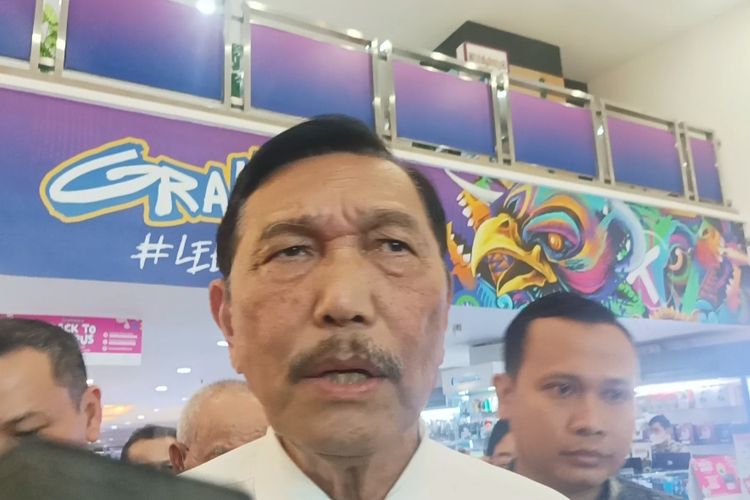
Dian Erika Nugraheny, Icha Rastika, Jakarta — Coordinating Minister for Maritime Affairs and Investment Luhut Binsar Pandjaitan says that the environmental impact analysis (Amdal) for the Eco City project on Rempang Island, Batam, is still in process.

According to Pandjaitan, there are no problems with the Amdal.

“Yeah, right now everything is in the process. There aren’t any problems”, said Pandjaitan after attending a launch and discussion on the book “Luhut Binsar Pandjaitan According to us” at the Gramedia Matraman bookstore in Jakarta on Friday September 29.

Pandjaitan emphasised that there is no target for resolving the problems on Rempang Island.

Earlier, Investment Minister Bahlil Lahadalia said that the government had already conducted a thorough study of the Eco City project and the glass and solar panel industry that is to be established on Rempang Island.

Lahadalia rejected criticism from the Indonesian Forum for the Environment (Walhi) about the risk of environmental damage as a consequence of the project on Rempang.

“It’s been done already, of course (it’s part of the study). Walhi shouldn’t feel like it knows better than the government. You are behaving like this country, as if its regulated by some other institution”, he said during a press conference on Monday September 25 as reported by Kompas TV.

Lahadalia said that there is already an Amdal on the construction project on Rempang, and insisted that the Eco City project will not harm the local environment.

“Where is there a country that wants to bring suffering to its people?

Write this down carefully, we respect Walhi’s thoughts, but the country also has its goals”, he said.

“There is an Amdal, if in this country we keep worrying, continue to be suspicious, when do you want to move forward? We’re being given spice to curry suspicion, keep being afraid, when do we want to progress”, he said.

[Translated by James Balowski. The original title of the article was

“Luhut: Amdal Rempang Eco City Masih Proses, Enggak Ada Masalah”.]

Indonesian police raid church office, home in Nduga – arrest six, torture 12 

Asia Pacific Report

Members of Indonesia’s Nduga District Police and the Damai Cartenz Police Task Force have raided a residential house and the local head office of the Papuan Tabernacle Church (Kingmi Papua) in the town of Kenyam, Nduga Regency, Papua Pegunungan Province, reports Human Rights Monitor.

Before raiding the Kingmi Papua office on September 17, the police officers arbitrarily arrested Melince Wandikbo, Indinwiridnak Arabo, and Gira Gwijangge in their home in Kenyam.

They were tortured and forced to reveal the names of people who had attended a recent burial of several members of the West Papua National Liberation Army (TPNPB).

After one of the suspects mentioned the name of Reverend Urbanus Kogeya, the police officers searched the Kingmi Papua Office in Kenyam.

They arrested three other Papuans without showing a warrant. Police officers reportedly beat them during arrest and subsequent detention at the Nduga District police headquarters.

Everybody detained were later released due to lack of evidence.

Local Kingmi Papua church leaders and congregation members slept inside the Kingmi head office that night because they were preparing for a church event.

Around 11:30 pm, the police officers forcefully entered the office, breaking the entrance door.

Excessive force
According to the church leaders, the officers used excessive force against the suspects and the office facilities during the raid. Nine people suffered injuries as a result of police violence during the raid at the Kingmi Papua office — including an 85-year-old man and four women.

As Reverend Nataniel Tabuni asked the officers why they had come at night and broken the entrance door, a police officer approached him and punched him three times in the face.

According to Reverend Tabuni, one of the police officers ssaid: “You are the Church of Satan, the Church of Terrorists! You are supporting Egianus Kogeya [TPNPB Commander in Nduga] under the pretext of praying.”

The acts of torture were witnessed by the head of Nduga Parliament (DPRD), Ikabus Gwijangge.

He reached the Kingmi Papua Office around 11:45 pm after hearing people shouting for help.

As Gwijangge saw the police officers beating and kicking suspects, he protested the use of excessive force and called on the officers to follow procedure.

‘I’ll come after you’
A Damai Cartenz officer reportedly pointed his finger at Gwijangge and threatened him, saying: “Stupid parliamentarian. I’ll come after you! Wherever you go, I will find out where you are. I’ll chase you!”

Another police officer pushed Gwijangge outside the building to prevent him from witnessing the police operation. After that, the police officers searched all the office rooms and broke another office door.

The Nduga police chief (Kapolres), Commissioner Vinsensius Jimmy, has apologised to the local church leaders for the misconduct of his men.

The victims demanded that the perpetrators be processed according to the law.

Congregation members in Kenyam carried out a spontaneous peaceful protest against the police raid and violence against four Kingmi Papua pastors.

The Human Rights Monitor (HRM) is an independent, international non-profit project promoting human rights through documentation and evidence-based advocacy. HRM is based in the European Union and active since 2022.

————————