29 people killed fighting for their right to land under Jokowi’s watch:

Kompas.com – September 24, 2023

Vitorio Mantalean, Ambaranie Nadia Kemala Movanita, Jakarta — The Agrarian Reform Consortium (KPA) has recorded 2,710 incidents of agrarian conflicts between 2015 and 2022 or during the nearly nine years of administration of President Joko “Jokowi” Widodo.

KPA Secretary General Dewi Kartika said that these agrarian conflicts have broken out in many parts of the country and involve some 5.8 million hectares of land which are the source of livelihood for 1.7 million families.

“Meanwhile there are 1,687,000 hectares or more structural agrarian conflict areas that have been occupied, guarded and fought by KPA members in various regions that are continuously being safeguarded and defended from the threat of deprivation or eviction by private sector and state bodies as well as development projects that are anti-agrarian reform”, explained Kartika during a virtual discussion on Sunday September 24 organised by the KPA to mark National Farmers Day 2023.

The KPK has recorded that over the same time period, at least 1,615 local residents have been arrested by police and criminalised for defending their rights to their land.

“As many as 77 people have been victims of shootings because security forces are still being mobilised in regions where there are agrarian conflicts”, said Kartika.

As a result of this repressive approach, some 842 residents have been indicted by the courts.

Not stopping there, the agrarian conflicts that have broken out during the Widodo era have also resulted in the loss of life. “There were 29 people who had to lose their lives in areas of agrarian conflicts because they defended their rights”, she said.

Kartika added that these agrarian conflicts continue to take place across all sectors ranging from plantations, corporate agriculture, mining, infrastructure development and property developments, to coastal areas and small islands.

Some of these have been triggered by national strategic projects (PSN) which are considered to be “land hungry” and lead to the liberalisation of the industrial sector and sacrificing local communities.

Many national strategic projects use the “domain verklarin” approach which is based on the principle that if a person cannot prove the ownership of their land then it belongs to the state and they are not entitled to occupy it.

This principle is problematic because it ignores communal rights over land that has been cleared, cultivated and occupied by generation after generation.

As a consequence, the KPA has recorded that national strategic projects during the Widodo era have triggered at least 73 agrarian conflicts over the last three years.

Kartika also disagrees that these projects bring prosperity to the communities that are evicted.

“The theft of ordinary people’s land in rural areas has resulted in rural communities being discarded and becoming poorly paid labourers, informal workers or migrating to the cities or overseas”, she said.

The KPA also highlighted the performance of the National Agrarian Reform Team and the Agrarian Reform Task Force (GTRA), both of which have stalled despite being formed especially to resolve the problem of agrarian reform.

According to Kartika, this poor performance has resulted in the agrarian problems over the last nine years of the Widodo regime never being properly addressed.

[Translated by James Balowski. The original title of the article was “Konflik Agraria Era Jokowi, KPA: 29 Warga Tewas Perjuangkan Hak atas Tanah”.]

Source:

https://nasional.kompas.com/read/2023/09/24/21395241/konflik-agraria-era-jokowi-kpa-29-warga-tewas-perjuangkan-hak-atas-tanah

AWPA letter to Australian Foreign Minister

Australia West Papua Association (Sydney) 

PO Box 28, Spit Junction,  

NSW 2088 

Senator the Hon Penny Wong 

PO Box 6100
Senate
Parliament House
Canberra ACT 2600 

27  September  2023 

Dear Foreign Minister, 

I am writing to you on behalf of the Australia West Papua Association in Sydney concerning the torture and killing of civilians in West Papua.  

The Guardian (26 September 2023) reported that the Indonesian security forces had tortured and burned to death a 17-year-old high school student Wity Unue. 

An extract from the Guardian repot quoting Raga Kogeya, a West Papuan human rights activist. 

“Wity had been interrogated and detained along with three other boys and two young men under suspicion of being part of the troubled region’s rebel army. They were taken by special forces soldiers who rampaged through the West Papuan village of Kuyawage, burning down houses and a church and terrorising locals. Transported by helicopter to the regional military headquarters 100km away, the group were beaten and burnt so badly by their captors that they no longer looked human. 

Kogeya says Wity died a painful death in custody. The other five were only released after human rights advocates tipped off the local media.  “The kids had all been tortured and they’d been tied up and then burned,” says Kogeya, who saw the surviving boys’ injuries first-hand on the day of their release. https://www.theguardian.com/world/2023/sep/26/indonesian-military-accused-of-targeting-children-west-papua 

Numerous reports have documented the ongoing human rights abuses in West Papua, the burning of villages during military operations and the targeting of civilians including children. 

The most recent report by Human Rights Monitor titled “Destroy them first… discuss human rights later”(August 2023),   brings to attention the shocking abuses  that are ongoing in West Papua and should be of concern to the Australian Government. 

Extract 

“This report provides detailed information on a series of security force raids in the Kiwirok District, Pegunungan Bintang Regency, Papua Pegunungan Province (until 2022 Papua Province) between 13 September and late October 2021. Indonesian security forces repeatedly attacked eight indigenous villages in the Kiwirok District, using helicopters and spy drones. The helicopters reportedly dropped mortar grenades on civilian homes and church buildings while firing indiscriminately at civilians. Ground forces set public buildings as well as residential houses on fire and killed the villagers’ livestock. “https://humanrightsmonitor.org/wp-content/uploads/2023/08/HRM_Destroy_Them_First_Special_Report_2023.pdf 

The Indonesian security force operations have also created thousands of internal refugees who have fled to the forests to escape the Indonesian military. It has been estimated that there are up to 60,000 IDPs in the highlands living in remote shelters in the forest and  they lack access to food, sanitation, medical treatment, and education.  

In light of the ongoing human rights abuses in the territory,  we are urging you to use your good office with the Indonesian Government,  

To urge  Jakarta to immediately halt all military operations in West Papua 

To urge Jakarta to supply aid and health care to the West Papuan internal refugees by human rights and health care organisations trusted by the local people 

and to rethink Australia cooperation with the Indonesian military until the Indonesian military is of a standard acceptable  to the Australian people who care about human rights. 

Yours sincerely 

Joe Collins 

AWPA (Sydney) 

Freeport Boss Says Gresik Smelter to be Finalized 

May 2024 

 Translator Najla Nur Fauziyah 

Editor Mahinda Arkyasa

 27 September 2023 02:21 WIB

TEMPO.COJakarta – President Director of Freeport Tony Wenas reported the progress development of a copper smelter in Gresik, East Java. “At the end of August [the development] reached 76% of progress,” he said when met at Safe Forum 2023 in Jakarta on Tuesday, September 26, 2023. 

“Hopefully, the physical construction of this smelter will reach 100% at the end of the year and begin operation in May 2024,” he explained.

Earlier in 2021, Freeport Indonesia kick-started the development of Gresik Smelter and targeted the finalization for next year. The smelting factory is said to have a 1.7 million tonnes per year production capacity and 6,000 tonnes per year production capacity of precious metal refinery. 

Meanwhile, the smelter will produce copper cathodes, gold and silver bullion bars, platinum group metals, and additional products such as sulfuric acid, gypsum, lead, and slag.

The Freeport smelter is projected to produce 600,000 tonnes of copper, 50 tonnes of gold, and 210 tonnes of silver each year. 

Freeport Indonesia through this project has realized US$2.2 billion of investment through May 2023. The smelter has also absorbed US$3 billion. 

‘The kids had all been tortured’: Indonesian military accused of targeting children in West Papua

Exclusive: Australia is seeking to strengthen ties with Indonesia, despite new reports of brutality by the military — including the torture and murder of civilians — in West Papua

 by Marni Cordell

The body of 17-year-old Wity Unue was brought back by the Indonesian military in a box, witnesses say. When soldiers couldn’t find his family, they burned the cardboard coffin, with his body inside, in a clearing at the end of a road in the remote highlands of West Papua.

The high school student, a promising musician and songwriter, had been tortured and burned to death.

His parents – who had recently fled a military crackdown in fear for their lives – were shocked and devastated when they found out, says Raga Kogeya, a West Papuan human rights activist.

Kogeya says that days earlier, on 7 April this year, Wity had been interrogated and detained along with three other boys and two young men under suspicion of being part of the troubled region’s rebel army. They were taken by special forces soldiers, who rampaged through the West Papuan village of Kuyawage – burning down houses and a church and terrorising locals.

Transported by helicopter to the regional military headquarters 100km away, the group were beaten and burnt so badly by their captors that they no longer looked human.

Kogeya says Wity died a painful death in custody. The other five were only released after human rights advocates tipped off the local media.

“The kids had all been tortured and they’d been tied up and then burned,” says Kogeya, who saw the surviving boys’ injuries first-hand on the day of their release.

“[The military] had heated up machetes and knives and pressed it against their skin … They didn’t even look like humans. They were burnt from head to toe. They were in a really bad way.”

Human rights advocates say the incident is one of many in recent years that go beyond a historical crossfire between the Indonesian military and West Papua’s rebel army, which regularly attacks and kills members of the Indonesian military and police.

Last year UN human rights experts called for urgent and unrestricted humanitarian access to the region over serious concerns about “shocking abuses against Indigenous Papuans, including child killings, disappearances, torture and mass displacement of people.”

Locals say civilians have increasingly become the target.

‘These are just kids’

When the military detains boys and young men in West Papua, they claim it’s because they are members of the West Papuan Liberation Army, or TPNPB, says Yones Douw, the head of the Peace and Justice Department for the Kingmi church of Papua.

“They say ‘oh we thought they were guerrillas’. But there’s no way that the guerrillas are walking around looking like schoolkids – that doesn’t happen,” he says. “The guerrillas are not walking around in the streets.”

“This is happening to ordinary people – we’re being arrested and beaten. And these are just kids often; they’re not even out of high school yet. It’s really dangerous.”

The day before the boys’ detention, in the same region of Nduga, soldiers opened fire on a group of women and children returning with string bags filled with food from shopping in a neighbouring village, locals say.

Those at the front of the group dropped to the ground in time but a teenage girl at the rear was shot. In a photo seen by Guardian Australia, the girl, whose name is Parina, lies on her side on a mat on the floor. She has a gaping wound in her lower back. Locals say she fled to a remote refugee camp with no electricity or healthcare services soon after – with the bullet still lodged inside her abdomen.

Nopinanus Kogoya, an uncle of one of the tortured boys, says the attacks are proof that ordinary West Papuans are being deliberately targeted by the Indonesian military – not just caught in crossfire as soldiers wage war against the militants.

“The military could tell that [the group of women and children] were not combatants,” Kogoya says. “And they still shot them.”

“They know we’re carrying vegetables not guns – so why are they shooting at us and why are they arresting us?

“They’re hunting us in this inhumane way.”

What is going on in West Papua?

The former Dutch colony is just 250km from mainland Australia. It’s a short boat ride from the northern islands of the Torres Strait. But most Australians know little about the war that is raging there.

The lack of knowledge is partly by design: very little about West Papua reaches the outside world because Indonesia tightly controls access for foreign journalists and human rights monitors.

The region makes up the western half of the island of New Guinea to Australia’s north – the eastern half is the independent nation of Papua New Guinea.

When the Netherlands began preparing for withdrawal in the 1950s, West Papuans pushed strongly for independence. As Melanesians, they see themselves as part of the Pacific, not south-east Asia. But their powerful neighbour had other ideas.

Indonesia put pressure on the Netherlands to hand over the resource-rich region. When that didn’t work, it began to prepare for a full scale invasion.

A ceasefire was brokered by the United Nations, and a UN-backed ballot was held in 1969, ostensibly to allow West Papuans to have their say on integration with Indonesia.

But advocates say the “Act of Free Choice” was rigged from the start. Just 1,022 West Papuan leaders were handpicked by Indonesian officials to represent the entire population, and they were coerced and threatened at gunpoint to rejectindependence.

In this environment, support for integration was unanimous. The result was rubber-stamped by the UN.

Indigenous West Papuans continue to demand a real vote on self-determination, mostly through acts of civil disobedience such as raising the banned ‘Morning Star’ flag. They pay a heavy price in police and military brutality, as well as long jail sentences, for their activism.

“There are two students [currently] on trial for holding a flag,” says Douw, who also works with the investigations division of human rights organisation Elsham. “We have witnesses [in legal cases] being hunted. We have journalists being hunted.”

But the region is also home to the TPNPB, who regularly launch attacks and engage in skirmishes with the Indonesian security forces.

Under ‘complete military occupation’

In a photo that appears to have been taken by the military after Wity’s death, seen by Guardian Australia, his young face looks beaten and bruised. In another, a small group of friends stands in heavy rain at his gravesite.

The youngest of five siblings, he loved playing traditional guitar, composing songs, and was “always entertaining other people”, Kogeya says. He was “a lovely person [who was] always helping others”.

Before he died, he helped evacuate a group of refugees on foot from an area that was under constant military attack. Kogeya is adamant he was not a member of the TPNPB.

The regency of Nduga (pronounced: en-doo-ga), where Wity and his friends were from in the West Papuan highlands, is a stronghold of the TPNPB and a hotspot in the conflict. The area is under what locals describe as “complete [Indonesian] military occupation”.

“We can’t do anything here,” says Nopinanus Kogoya. “People are even dying of hunger in the street because they can’t farm, they can’t go anywhere. We’re just completely, completely under the control of this fierce military occupation.”

He says the military’s actions go far beyond what is required to contain the security situation and are often not just violent, but cruel. “They’ll kill livestock just for the hell of it – they just go and kill people’s pigs and cows. They’ve also raped women.”

Human rights groups say the military buildup began in 2018, after the TPNPB killed 17 construction workers building a bridge in Nduga. The militants claimed the dead were military personnel disguised as civilians, but Human Rights Watch disputes this and says at least some of them were in fact ordinary Indonesian workers.

Locals say the brutality escalated in February this year, when Phillip Mehrtens, a New Zealand pilot working for Indonesian airline Susi Air, was taken hostage and his plane burned by the rebel army at Nduga airport.

The 37-year-old father and husband is still being held after negotiations broke down between his captors and the New Zealand government and Indonesian rescue missions failed. It’s understood he hasn’t been harmed by the militants but he’s in a very remote area with no access to health services.

In a proof-of-life video released by the militants in April, Mehrtens pleaded with the military to stop dropping bombs on the jungle camp where he’s being held. “Please, there is no need, it is dangerous for me and everybody here,” he said. “Thank you for your support.”

Dozens of Indonesian soldiers have so far been killed by the TPNPB during the failed operations to rescue Mehrtens – and this in turn has led to more civilian deaths.

“The military operation to free him included Kopassus, and Kopassus are elite combat troops,” says Douw. “They shoot to kill – and they have killed [ordinary] people in this operation.

“People are really afraid.”

Australia seeks closer ties

In August, Indonesian para raiders dropped from the sky above Shoalwater Bay in Queensland as part of Operation Talisman Sabre, a multi-country war games event.

It was the first time that Indonesia had fully participated in the biennial exercise, and was a jarring sight for anyone who has followed the chequered history of military ties between the two countries.

A spokesperson for the defence department told Guardian Australia that “Indonesia is one of Australia’s closest and most important defence partners”, but it hasn’t always been that way, according to Donald Rothwell, a professor of international law at ANU.

The two countries spectacularly fell out over Australia’s involvement in the intervention in Timor-Leste in 1999, and military cooperation was temporarily suspended. The relationship has been tested numerous times since.

Now, Australia is seeking to forge closer military ties in negotiations on a “defence cooperation agreement” – a “treaty-level instrument” that will be legally enforceable before an international court, says Rothwell.

Defence minister Richard Marles has said the agreement will be “ambitious”, with “a high level of cooperation, befitting what should be the security relationship between two friendly countries who are neighbours with each other”.

“We want to see greater opportunities for our defence forces to work together, to exercise together, to use each other’s facilities,” he said.

Australia also provides weapons and other tools of war to Indonesia, including a recent shipment of 15 Bushmaster armoured vehicles, intended for use by Indonesian special forces during peacekeeping missions.

The defence minister and alleged war crimes

In February, there was another first: a photo of the Indonesian defence minister, Prabowo Subianto, in Canberra’s parliament house, standing alongside Australian foreign minister Penny Wong and Marles.

The former commander of the special forces has not always been a welcome guest in Australia because of his alleged involvement in some of the most deadly military-sponsored crimes in Indonesian history.

In the 1980s and 90s, Prabowo was allegedly involved in the planning and execution of numerous targeted killings of East Timorese civilians, including a 1983 massacre that killed hundreds, mostly men, in Kraras – since known as “the village of widows”.

Prabowo did not respond to questions from Guardian Australia but has previously called claims about his involvement in Kraras “unproven allegations, innuendoes and third-hand reports”.

In 1998, he was allegedly involved in the kidnapping and disappearance of more than 20 Indonesian student activists, many of whom remain missing. Soon after he was discharged from the army for his alleged involvement in the abductions. He has never been prosecuted. In January, president Joko Widodo made a rare public apology for a number of historical “gross human rights violations” in Indonesia, including this one.

For many years Prabowo was reportedly on an unofficial visa blacklist in Australia, and was banned from entering the US. But his first run for president in 2014 – and his subsequent appointment to the ministry by Widodo – changed that. He is now making another tilt for president for when Widodo’s term ends in 2024.

Andreas Harsono, who is Indonesia researcher for Human Rights Watch, acknowledges foreign governments face a difficult task when engaging with the alleged war criminal.

“It’s unavoidable because he’s the defence minister but there are many things that governments can do to send a message that they do not approve of his track record,” he says.

“For instance, they can meet him somewhere other than their headquarters, or decline photo opportunities with him.

“Whether the Australian government meets with him or not, they should be acknowledging the serious human rights abuses he has been involved in.”

At a June press conference in Jakarta, Marles waxed lyrical about a recent visit with his counterpart to the Royal Military College, Duntroon, where Prabowo trained as a cadet in 1974. It was a “poignant moment” for Australian officers to “see what happens to officer cadets who do their training at Duntroon”, he said.

A defence department spokesperson said Marles engages with Prabowo “as a senior member of a democratically elected government”.

“The Australian government has regular and open discussions with Indonesia on a range of issues including the Papua provinces and human rights,” they said. “Our bilateral defence activities incorporate training on professionalism and the laws of armed conflict.”

A message for Australia

The year after Prabowo trained as a young cadet in Australia, Father Dorman Wandikbo, the president of the evangelical church of Indonesia and a veteran of the West Papuan independence struggle, fled military violence in his home town of Wamena.

He says he spent five years as a refugee in the jungle before joining the priesthood, and later, nine months in jail for a speech in which he urged West Papuans to rise up against injustice.

In West Papua, Prabowo is “greatly feared and shunned”, Wandikbo tells Guardian Australia from Port Vila, Vanuatu, where he is taking part in a meeting of civil society delegates working on a roadmap for West Papuan independence.

He has a stark message for the Australian government: “Stop the military aid, stop selling [military] equipment to Indonesia and stop training the special forces and the police from Indonesia.”

“Australia wants this close relationship [with the Indonesian military] because they think they’re protecting Australia’s security from terrorism,” he says.

“But those weapons are not being used to protect Australia from terrorism. Those weapons are not supporting Australia’s security. Those bullets, those guns, those military vehicles are ending up in Papua and harming Papuans.”

Wandikbo says there are two things he asks Australians to do when he talks to them about the conflict. “One: ask that [Indonesia] let foreign journalists into Papua; and two: ask that they allow the UN Human Rights Commission to enter West Papua. Those are the two things we want the solidarity movement to press for.”

Parina’s condition unknown

Without access to doctors or medicine, injured teenager Parina is likely to be in a dire condition. No one Guardian Australia spoke to knows whether her bullet wound festered or healed; whether she lived or died.

Locals say the remote refugee camp she fled to is completely inaccessible because of military checkpoints and snipers.

Eneko Bahabol, who does advocacy work with refugees in the highlands, says in his visits to similar camps he’s seen children, women and the elderly dying, as well as more than a dozen untreated serious diseases – pneumonia, rheumatic fever and amoebic dysentery among them.

Between 60,000 and 100,000 people from the West Papuan highlands are displaced, according to the UN. Bahabol says many live in poverty in nearby towns, with no money or access to land to grow food, while others have fled to camps in the jungle.

“We’re pretty worried about these refugees because as time goes on, their condition is worsening and the longer they are in refugee camps, the worse the outcomes [will be] for them,” he tells Guardian Australia. “Their physical condition is pretty bad.”

“All of the refugees in camps are saying the same two things: we want to go home, and we want the military out,” he says. “They also [say] the TPNPB and the Indonesian army have to come to some kind of agreement about ending the conflict.

“They’re not going to feel OK to go home unless there is an agreement about [that].”

In recent weeks, the Indonesian military has launched a new offensive against the militants in the neighbouring regency of Yahukimo. Locals say at least five civilians have been killed.

The military did not respond to questions from Guardian Australia.

In Port Vila, Wandikbo says what’s happening in West Papua is a slow-motion genocide. “We feel, as Papuans, if we stay within the nation of Indonesia, we will be finished,” he says.

“We will be wiped out.”

Translation by Zelda Grimshaw

  • Research for this article was supported by a grant from the Melbourne Press Club’s Michael Gordon Fellowships program.
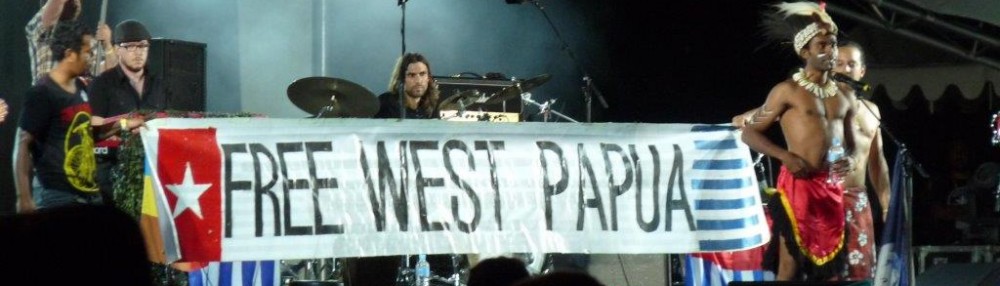
Release of Victor Yeimo from Indonesian prison rekindles West Papuan fight against racism

Prominent West Papuan independence activist Victor Yeimo was yesterday released from prison in Jayapura, Indonesia’s occupied capital of West Papua, sparking a massive celebration among thousands of Papuans.

His release has ignited a spirit of unity among Papuans in their fight against what they refer to as racism, colonialism, and imperialism.

His jailing was widely condemned by global human rights groups and legal networks as flawed and politically motivated by Indonesian authorities.

“Racism is a disease. Racism is a virus. Racism is first propagated by people who feel superior,” Yeimo told thousands of supporters.

He described racism as an illness and “even patients find it difficult to detect pain caused by racism”.

Victor Yeimo’s speech:

“Racism is a disease. Racism is a virus. Racism is first propagated by people who feel superior. The belief that other races are inferior. The feeling that another race is more primitive and backward than others.

“Remember the Papuan people, my fellow students, because racism is an illness, and even patients find it difficult to detect pain caused by racism.

“Racism has been historically upheld by some scientists, beginning in Europe and later in America. These scientists have claimed that white people are inherently more intelligent and respectful than black people based on biological differences.

“This flawed reasoning has been used to justify colonialism and imperialism in Africa, Asia, and the Pacific, with researchers misguidedly asserting genetic and ecological superiority over other races.

“Therefore, there is a prejudice against other nations and races, with the belief that they are backward, primitive people, belonging to the lower or second class, who must be subdued, colonised, dominated, developed, exploited, and enslaved.

“Racism functions like a pervasive virus, infecting and spreading within societies. Colonialism introduced racism to Africa, Asia, and the Pacific, profoundly influencing the perspectives and beliefs of Asians, Indonesians, and archipelago communities.

“It’s crucial to acknowledge that the enduring impact of over 350 years of racist ideology from the Dutch East Indies has deeply ingrained in generations, shaping their worldview in these regions due to the lasting effects of colonialism.

“Because racism is a virus, it is transmitted from the perpetrator to the victim. Colonised people are the victims.

“After Indonesia became independent, it succeeded in driving out colonialism, but failed to eliminate the racism engendered by European cultures against archipelago communities.

“Currently, racism has evolved into a deeply ingrained cultural phenomenon among the Indonesian population, leaving them with a sense of inferiority as a result of their history of colonisation.

“Brothers and sisters, I must tell you that it was racism that influenced Sukarno [the first President of Indonesia] to say other races and nations, including the Papuans, were puppet nations without political rights.

“It is racist prejudice.

“There is a perception among people from other nations, such as Javanese and Malays, that Papuans have not advanced, that they are still primitives who must be subdued, arranged, and constructed.

“In 1961, the Papuans were building a nation and a state, but it was considered an impostor state with prejudice against the Papuans. It is important for fellow students to learn this.

“It is imperative that the Papuan people learn that the annexation of this region is based on racist prejudice.

“The 1962 New York Agreement, the 1967 agreement between Indonesia and the United States regarding Freeport’s work contract, and the Act of Free Choice in 1969 excluded the participation of any Papuans.

“This exclusion was rooted in the belief that Papuans were viewed as primitive and not deserving of the right to determine their own political fate. The decision-making process was structured to allow unilateral decisions by parties who considered themselves superior, such as the United States, the Netherlands, and Indonesia.

“In this arrangement, the rightful owners of the nation and homeland, the Papuan people, were denied the opportunity to determine their own political destiny. This unequal and biased treatment exemplified racism.”

Victor Yeimo’s imprisonment
According to Jubi, a local West Papua media outlet, Victor Yeimo, international spokesperson of the West Papua Committee National (KNPB), was unjustly convicted of treason because he was deemed to have been involved in a demonstration protesting against a racism incident that occurred at the Kamasan III Papua student dormitory in Surabaya, East Java, on 16 August 2019.

He was accused of being a mastermind behind riots that shook West Papua sparked by the Surabaya incident, which led to his arrest and subsequent charge of treason on 21 February 2022.

However, on 5 May 2023, a panel of judges from the Jayapura District Court ruled that Victor Yeimo was not guilty of treason.

Nevertheless, the Jayapura Court of Judges found Yeimo guilty of violating Article 155, Paragraph (1) of the Criminal Code.

The verdict was controversial because Article 155, Paragraph (1) of the Criminal Code was never the charge against Victor Yeimo.

The article used to sentence Victor Yeimo to eight months in prison had even been revoked by the Constitutional Court.

On 12 May 2023, the Public Prosecutor and the Law Enforcement and Human Rights Coalition for Papua, acting as Victor Yeimo’s legal representatives, filed appeals against the Jayapura District Court ruling.

On 5 July 2023, a panel of judges of the Jayapura High Court, led by Paluko Hutagalung SH MH, together with member judges, Adrianus Agung Putrantono SH and Sigit Pangudianto SH MH, overturned the Jayapura District Court verdict, stating that Yeimo was proven to have committed treason, and sentenced him to one year in imprisonment.

Jubi.com stated that the sentence ended, and at exactly 11:17 WP, he was released by the Abepura Prerequisite Board.

International response
Global organisations, such as Amnesty International and Human Rights Watch have condemned the Indonesian government’s treatment of Papuans and called for immediate action to address the issue of racism.

They have issued statements, conducted investigations, and raised awareness about the plight of Papuans, urging the international community to stand in solidarity with them.

Yeimo’s release brings new hope and strengthens their fight for independence.

His release has not only brought about a sense of relief and joy for his people and loved ones but has also reignited the flames of resistance against the Indonesian occupation.

At the Waena Expo Arena in Jayapura City yesterday, Yeimo was greeted by thousands of people who performed traditional dances and chanted “free West Papua”, displaying the region’s symbol of resistance and independence — the Morning Star flag.

Thousands of Papuans have united, standing in solidarity, singing, dancing, and rallying to advocate for an end to the crimes against humanity inflicted upon them.

Victor Yeimo’s bravery, determination and triumph in the face of adversity have made him a symbol of hope for many. He has inspired them to continue fighting for justice and West Papua’s state sovereignty.

Papuan communities, including various branches of KNPB offices represented by Victor Yeimo as a spokesperson, as well as activists, families, and friends from seven customary regions of West Papua, are joyfully celebrating his return.

Many warmly welcome him, addressing him as the “father of the Papuan nation”, comrade, and brother, while others express gratitude to God for his release.

Yamin Kogoya is a West Papuan academic who has a Master of Applied Anthropology and Participatory Development from the Australian National University and who contributes to Asia Pacific Report. From the Lani tribe in the Papuan Highlands, he is currently living in Brisbane, Queensland, Australia.

Thousands turn out to welcome Papua activist Victor Yeimo’s release from prison

Suara Papua – September 23, 2023

Agus Pabika, Jayapura — West Papua National Committee (KNPB) international spokesperson Victor F. Yeimo was released from the Abepura Penitentiary in Jayapura city on Saturday September 23. He was greeted by family members, activists, his team of lawyers and thousands of ordinary Papuans.

On May 5 Yeimo sentence to eight months in prison on charges of makar (treason, subversion, rebellion) for allegedly being involved in and mobilising anti-racism protests in Jayapura on August 19 and 29, 2019.

At exactly 11.17 am, Yeimo was escorted out of the Abepura Penitentiary by prison officials.

He was then greeted by family members and his team of lawyers from the Papua Law Enforcement and Human Rights Coalition (KPHHP), advocates Emanuel Gobay, Persila Heselo, Gustaf Kawer and other team members. Also present was Papua Regional House of Representatives (DPRD) lawmaker Laurenzus Kadepa.

Yeimo said that his release today is not the end of the struggle and called on all Papuan people to continue to fight racist discrimination.

“Today I am free, but the continuing struggle is to be free from racism that still exists in [and is still a festering wound in this country]”, said Yeimo.

Yeimo was then accompanied in a procession to the Waena Expo to take part in a thanksgiving event to celebrate his release. The procession and thanksgiving event were closely watched over by police.

Activists blocked by police

Scores of activists who went to the Abepura Penitentiary to pick Yeimo up however were initially blocked by police at the Abepura taxi traffic circle.

An argument broke out between the activists, Yeimo’s team of lawyers and the police who were on guard in front of the Sumber Makmur shop. In the end however, they were allowed to greet Yeimo at the prison.

During the procession from the Abepura prison, Yeimo and his entourage were closely guarded by police until they reached the Waena Expo where the thanksgiving event was to be held.

Also present at the thanksgiving was acting Papua Council of Churches moderator Benny Giay and United Liberation Movement for West Papua

(ULMWP) Secretary Markus Haluk.

The thanksgiving was held under the theme “Racism is a Global Enemy”.

When Yeimo arrived, he was greeted by thousands of supporters, traditional dances by different tribal groups and shouts of “Free Papua”.

A number of those present wore the Moring Star independence symbols on their bodies or noken (knitted or woven bags). Others unfurled KNPB flags.

“All of the resistance groups have joined us here. The KNPB, the Papuan Traditional Council, Sonamapa [West Papua Youth and Student National Solidarity], Green Papua and all of the people and student movements that have joined in”, said organising committee head Kamus Bayage in welcoming Yeimo’s release.

[Translated by James Balowski. The original title of the article was “Victor Yeimo Disambut Ribuan Rakyat Papua Dengan Ibadah Syukur”.]

The Yahukimo Church said the 5 people who died in Muara Kali Brasa were not TPNPB members

We can say that they are not members of the TPNPB. They are village youth. They usually deliver food to the village. after buying it at Dekai

News Desk – Five People Found Dead in Brasa River

September 16, 2023

Jayapura, Jubi TV– Chairman of the Fellowship of Yahukimo Churches or PGGY, Pastor Atias Matuan stated that the five civilians who were shooting victims and were found dead at the mouth of the Brasa River, Dekai, capital of Yahukimo Regency, Mountain Papua, were not members of the West Papua National Liberation Army or TPNPB. This was stated by Atias Matuan when contacted on Friday (15/9/2023).

Pastor Atias Matuan, who is also the Pastor of the Kingmi Papua Church, explained that the five civilians were Darnius Heluka, Musa Heluka, Man Senik, Yoman Senik, and Kaраі Payage. According to him, the five victims were members of the Kingmi Papua Church who were only 15-18 years old, and ordinary civilians.

“We can say that they are not members of the TPNPB. They are village youth. They usually deliver food to the village. after buying it at Dekai. “When they wanted to go to the village, they walked without carrying sharp tools or weapons, but Indonesian security forces immediately shot them until they died,” said Matuan.

Matuan said the families of the five victims had also explained that Darnius Heluka, Musa Heluka, Man Senik, Yoman Senik, and Kapаі Payage were not members of the TPNPB. “They are young people from the village, most of them have dropped out of school,” he said.

On Friday, PGGY accompanied the family to collect the bodies of the five victims at the Yahukimo Regional General Hospital (RSUD). “After seeing their bodies with gunshot wounds to the stomach, chest and legs,” said Matuan.

Matuan said TNI officers had a guard post at the Dekai urban boundary, so that residents who wanted to travel from Dekai were required to report to the security post. “Residents must report to the security post. “If they don’t report it, they are considered part of the TPNPB, even though they don’t carry war equipment,” he said.

Matuan explained that Darnius Heluka, Musa Heluka, Man Senik, Yoman Senik, and Kaраі Payage had been buried at the Kilo Enam Public Cemetery (TPU) in Dekai. “The family agreed not to carry out a mourning [ceremony], because they died as heroes of the Papuan nation. “We immediately buried their bodies,” said Matuan.

According to him, the group of mourners arrived at Kilo Enam TPU at around 11.00 WP. “When we arrived at Kilo Enam TPU, the security forces, the majority of whom were Papuan children, were digging graves. [After] the security forces left the place, we buried [the victims] and dispersed,” he said.

Matuan said that if the TPNPB and TNI/Polri want to continue fighting each other to defend their respective beliefs, the armed conflict should not sacrifice civilians. “TPNPB and TNI must protect the community, so that the community does not experience victims [or] displacement,” he said.

Matuan said that his party had difficulty mediating in the armed conflict, because he felt that the Indonesian security forces did not trust the Servant of God. “The Indonesian state no longer trusts [members of] the Regional People’s Representative Council, governors, regents. So us wanting to step in [to] mediate [the conflict] is also difficult. I advise the public to each take care of [themselves]. “We need to convey that in the church, in the pulpit,” he said.

On Friday, the Head of Public Relations for the Papua Regional Police, Kombes Ignatius Benny Ady Prabowo, stated that the bodies of the five residents were found after a firefight occurred between TNI/Polri security forces and the TPNPB armed group on Thursday (14/9/2023). Benny stated that at the same location the police found two magazines and four bullets. (*)

This article was published on jubi.id with the title: PGGY: 5 shooting victims in Yahukimo were not TPNPB members

————–

TPNPB stated that the 5 victims found dead in Yahukimo were not its members

September 17, 2023

Writer: Hengky Yeimo | Editor: Aryo Wisanggeni G

Jayapura, Jubi – Spokesperson for the West Papua National Liberation Army or TPNPB, Sebby Sambom, stated that the five victims who were found dead in the Brasa River, Dekai, capital of Yahukimo Regency, Papua Mountains, on Friday (15/9/2023) were not members of the TPNPB.

This was stated by Sebby Sambom on Saturday (16/9/2023). “They are not our members. They were purely civilians who wanted to return to their villages and were shot and bombed by the Indonesian military. The Indonesian military has shot dead civilians who don’t know anything. “We ask the United Nations to immediately carry out an investigation into the killing of indigenous Papuan civilians in Yahukimo,” said Sambom.

On Friday (15/9/2023), five civilians were found dead at the mouth of the Brasa River, Dekai. Head of the Public Relations Division of the Papua Regional Police, Kombes Ignatius Benny Ady Prabowo, stated that the bodies of the five residents were found after a firefight occurred between TNI/Polri security forces and the TPNPB armed group on Thursday (14/9/2023). Benny stated that at the same location the police found two magazines and four bullets.

On Friday, the Chair of the Yahukimo Church Fellowship or PGGY, Pastor Atias Matuan stated that the five civilians who were victims of the shooting were Darnius Heluka, Musa Heluka, Man Senik, Yoman Senik, and Kaраі Payage. According to him, they were ordinary civilians aged 15 – 18 years, and not members of the TPNPB.

Ambom said the TPNPB National Command Central Command Headquarters had received a report from the Commander of the XVI Yahukimo TPNPB-Free Papua Organization, Brigadier General Elkius Kobak, that security forces killed five indigenous Papuan civilians on September 15 2023.

“This incident occurred because the TNI and Polri monitored the movements of TPNPB members in Yahukimo using aerial cameras along the Brasa River. “Usually, [during] this time indigenous Papuan civilians [from] the Ngalik and Kesing tribes commute to [Dekai, Ibu] Yahukimo City,” said Sambom.

Sambom asked the Regent of Yahukimo to take responsibility for allowing the TNI/Polri to build a number of posts in Yahukimo. “TPNPB will not let Indonesia control our territory, because we are the owners of the country,” he said.

Commander of the XVI Yahukimo TPNPB-Free Papua Organization Defense Regional Command, Brigadier General Elkius Kobak also emphasized that the five victims found in the Brasa River on Friday were not members of the TPNPB. “We have confirmed that it was the TNI/Polri who planted the bomb on the road that killed five indigenous Papuan civilians,” he said. (*)

—————————————-

KNPB asks police not to create uproar over Papua activist Victor Yeimo’s release

Suara Papua – September 21, 2023

Jayapura – West Papua National Committee (KNPB) spokesperson Ones Suhuniap is asking Jayapura city police chief (Kapolresta) Senior Commissioner Victor Makbun to stop creating a commotion in the media about a planned thanksgiving meeting to welcome the release of Victor Yeimo.

According to Suhuniap, Makbun does not need to be overly excessive in response to Yeimo’s welcome.

Papua activist Yeimo, who is also the international spokesperson for the KNPB, will be released from the Abepura penitentiary on Saturday September 23.

Earlier in May, the Jayapura District Court sentenced Yeimo to eight months in prison for treason over the anti-racism demonstrations and riots in Jayapura in 2019.

“The statement by the Kapolresta is as if the KNPB organisation will create a commotion, but it is the Kapolresta’s statement itself that is in fact creating a skewed opinion and a commotion. The Kapolresta does not need to create a subjective public opinion about the KNPB without evidence that can be justified”, Suhuniap said on Thursday September 21.

Suhuniap claimed that in every activity the KNPB does in fact prioritise the values of humanity and democracy, uphold human rights and respect the laws and regulations of Indonesia.

He then stated that on the contrary, every activity by the KNPB attracts provocation from the police.

“At every single peaceful demo or religious event, the police always creates a provocation, with the latest being on August 15, 2022, when the KNPB was holding a peaceful demo, instead the police committed violence and torture”, he said.

The KNPB in suspects that thorough Makbun’s statement the police have in fact something bad planned for Yeimo’s release.

“We can believe that the statement publically expressed by the Kapolresta is a way of creating a commotion and preconditioning to frighten the ordinary Papuan people. We are sure there is a plot to criminalise the activity welcoming Victor Yeimo”, said Suhuniap.

“We ask that the Jayapura Kapolresta not create a skewed public opinion or create an uproar”, he said.

The KNPB itself, said Suhuniap, in welcoming Yeimo’s release, will hold thanksgiving prayers and a joint meal that is being planned by the Papuan People’s Front Against Racism (RPMR), which has up until now been campaigning for Yeimo’s release.

“As believers who have faith in God, the RPMR fights racism and is planning thanksgiving prayers, because worship is part of the human rights guaranteed under Indonesian law. The thanksgiving itself will be joined by all the organisational movements, social organisations, associations, church groups, traditional [communities] and the ordinary Papuan people who are anti-racist”.

“All Papuans who are victims of racism will be involved in the thanksgiving for Victor Yeimo’s release. We once again convey to the police, more specifically the Jayapura city police chief, not to create a skewed opinion. The thanksgiving for the release of Victor Yeimo does not need to be politicised with subjective sentiments.”

“To the people in the land of Papua, especially Papuans in the cities of Jayapura, Sentani and Kaerom and surrounding areas, please come peacefully and take part in the thanksgiving prayers. We also convey to non-Papuans in organisations and personally who are against the practice of racism, please join the prayers [as well]”.

Meanwhile the Jayapura district police are planning to deploy a number of personnel to provide security when Yeimo is released on Saturday.

[Translated by James Balowski. The original title of the article was “KNPB Minta Aparat Tidak Memprovokasi Pembebasan Victor Yeimo”.]

Southwest Papua to facilitate native Papuans to study in Japan 

Sorong, Southwest Papua (ANTARA) – Southwest Papua provincial government will facilitate indigenous Papuan high school graduates to enroll in vocational education programs in Japan through the Golden Generation Scholarship (Bisgemas) Program.

“We have opened (scholarship) registration for economically weak native Papuan high school graduates. We will facilitate them through Bisgemas,” stated Adrian Howay, Head of Southwest Papua’s Education and Culture Office, in Sorong, on Sunday.

He further explained that the program is open to Papuan high school and vocational high school graduates in the 2022/2023 academic years.

According to him, the provincial government has allocated 80 percent of the scholarship quota for native Papuan students, while the remaining 20 percent of the quota has been allocated for non-native residents of the province.

“We have spread registration brochures. After a strict selection process, a total of 60 people will be granted the scholarship,” he noted.

He added that the selected participants will later undergo a six-month preparatory phase in a facility belonging to the Bejana Kasih Bumi Papua Foundation in Yogyakarta Province.

During the preparatory phase, the participants will be provided with Japanese language training courses and information on Japanese life and culture, among others, he said.

After completing the preparations, he continued, the 60 scholarship awardees will fly to Japan to enroll in various vocational education programs, such as nursing, foundry, industry, construction, car maintenance, accommodation business, agriculture, fishery, and food and beverages.

“We have established cooperation with universities in Japan (to accommodate the participants),” he highlighted.

Howay affirmed that the provincial government is implementing the scholarship program in the hopes of improving Southwest Papua’s human resource quality and competitiveness.

“After concluding their studies, they will return to develop Southwest Papua by optimizing their respective expertise,” he remarked.


Australian advocacy group condemns killing of 5 West Papuans – challenges Canberra 

By APR editor –  September 17, 2023

Asia Pacific Report

An Australian human rights advocacy group for West Papuans has condemned the killing of 5 youths found dead in Dekai, capital of Yahukimo Regency, and have challenged Canberra to reconsider government ties with Indonesian security forces.

Criticising the latest deaths, Australia West Papua Association (AWPA) spokesperson Joe Collins said: “While West Papuans are being killed by the Indonesian security forces, we have Australia and Indonesia sitting down at the ninth bilateral consultation to discuss
bolstering anti-terror cooperation”.

Antara News reports that Indonesia and Australia have committed to continue “anti-terrorism” cooperation through dialogue at bilateral, regional, and multilateral forums, as well as technical cooperation.

Collins said it was time that the Australian Defence Department and DFAT (Department of Foreign Affairs and Trade) “seriously looked at their ties with the Indonesian security forces” and the affect their aid and training had on West Papuans.

The five civilians who were found dead at the mouth of the Brasa River were aged between 15-18 and were members of the Kingmi Papua Church.

According to church officials, the five youths usually delivered food to the village after buying it at Dekai.

Sebby Sambom, a spokesperson for the West Papua National Liberation Army (TPNPB) fighting for independence from Indonesia, was reported to have said that the five victims found dead on Friday were not members of the TPNPB.

‘Not ours’ says TPNPB
“They’re not our members. They were purely civilians who wanted to return to their villages and were shot and bombed by the Indonesian military,” he was quoted as saying by the Papuan news outlet Jubi.

The chair of the Yahukimo Church Fellowship (PGGY), Pastor Atias Matuan, named the five dead civilians as Darnius Heluka, Musa Heluka, Man Senik, Yoman Senik and Kaраі Payage.

On Friday, PGGY accompanied the family to collect the bodies at the Yahukimo Regional General Hospital (RSUD).

“Their bodies had gunshot wounds to the stomach, chest and legs,” Pastor Matuan said.

The pastor also reported that TNI officers had a guard post at the Dekai urban boundary, and residents wanting to travel from Dekai were required to report there.

“Residents must report to the security post. If they don’t, they’re considered part of the TPNPB, even though they don’t carry military equipment,” he said.

Victims buried
The five victims were buried at the Kilo Enam Public Cemetery, Dekai, on Friday.

Joe Collins of AWPA said there appeared to be a “total lack of trust” between the security forces and local people in the region.

Pastor Matuan said that his party “had difficulty mediating in the armed conflict because he felt that the Indonesian security forces did not trust the Servant of God”.