A shooting incident involving the Indonesian military (TNI) occurred in Dogiyai Regency, Central Papua (Papua tengah) Province, on 16 December 2024, leaving three civilians injured. The incident began around 10:00 AM following a traffic accident and subsequent confrontation.
According to local residents’ reports, the sequence of events unfolded as follows:
The incident was triggered by a collision between a vehicle reportedly belonging to security personnel and a motorcyclist in the Dogomo area of Nabire SPC. Although the motorcyclist was conscious after the accident, local residents were dissatisfied with the driver’s response and demanded accountability.
The situation escalated when the driver fled to a nearby military command post seeking refuge from angry residents. In response to residents throwing objects at the location where the driver was sheltering, military personnel reportedly responded by firing live ammunition, resulting in injuries to three civilians – two men and one woman.
The victims have been identified as:
Agustinus Kotouki from Digikebo Village, South Kamu District, who sustained a gunshot wound to the back of his thigh
Alo Mote from Puweta I Village, South Kamu District, who suffered severe blunt force trauma to the front of his head and upper spine
Agustina Adii from Puweta I Village, South Kamu District, who sustained head injuries from blunt force trauma
All three victims are currently receiving medical treatment at Paniai Hospital in Madi, where doctors performed procedures to remove bullet projectiles. Their conditions are reported to be improving.
Local residents have strongly condemned what they describe as excessive use of force by security personnel in handling the situation. The incident has added to ongoing concerns about human rights violations against civilians in Papua.
The reports are based on accounts from local residents and human rights defenders (HRDs). The incident has highlighted tensions between security forces and civilians in the region, with residents calling for accountability and appropriate action regarding the use of force in civilian areas.
A group of unidentified individuals attacked Papua environmental activist Sulvianto Alias on Friday midnight, with one of the suspects claiming to be a police officer, prompting calls from civil groups for the police to investigate the case thoroughly. News Desk (The Jakarta Post) Jakarta Sun, December 22, 2024
C ivil society organizations have condemned the assault committed by an unidentified group on environmental activist Sulfianto Alias in Teluk Bintuni regency, West Papua, on Friday, with one of the perpetrators claiming to be a police officer. The assault took place when Sulvianto, who is also a coordinator of Panah Papua legal aid institute (LSM), was leaving a cafe in the regency at midnight. “Some people shouted at me in the parking lot. They later chased and beat me when I tried to flee to the café’s backyard,” the activist said on Friday, as quoted by kompas.com.
One of the assailants, who claimed to be a police officer, forced him to get onto an off-road motorcycle to take him to a police station. But they diverted to a forest near Tanah Merah village, where the gang continued to interrogate and beat him. During the assault, Sulvianto claimed that the attackers ordered him to unlock his phone. One of his friends, identified as Roy, called him.
“The assailants ordered me to answer the call and tell Roy that I was at home. But I told my friend that I was in Tanah Merah while moaning in pain,” Sulvianto said.
The perpetrators then moved him to another location, where they continued the assault, including using a rock and wooden stick. The activist claimed that the assailants questioned whether he supported a certain political candidate in the regency. He denied having ties with any political figures, but the assailants kept beating him until they left him alone at 2 a.m. on Saturday. Sulvianto managed to walk to the main road and stopped a motorcyclist passing by to ask for help. He was taken to a hospital and later filed a report with the Teluk Bintuni Police.
Sulvianto and his group Panah Papua recently worked on a campaign against an oil palm company, as well as a national strategic project (PSN) producing fertilizer in West Papua. Environmental group the Indonesian Forum for the Environment (WALHI) condemned the incident, describing it as an example of the poor protection provided by the state for anyone voicing criticism against violent acts, which have been used to silence people fighting for justice.
Sulvianto’s case is one more in the long list of abuse faced by environmental and human rights defenders, according to WALHI, with at least 1,131 individuals across the country assaulted or criminalized in the past 10 years. Only half of the cases were brought to court, with their trials ending in imprisonment. Some activists have even been murdered, such as Golfrid Siregar, an environmental lawyer who was found dead in North Sumatra in 2019. “These incidents show that the fight for our right to a healthy environment comes with a hefty price,” WALHI wrote in a statement on Saturday.
“We believe that a healthy environment is the right of every citizen. Therefore, every attempt to silence environmental defenders is a serious attack that cannot be left unpunished,” the group added, calling for the police to arrest all perpetrators and thoroughly investigate the case. A similar call for the police to solve the case was also raised by a group of 86 activists in a statement issued on Saturday.
They also called for state officials and law enforcement institutions to protect environmental and human rights defenders and prevent similar violent acts from happening in the future, they said as reported by tribunnews.com. Teluk Bintuni Police have arrested five suspects in the case, as reported by local media. One suspect, identified only as LA, is a son of a candidate for Teluk Bintuni regent in November’s election, although the identity of the candidate has not been revealed. Another suspect, identified only as DAS, is a police officer. The suspects surrendered themselves on Friday evening, as reported by inews.id. Investigators said they would investigate the motive behind the assault.
The assault took place a week after the government announced a plan to grant amnesty for around 44,000 convicts, including people jailed in provinces in Papua for criticizing the government. (kuk)
Jakarta (ANTARA) – Communication and Digital Affairs Minister Meutya Hafid has praised the dedication of the ANTARA News Agency to building an ecosystem of information that upholds transparency and integrity in Indonesia in the last 87 years.
“We, the Ministry of Communication and Digital Affairs, are truly proud to have ANTARA as an integral part of the government in building the information and communication ecosystem,” she said at ANTARA’s 87th anniversary event here on Friday.
According to Hafid, ANTARA has demonstrated its commitment to providing reliable public information. She then expressed appreciation for each person involved in the process.
She said that ANTARA’s role is becoming increasingly strategic, especially in the era of digital transformation, and needs to be improved by consistently providing reliable information to address the flood of digital information that is often full of hoaxes.
She expressed appreciation for ANTARA’s hard work in providing information, including collaborating with her ministry for various digitalization programs that support information openness.
In addition, the minister expressed the hope that ANTARA would maintain its role as the government’s strategic partner in introducing and providing education on strategic programs implemented under the leadership of President Prabowo Subianto to the public.
The issues that ANTARA can educate people about include the impact of the downstreaming of natural resources on job creation, economic equality, legal and bureaucratic reforms, corruption eradication, and environmental conservation.
Furthermore, pushing inclusivity for vulnerable groups is also considered an issue that ANTARA must continue to promote.
Lastly, the minister urged ANTARA to seize opportunities arising from digitalization in Indonesia by developing its services.
“Digitalization provides opportunities for the development of new services, such as data-based news analysis, news podcasts, digital journalism education platforms, and others,” she said.
She then promised that government support for ANTARA will continue, in line with the development of a transparent and accountable information ecosystem in the country.
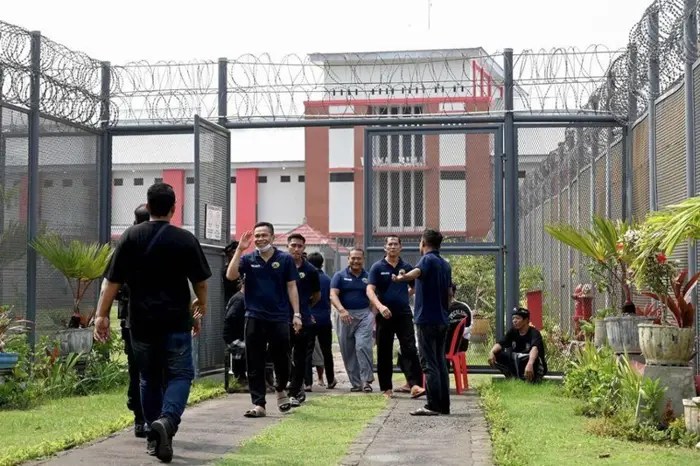
December 13, 2024 22:14 GMT+700 Jakarta (ANTARA) – President Prabowo Subianto has decided to grant amnesty to several prisoners involved in narcotics to Papua-related cases, Law Minister Supratman Andi Agtas has informed.
“The President will grant amnesty to several prisoners who we are currently assessing with the Ministry of Immigration and Corrections,” he said at a press conference at the Presidential Palace on Friday.
The grant of amnesty is meant to reduce overcapacity at correctional institutions and is based on humanitarian considerations, he added.
According to Agtas, amnesty will be given to prisoners who suffer from long-term illnesses, such as HIV/AIDS, and those with mental disorders.
Several people imprisoned in cases connected to the Electronic Information and Transactions Law (ITE), including those convicted of insulting the head of state, will also be given amnesty, he added.
In addition, prisoners linked to cases in Papua, who were not involved in armed action, will also receive the amnesty.
The minister said that the idea is a part of reconciliation efforts in Papua. A total of 18 prisoners involved in Papua-related cases will get amnesty.
“The cases are mostly activist and (form of) expression. This is part of our efforts to make reconciliation efforts with friends in Papua. This demonstrates a good faith to make Papua more peaceful,” he added.
Furthermore, prisoners involved in narcotics cases will also be given amnesty by the President.
“Prisoners in drug cases who should receive rehabilitation will also be given amnesty. However, the exact number will be conveyed after we conduct a further assessment,” he said.
Agtas added that based on data from the Ministry of Immigration and Corrections, there are around 44 thousand prisoners who meet the criteria for amnesty.
He informed that President Prabowo has approved the amnesty. Furthermore, the amnesty proposal will be submitted to the House of Representatives (DPR) for consideration.
“We will ask the DPR to consider this proposal. We will wait after we officially submit it to the House for their consideration,” the minister added.
JAKARTA: Indonesia’s President Prabowo Subianto will pardon tens of thousands of prisoners ranging from activists convicted of defamation to those jailed in the easternmost province of Papua for criticising the government, a minister said on Friday (Dec 13).
Law minister Supratman Andi Agtas said some 44,000 prisoners nationwide might get an amnesty on humanitarian grounds and to help relieve the country’s overcrowded jails.
The number is equivalent to around 30 per cent of all prisoners in the Southeast Asian country, Andi said.
The prisoners to be pardoned include people convicted in defamation and hate speech cases, including those who defamed the president under Indonesia’s Electronic Information and Transaction Law, Andi added.
Around 18 activists jailed for exercising their freedom of expression to criticise the authorities or staging protests in Papua will be among those freed, said Andi.
“This is part of the effort to reconcile with our friends in Papua. The government has the good intention to make Papua more peaceful,” he said.
Papua came under Indonesian rule in 1969 after a controversial United Nations-backed referendum that many Papuans say did not reflect the will of local people.
Discussions of Papuan independence is a sensitive issue for Indonesia’s government, which has long insisted that the plebiscite was legitimate.
Others set to be freed include those convicted of drug offences who are not dealers as well as prisoners with chronic diseases such as HIV.
The government is now finalising the plan, including drawing up lists of prisoner names. It will also discuss the plan with the parliament.
Prabowo also suggested that those who are pardoned and are still of a productive age should get involved in his programme to achieve food self sufficiency or becomes part of the military reserve force, said Andi.
Prisons in Indonesia are notoriously overcrowded, with experts saying this is partly due to an emphasis on incarceration rather than rehabilitation of people convicted of drug-related offences under the country’s strict narcotics laws. – Reuters
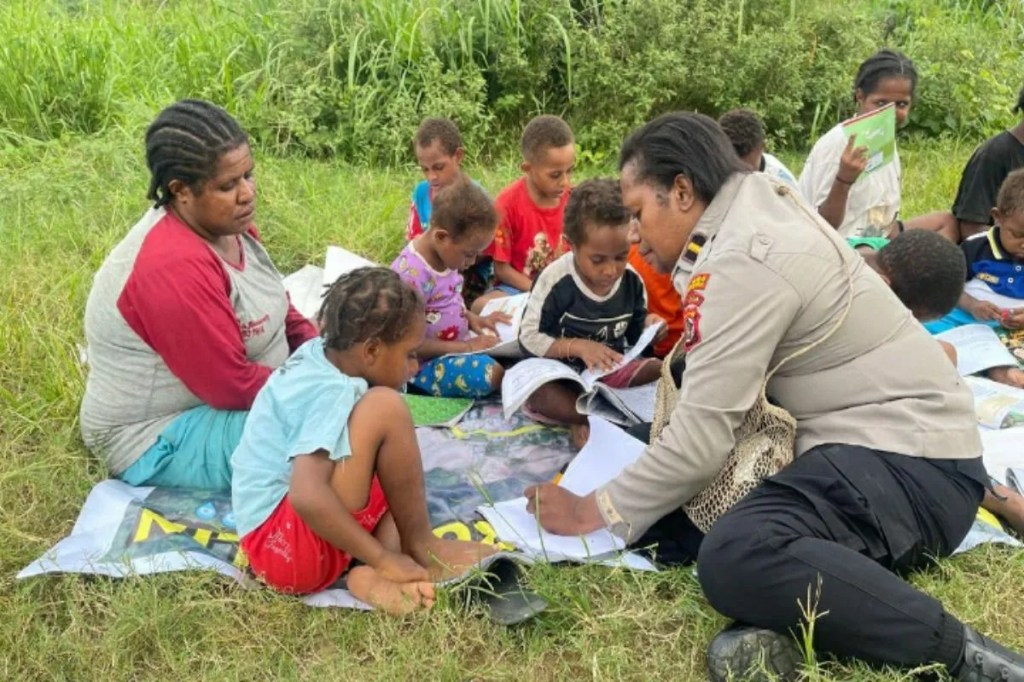
Jayapura, Papua (ANTARA) – The Reading and Writing Program (Gabus) implemented by the Jayapura Police since 2021 has effectively boosted the area’s community literacy, considering that the ability to read, write, and count is important for all.
Some Jayapura Police personnel were willing to increase the local residents’ literacy amid their busy schedules of maintaining security and social order. The program, which has been running for three years, is starting to show improvement.
Before running the program, the Jayapura Police prepared its personnel by involving them in a teaching program.
The police participated in training conducted by the Bunda PAUD (Early Childhood Education) program, which is implemented by the Ministry of Education and Culture. Through this training, the police gained a better understanding of effective teaching.
The police decided to participate in the education duty since they saw that several children had dropped out of school and were not fluent in reading and writing in the area. In addition, the same was noticed in several adults, thereby necessitating the implementation of the Gabus program.
In the future, all police stations in the Jayapura Police area are expected to implement a similar program to help the community around them.
“Through the Gabus program, the Jayapura Police are trying to help residents improve their literacy,” said Jayapura Police Chief Adjunct Senior Commissioner Fredrickus W. A. Maclarimboen.
Activities involving personnel are carried out amid their daily duties, with some even doing it after office hours.
The personnel usually carry out the program between visits to the community, while the policewomen usually execute it after office hours, with a teaching duration of around one hour.
The Jayapura Police have 106 active personnel who are members of the program, and the number of participants is currently 127.
Students who are already fluent in reading and writing will be reported to the Ministry of Education and Culture to take part in the test program and receive a Literacy Certificate (Sukma). Some 12 participants have received Sukma, and more are expected to take the equivalency exam in the future.
The Jayapura Police expressed hope that agencies or parties involved in the education sector would be willing to help and work together to eradicate illiteracy among residents in the district and Papua as well.
Outdoor study
Agustina Felle, a teacher at Komba Elementary School in Sentani Subdistrict, said she was called to join forces with members of the Jayapura Police to teach children and adults who cannot read fluently or who are still illiterate.
As a teacher, she feels responsible for the children around her who cannot read and write fluently, which hinders their education and even causes them to drop out of school.
Hence, the Gabus program is expected to teach children and adults to become more fluent in reading, writing, and even arithmetic so they can pursue higher education in the future.
“They are the future of the nation, so all parties are expected to help educate children,” Felle said.
Apart from teaching, she also provides one of the rooms in her house for teaching and learning activities.
Adjunct Commissioner Khatarina H.L. Aya, a member of the Jayapura Police, said she was glad to teach in the Gabus program.
Aya said that she sometimes carries out these activities in an open space for closer interactions by visiting residents and adjusting to their schedules.
This is different from teaching children and young people who have dropped out of school or who cannot read and write fluently, which she usually does in some residents’ yards.
“We are ready to teach them anywhere. The most important thing is their spirit to learn,” she remarked.
Learning with no shame
Ina Wenda, a Gabus program participant who has recently become literate, commended the dedication of the police, who are willing to take time out to teach those who cannot yet read and write.
Despite being a 50-year-old woman who sells staple goods at Sentani Market, she said she was not embarrassed to study alongside other students.
She was seen diligently writing word by word and listening to the lessons imparted by the policewoman using a small table.
“I want to be able to read and write fluently like everyone else,” Wenda revealed.
Children participating in the program echoed the same aspiration, saying that the Gabus program helps them understand lessons at school.
After participating in the Gabus program, one student, along with several other participants, admitted to having developed greater fluency in reading and writing.
“Thank you to our police who have been teaching us to read and write fluently,” stated Isak, one of the students.
The police’s efforts through this program can change the future of the Gabus participants. By reading and writing fluently, the horizons of the children will be increasingly broadened.
On the southeastern coast of Jayapura city lies a mangrove forest where only women are permitted to enter
By EDNA TARIGAN and FIRDIA LISNAWATI – Associated Press 8 hrs ago
JAYAPURA, Indonesia (AP) — On the southeastern coast of the city of Jayapura, Petronela Merauje walked from house to house in her floating village inviting women to join her the next morning in the surrounding mangrove forests.
Merauje and the women of her village, Enggros, practice the tradition of Tonotwiyat, which literally means “working in the forest.” For six generations, women from the 700-strong Papuan population there have worked among the mangroves collecting clams, fishing and gathering firewood.
“The customs and culture of Papuans, especially those of us in Enggros village, is that women are not given space and place to speak in traditional meetings, so the tribal elders provide the mangrove forest as our land,” Merauje said. It’s “a place to find food, a place for women to tell stories, and women are active every day and earn a living every day.”
The forest is a short 13 kilometers (8 miles) away from downtown Jayapura, the capital city of Papua, Indonesia’s easternmost province. It’s been known as the women’s forest since 2016, when Enggros’ leader officially changed its name. Long before that, it had already been a space just for women. But as pollution, development and biodiversity loss shrink the forest and stunt plant and animal life, those in the village fear an important part of their traditions and livelihoods will be lost. Efforts to shield it from devastation have begun, but are still relatively small.
Women have their own space — but it’s shrinking
One early morning, Merauje and her 15-year-old daughter took a small motor boat toward the forest. Stepping off on Youtefa Bay, mangrove trees all around, they stood chest-deep in the water with buckets in hand, wiggling their feet in the mud to find bia noor, or soft-shell clams. The women collect these for food, along with other fish.
“The women’s forest is our kitchen,” said Berta Sanyi, another woman from Enggros village.
That morning, another woman joined the group looking for firewood, hauling dry logs onto her boat. And three other women joined on a rowboat.
Women from the next village, Tobati, also have a women’s forest nearby. The two Indigenous villages are only 2 kilometers (1.2 miles) apart, and they’re culturally similar, with Enggros growing out of Tobati’s population decades ago. In the safety of the forest, women of both villages talk about issues at home with one another and share grievances away from the ears of the rest of the village.
EDITOR’S NOTE: This is part of a series of on how tribes and Indigenous communities are coping with and combating climate change.
Alfred Drunyi, the leader of Drunyi tribe in Enggros, said that having dedicated spaces for women and men is a big part of the village’s culture. There are tribal fines if a man trespasses and enters the forest, and the amount is based on how guilty the community judges the person to be.
“They should pay it with our main treasure, the traditional beads, maybe with some money. But the fines should be given to the women,” Drunyi said.
But Sanyi, 65, who’s been working in the forest since she was just 17, notes that threats to the space come from elsewhere.
Development on the bay has turned acres of forest into large roads, including a 700-meter (2,300-foot) bridge into Jayapura that passes through Enggros’ pier. Jayapura’s population has exploded in recent decades, and around 400,000 people live in the city — the largest on the island.
In turn, the forest has shrunk. Nearly six decades ago, the mangrove forest in Youtefa Bay was about 514 hectares (1,270 acres). Estimates say it’s now less than half that.
“I am so sad when I see the current situation of the forest,” Sanyi said, “because this is where we live.” She said many residents, including her own children, are turning to work in Jayapura instead of maintaining traditions.
Pollution puts traditions and health at risk
Youtefa Bay, where the sea’s brackish water and five rivers in Papua meet, serves as the gathering bowl for the waste that runs through the rivers as they cross through Jayapura.
Plastic bottles, tarpaulin sheets and pieces of wood are seen stuck between the mangrove roots. The water around the mangrove forest is polluted and dark.
After dozens of years being able to feel the clams on the bay with her feet, Sanyi said she now often has to feel through trash first. And once she removes the trash and gets to the muddy ground where the clams live, there are many fewer than there used to be.
Paula Hamadi, 53, said that she never saw the mangrove forest as bad as it is now. For years, she’s been going to the forest almost every day during the low tide in the morning to search for clams.
“It used to be different,” Hamadi said. “From 8.00 a.m. to 8:30 in the morning, I could get one can. But now, I only get trash.”
The women used to be able to gather enough clams to sell some at the nearest village, but now their small hauls are reserved for eating with their families.
A study in 2020 found that high concentrations of lead from waste from homes and businesses were found at several points in the bay. Lead can be toxic to humans and aquatic organisms, and the study suggests its contaminated several species that are often consumed by the people of Youtefa Bay.
Other studies also showed that populations of shellfish and crab in the bay were declining, said John Dominggus Kalor, a lecturer on fisheries and marine sciences at Cenderawasih University.
“The threats related to heavy metal contamination, microplastics, and public health are high,” Kalor said. “In the future, it will have an impact on health.”
Some are trying to save the land
Some of the mangrove areas have been destroyed for development, leading to degradation throughout the forest.
Mangroves can absorb the shocks of extreme weather events, like tsunamis, and provide ecosystems with the needed environment to thrive. They also serve social and cultural functions for the women, whose work is mostly done between the mangroves.
“In the future people will say that there used to be a women’s forest here” that disappeared because of development and pollution, said Kalor.
Various efforts to preserve it have been made, including the residents of Enggros village themselves. Merauje and other women from Enggros are trying to start mangrove tree nurseries and, where possible, plant new mangrove trees in the forest area.
“We plant new trees, replace the dead ones, and we also clean up the trash around Youtefa Bay,” Merauje said. “I do that with my friends to conserve, to maintain this forest.”
Beyond efforts to reforest it, Kalor said there also needs to be guarantees that more of the forest won’t be flattened for development in the future.
There is no regional regulation to protect Youtefa Bay and specifically the women’s forests, but Kalor thinks it would help prevent deforestation in the future.
“That should no longer be done in our bay,” he said.
The Associated Press’ climate and environmental coverage receives financial support from multiple private foundations. AP is solely responsible for all content. Find AP’s standards for working with philanthropies, a list of supporters and funded coverage areas at AP.org.
On 15 November 2024, thousands of Papuans went to the streets after the West Papua National Committee (KNPB) called for peaceful Papua-wide demonstrations against the central Government’s plan to relaunch the transmigration program, with West Papua being one of the target areas. Indigenous Papuans are concerned that the influx of population from more developed areas will inevitably contribute to the marginalisation of Papuans, exacerbate land grabbing and exploitation of natural resources instead of bringing benefits for indigenous communities. Many fear a loss of their culture and growing economic competition concerning labour possibilities and entrepreneurship. Besides concerns on transmigration, the protests addressed the conversion of 2 million hectares of customary land for rice field production in the Merauke Regency, Papua Selatan Province since August 2024, as part of the central government’s Strategic National Projects (PSN) on food security.
The ‘Transmigrasi’ Program envisaged the population transfer from overpopulated Indonesian islands like Java to remote rural areas on a large scale, mainly to West Papua and Kalimantan. It was initiated under Indonesia’s first President Sukarno and later retained under military dictator Suharto. During the Reformation, the program was restructured and downsized.
One day after President Prabowo Subianto’s inauguration on 20 October 2024, the minister for Transmigration, Muhammad Iftitah Sulaiman Suryanagara, announced plans to continue transmigration programs in eastern Indonesia, particularly West Papua, to improve the national unity and welfare of the local population. This together with several follow-up statements triggered a public debate in West Papua.
Following the statements, the West Papua National Committee (KNPB) called for peaceful demonstrations for the rejection of Jakarta’s transmigration plans across West Papua. Larger protests were held in Jayapura, Nabire, Sorong, Dekai (Yahukimo Regency), and Yalimo, but also in some Indonesian cities outside of West Papua, such as Manado. Police officers in the towns of Jayapura and Nabire reportedly cracked down on protesters using water cannons, tear gas, wooden sticks, and rubber ammunition. According to reports received, 14 protesters were arbitrarily detained, while at least 16 protesters were injured as a result of police violence.
Jayapura City and Jayapura Regency
Police officers reportedly prevented KNPB activists in the town of Sentani, Jayapura Regency, from distributing leaflets for the demonstration on 13 and 14 November 2024. On 15 November 2024, joint security forces took position at all major roads in Sentani at 5:00 am, checking public transport and private vehicles to prevent protesters from going to meeting pints in Jayapura City. The protesters in Jayapura City gathered in various locations. In Expo Waena and the Abepura Roundabout, protesters were forcibly dispersed by the authorities using water cannons, tear gas, wooden sticks, and rubber ammunition around 8:30 am. At least eleven protesters were injured during the crackdown (see table below, source: independent HRDs). The police stopped the peaceful assembly without obvious reason as the KNPB had registered the protest with the police following Indonesian law. Several police officers were wounded as protesters responded throwing stones at the police.
Police officers disperse protesters in Jayapura, 15 Nov’24
Videos
Nabire Town
The Papuan People’s Front Against Transmigration (FRPAT) officially registered the protest on 12 November, as required under national law. In the early morning of 15 November 2024, protesters gathered peacefully in the Jepara 1 area. AT 8:00 am, police officers dispersed the crowd teargas and water cannons. Some officers also released gunshots. At least four protesters were injured during the crackdown and 14 protesters were arbitrarily detained at the Nabire District Police Station. The police forced them to sign statements to refrain from joining future political protests or other activities. Residents in of Jappara 1 complained that police forces also fired teargas grenades at residential houses (see video below).
Police officers disperse protesters in Nabire, 15 Nov’24
Videos
Demonstrations in other locations
Protests in the Sorong, Dekai, Yalimo, Manado (Sulawesi Utara Province) and Makassar (Sulawesi Selatan Province) were closely monitored by police personnel but were allowed to proceed. All protests remained peaceful. People displayed banners and held peaceful orations, calling upon Jakarta to abandon the plans of reenacting the transmigration program to West Papua and immediately hold the conversion of customary land to agricultural areas for rice production in Merauke.
Table: Victims of police violence during crackdown on demonstration against transmigration, 15 November 2024……………..
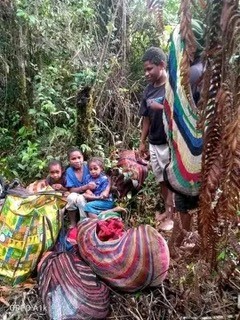
The National Committee of West Papua Star Mountains Region (KNPB-WPB) informs from the scene regarding the refugee situation and conditions in Oksop District that, All the residents of Oksop district of the Star Mountains region have fled to various points, and not a single Community stays in the Village Because of the Action by the Very Armed Forces without dignity & criminal character.
Military Entered Oxop District not Through public roads but through rat roads, and as far as the District Capital, they do not occupy in the District Offices or Social housing existing, but they take place in the forests and then outnumber the civilians in the villages and forests inhabited by the civilians. The actions done by the Military are very scary for the Civil Society of Oksop District So the citizens are very endangered and need help from all parties.
Refugee data
To record casualties of civilians on the field, we had field constraints and were hampered by such a large Military Power, but there is some refugee data we got from the ground among others:
1. Toddler turns 54
2. Launching 23
3. Pregnant mom of 5
4. a serious patient 2
In the statement We Made at some points, civilians are very Unacceptable and Disappointed to the Treatment of the Indonesian Military that is very Inhumane and Criminal. Refugees also say that, December is a big day for us Christians and KAMTIBMAS Day. But this great day (Christmas) we don’t feel the joy and usher the savior’s birth with joy. This is the Worst Christmas present of previous years for us Two denominations “Reveal one citizen representing two Church Denominations (Catholic & Protestant).
Military data
The first stage of Military Power a total of 300 personnel and the second stage of drowning of 3 Cars. While the Military Power is growing and we can’t fully confirm the numbers. As a result of the refugee activities such as Looking for food, drinking, etc. are very narrow because the situation is so tense & many Military Forces expresses their Criminal character.
Therefore, We Request Support & Prayer and Monitoring From Various Parties.
Jayapura, Jubi – The People’s Front and Papuan students hope that on the momentum of the commemoration of International Human Rights Day, the Indonesian state can open its eyes and also realize, the state has the greatest sin in the form of human rights violations against the Papuan people.
Stenlhy Dambujai, one of those responsible for the action, asked the Indonesian National Human Rights Commission and also the Papuan Representative of the National Human Rights Commission to be truly firm, not to cover up cases of human rights violations in Papua. The Papuan people firmly asked Natalius Pigai as the
Minister of Human Rights of the Republic of Indonesia not to turn a blind eye to the many human rights violations that have occurred in Papua.
“Don’t deny your identity as a Papuan just because of your position,” he said when interviewed by Jubi during the action to commemorate International Human Rights Day at the Abepura Circle, Jayapura City, Papua, Tuesday (10/12/2024).
Frengki Edowai from the Jayapura Green Papua Collective added, in Papua there are many human rights violations. The state also knows, the highest cases of human rights violations are in Papua, but there has been no resolution process.
He asked the task forces formed by the state to carry out military operations in Papua to be withdrawn immediately.
“Organic and non-organic military, because of the military that was sent to Papua, they became actors of violence against the community. They are the ones who caused human rights violations in Papua,” he said.
According to him, the existence of various national strategic projects is the basis for the military to continue to be massive in Papua. The presence of the security forces adds to the existing trauma because the violence continues to roll.
The action went smoothly, escorted by around 20 local police personnel.
There are several points of the statement of position conveyed by the Papuan People’s Front rejecting human rights violations in Papua, namely:
1. Immediately arrest and prosecute the perpetrators of the shootings in Intan Jaya Regency, Yahukimo, Puncak Regency, Dogiyai Regency, Nduga Regency.
2. Arrest and prosecute the perpetrators of the shooting of Tobias Silak
3. Withdraw Brimob posts throughout Papua
4. Komnas HAM immediately announces the results of the investigation into the shooting of Tobias Silak
5. Immediately reveal and prosecute the perpetrators of the bombing of the Papua Jubi Media Office and the Papua LBP office
6. Immediately reveal and prosecute the perpetrators recorded by Komnas HAM from January 1 to June 1, 2024, around 41 shooting incidents.
7. Immediately revoke the Presidential Decree on Defense and Security and the Organic and Non-Organic Military throughout Papua
8. Immediately disband the Cartenz Peace Task Force, Nemangkawi Task Force, Habema Task Force, Binmas Noken Task Force, Pinang Sirih Task Force and Paro Task Force.
9. Immediately stop and revoke capitalist investment throughout Papua under the guise of National Strategic Projects
Give the Papuan people the right to self-determination as a democratic solution. (*)



 Australia West Papua Association Adelaide