
Security forces block Papua Annexation Day rally in Manokwari

Suara Papua – May 1, 2024

Jayapura — Eight civil society organisations from the Papuan People’s Front (FRP) held a peaceful demonstration on Jalan Gunung Fanindi in Manokwari, West Papua province, on Wednesday to commemorate 61 years since the annexation of the Papuan nation (May 1, 1963 to May 1, 2024).

The eight movement organisations that that make up the FRP are the West Papua National Committee (KNPB), the Papua Student and Youth National Front (FNMPP), West Papua Youth and Student National Solidarity (SONAMAPA), the Papuan People’s Struggle Movement (GPRP) and the West Papua Independent Student Forum (FIM-WP), along with other student and Papuan people’s groups.

The demonstration was held at three points, the first being in front of the Mansinam student dormitory, the second in front of the Amban Village head’s office and the third in front of the Papua Manokwari University campus entrance.

The peaceful actions to commemorate Annexation Day, which the Indonesian government calls integration day, took up the theme “Give the right of self-determination to the Papuan nation and the military emergency in the land of Papua”.

field coordinator Lotty Selak said the action commemorating the annexation of Papua into the Unitary State of the Republic of Indonesia

(NKRI) was to include a long-march to the West Papua Regional House of Representatives (DPR) offices.

The action began at 7.25 am when protesters moved out carrying protest materials such as pamphlets, megaphones, speakers, rafiah ropes to keep the demonstrators together and KNPB flags. Following this, they began moving to the individual gathering points.

“The protesters at the gathering point in front of the Mansinam student dormitory began to move off towards the location of the action accompanied by yells of ‘We are not the red-and-white’, ‘Indonesia is killing-killing the people’ and speeches while marching”, explained Selak.

Selak said that at 8.25 am a police car, two water cannon, a patrol car and a truck carrying police personnel took up a position to block the protesters at the Manokwari Makalo Monument.

At 9.15 am, before they had a chance to negotiate with police, the protesters were confronted by a water cannon in the middle of the road.

At 9.20 am protesters from the gathering point in front of the Amban Village head’s office arrived and joined the demonstrators in front of the Mansinam student dormitory at the Makalo Monument.

At 9.43 pm the demonstrators advanced by around five metres but security personnel block them again.

“The security forces did not allow the long-march to the West Papua DPRD offices. The demonstrators were asked to express their aspirations by using transportation provided by the security forces to go to the West Papua DPRD. Negotiations stalled, so the demonstrators sat down in the middle of the road”, he explained.

“At 11.04 am the security forces brought a DPRD representative. At 12.05 pm we were directed to deliver political speeches from each organisation. At the end of the political speeches a statement was read out”.

In the statement they said that the claims made by the Indonesian government about the status of the land of Papua as an integral part of the Republic of Indonesia are invalid, because they did not have authentic, real and true historical evidence, and that since December 1, 1961, the West Papuan nation have had genuine sovereignty as an independent nation that is equal to other nations on earth.

The West Papuan people firmly reject the results of the 1969 Pepera (the UN sponsored referendum on West Papua’s integration into Indonesia) because it was carried out on the basis of the New York Agreement that was legally and morally flawed and was conducted in an atmosphere of oppression beyond the limits of humanity.

The Papuan nation has the right to determine a future that is independent politically, legally and economically. West Papua is currently an emergency military zone, and therefore military operations must be halted immediately. May 1 is International Labour Day, so the Papuan nation supports the struggle of workers in Indonesia and the entire world.

[Translated by James Balowski. The original title of the article was “Aksi Hari Aneksasi di Manokwari Dihadang Aparat, Pernyataan Dibacakan di Jalan”.]



Papua Annexation Day rally in Bali harassed, forcibly dispersed by police

Suara Papua – May 2, 2024

Elisa Sekenyap, Jayapura — A peaceful demonstration by Papuan students in Balinese provincial capital of Denpasar on Wednesday May 1 to commemorate the day Papua was annexed into the Unitary State of the Republic of Indonesia (NKRI) has been blocked and repressed by police.

Earlier, according to the notification letter submitted to police, the protesters planned to gather at the Renon Field eastern parking area then hold a long-march to the location of the action at the American Consulate in Denpasar.

The plan however was not realised because officers from the Bali regional police (Polda) and the Denpasar city municipal police

(Polresta) rushed to intercept the protesters, who were then forced to disperse at exactly 12 noon.

Chronology of incident

Field coordinator Derimon Kepno said that the Papuan students had been gathering at the eastern parking area since 6.30 am after moving off from the Papua dormitory and several other locations in the city.

“At 8.50 am the protesters began a long-march towards the action point at the American Consulate in Denpasar. At 9.15 am they were intercepted and repressed by police.”

“At that time we were hemmed in and forced to disperse. The live recording on Facebook was also suddenly cut, because the network was interrupted. The Bali Polda and Denpasar Polresta deployed around 480 personnel just to stop the mass action, but we also insisted on going to the American Consulate, because before the action we had already sent a letter notifying [police about] the action”, explained Kepno.

At that moment, said Kepno, representatives from the Legal Aid Foundation (LBH) and Papua Student Alliance (AMP) met with the authorities to hold negotiations, but they reached a dead end and police remained determined to disperse the protesters.

“At 10.20 am the Bali LBH and AMP representatives negotiated with the police, but the police did not respond well and the police instead forbade the demonstrators from taking the protest to the action point at the American Consulate. Next we had a second negotiation but the authorities only gave us time for an action until 12 noon”.

“At 11.15 am the crowd was surrounded and the space [allowed] for the action was isolated so in the end comrades decided to change the method of action. So they put up posters on the side of the road so that the public could see them, because previously we were isolated.”

“Finally at 12.15 pm, comrades read out a statement. When we read out our statement, Brimob [paramilitary Mobile Brigade], Dalmas [crowd control unit] and a police water canon arrived at the location of the action. We knew that this was a way of upsetting our psychology, so we remained calm and read our statement”, he concluded.

Papuan student’s statement

AMP General Chairperson Jeeno Dogomo, as the person responsible for the action, said that Indonesia’s position in the land of Papua over the last 61 years is illegal.

Dogomo said this started on May 1, 1963, because the United States, the United Nations, the Netherlands and Indonesia had an interest in the land of Papua. “The handover of West Papua to Indonesia was without the knowledge of the Papuan people, therefore we declare this illegal”, asserted Dogomo.

He said that the annexation of the Papua region into the NKRI was carried out through a series of military operations in the context of thwarting the state of West Papua that was declared on December 1, 1961.

The declaration of the state of West Papua was organised by the representative political institution of the Papuan nation, namely Nieuw Guinea Raad (the New Guinea Council, NGR) with the approval of the Dutch royal government, which at that time occupied the Papua region in accordance with UN Resolution Number 1514.

However nineteen days later Indonesia’s founding president Sukarno issued  the Trikora (the Triple Commands of the People) declaration at the Yogyakarta Northern Square which called for: (1) Disbanding the Dutch-made puppet state (2) Raising the red-and-white flag throughout the Land of Papua and (3) A national mobilisation to seize West Irian (as Papua was then called).

“Today’s situation is that the Papuan people are facing a situation of systematic and structured repression, intimidation and murder by the state after special autonomy was imposed in 2001. As a result, a prolonged conflict continues to occur where the TNI [Indonesian military] and Polri [national police] indiscriminately accuse civilians [of being separatists]”, he said.

Therefore, said Dogomo, they reject Indonesia’s presence in the land of Papua over the last 61 years and make the following demands.

– For 61 years Indonesia’s position in Papua has been illegal.

– Fully investigate the perpetrators of the torture of three civilians in Puncak regency, Papua.

– Audit Freeport’s assets and provide severance pay to its workers.

– Audit mine reserves and environmental damage.

– Withdraw all organic and non-organic TNI and Polri from the land of West Papua.

– Stop engineering conflicts throughout West Papua.

– Provide access to foreign journalists and provide information throughout West Papua.

– Investigate, arrest, prosecute and imprison human rights violators during Freeport McMoran’s presence in West Papua.

– Provide the right to self-determination a democratic solution for the West Papuan people.

Notes

Although it is widely held that West Papua declared independence from Indonesia on December 1, 1961, this actually marks the date when the Morning Star flag was first raised alongside the Dutch flag in an officially sanctioned ceremony in Jayapura, then called Hollandia. The first declaration of independence actually took place on July 1, 1971 when the Free Papua Organisation (OPM) unilaterally proclaimed West Papua as an independent democratic republic.

Operation Trikora was an Indonesian military operation aimed at harassing and forcing the Dutch out of Netherlands New Guinea (West

Papua) in 1961-62 rather than one intended to suppress a nascent independence movement.

[Translated by James Balowski. Abridged slightly due to repetition. The original title of the article was “Aparat Hadang dan Represi Aksi Demo Damai Mahasiswa Papua di Bali”.]

The Papuan Police sent the Cartenz Peace Operations Task Force to Intan Jaya

These tactical and technical steps were taken in an effort to comprehensively handle the capital city of Intan Jaya after the TPNPB-OPM attack

May 3, 2024 in Political, Legal and Security Affairs

  0

Author: Alexander Loen – Editor: Alberth Yomo

Jayapura, Jubi – A total of 20 Cartenz Peace Operation Task Force personnel were sent to Intan Jaya Regency, Central Papua Province following the attack on the Homeyo Police Station on April 30 2024 which resulted in the death of a teenager named Alexsander Parapak. Not only that, this Task Force will also investigate the burning of the Inpres Pogapa Elementary School building on Wednesday 1 May 2024, and the attempted attack on Koramil 1705-05/Homeyo on 2 May 2024 by an armed group suspected of being the West Papua National Liberation Army Free Papua Organization or TPNPB -OPM. This was conveyed by the Head of the Papua Regional Police, Inspector General Mathius Fakhiri in Jayapura City, Friday (5/5/2024).

“We hope today can be calmer. I am also trying today to be able to add additional personnel assistance and our helicopter can land safely because yesterday it couldn’t come in. “So today we are adding strength to take action,” said Fakhiri.

Fakhiri said that if additional personnel had arrived at Intan Jaya, his party would take tactical and technical steps in comprehensive handling of Sugapa, the capital of Intan Jaya. With the hope that in the future there will be no more disturbances.

“Our helicopter is under maintenance and the other is in Boven Digoel. Our personnel have also been shifted there. “When we arrive there, we will immediately take security measures together with the Intan Jaya Police,” he stressed.

Police Chief Fakhiri admitted that he had received reports that in Intan Jaya there had been disturbances in security and order (kamtibmas) such as shootings. Government services will certainly be disrupted and paralyzed. However, he asked the government to continue providing services to the community.

“The only survivors are Polri and TNI personnel and the task force assigned there. “Meanwhile, other civil servants chose to leave to protect themselves,” he said.

Commander of the Joint Regional Defense Command (Kogabwilhan) III, Lieutenant General TNI Richard T.H. Tampubolon said the joint TNI-Polri apparatus had succeeded in cracking down on the TPNPB-OPM movement in Intan Jaya. “TPNPB has disturbed security and tried to control the Homeyo area for three days in a row, causing fear among the local community, some people even fled to protect themselves,” said Richard.

According to Richard, the armed disturbances and arson carried out by TPNPB also paralyzed community activities in the area. “Today the TNI-Polri security forces have succeeded in carrying out an action against the TPNPB group in the Homeyo District area,” he stressed.

Richard said the joint TNI-Polri apparatus assigned to Intan Jaya involved the Habema TNI Operations Command (KOOPS TNI) unit and the Nanggala Damai Cartenz Task Force. The results obtained from this operation are that the Homeyo District is gradually recovering from TPNPB’s sporadic actions.

He assessed that control of security is very meaningful for the smooth and conducive situation in the lives of local people in carrying out their daily lives and activities. “The firm crackdown operation against OPM in the Homeyo District area is an effort to create regional security that will support all processes of accelerating Papua’s development,” he said.

Komnas TPNPB spokesperson Sebby Sambom in a written release said that TPNPB Region VIII Intan Jaya troops managed to shoot 4 members of the Indonesian military and burn down an elementary school building on May 1 2024. “TPNPB-OPM Kodap VIII Intan Jaya Brigadier General Undius Kogoya is responsible for the deaths of 4 “TNI-Polri members and an empty back car,” said Sambom.

According to Sambom, the shooting incident occurred at 12.05 WIT afternoon in Enarotali Regency, precisely in Bibida Village. The incident started when members of the TNI-Polri entered without permission so we shot them. We hope that we don’t blame the people of Enarotali.

“We are also ready to carry out operations in Enarotali, Deiyai, Dogiyai and Nabire districts, these 4 areas are the TPNPB-OPM operational areas. “We convey this because Prabowo Subianto and top Indonesian military officials have agreed to discuss law enforcement, so before sending TNI-Polri troops, prepare the coffins of your members’ bodies and then send them,” he stressed. (*)

Deforestation in Indonesia Spiked Last Year, but Resources Analyst Sees Better Overall TrendA data analysis shows Indonesia had a 27% increase in primary forest loss in 2023

By Associated Press

April 28, 2024, at 10:06 p.m.

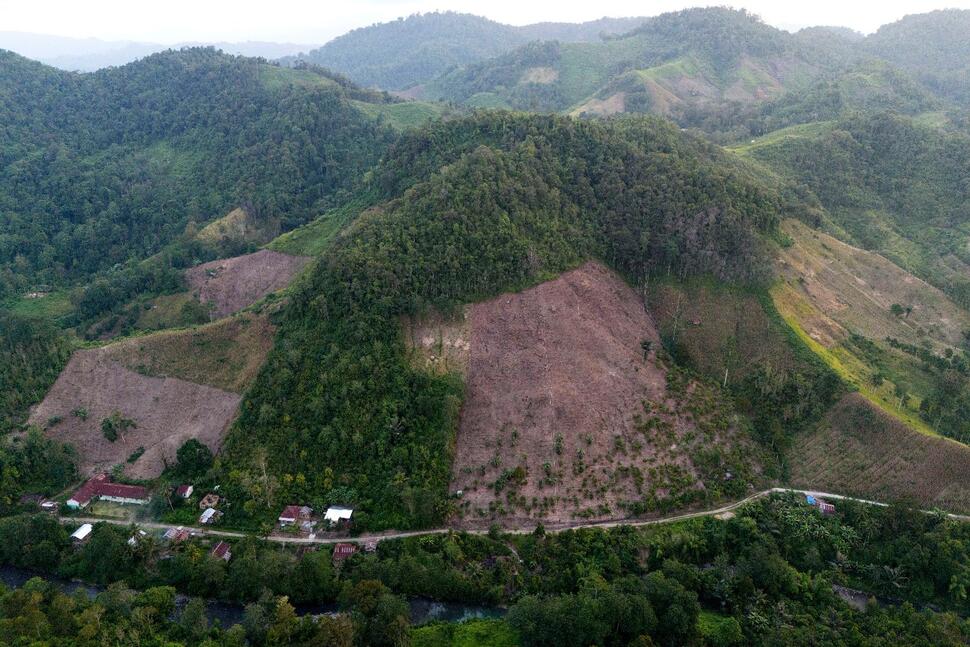
JAKARTA, Indonesia (AP) — From trees felled in protected national parks to massive swaths of jungle razed for palm oil and paper plantations, Indonesia had a 27% uptick in primary forest loss in 2023 from the previous year, according to a World Resources Institute analysis of deforestation data. But the loss is still seen as historically low compared to the 2010s, it said.

“Deforestation has been declining from six or so years ago, when there were peak rates,” said Rod Taylor, global director of the forests program at WRI. “It’s good news and commendable for Indonesia.”

But others saw cause for concern in the uptick, and tied some of the more recent deforestation to the world’s appetite for mining Indonesia’s vast deposits of nickel, which is critical for the green energy transition.

The latest data from the University of Maryland’s Global Land Analysis and Discovery laboratory was shared on Global Forest Watch — a platform run by WRI that provides data, technology and tools for monitoring the world’s forests.

A vast tropical archipelago stretching across the equator, Indonesia is home to the world’s third-largest rainforest, with a variety of endangered wildlife and plants, including orangutans, elephants and giant forest flowers. Some live nowhere else.

Since 1950, more than 74 million hectares (285,715 square miles) of Indonesian rainforest — an area twice the size of Germany — have been logged, burned or degraded for development of palm oil, paper and rubber plantations, nickel mining and other commodities, according to Global Forest Watch. Indonesia is the biggest producer of palm oil, one of the largest exporters of coal and a top producer of pulp for paper. It also exports oil and gas, rubber, tin and other resources.

Expansion of industrial plantations occurred in several locations adjacent to existing palm oil tree and pulp and paper plantations on the tropical islands of Kalimantan and West Papua, according to the analysis.

The Indonesian Ministry of Environment and Forestry said the expansion occurred in concessions granted before the current administration took office in 2014.

The Indonesian Ministry of Environment and Forestry did not respond to questions and a request for comment sent by The Associated Press.

Global Forest Watch’s data on Indonesia’s loss of primary forests — which are old-growth forests typically high in stored carbon and rich in biodiversity — are higher than the official Indonesian statistics. That’s because much of the primary forest loss in Indonesia, according to the analysis, is within areas that Indonesia classifies as secondary forest — areas that have regenerated through largely natural processes after human actions such as agriculture clearing or timber harvest. Secondary forests typically have reduced capacity for storing carbon than primary forests.

Deforestation linked to the mining industry occurred in Sumatra, Sulawesi, Mlauku and Kalimantan, according to the analysis.

Indonesia has the world’s largest reserves of nickel — a critical material for electric vehicles, solar panels and other goods needed for the green energy transition. And part of this deforestation can be directly linked to the expansion of Indonesia’s nickel industry, said Timer Manurung, director of Auriga Nusantara, a nongovernmental conservation organization based in Indonesia.

Manurung said it’s not clear exactly how much of Indonesia deforestation is due to mining. But he called it a “significant driver,” and said the government’s rapid development of the country’s mining and nickel industry — including more than 20 new smelters to process the nickel ore — is “repeating Indonesia’s oil palm and pulpwood mistakes” of increasing deforestation.

But Taylor noted that deforestation done on a massive scale seems to be shrinking, compared to the past.

In the 2010s there was gargantuan oil palm, timber and large-scale plantation expansion across Indonesia. Research in the Nature Climate Change journal found that the deforestation rate doubled to approximately 2 million hectares per year during 2004-2014.

In 2023, primary forest loss in patches greater than 100 hectares made up just 15% of the loss, according to the analysis.

Taylor attributes this lack of large-scale deforestation patches to the reputational risks that companies face if they are found to be razing trees. In recent decades nongovernmental organizations, consumers and governments — including the European Union — have pushed for companies to move away from deforestation practices.

In 2018 Indonesian President Joko Widodo put a three-year freeze on new permits for palm oil plantations. And the rate of deforestation slowed between 2021-2022, according to government data.

But small-scale primary forest loss was still prevalent throughout the country, including within several protected areas such as Tesso Nilo National Park and Rawa Singkil Wildlife Reserve on the island of Sumatra. Both areas are home to critically endangered animals such as tigers and elephants.

A wetter than usual El Nino — which usually leads to less rainfall and higher temperatures that can cause rapid spread of fires set to clear land for agriculture — contributed to a quieter than expected fire season, Taylor said. So did investments made by the Indonesian government in fire prevention capabilities, as well as efforts to suppress fire by local communities.

During Indonesia’s last El Nino in 2015-2016, fires intentionally started to clear land for agriculture rapidly spread, sending haze across Southeast Asia. Several Indonesian provinces declared states of emergencies, respiratory illnesses spiked and thousands of Indonesians had to flee their homes.

“The good news in Indonesia is that the fire prevention measures are much more sophisticated than they were in years past,” said Taylor. “It’s really making a difference.”

___ Associated Press climate and environmental coverage receives support from several private foundations. See more about AP’s climate initiative here. The AP is solely responsible for all content.–

Indonesian Imperialism Is Alive – And Brutal – in West PapuaIn the restive eastern province, Cold War realpolitik continues to reverberate.


By David Hutt
April 26, 2024

ASEAN BEAT | SECURITY | SOUTHEAST ASIA
Indonesian Imperialism Is Alive – And Brutal – in West Papua
In the restive eastern province, Cold War realpolitik continues to reverberate.

David Hutt
By David Hutt
April 26, 2024
Indonesian Imperialism Is Alive – And Brutal – in West Papua
Supporters of the independence of the West Papua shout slogans during a rally
commemorating the 59th anniversary of the failed efforts by Papuan tribal
chiefs to declare independence from Dutch colonial rule in 1961, in Jakarta,
Indonesia, Tuesday, Dec. 1, 2020.

Credit: AP Photo/Achmad Ibrahim
Last month, videos emerged of 13 soldiers from an elite Indonesian battalion in
West Java torturing a Papuan man, Definus Kogoya. According to Human Rights
Watch, Kogoya “had his hands tied behind him and been placed inside a drum
filled with water. The soldiers taunted Kogoya with racist slurs, kicking and
hitting him. In another video, a man used a bayonet to cut his back. The water
turned red.” The military, while apologizing for the incident, insisted that
Kogoya was a member of the West Papua National Liberation Army and that he and
two comrades – one of whom “died when he jumped from a military vehicle after
arrest” – had burned down a clinic. Later, the police released the two alive
men without charge.

At least 10 Papuan teenagers were killed by Indonesia’s military last September
alone, while the implications of the 2019 Papuan uprising, the largest
pro-independence mobilization in decades, are still being felt. Douglas Gerrard
produced an excellent article on the conflict (“Indonesia Is Stepping Up Its
Repression of West Papua’s Freedom Movement”) last year.

When the rest of Indonesia won independence in the 1950s, West Papua remained
part of Dutch New Guinea. Jakarta wanted the entire territory. Sukarno’s first
foreign minister demanded that Jakarta and its forces “get them down from the
trees,” a racist notion of West Papuans that aped the racism of the European
colonizers and which continues today. In the 1950s, Indonesian troops led some
incursions into the Dutch colonial holdout but they were rebuffed, in part
because Washington was unsure of which side to take, not least because Sukarno
was still flirting with the communists.

But by the end of the 1950s, as the Cold War became more intense and Indonesia
was seen as a country that had to become an ally, by hook or crook, the
Americans made it known to the Dutch that they could no longer count on U.S.
support for the status quo. Knowing that its empire would soon end and motivated
to maintain some influence in Southeast Asia once it did, the Dutch cautiously
favored independence for the West Papuans and supported the formation in 1961
of the New Guinea Council, which drafted a manifesto for Independence and
Self-Government and declared the territory Papua Barat – “West Papua.”

Still, Washington wouldn’t support the effort. Instead, it orchestrated talks
that led to the August 1962 New York Agreement. Jakarta gained control of West
Papua (renamed West Irian), and after a brief transitional period overseen by
the U.N., things were supposed to climax in (and Indonesia was obligated to
hold) a referendum on self-determination.

Starting in July 1969, U.N. officials oversaw the so-called “Act of Free
Choice,” an Orwellian term if there ever was one. The U.N. claimed it would be
a fair election conducted under international scrutiny and by international
norms. And all adults from West Papua were supposed to have a vote, per the
U.N.’s rules. However, that wasn’t the case. Jakarta upped its attacks on West
Papuan separatists, especially after Suharto became dictator in 1965. Having
already decimated much of the separatist movement, Jakarta then handpicked
1,022 West Papuans to vote on behalf of the region’s 800,000 people in the
plebiscite, despite committing to a universal ballot. Naturally, they voted
unanimously in favor of integration with Indonesia.

In July 2004, on the 35th anniversary of this Act of Free Choice, the U.S.
National Security Archive released declassified documents on U.S. policy
deliberations, which I quote liberally from below. The violation of the Act of
Free Choice was obvious long before the 1,000 or so Jakarta patsies were led
forcibly into the polling booths. In 1968, U.S. embassy officials visiting the
region noted that “Indonesia could not win an open election.”  The U.S.
ambassador, Marshall Green, fretted at the time that U.N. officials might “hold
out for free and direct elections,” while Green stressed that all U.S. and
Western officials should make known to their U.N. counterparts the “political
realities,” meaning that Washington needed the vote to go Jakarta’s way because
it was a committed anti-communist ally at the time.

By October 1968, months before the election, the U.S. Embassy wrote back to
Washington in relief that U.N. officials had conceded “that it would be
inconceivable from the point of view of the interest of the U.N., as well as
the [Government of Indonesia], that a result other than the continuance of West
Irian within Indonesian sovereignty should emerge.” Even still, Green’s
successor as U.S. ambassador, Frank Galbraith, noted in 1969, the year of the
“referendum,” that “possibly 85 to 90%” of the West Papuan population “are in
sympathy with the Free Papua cause.”

Nonetheless, Nixon and Kissinger visited Jakarta in July 1969 while the
referendum was underway. Kissinger instructed his boss, “You should not raise
this issue” of West Papua, and advised that “we should avoid any U.S.
identification with” the matter of independence or integration. This was from a
man who described Suharto as a “moderate military man … committed to progress
and reform.” (Or was that said by U.S. officials of Prabowo today?) In any
case, Indonesia’s control over the region was accepted by the international
community, West Papua became a formal part of Indonesia, and six years later
Kissinger masterminded, shadowing another U.S. president, America’s support for
Indonesia’s colonization and occupation of Timor-Leste.

Why do I write all this? For starters, it’s a story often forgotten. How many
people have heard of West Irian or West Papua or know that there remains a
separatist movement? And there remains the notion that Indonesian imperialism
ended in the 1990s with the death of the Suharto regime. That’s true for Timor-Leste,
though Indonesians traipsed off only through pools of blood. Indonesia’s
imperialism is also back in the news as Prabowo Subianto, the incoming
Indonesian president, is accused of war crimes during his time in occupied
Timor-Leste as head of the Kopassus special forces. As I argued some months
ago, it’s not always healthy to pick at history’s healing wounds, and
Indonesia’s relations with Timor-Leste, despite its barbaric past, had been
healing for several years. But it’s quite another thing for the majority of
Indonesians to elect an alleged war criminal, which must surely re-open those
wounds.

But, also, this history serves as a reminder that American foreign policy is at
its most heinous and brutally hypocritical when it wants to appease dictators
and tyrants for a greater cause. A few months ago, after the death of Henry
Kissinger, I was asked by a newspaper to write an obituary. A family emergency
meant I hadn’t the time. But, for research and pleasure, which aren’t mutually
exclusive, I did re-read a number of biographies, including Niall Ferguson’s
sonorous first volume “Kissinger: 1923-1968: The Idealist,” and its polar
opposite, Christopher Hitchens’ “The Trial of Henry Kissinger,” a short
pamphlet that dedicates a chapter to how Washington (and Kissinger) sold out
East Timorese independence and permitted an Indonesian invasion in order to
appease Suharto and to keep stoking anti-communism in Southeast Asia. Hitchens
had no space, though, for West Papua. Yet he did write: “Those who willed the
means and wished the ends are not absolved from guilt by the refusal of reality
to match their schemes.”

Realpolitik didn’t die with Kissinger last November. It is found – although not
to the same extremity as in the 1960s and 1970s – in U.S. policy in Southeast
Asia today. It’s quite obvious that Washington doesn’t just tolerate but
provokes the worst excesses of the Communist Party of Vietnam because of
China’s hostilities with Hanoi. Equally, Washington is now seeking to make
friends with Phnom Penh because it has realized that it cannot condemn
Cambodian authoritarianism at the same time as deterring Cambodia’s friendship
with Beijing, so support for Cambodian democracy has been ditched. Elsewhere,
all effort is now on rivaling China. Liberation and liberty, not least in
Myanmar, are the casualties.

Contributing Author

David Hutt is a journalist and commentator. He is a research fellow at the
Central European Institute of Asian Studies (CEIAS), and a columnist at The
Diplomat and Radio Free Asia.

-- 

Amnesty International Report 2023/24

I

INDONESIA

Peaceful demonstrators were arrested and excessive force was used to break up protests. Military operations in Papua resulted in unlawful killings and torture and other ill-treatment. Pro-independence activists were imprisoned. Torture and other ill-treatment by security forces of criminal suspects was commonplace, in some cases resulting in deaths. Non-state armed groups in Papua were also responsible for unlawful killings. The government failed to conduct meaningful consultations with populations affected by controversial development projects. Indonesia remained heavily reliant on coal for energy generation and plans to phase out fossil fuels were inadequate.

Background
Tensions in Papua increased following the taking hostage in February of a pilot, a New Zealand national, by members of the National Liberation Army of Free Papua Organization (TPNPB-OPM) at Paro Airport in the remote highlands of Nduga regency, Papua Pegunungan province. In response the Indonesian military raised the operational status in Nduga to “combat alert” and deployed additional troops to the area, raising fears for the safety of civilians there and in surrounding areas.

Freedom of assembly
Security forces arrested peaceful demonstrators and used excessive force to disperse protests, often resulting in injuries.

On 5 August, police arrested 18 people who were resting in West Sumatra Grand Mosque in the provincial capital Padang during protests against plans for an oil and petrochemical refinery in Nagari Air Bangis village in Barat regency. Police removed other protesters from the building, some of whom were praying at the time, including women who were dragged from the mosque. At least five journalists who were live-streaming or reporting on the event were physically assaulted and threatened by police officers. All of those arrested, including community leaders and activists, students and lawyers, were subsequently released without charge. These events followed a six-day protest in Nagari Air Bangis by residents concerned about the risk posed by the construction of the refinery to their livelihoods and the local environment.

On 14 August, security forces arrested seven people and used tear gas to disperse protesters who were blocking a road in the city of Bandung, West Java, to protest against the planned eviction of around 300 residents of Dago Elos, a suburb of the city. Those arrested included Dago Elos residents and a lawyer who was supporting them in the land dispute. All were released on 16 August but three were charged with committing violent acts. Several people were reportedly injured as a result of excessive use of force by the police.1

Freedom of expression
Authorities continued to prosecute people for crimes against the security of the state for exercising their right to freedom of expression, including those calling for independence of Papua. At least three Papuan activists were imprisoned during the year for expressing their opinions.

On 8 August, Jayapura District Court found Yoseph Ernesto Matuan, Devio Tekege and Ambrosius Fransiskus Elopere guilty of treason under Articles 55 and 106 of the Criminal Code and sentenced them to 10 months’ imprisonment each. The three students were arrested in November 2022 while participating in a vigil at Jayapura University of Technology and Science to commemorate the 21st anniversary of the abduction and killing of pro-independence leader Theys Eluay, at which the Morning Star flag, a symbol of Papuan independence, was raised. All three were released in September having served their sentences.2

Unlawful killings
At least 26 incidents resulting in unlawful killings by security forces were reported in Papua, involving a total of 58 victims.

In September, security forces shot and killed five Indigenous Papuans in Dekai, the capital of Yahukimo regency, Papua Pegunungan province. The security forces claimed that the five, who were aged between 15 and 18, were killed in a firefight with the TPNPB-OPM. Other sources denied that the youths were members of the armed group but rather were returning to their village having bought food in Dekai. Anyone leaving Dekai was required to report to a security post on the outskirts of the city and if they failed to do so they were automatically considered to be members of the TPNPB-OPM. The authorities had not initiated investigations into the alleged killings by the end of the year.

Torture and other ill-treatment
Security forces subjected detainees to torture and other ill-treatment to extract information or confessions.

Torture and other ill-treatment remained commonplace in Papua, where incidents of arbitrary detention and torture also occurred in the context of military operations in and around Nduga regency. On 6 April, the military detained and tortured six Indigenous Papuans from Kwiyawagi village in Lanny Jaya regency, Papua Pegunungan province. The six, who included four boys, were transported by helicopter to the military headquarters in Timika, where 17-year-old Wity Unue died, reportedly as a result of injuries sustained from torture. The five others were released without charge on 20 April, but were reported to be in poor health. No one had been brought to justice by the end of the year.

In September, eight members of the narcotics division of Jakarta Metropolitan Police were named as suspects in the beating to death of a suspected drug dealer during interrogation in July. None of the eight had been charged by the end of the year.

In August, the body of Imam Masykur was found more than three weeks after he was abducted and tortured by three soldiers from the Presidential Security Force and the Indonesian military. According to the Asian Human Rights Commission, the three detained the 25-year-old in the capital, Jakarta, after accusing him of selling illegal drugs and demanded a ransom for his release. Imam Masykur’s body was found in a reservoir in West Java. In December, the three perpetrators were sentenced to life imprisonment and dismissed from the military.

Abuses by armed groups
Eleven incidents resulting in the unlawful killings of 24 victims by the TPNPB-OPM in Papua were documented during the year.

On 28 August, a spokesperson for the armed group claimed that it had killed Michelle Kurisi Doga in Kolawa, Lanny Jaya regency, Papua Pegunungan province. At the time of her death, Michelle Kurisi Doga was travelling to gather data on displacement resulting from military operations in Nduga, but according to the spokesman they suspected her of being a member of military intelligence.3

The New Zealand national taken hostage by the TPNPB-OPM in February had not been released by the end of the year.

Economic, social and cultural rights
The government failed to carry out meaningful consultations and effective human rights due diligence processes before allowing work to start on the Rempang Eco-City project, a multibillion-dollar industrial and tourism development project on Rempang Island. The project involves the relocation of around 7,500 residents from 16 villages primarily inhabited by the Tempatan Indigenous Peoples that would result in loss of access to their ancestral lands. The national development project met with strong opposition from Tempatan Peoples and other local communities. Consultations on the project were held with affected communities in August, but security at some of the meetings was reportedly heavy and observers described the meetings as a one-way dissemination of information from the government and the company to residents.

A series of protests against the acquisition of land for the Rempang Eco-City project were held in August and September, culminating in clashes with security forces on 7 September during which some protesters threw stones and water bottles and security forces responded with water cannon, tear gas and rubber bullets. At least 20 protesters were injured and approximately 25 pupils from two schools located near the site of the protests required hospital treatment from the effects of tear gas. Following the events of 7 September, new joint police/military security posts were established on the island. According to the local branch of the NGO Legal Aid Institute, at least 35 people were charged with using or threatening to use violence against officials carrying out their duties, which carries a maximum prison sentence of one year and four months.4

Right to a healthy environment
Although Indonesia generated an increasing amount of its electricity from renewables, it remained heavily reliant on coal for electricity generation. Coal was also Indonesia’s biggest export product. Plans to phase out the use of fossil fuels in energy production, set out in Presidential Regulation No. 112 of 2022 on the Acceleration of Renewable Energy Development for Power Supply, were inadequate because, among other factors, although the regulation banned new coal-fired energy plants, it permits the development of those already planned. As such, the government proceeded with a planned 35 thousand-megawatt power generation project, agreed in 2015, involving the construction of 109 mainly coal-fired power plants across the country

NDONESIA 2023

Pacific churches urges MSG to expel Indonesia if it doesn’t allow UN visit to Papua

Suara Papua – April 16, 2024

Elisa Sekenyap, Jayapura — The Pacific Conference of Churches (PCC) says it deplores the recent sadistic torture of indigenous peoples of Melanesia in West Papua committed by the Indonesian government through members of the TNI (Indonesian military).

“Unfortunately this horrifying incident is only the latest in the six decades of Indonesian oppression of the people of West Papua”, PCC General Secretary Reverend James Bhagwan told Suara Papua on Sunday April 14 via email from Suva, Fiji.

The PCC’s statement was conveyed in connection with three Papuan civilians who were tortured by TNI officers in Puncak regency, Central Papua province, a video of which spread widely on social media not long ago.

Bhagwan said that the Indonesian government is a signatory to a number of United Nations conventions, which should guarantee the civil and political rights of its citizens, including West Papuans, regardless of their political ideology or religious beliefs.

“The Indonesian government should also do the same thing under what is called the Special Autonomy Law. However, people who express their rights as indigenous people, express voices that are different from the government, are routinely harassed and tortured brutally”, he said.

Bhagwan said it should be noted that Indonesia, which tries to be seen as a respected member of the international community, has been re-elected for another term as a member of the UN Human Rights Council (2024-2026).

“Do countries that supported Indonesia’s nomination as members of the UN Human Rights Council say they feel comfortable with these human rights violations?”

“With the end of the meeting of Melanesian Spearhead Group foreign officials and in anticipation of the next meeting of MSG leaders, the question is, how is it that the MSG is able to continue to allow Indonesia, which has policies and practices that demean dignity, weaken and eliminate women’s rights, children, Melanesian men and fellow MSG members, remain a member [of the MSG]?”

“Therefore in the name of justice, which is an expression of divine love, and when much of the Pacific people are reflecting on the betrayal, arbitrarily arrest, torture, fake trial and execution of our God and Savior, Jesus Christ, we call for the suspension, or even the expulsion of Indonesia from the MSG if they do not agree to facilitate a visit by the UN Human Rights [Commissioner] to West Papua”, concluded Bhagwan.

[Translated by James Balowski. The original title of the article was “Gereja Pasifik Desak MSG Keluarkan Indonesia Jika Tidak Memfasilitasi Komisi HAM PBB Ke Papua”.]

Source:

—————————————————————

Puncak Jaya’s glaciers shrank to 0.23 square kilometers by 2022: BMKG 

April 18, 2024 18:03 GMT+700 Denpasar, Bali (ANTARA) – Central Papua’s Puncak Jaya has lost most of its glaciers, whose thickness had been recorded at only 0.23 square kilometers by April 2022, according to the Meteorology, Climatology, and Geophysics Agency (BMKG).

“The probable cause is the 2022-2023 El Nino phenomenon,” BMKG’s research and development department coordinator, Donaldi Permana, stated at a webinar on the 74th World Meteorology Day observed here on Thursday.

Permana remarked that the agency conducted a long-term observation of the glacier coverage in Indonesia’s highest peak from 2009 to 2023.

The agency found the snow thickness, which by December 2022 was recorded at six meters, had reduced to two meters on December 2023. Meanwhile, the average reduction in ice area from 2016 to 2022 was recorded at 0.07 kilometers annually.

Permana pointed out that climate change-induced global warming was the primary cause of the gradual disappearance of Indonesia’s only eternal snow.

The department chief stated that by 1850, Puncak Jaya’s snow coverage was 19 square kilometers. However, by 2020, the ice cap shrank to an estimated 0.34 square kilometers.

He said that such glacial thinning had not solely occurred in Puncak Jaya, as glaciers in other mountains in tropical regions, such as Mount Kilimanjaro in Tanzania, Quelccaya in Peru, and Naimona’nyi in Tibet, China, had also been affected by climate change.

The climate change made 2023 the hottest year recorded, and the average global temperature in 2014-2023 had increased by 1.20 plus-minus 0.12 degrees Celsius, Permana remarked.

The department head accentuated the need to reduce carbon emissions through mitigation and adaptive measures to reduce climate change effects and ensure the longevity of ice caps in tropical areas, such as Puncak Jaya.

Planting more trees, reducing plastic use, and using green energy will be simple steps to mitigate climate change, Permana stressed.

“If not mitigated or reduced, carbon dioxide will stay in the atmosphere, and even after 100 years, the concentration will remain at 33 percent,” he stated. 

Police arrest Russian tourist taking photos in Enarotali

CasesHuman Rights News / IndonesiaWest Papua / 9 April 2024 

A Russian tourist, Mr Shmatov Ivan Aleksandrovich, was arbitrarily arrested by Indonesian security forces in the town of Enarotali, Paniai Timur District, Papua Tangah Province, on 11 March 2024 (see photo, source: Suara Papua). The arrest occurred while Ivan was photographing community activities at a local market. Local informants confirmed that Mr. Aleksandrovich visited the town as a tourist to document the cultural activities of the Mee tribe. Indonesian soldiers conducted the arrest because they suspected him of being a foreign journalist. Mr Aleksandrovich was detained and questioned for several hours before being released.

On 11 March 2024, at approximately 12:00 pm, Indonesian security forces apprehended Mr Aleksandrovich at the traditional market in Enarotali. The arrest followed reports of Ivan taking photographs at the market, prompting authorities to detain him for questioning. Thereupon, Mr Aleksandrovich was taken to the Paniai Police Station, where members of the police Intelkam Unit interviewed him. During the interrogation, he disclosed that he had traveled from Nabire to Paniai to capture images of the indigenous people’s way of life. Despite having a valid passport and visa, police officers claimed Mr Aleksandrovich did not possess a travel document from the Directorate of Intelkam of the Papua Regional Police (‘Surat Jalan’), permitting him to visit the area.

Lieutenant Dwi S, Legal Officer of Task Force Yonif 527/BY, responded to Mr Aleksandrovich’s arrest, stating, “Our members never secured the tourist. The tourist was secured and taken by the police to the nearest police station.” He refuted claims that Mr Aleksandrovich was detained and interrogated by military personnel, emphasizing that the police were responsible for handling the situation.

The arrest raises significant concerns regarding freedom of movement and ongoing reports of arbitrary detention in West Papua. The case highlights the restrictions individuals, particularly foreigners, face when visiting the region. The incident underscores broader issues related to the ongoing armed conflict and the human rights crisis in West Papua, which remains isolated from access by foreign journalists.

Background

The Indonesian government restricts access to West Papua for foreign journalists and international observers. Indonesian government agencies hinder foreign journalists from conducting media coverage in West Papua. Authorities use various repressive strategies against foreign journalists, including intimidation, bureaucratic obstruction, and physical attacks, to prevent journalists from covering politically sensitive events. This picture contradicts  President Joko Widodo’s statement on 10 May 2015 that West Papua would be open to foreign journalists. President Joko Widodo reiterated the opening of West Papua during his official speech on Indonesia’s Independence Day on 14 August 2015.

Jokowi’s ambitious statements were never put into practice. The Indonesian government requires foreign journalists to fulfill a large number of requirements. The Indonesian Ministry of Foreign Affairs supervises the so-called clearing house process. The requirements included detailed information on persons to be interviewed, time schedules, and locations. Moreover, government agencies clarified that reporting on human rights-related or political issues in West Papua was prohibited.

President Joko Widodo’s statement was never followed up with a presidential instruction, which may be a major reason for the ongoing confusion regarding its implementation. Contradictory information given by multiple state representatives and security force commanders indicates a lack of coherent and unified government policy to repeal restrictions on foreign media access to West Papua. 

However, on the 17th June 2015, the general director of information in the Ministry of Foreign Affairs, Ms. Esti Andayani, said during an interview with Radio New Zealand that the government had abolished the clearing house system without providing any clear information on the new procedures which had replaced the former control mechanism. She further stated that foreign journalists would still be screened with regard to the fulfillment of visa requirements. The Foreign Ministry emphasized that all foreigners, including foreign correspondents, would still need a permission letter (‘Surat Jalan’) from the police intelligence unit if they intend to travel to West Papua. 

Possible changes in bureaucratic procedure have little impact on the situation in the field, as the arrest of Mr Aleksandrovich illustrates. If foreign journalists receive permission to cover West Papua, they still face obstructions by local government agencies and strict surveillance by the local police and intelligence. Persons interviewed by foreign journalists are at risk of being interrogated, arrested, and prosecuted, particularly if journalistic coverage includes political and human rights-related issues.

————————————————————

Investment Minister Lahadalia reported for bribery, extortion over mining permits

CNN Indonesia – March 19, 2024

Jakarta — The Mining Advocacy Network (JATAM) reported Minister of Investment and head of the Investment Coordinating Agency (BKPM), Bahlil Lahadalia, to the Corruption Eradication Commission (KPK) today, Tuesday March 19.

The report is related to the decision to revoke mining permits by Lahadalia that was allegedly ridden with corrupt practices, namely benefiting himself, certain groups and others, and allegedly harming the country’s economy.

“This report is important in order to reveal what patterns are used by state officials, especially Minister Bahlil in relation to the process of revoking permits that have attracted a polemic”, said JATAM Coordinator Melky Nahar at the KPK Red and White Building in Jakarta on Tuesday.

Lahadalia was reported for allegedly receiving gratifications, bribes and committing extortion related to revoking and reissuing mining permits in Indonesia.

Lahadalia has been given the authority and a mandate to do this by President Joko “Jokowi” Widodo since 2021.

Widodo issued Presidential Decree (Keppres) Number 11/2021 on the Investment Acceleration Task Force in which Lahadalia was appointed as the head of the task force to ensure investment realisation and resolve licensing issues as well as tracking down unproductive mining and plantations permits.

In 2022, President Widodo signed Presidential Decree Number 1/2022 on the Land Use and Investment Arrangement Task Force.

Through this decree, Lahadalia was given the power to revoke mining permits, land use rights and forest area concessions, and made it possible to facilitate social organisations, cooperatives and the like to obtain land or concessions.

The climax of this, said Nahar, was in October 2023 when then President Widodo issued Presidential Regulation Number 70/2023 on Land Allocation for Investment Arrangements.

Through this regulation, Lahadalia was given the authority to revoke mining permits, plantation and forest area concessions and could give land use permits to ormas (social or mass organisations), cooperatives and so on.

“JATAM suspects that President Jokowi’s move, which give great authority to Bahlil such that he had the power to revoke thousands of mining permits that was actually full of corruption. The indications of corruption are strengthened by allegations that Minister Bahlil fixed the tariffs or fees for a number of companies that wanted their permits restored”, said Nahar.

JATAM is asking the KPK to follow up on the report of alleged corruption involving Lahadalia.

“JATAM hopes and is urging the KPK to work quickly after this report has been made to connect the facts that have already been revealed to the public so that we can see the whole picture of the puzzle, so that we can see how depraved the alleged corruption was that happened, following this just who the parties were that gained benefits” he said.

KPK Deputy Chairperson Alexander Marwata has ordered the KPK Social Complaints Team (Dumas) to follow up on the report.

“The leadership has asked the Dumas to review the information which has been conveyed by the public”, said Marwata when sought for confirmation via a written message.

Lahadalia meanwhile has declined to respond to the report submitted by JATAM. “I don’t know, I don’t know [about it] yet”, Lahadalia said after making a complaint with the national police Criminal Investigations Directorate. (ryn/fra)

[Translated by James Balowski. The original title of the article was “JATAM Laporkan Bahlil Lahadalia ke KPK”.]

Source:

https://www.cnnindonesia.com/nasional/20240319190659-12-1076318/jatam-laporkan-bahlil-lahadalia-ke-kpk

—————————————————————