Adding TNI commands waste of budget, won’t bolster national defense says Coalition

CNN Indonesia – March 2, 2024

Jakarta — The Civil Society Coalition for Security Sector Reform is asking the Indonesian military Headquarters (Mabes TNI) to cancel a plan to add Regional Military Commands (Kodam) in all Indonesian provinces.

The Coalition believes that this will not contribute to strengthening national defense and will only cause disputes in the management of domestic security and have a negative impact on democracy.

“The Mabes TNI must stop the plan to add Kodams to all Indonesian provinces … The additional Kodams are also a form of wasting the national defense budget amid a limited budget for the fulfillment of and modernisation of our current Alutsista (primary defense equipment(“, said the group in a written statement on Friday March 1.

The Coalition believes that the addition of Kodams also shows a strong orientation to a development posture, as well as the degree to which the TNI’s forces are more aimed at and oriented towards being inward looking, not outward looking.

According to the coalition, this has implications for the tendency for the military to become involved in political life. As a consequence, it is difficult to create a TNI that is a strong, professional and modern national defense tool.

The coalition also said that the 1998 TNI reform agenda mandates the political authorities, namely the government and the House of Representatives (DPR), to restructure the TNI’s territorial command structure, namely the existence of Kodam down to Koramil (sub-district military commands) at the lowest level.

“The government and DPR should immediately restructure the territorial commands (Kodam to Koramil) and replace them with a military force posture model and title that is more contextual to the dynamics of threats and the geographical conditions of Indonesia as an archipelagic country”, said the Coalition.

The plan to add additional Kodams was raised again by TNI commander General Agus Subiyanto at a TNI-Indonesian police leadership meeting on Wednesday February 28. Currently, there are a total of 15 Kodams throughout Indonesia and the plan is to add 22 more.

“The TNI AD (Army) plans to build and deploy 37 Kodams where there will be 37 Kodams rolled out, 15 Kodams will be strengthened with Korems [sub-regional military commands], while 22 Kodams will be without Korems under them, this includes the construction of the IKN [new capital city Nusantara in East Kalimantan] Kodam and two new battalions”, said Subiyanto on Wednesday February 28.

Meanwhile, Army Chief of Staff (KSAD) General Maruli Simanjuntak has said that they will accommodate criticism regarding the plan to add more Kodams. However Simanjuntak said that the additional Kodams are also in response to requests from the public.

“If I visit a region, they ask for this. Yeah, there are many places, where they even say, ‘Pak [Sir], we’ll prepare the land. Pak, please make a Kodam here, a battalion, a Koramil [sub-district military command] and so on’. Because indeed our presence is needed by them”, Simanjuntak said following an Army (TNI AD) leadership meeting on Thursday February 29.

Simanjuntak explained that the formation of military commands at the smallest level has consequences for organisational management at higher levels.

“We have been asked for Ramil [Koramil] posts, which means there must be a coordinator after several dozen, a Kodim. After there are several Kodim [district military commands] we must have a Korem, after there are several Korems, most of them must have a Pangdam [regional military commander]” said Simanjuntak.

“Because maybe people don’t realise what it’s like to be a military commander covering three provinces in Kalimantan. Just moving from province to province, you have to go through Jakarta, that’s basically the problem”, he added. (yoa/chri)

Notes

The TNI’s territorial command structure mandates the deployment of military command posts and detachments at all levels of the civil

administration: provincial, district, sub-district and village. This structure provides the organisational framework for the TNI to act as a political security force at all levels of society. The five respective commands are: Kodam — Komando Daerah Militer, Regional Military Command; Korem — Komando Resort Militer, Military Command at a level below the residency; Kodim — Komando Distrik Militer, District Military Command; Koramil — Komando Rayon Militer, Sub-District Military Command

(Kecamatan) level and; Babinsa — Bintara Pembina Desa, Non-commissioned military officer posted in villages and wards and affiliated with the civilian administration. Since becoming Defense Minister in 2019, Prabowo Subianto, who is set to become Indonesia’s next president in October, has on several occasions pushed the idea of establishing Kodam in every province.

[Translated by James Balowski. The original title of the article was “Koalisi Sipil Minta TNI Hentikan Rencana Tambah Kodam di Tiap Provinsi”.]

Source:

https://www.cnnindonesia.com/nasional/20240302000428-20-1069493/koalisi-sipil-minta-tni-hentikan-rencana-tambah-kodam-di-tiap-provinsi

—————————————————————

Army chief claims many people ask for new military commands, TNI posts

Kompas.com – March 1, 2024

Icha Rastika, Jakarta — Army Chief of Staff (KSAD) General Maruli Simanjuntak claims that many local people have asked him for new TNI (Indonesian military) post to be established in regions that he has visited.

That was conveyed by Simanjuntak when answering questions from media crews about the involvement or input from local people on the plan to build 22 new regional military commands (Kodam) around the country.

When visiting the regions, Simanjuntak has heard input from communities that want TNI posts to be established.

“If I visit a region, they ask for this. Yeah, there are many places, where they even say, ‘Pak [Sir], we’ll prepare the land. Pak, please make a Kodam here, a battalion, a Koramil [sub-district military command] and so on’. Because indeed our presence is needed by them”, Simanjuntak said following an Army (TNI AD) leadership meeting at the Kartini public hall in South Jakarta on Thursday February 29.

Simanjuntak also hopes that media crews can conduct a survey on the issue in the regions. “So you can really get an opinion in accordance with the wishes of the many ordinary people”, said the KSAD.

He also said that many local people have asked for a new Ramil (Koramil) post.

“Almost all of them said, ‘Pak, please help making a Ramil post so that we can help to help reconcile the community, help development, help prevent stunting [in children], and so on”, said Simanjuntak.

The TNI AD is indeed planning to establish regional military commands in every province in the country.

Based on a presentation delivered by TNI commander General Agus Subiyanto at a TNI-Indonesian police leadership meeting on Wednesday February 28, there will be a total of 37 regional military commands.

This means there will be an additional 22 new Kodam, complementing the

14 that already exist.

Notes

The TNI’s territorial command structure mandates the deployment of military command posts and detachments at all levels of the civil

administration: provincial, district, sub-district and village. This structure provides the organisational framework for the TNI to act as a political security force at all levels of society. The five respective commands are: Kodam — Komando Daerah Militer, Regional Military Command; Korem — Komando Resort Militer, Military Command at a level below the residency; Kodim — Komando Distrik Militer, District Military Command; Koramil — Komando Rayon Militer, Sub-District Military Command

(Kecamatan) level and; Babinsa — Bintara Pembina Desa, Noncommissioned military officer posted in villages and wards and affiliated with the civilian administration.

[Translated by James Balowski. The original title of the article was “Klaim Banyak Warga Minta Dibangun Pos TNI, KSAD Maruli: Kehadiran Kami Diperlukan”.]

Source:

https://nasional.kompas.com/read/2024/03/01/08090201/klaim-banyak-warga-minta-dibangun-pos-tni-ksad-maruli-kehadiran-kami

—————————————————————

Military members shot two Papuans during electoral activity in Titigi Village, Intan Jaya

Cases, Human Rights News / Indonesia, West Papua / 1 March 2024

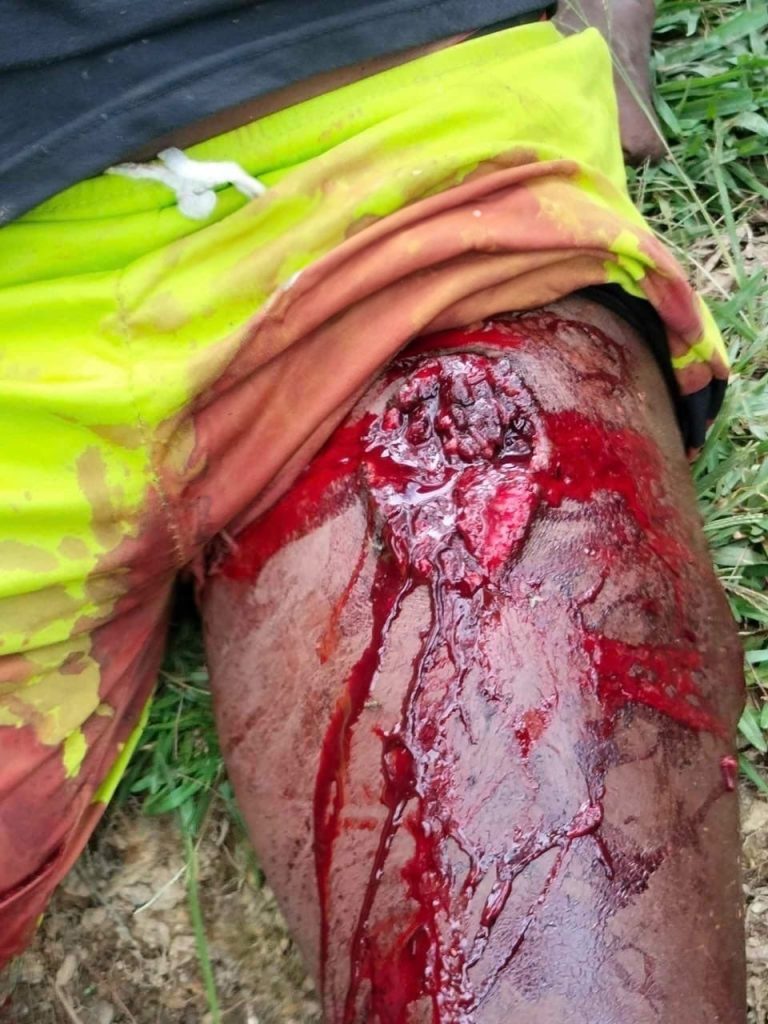
On 28 February 2024, around 10:30 pm, members of the Indonesian National Army (TNI) command Yonif 330 reportedly shot down the two indigenous Papuans, Selli Maiseni, 16, and Mr Mikalon Yoani, 18, in Titigi Village (see satellite image on top, source: European Space Imaging), Sugapa District, Intan Jaya Regency, Papua Tengah Province. Selli Maiseni sustained a gunshot wound on the arm, while Mr Yoani was shot in the thigh (see photos below, source: WPCC). The incident occurred during the vote count for the Indonesian Legislative and Presidential elections. The circumstances of the shooting are currently being investigated and verified. The XVII/Cenderawasih military command spokesperson, Colonel Candra Kurniawan, denied the allegations, saying there was no shooting in Suagapa on 28 February 2024 .

The case highlights a disturbing pattern of violence perpetrated by the TNI in Intan Jaya, citing many instances of shootings resulting in extrajudicial killings or injuries among civilians, including school children. The armed conflict in West Papua is a driver of internal displacement and prompted not only the indigenous population. but also teachers and health workers to leave the conflict areas. Accordingly, military members have become more involved in providing fundamental government health services, teaching in schools, and engaging in public activities such as burials and joint garden work. This is also part of the new Government strategy to tackle the armed conflict in West Papua with ‘Smart Power,’ a combination of soft approach, hard approach, and military diplomacy.

Many indigenous Papuans are traumatized by the presence of the military in their communities. Many are concerned that this exposes the community to increased potential risk of armed attacks by the West Papua National Liberation Army (TPNPB) near indigenous settlements and human rights violations. Human rights observers call for immediate action, demanding the withdrawal of all TNI Yonif 330 members operating there.

Mr Mikalon Yoani (left) and Selli Maiseni (right) sustained bullet injuries after military members bullet injuries opened fire in Titigi on 28 February 2024

Security forces raid villages Manggume, Aminggaru, Yenggernok, and Agiyome, Puncak Regency

CasesHuman Rights News / IndonesiaWest Papua / 13 February 2024 

Security forces raided the villages Manggume and Aminggaru, Omukia District, as well as in the villages Yenggernok and Agiyome in the Gome District, following the theft of an automatic firearm by members of the West Papua National Liberation Army (TPNPB) on 1 February 2024. According to information received, on 3 and 4 February 2024, security force members burnt houses in various villages to the ground (see images, source independent HRDs) and arbitrarily tortured villagers.

One Papuan villager reportedly died because of the injuries he sustained due to the torture. At least three other civilians were injured after being tortured, including one pastor named Rev Eriak Waker. The torture occurred during his interrogation in the Yenggernok Village. The other two victims sustained more severe injuries and were hospitalised. The Military later claimed that all victims were associated with the TPNPB. The relatives and the victims themselves underlined that they were civilians and not affiliated with the armed resistance.   

According to information received, security force members carried out a raid in the Manggume Village, Omukia District, on 4 February 2024, around 10.00 am. Mr Andinus Murib, 21, and Mr Devius Wanikbo, 19, were fixing the roof of a house when the security forces came to the villages. Villagers panicked and fled to the forest while Mr Murib and Mr Wandikbo were trapped on the roof. Security force members were temporarily detained and beaten.

Mr Murib and Mr Wandikbo were admitted to the public hospital after losing consciousness due to the pain they experienced during the torture. On 5 February 2024, military members suggested transferring both patients to Timika, where the hospital was better equipped. However, the relatives rejected the offer. Instead, they brought Mr Murib and Mr Wandikbo back to the village and treated them with traditional medicine because they feared further violence or criminalisation by the authorities.

During the raid in Manggume on 4 February 2024, security forces encountered Mr Werinus Murib, 20, in the forest near the village around 11.15 am while collecting firewood. After being arrested, security force members reportedly tortured Mr Murib until he succumbed to the injuries he sustained. The pattern of injuries indicated that the security force member beat and kicked the victim’s head and body using bare hands and blunt objects. The body also had stabbing and slashing injuries. Witnesses saw joint security forces tying Mr Murib’s feet to a car and dragging him for a distance of 1 kilometre. Mr Murib died on the way to the hospital as a result of the injuries he sustained.

Background

The pattern of attacks involving killings, torture, the destruction of houses, and the killing of livestock was also observed in the regencies Intan Jaya, Nduga, and Pegunungan Bintang, all located in the central highlands. This pattern indicates that these procedures are part of the security forces’ counterinsurgency strategy against guerrilla fighters. Armed resistance members hide among civilians and need the villages to supply their members with food and other essentials. The fighters are indigenous locals. Many are related to civilians living in the conflict areas. However, the presence of combatants among civilians is not sufficient reason to justify indiscriminate attacks directed against civilian settlements. Particularly in the case of air raids against small villages, a clear separation between civilians and targets can no longer be guaranteed. Strategies involving the deliberate destruction of civilian settlements and livestock cannot be justified under international law.

The use of extra-judicial execution, torture, and forced displacements during such raids amount to crimes against humanity as defined under the Rome Statue. While Indonesia has not yet been willing to become a party to the Rome Statute, the definitions provided in it are internationally recognised legal norms. An investigation by the National Human Rights Commission (Komnas HAM) into allegations of crimes against humanity is necessary and mandated by Indonesian law to reveal command structures, determine who authorised the attacks, and what security force units carried out the raids. Houses burnt to the ground during the raid in Puncak Regency, Papua Pegunungan Province, on 3 a

Amungme leader criticizes official visit amidst Freeport Indonesia environmental concerns

News Desk – PT Freeport Indonesia 14 February 2024

Jayapura, Jubi – John Magal, the chairman of the Amungme Community Institution (LEMASA) or Amungme Nagawan, expressed regret over the visit of a team from the Indonesian Ministry of Environment and Forestry (KLHK) and the National Development Planning Agency (Bappenas) failing to meet and observe residents directly affected by tailings from PT Freeport Indonesia‘s mining activities.

“They should have also seen the conditions of residents around the mining area, such as those living in Banti, Tsinga, and Arwanop. It is the duty of the state to observe the conditions of every Indonesian citizen,” said John Magal via WhatsApp to Jubi on Thursday (8/2/2024).

He added that as a citizen and leader of LEMASA, he deeply regrets that the visit was only to Freeport’s reclamation area in Tembagapura District, Mimika Regency, Central Papua Province.

“They should have directly observed the conditions of the people at locations directly affected by tailings and also residents around the mining area,” he added.

John Magal mentioned having sent a letter to the Ministry of Environment and Forestry, the Directorate General of Forestry and Environmental Planning, the Directorate of Environmental Impact Prevention of Business and Activities in Jakarta in June 2023.

“The ministry has responded to the letter because our request was for the Environmental Impact Analysis (AMDAL) to be suspended temporarily as it did not involve representatives of affected communities,” said Magal.

He personally wrote to the Minister of Environment and Forestry in Jakarta and until now, their request to meet with KLHK officials in Jakarta has not been fulfilled.

“Yes, I wrote to KLHK in Jakarta, and someone else met with them,” he said.

He stated that for nearly 50 years, their community as landowners has remained spectators, witnessing the wealth extracted from the bowels of Amungsa in Nemangkawi.

“Yes, we have been mere spectators for a long time,” he said.

Meanwhile, through its release, the Secretary of the Directorate General of Forestry and Environmental Planning, Herban Hendrayana, explained that Freeport has made various efforts in environmental management, and they hope this will continue and improve.

“The team planted Dechampsia Klossii, an endemic grass species found in Grasberg. Planting was done at Batu Bersih Grasberg at an altitude of 4,300 meters above sea level,” said Herban.

The KLHK and Bappenas team visited Mimika from Saturday, February 3 to Monday, February 5, 2024, to get a closer look at environmental management in mining areas and review community empowerment programs at PT Freeport Indonesia. (*) ——————–

Press Release TPNPB-OPM Central Command Headquarters 

on FEBRUARY 7, 2024


PRESS RELEASE

Today February 7, 2024, is the one-year-old detention of the Air Susi Airplane pilot from New Zealand, Philip Max Mehrtens, who was detained by the West Papua National Liberation Army – the Free Papua Organization, the Regional Defense Command III Ndugama Darakma under the Regional Commander-in-Chief Brigadier General Egianus Kogeya on February 7, 2023, during the national liberation war “War of National Liberation” against the Indonesian government in the West Papua Territory.

We affirm that the struggle of the West Papua National Liberation Army – Free Papua Organization (TPNPB-OPM) is an Act of International Law Enforcement that guarantees the Right of the Papuan Nation to self determination based on an Agreement between the Government of the Republic of Indonesia and the Government of the Kingdom of the Netherlands at the Headquarters of the United Nations on August 15, 1962 and recorded under General Assembly Resolution Number 1752 (XVII) 1962 of the United Nations, September 21, 1962.

The West Papua National Liberation Army (TPNPB) using this “War of National Liberation” is based on the history of manipulation of legal rights for the self-determination of the people of West Papua and the history of violations of international law related to the status of the West Papua Territory. Historical facts prove that the legal status of the West Papua territory under International Law is a territory that has been sovereign and independent in 1961, therefore the TPNPB has the right to maintain sovereignty in order to enforce international law that is guaranteed in accordance with the United Nations Charter “Self-defence”.

Thus, in the context of the one-year detention of the New Zealand Citizen Susi Air pilot, Philip Max Mehrtens, who was detained by the West Papua National Liberation Army-Free Papua Organization, Defense Regional Command III Ndugama Darakma under Regional Commander Brigadier General Egianus Kogeya, then we from the National Command Central Headquarters, the West Papua National Liberation Army-Free Papua Organization as the higher authority of the military organization in West Papua issued an official statement that:

1. The West Papua National Liberation Army-Free Papua Organization holding a pilot from New Zealand hostage is not actually the main target, but a guarantee of the Indonesian Government’s Violation of allowing Civil flights to enter the war area between the TPNPB-OPM (Milter of the Papuan Nation) and the Indonesian Military;

2. The hostages took place according to the standards of the law of war. Pilot Philip Max Mehrtens landed his plane in a war zone using the Susi Air airline which was subsidized by the Indonesian Government with the Pioneer Operations program. TPNPB-OPM Ndugama Darakma suspects that the New Zealand Pilot is carrying out a pioneering operation task which is an Indonesian Intelligence operation to destroy the struggle of the Papuan nation and spy on the movement of the West Papuan National Liberation Army (TPNPB);

3. We announce that in one year the Government of the State of Indonesia and the Government of the State of New Zealand are unable to open up to Peace Negotiation with the Papuan nation in the context of the release of Pilot Philip Max Marthens who is a New Zealand citizen who was detained by TPNPB-OPM;

4. We condemn President Jokowi and the Indonesian illegal Government in West Papua who are unable to answer the demands of the West Papua National Liberation Army (TPNPB) of the Defense Regional Command III Nudgama Darakma and are also unable to accept the offer of Peace Negotiations with the Management of the West Papua National Liberation Army National Liberation Army (KOMNAS TPNPB) headquarters for the release of the Pilot for one year. And also to the New Zealand Government who still does not want to accept a good offer from the West Papua National Liberation Army (TPNPB) in the release of the Pilot. Both countries have failed in their efforts to seek release through peaceful ways, still underestimate the goodwill efforts of TPNPB – OPM;

5. We are disappointed with Melanesian countries that have never paid attention to humanitarian crises including the release of New Zealand Pilot and the armed war categorized as part of the international armed conflict character, which has been going on for too long in the Pacific region. This is the failure of Pacific regional governments such as MSG and PIF that are not in accordance with the humanitarian norms of the lives of the indigenous people of the islands in the Pacific, and the West Papuan nation invites countries in the Pacific region to be a solution for the safety and release of Pilot from the rotten intentions of Indonesia who are trying to victimise this Pacific citizen from New Zealand;

6. The Management of the Central Headquarters of TPNPB gave the highest appreciation to the Commander of the TPNPB Regional Defense Command III Ndugama Darakma and the Troops for being able to carry out the noble task of ensuring international humanitarian law in war in accordance with the “1949 Geneva Convention III related to the protection of prisoners of war and the IV Geneva Convention on protection of civilians”. This is the proof and reputation of the West Papua National Liberation Army (TPNPB) because it has proven to be treated well, guarantee health and save Pilot Philip Max Martherns from the deadly attack of the Indonesian military. Therefore, through the Central Headquarters Management of National Command of TPNPB OPM will grand awards for the dedication, sacrifices and extraordinary work carried out by all TPNPB Regional Command III Ndugama Darakma troops;

7. In order to protect humanity and ensure human rights, the Management of the Central Headquarters of the National Command, the West Papua National Liberation Army (TPNPB) will return the pilot Philip Max Martherns to his family through the Jurisdiction of the Secretary General of the United Nations (UN).

Thus, we convey this Press Release with full responsibility on behalf of the Papuan nation, so that it is known by all Parties. Thank you.

Issued at Central Headquarters

On February 7, 2024

WEST PAPUA NATIONAL LIBERATION ARMY

CENTRAL HEADQUARTERS COMMAND

On behalf of HIGH COMMANDER

CHIEF OF GENERAL STAFF

Major General TERIANUS SATTO

NRP: 7312.00.00.003

2

Press Release TPNPB-OPM Central Command Headquarters on FEBRUARY 7, 2024

——————————

Police to recruit 10 thousand personnel to be assigned in Papua  

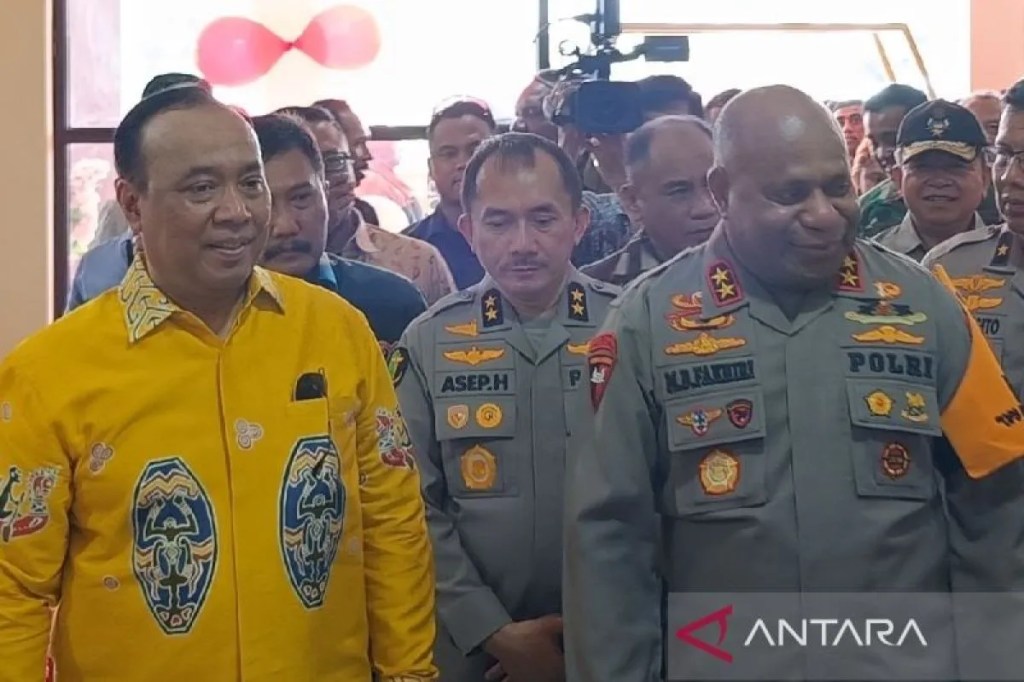
March 3, 2024 21:29 GMT+700 Jayapura, Papua (ANTARA) – Assistant to the National Police (Polri) Chief, Inspector General Dedi Prasetyo, stated that his side will recruit 10 thousand people to be assigned in the four provinces in Papua.

The recruitment of 10 thousand personnel will be carried out from 2024 to 2028, Prasetyo said here on Sunday.

According to him, the Polri will recruit two thousand people in April this year. The new recruits will be educated at the State Police School (SPN) in Java.

Prasetyo hoped that the regional police chiefs in Papua could be active in disseminating information for the new recruits.

He said that those who will be recruited are Indigenous Papuans and those who were born and raised in Papua.

They will be educated for five months in SPNs in Java, and after their education, they will be temporarily assigned to the regions for adjustment before being returned for duty in Papua.

Prasetyo said he is committed to accepting indigenous Papuans to minimize the transfer of Polri members from outside Papua to Papua.

He explained that the two thousand personnel will include 150 paramedics, especially doctors. The medical personnel recruitment will be carried out in collaboration with Cenderawasih University (Uncen).

Papua Police Chief, Inspector General Mathius Fakhiri, said that due to the expansive region, the number of local police stations is limited. Some areas even only have two stations, such as the Nduga Police and the Puncak Police.

“Hopefully, the increasing number of police members can expand services to the community,” Fakhiri said.

The territory of the Papua Regional Police includes Papua, Highland Papua, Central Papua, and South Papua.

President lauds RSPPN facilities built by Defense Ministry

Jakarta (ANTARA) – Indonesian President Joko Widodo commended the completeness of facilities at the National Defense Central Hospital (RSPPN) Panglima Besar Soedirman in Bintaro, Jakarta, which was built by the Ministry of Defense.

“The COVID-19 pandemic has taught us the importance of having adequate health facilities, including hospital, with human resources readiness, equipped with adequate facilities to deal with health emergencies like the ones we have experienced,” the president stated at the RSPPN inauguration in Jakarta on Monday.

During his visit, Widodo was accompanied by Defense Minister Prabowo Subianto to check the number of facilities at the hospital that he considers modern.

These facilities include an MRI machine with the highest spec Tesla 3 that can capture detailed views from all angles, a CT scan device that can scan from all sides to create cross-sectional images of the body, and a sophisticated and integrated modular operating room.

The head of state also highlighted the construction of hospitals for the Indonesian Navy, Army, and Air Force that have a domestic component level reaching an average of 70 percent.

Related news: Pandemic impels hospitals to improve quality of health services: VP

“This is a very good step to support the development of our national industry to accelerate our national economic recovery,” he remarked.

Apart from the RSPPN, Jokowi also inaugurated 20 hospitals for the Indonesian Army, Navy, and Air Force, as well as five other hospitals that had earlier been inaugurated and were fully operational.

With its complete facilities, he expressed hope that the RSPPN can become a reference hospital for employees of the Ministry of Defense, Indonesian Defense Forces (TNI), and their families as well as the public to access the best health services.

In addition, RSPPN is a teaching hospital for the Faculty of Medicine of the Defense University and is ready to become a disaster response hospital when needed.

Australian Ambassador Pays Working Visit to Papua 

Translator Ririe Ranggasari

 Editor Laila Afifa

 28 February 2024 22:21 WIB

TEMPO.COJakarta – Australian Ambassador to Indonesia Penny Williams PSM visited Jayapura in Papua province on February 26 and 27. While in Jayapura, Ambassador Williams met with the chairman of DPR Papua Jhony Banua Rouw, Papua Province Acting Governor Dr. M. Ridwan Rumasukun, and the Papua Chief of Police, Insp. Gen. Mathius D. Fakhiri.

Ambassador Williams also visited the Regional Development Planning Agency in Jayapura to see in person how Australia and Indonesia are working together for better development planning in Papua.

“I am very pleased to visit Jayapura and to see firsthand the cooperation between the province of Papua and Australia,” Ambassador Williams said.

One of the highlights of Ambassador Williams’ visit to Jayapura was a dinner with prominent Australian Alumni women leaders in Papua. Ambassador Williams also met with the Rector of Cenderawasih University, Dr. Oscar Oswald O. Wambrauw.

Ambassador Williams is a senior official in the Australian Department of Foreign Affairs and Trade (DFAT). Prior to her appointment as the Australian Ambassador to Indonesia, Williams served as the Deputy Secretary of DFAT. She has also served as the Australian Ambassador to Malaysia and was Australia’s first Ambassador for Women and Girls. Williams is the first female Australian Ambassador to Indonesia.

Williams is fluent in Indonesian due to her educational background in Bachelor of Asian Studies (Honors) with a focus on: He holds a Bachelor of Asian Studies (Honors) with a focus on Indonesia, as well as a Masters in Applied Anthropology and Participatory Development.

Suci Sekarwati

Survey finds drastic decline in people who think elections were honest and fair

Kompas.com – February 25, 2024

Novianti Setuningsih, Jakarta — The Indonesian Survey Institute (LSI) says that the level of public trust in the honesty and fairness (jurdil) of the 2024 general elections has plummeted a week after the vote on February 14.

This was one of the findings of a post-election survey conducted by the LSI on February 19-21.

In the post-election survey, the number of respondents who believe that the 2024 elections proceeded in an honest and fair manner was only 76.4 percent. Yet on voting day, the figure stood at 94.3 percent.

LSI Executive Director Djayadi Hanan said this sharp decline can be regarded as severe.

“There has been a decline in the level of public confidence in the jurdil (honesty, fairness) of the election process when seen from this data”, said Hanan during an online release of the LSI’s findings on Sunday February 24.

“The decline is almost 20 percent. A decline that is very significant”, he continued.

Broken down, the number of respondents who considered the implementation of the 2024 elections to be “very honest and fair” plummeted from 45.5 percent to 17.6 percent.

This difference does not compensate for the number of respondents who consider the implementation of the elections to be quite honest and fair, which only rose to 58.8 percent from the previous 48.8 percent.

Of the remainder, an additional 8.1 percent of respondents consider the

2024 elections to be less than honest and fair, as well as 4.8 percent of respondents who considered it to be not honest and fair at all.

Furthermore, Hanan revealed that the declining trend was also seen in public satisfaction with the implementation of the 2024 elections.

In the post-election survey, the level of public satisfaction in the elections reached 83.6 percent. Yet on polling day, the level of satisfaction was as high as 94.5 percent.

Hanan believes that this decline is significant because the change in the figures was quite wide in a short space of time.

“So for example, if we did a survey in another 10 days, maybe the level of satisfaction will go down again”, he said.

Hanan is of the view that one of the reasons for the decline was because the public was been informed about the various controversies that accompanied the organisation of the 2024 elections through a variety of news reports.

This includes the controversy over tabulation errors in the General Elections Commission’s (KPU) Recapitulation Information System (Sirekap). Then, there have also been a number of reports doing the rounds about elections being rerun in several regions.

For example, the Election Supervisory Board (Bawaslu) has recommended that 780 polling stations (TPS) must organise a revote, and the KPU has already scheduled 686 of these.

Over the same time span, the number of respondents who answered they were “less than satisfied” with the elections rose from 4.4 to 8.3 percent, and those who were “not satisfied at all” also increased sharply from 0.5 to 5.5 percent.

The LSI said that the survey target population was Indonesian citizens who are 17 years and over or who are married and have a telephone or cellphone. This represents around 83 percent of the total national population.

The sample was selected through a Random Digit Dialing (RDD) method or the technique of selecting a sample through a random telephone number generation process.

Using the RDD technique, a sample of 1,211 respondents was selected through a random telephone number generation process, validation and screening. The survey’s margin of error is estimated to be around 2.9 percent with a 95 percent level of confidence.

The LSI claims that the interviews with respondents that were conducted by telephone were done by trained interviewers.

Politically, the narrative about the lack of honesty and fairness that has irreparably damaged the credibility of the 2024 election is getting stronger.

And this is not just coming from civil society groups. The political parties that supported the loosing presidential tickets of Anies Baswedan-Muhaimin Iskandar and Ganjar Pranowo-Mahfud MD have begun to be of one voice in the discourse about initiating a parliamentary right of inquiry to raise the issue.

Former Central Java governor Pranowo is already pushing the two political parties that supported him in the election  — the ruling Indonesian Democratic Party of Struggle (PDI-P) and the United Development Party (PPP) — to use the House of Representative’s (DPR) right of inquiry.

According to Pranowo, the DPR cannot remain silent over the alleged election fraud that was so blatant.

“In this case, the DPR can summon state officials who know about these fraudulent practices, including asking for accountability from the KPU and Bawaslu as the election organisers”, Pranowo said in a statement on February 19.

Meanwhile, the three political parties supporting Baswedan and Iskandar, the National Democrats (Nasdem), the National Awakening Party (PKB) and the Justice and Prosperity Party (PKS) are ready to support a right of inquiry in the DPR.

“We have met and discussed the steps and we are solid, because of this I want to convey, when the right of inquiry initiative is carried out these three parties are ready to participate”, said former Jakarta Governor Baswedan at the Anies-Muhaimin national legal team office in Mampang Prapatan, South Jakarta, on February 20.

[Translated by James Balowski. The original title of the article was “Survei LSI: Tingkat Keyakinan Masyarakat Pemilu 2024 Jurdil Turun Drastis Sepekan sejak Pencoblosan”.]

Source: https://nasional.kompas.com/read/2024/02/25/15415871/survei-lsi-tingkat-keyakinan-masyarakat-pemilu-2024-jurdil-turun-drastis