Tensions escalate between Me and Kamoro tribes over gold mining in Central Papua – PT Zoomlion continues with illegal operation

 Cases Human Right 22 August 2024 

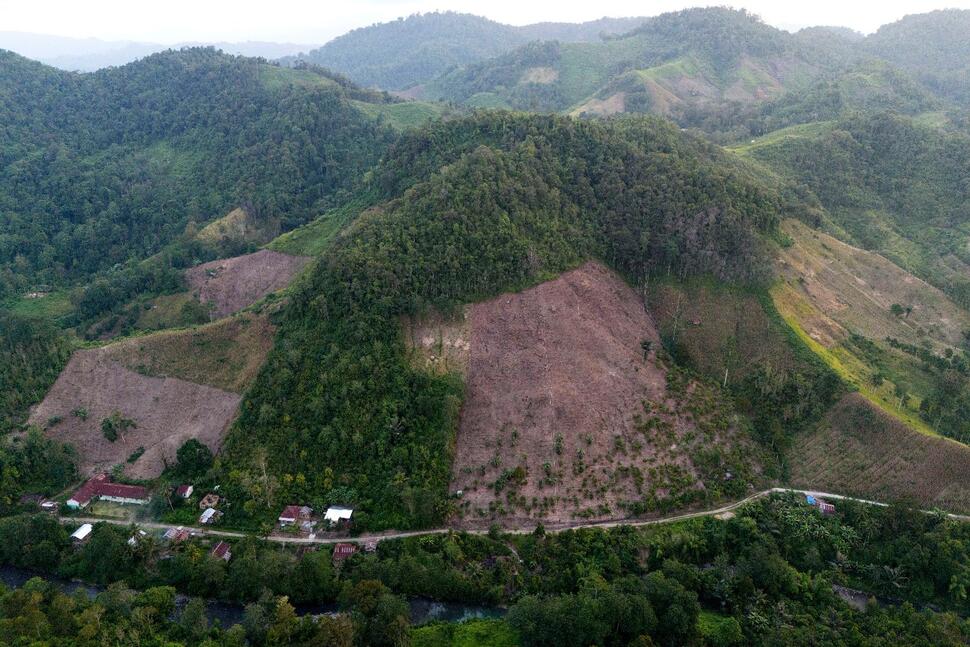
Some of the conflicts in Papua stem from illegal operations by companies that have failed to involve the customary land rights owners. A prominent example is the operation of PT Zoomlion in Kapiraya District, Central Papua Province. This issue urgently requires intervention from the Central Papua Provincial Government.

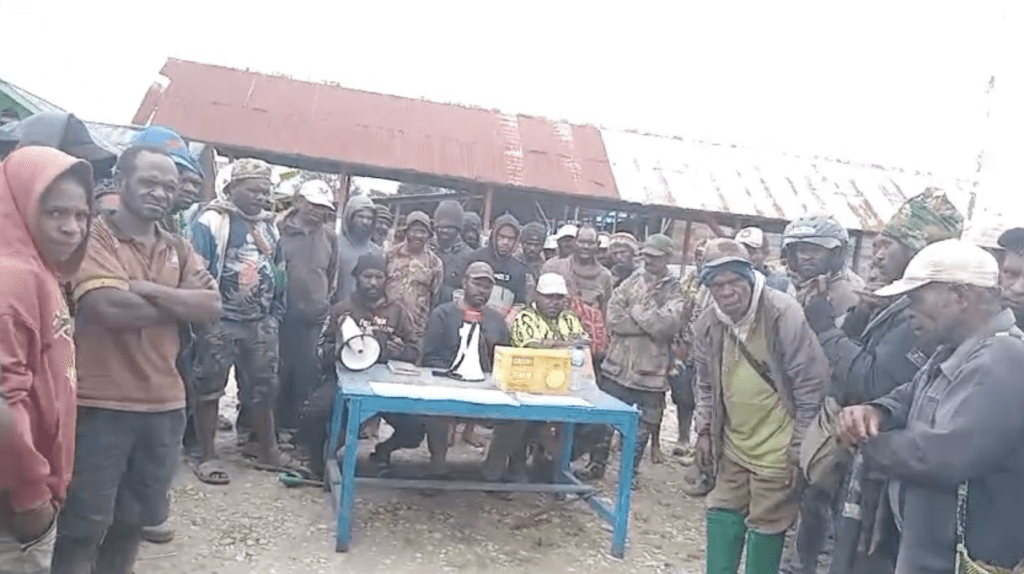
On 18 July 2024, the dispute over gold panning land in Kapiraya District escalated tensions between the Mee and Kamoro tribes. This dispute threatens the peaceful coexistence that has long been maintained between the two tribes. Historically, the Me and Kamoro tribes have lived in harmony, engaging in activities such as hunting, cooking, and bartering together. However, tensions have risen recently when residents of Wakiya Village, armed with weapons, threatened to sweep away the Me tribe residents in Mogodagi Village. This threat arose due to a scramble for control over the gold mining land in the region.

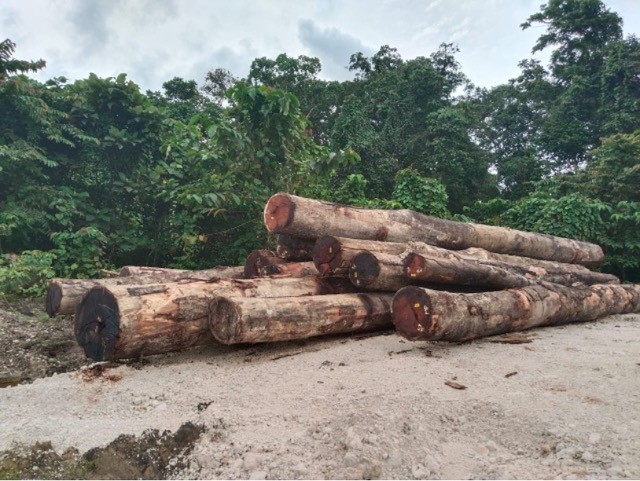
The Dogiyai Regency House of Representatives has taken steps concerning the illegal gold mining activities carried out by PT Zoomlion Indonesia Heavy Industry in Mogodagi Village, Kapiraya District, Deiyai Regency. Since January 2023, PT. Zoomlion has been conducting manual gold mining operations. In May 2024, they expanded their activities by bringing in two excavators and two Hilux vehicles without obtaining permission from the local community. This operation has resulted in severe environmental damage and a blatant disregard for the rights of the indigenous peoples who hold customary rights to the land.

In response to the increasingly volatile situation, the Dogiyai Regency House of Representatives conducted field monitoring (which was announced in May 2024) to Mogodagi Village. Their findings were compiled into official recommendations submitted to the Central Papua Provincial Government, specifically to the Acting Governor, and other relevant parties. The Dogiyai representatives urged that immediate and concrete steps be taken to resolve the situation before lives are lost. The presence of this illegal gold mine has intensified tensions within the local community, particularly between the Kamoro and Kei communities, who have threatened violence against the Me community in Mogodagi Village. Following the DPR’s visit, the situation worsened with the arrival of additional heavy equipment to support the illegal mining activities and the blockade of the Kapiraya airport runway by the Kamoro and Kei people, along with the company. The situation is extremely tense, putting the Me community under serious threat.

It is crucial that the Kamoro and Me tribes engage in dialogue to determine the boundaries of their respective customary lands. This mediation meeting should be facilitated by the Central Papua Provincial Government, given that this region lies at the intersection of three districts: Deiyai, Mimika, and Dogiyai. The community is urging the Acting Governor of Central Papua to promptly take concrete steps based on the recommendations of the Dogiyai Regional People’s Representative Council (DPRD), which reflect the people’s aspirations. This action is vital to prevent casualties and bloodshed. We seek a solution that promptly delineates territorial boundaries and issues a Governor’s Regulation (Pergub) and a Special Regional Regulation (Perdasus) on people’s mining.

Immediate actions that need to be taken include shutting down the illegal gold mining operations carried out by PT. Zoomlion Indonesia Heavy Industry in Mogodagi Village, conducting a transparent investigation into how PT. Zoomlion began its operations without the consent of customary rights owners, restoring the rights of indigenous peoples, protecting the environment by implementing measures to repair the damage caused, and ensuring transparency and accountability in all mining operations permits and other economic activities.

This call must be urgently addressed by the relevant parties before the situation deteriorates further and casualties occur. Let us work together to maintain the peace and well-being of the people of Central Papua.

From Papua to Gaza, military occupation leads to ‘ecocide’ – climate catastrophe 

By APR editor –  August 14, 2024 0 7 

Environmental destruction is not an unintended side effect, but a primary objective in colonial wars of occupation.

By David Whyte and Samira Homerang Saunders

Many in the international community are finally coming to accept that the earth’s ecosystem can no longer bear the weight of military occupation.

Most have reached this inevitable conclusion, clearly articulated in the environmental movement’s latest slogan “No Climate Justice on Occupied Land”, in light of the horrors we have witnessed in Gaza since October 7.

While the correlation between military occupation and climate sustainability may be a recent discovery for those living their lives in relative peace and security, people living under occupation, and thus constant threat of military violence, have always known any guided missile strike or aerial bombardment campaign by an occupying military is not only an attack on those being targeted but also their land’s ability to sustain life.

A recent hearing on “State and Environmental Violence in West Papua” under the jurisdiction of the Rome-based Permanent Peoples’ Tribunal (PPT), for example, heard that Indonesia’s military occupation, spanning more than seven decades, has facilitated a “slow genocide” of the Papuan people through not only political repression and violence, but also the gradual decimation of the forest area — one of the largest and most biodiverse on the planet — that sustains them.

West Papua hosts one of the largest copper and gold mines in the world, is the site of a major BP liquefied natural gas (LNG) facility, and is the fastest-expanding area of palm oil and biofuel plantation in Indonesia.

All of these industries leave ecological dead zones in their wake, and every single one of them is secured by military occupation.

At the PPT hearing, prominent Papuan lawyer Yan Christian Warinussy spoke of the connection between human suffering in West Papua and the exploitation of the region’s natural resources.

Shot and wounded
Just one week later, he was shot and wounded by an unknown assailant. The PPT Secretariat noted that the attack came after the lawyer depicted “the past and current violence committed against the defenceless civil population and the environment in the region”.

What happened to Warinussy reinforced yet again the indivisibility of military occupation and environmental violence.

In total, militaries around the world account for almost 5.5 percent of global greenhouse gas emissions annually — more than the aviation and shipping industries combined.

Our colleagues at Queen Mary University of London recently concluded that emissions from the first 120 days of this latest round of slaughter in Gaza alone were greater than the annual emissions of 26 individual countries; emissions from rebuilding Gaza will be higher than the annual emissions of more than 135 countries, equating them to those of Sweden and Portugal.

But even these shocking statistics fail to shed sufficient light on the deep connection between military violence and environmental violence. War and occupation’s impact on the climate is not merely a side effect or unfortunate consequence.

We must not reduce our analysis of what is going on in Gaza, for example, to a dualism of consequences: the killing of people on one side and the effect on “the environment” on the other.

Inseparable from impact on nature
In reality, the impact on the people is inseparable from the impact on nature. The genocide in Gaza is also an ecocide — as is almost always the case with military campaigns.

In the Vietnam War, the use of toxic chemicals, including Agent Orange, was part of a deliberate strategy to eliminate any capacity for agricultural production, and thus force the people off their land and into “strategic hamlets”.

Forests, used by the Vietcong as cover, were also cut by the US military to reduce the population’s capacity for resistance. The anti-war activist and international lawyer Richard Falk coined the phrase “ecocide” to describe this.

In different ways, this is what all military operations do: they tactically reduce or completely eliminate the capacity of the “enemy” population to live sustainably and to retain autonomy over its own water and food supplies.

Since 2014, the bulldozing of Palestinian homes and other essential infrastructure by the Israeli occupation forces has been complemented by chemical warfare, with herbicides aerially sprayed by the Israeli military destroying entire swaths of arable land in Gaza.

In other words, Gaza has been subjected to an “ecocide” strategy almost identical to the one used in Vietnam since long before October 7.

The occupying military force has been working to reduce, and eventually completely eliminate, the Palestinian population’s capacity to live sustainably in Gaza for many years. Since October 7, it has been waging a war to make Gaza completely unliveable.

50% of Gaza farms wiped out
As researchers at Forensic Architecture have concluded, at least 50 percent of farmland and orchards in Gaza are now completely wiped out. Many ancient olive groves have also been destroyed. Fields of crops have been uprooted using tanks, tractors and other vehicles.

Widespread aerial bombardment reduced the Gaza Strip’s greenhouse production facilities to rubble. All this was done not by mistake, but in a deliberate effort to leave the land unable to sustain life.

The wholesale destruction of the water supply and sanitation facilities and the ongoing threat of starvation across the Gaza Strip are also not unwanted consequences, but deliberate tactics of war. The Israeli military has weaponised food and water access in its unrelenting assault on the population of Gaza.

Of course, none of this is new to Palestinians there, or indeed in the West Bank. Israel has been using these same tactics to sustain its occupation, pressure Palestinians into leaving their lands, and expand its illegal settlement enterprise for many years.

Since October 7, it has merely intensified its efforts. It is now working with unprecedented urgency to eradicate the little capacity the occupied Palestinian territory has left in it to sustain Palestinian life.

Just as is the case with the occupation of Papua, environmental destruction is not an unintended side effect but a primary objective of the Israeli occupation of Palestine. The immediate damage military occupation inflicts on the affected population is never separate from the long-term damage it inflicts on the planet.

For this reason, it would be a mistake to try and separate the genocide from the ecocide in Gaza, or anywhere else for that matter.

Anyone interested in putting an end to human suffering now, and preventing climate catastrophe in the future, should oppose all wars of occupation, and all forms of militarism that help fuel them.

David Whyte is professor of climate justice at Queen Mary University of London and director of the Centre for Climate Crime and Climate Justice. Samira Homerang Saunders is research officer at the Centre for Climate Crime and Climate Justice, Queen Mary University.

Papua’s Awyu, Moi Sigin Tribes Deliver Petition of Support to Top Court over Customary Land Grabs 


Translator Najla Nur Fauziyah 

Editor Petir Garda Bhwana 

23 July 2024 08:41 WIB

TEMPO.COJakarta – Representatives of the Awyu and Moi Sigin indigenous communities submitted a petition supporting the tribes’ struggle against palm oil companies to the Supreme Court on Monday, July 22, 2024, from South Papua and Southwest Papua. 

Their visit to the Supreme Court was also intended to question the progress of the Awyu and Moi Sigin tribes’ cassation filed respectively on Mack and early May.

“To this day, we have not received any information about the registration number of the cassation appeal that we, Awyu and Moi Sigin indigenous communities, submitted to the Supreme Court,” said the representative of the Awyu tribe, Hendrikus Woro in a written statement on Monday.

“We came all the way from Papua twice because we were waiting for a decision that would save our customary forests,” said Hendrikus.

Hendrikus Woro’s petition concerns the environmental permit issued by the Papua Provincial Government to PT Indo Asiana Lestari (IAL) for 36,094 hectares of the Woro clan’s customary forest. 

Apart from PT IAL, several members of the Awyu Indigenous communities are also filing an appeal against PT Kartika Cipta Pratama and PT Megakarya Jaya Raya for 65,415 hectares of rainforest.

In a separate case, the Moi Sigin sub-tribe is fighting against PT Sorong Agro Sawitindo (SAS) as the defendant intervenor. PT SAS sued the central government for revoking their permit on 18,160 hectares of customary forest. 

“We received 253,823 signatures in the petition supporting the Awyu and Moi tribes, which today will be submitted directly to the Supreme Court. This petition and the recent #AllEyesOnPapua movement are proof of many people’s concern for the tribes’ struggle,” said a member of the  Save Papua Forests’ Advocacy Team from the Bentala People’s Heritage Foundation, Tigor Hutapea, on Monday.

Member of the Save Papua Forests’ Advocacy Team from Greenpeace Indonesia, Sekar Banjaran Aji, said customary forests are an ancestral heritage that has supported the Awyu and Moi Sigin indigenous communities for generations. They depend on forests as hunting grounds and ‘supermarkets’ for various sources of food and medicine. Forests are also indigenous people’s culture and identity.

Sekar emphasized that saving Papua’s forests will not only strengthen the defense against the climate crisis and biodiversity extinction but also protect natural, social, and cultural wealth.

Moi Sigin indigenous woman, Diana Klafiyu, also expressed her appreciation for the support that has poured in for their struggle and those signing the petition. 

“I hope that the judge will decide in favor of us, the indigenous people of the Moi tribe and the Awyu tribe,” Diana said.

ANNISA FEBIOLA

—————————

Papua’s Customary Forests Are Threatened with Disappearance by the Expansion of the Palm Oil Industry

All Eyes On Papua, the solidarity movement to save customary forests in Cenderawasih continues to resonate  

byRedaksi Asiatoday

June 3, 2024

in SCIENCE AND ENVIRONMENT

Reading Time: 3 mins read

ASIATODAY.ID, JAKARTA – The social media scene in Indonesia in the last few days has been filled with uploads of posters reading “All Eyes on Papua”.  This poster has been widely uploaded by residents as a form of support for the Papuan indigenous people, especially the Awyu and Moi tribes who are struggling to defend their customary forests.

This is because the customary forest, which has been a source of livelihood for the Awyu tribe in Boven Digoel, South Papua, and the Moi tribe in Sorong, West Papua, is at risk of being lost due to the expansion of the palm oil industry which is clearing land in Bumi Cenderawasih.

The “All Eyes on Papua” campaign has increasingly come into the public spotlight and gained momentum after environmental fighters from the Awyu and Moi tribes staged a protest at the Supreme Court, Jakarta, on Monday, May 27 2024.

Based on official information from the Coalition to Save Papua Customary Forests published on the official Greenpeace Indonesia website, the Awyu tribe and Moi tribe communities are both involved in legal action against the local government and palm oil companies to defend their customary forests. Both lawsuits have now reached the cassation stage at the Supreme Court.

An environmental fighter from the Awyu tribe, Hendrikus Woro, sued the Papua Provincial Government for issuing an environmental feasibility permit for PT IAL.

PT IAL has an environmental permit covering an area of ​​36,094 hectares, or more than half the area of ​​Jakarta City, and is located in the traditional forest of the Woro clan – part of the Awyu tribe.

However, Hendrikus’ lawsuit failed in the first and second instance courts. Now, the cassation at the Supreme Court is his remaining hope to defend the customary forest which has been his ancestral heritage and support the Woro clan for generations.

Apart from the PT IAL case’s cassation, a number of Awyu indigenous communities are also filing an cassation against the lawsuit of PT Kartika Cipta Pratama and PT Megakarya Jaya Raya, two palm oil companies which have also expanded and will expand in Boven Digoel. PT KCP and PT MJR, which previously lost at the Jakarta PTUN, filed an appeal and were won by a judge at the Jakarta State Administrative High Court (PTUN).

“We have been tormented for quite a long time by the existence of palm oil plans in our traditional territory. We want to raise our children through natural products. Palm oil will destroy our forests, we reject it,” said Rikarda Maa, an Awyu traditional woman.

The Moi Sigin sub-tribe is fighting against PT SAS which will clear 18,160 hectares of Moi Sigin customary forest for oil palm plantations. PT SAS previously held a concession of 40 thousand hectares in Sorong Regency.

In 2022, the central government will revoke PT SAS’s forest area release permit, followed by the revocation of business permits. Not accepting this decision, PT SAS sued the government at the Jakarta PTUN.

Representatives of the Moi Sigin indigenous community also fought back by submitting themselves as intervention defendants at the Jakarta PTUN in December 2023. After the judge rejected the lawsuit in early January, the Moi Sigin indigenous community filed an appeal to the Supreme Court on May 3 2024.

“I urge the Supreme Court to provide legal justice for us indigenous peoples. The customary forest is where we hunt and gather sago. The forest is a pharmacy for us. Our needs are all in the forest. If our traditional forests disappear, where else will we go?” said Fiktor Klafiu, a representative of the Moi Sigin indigenous community who was the defendant in the intervention.

According to the Coalition to Save Papuan Traditional Forests, the existence of oil palm plantations is said to destroy forests which are a source of livelihood, food, water, medicine, culture and knowledge for the Awyu and Moi indigenous communities. This forest is also a habitat for endemic Papuan flora and fauna, as well as storing large carbon reserves.

It is feared that palm oil plantation operations will trigger deforestation which will release 25 million tonnes of CO2e into the atmosphere, exacerbating the impact of the climate crisis in the country.

“The panel of judges needs to prioritize aspects of environmental and climate justice, the impacts of which will not only be felt by the Awyu and Moi tribes but also other Indonesian people,” said Tigor Hutapea, a member of the legal team for the Awyu and Moi tribes from Pusaka Bentala Rakyat.

Greenpeace Indonesia Forest Campaigner, Sekar Banjaran Aji, said that the struggle of the Awyu and Moi tribes was an honorable effort for the sake of customary forests, for the lives of their children and grandchildren today and in the future, and indirectly all of us.

“We invite the public to support the struggle of the Awyu and Moi tribes and speak out about saving Papua’s forests which are our stronghold in facing the climate crisis.” (AT Network)

Follow Us at Google News and WA Channel

Indonesia’s carbon crisis: will Islam get dirty hands?

Nahdlatul Ulama (NU)(revival of the scholars) is Indonesia and the world’s largest Islamic organisation claiming almost 100 million members. If it digs coal it could become mega-rich. How dirty work marries with sending souls to paradise only Allah knows.

President Joko ’Jokowi’ Widodo has four months left in office, enough time to sow division before handing the job on to the elected former cashiered general Prabowo Subianto.

In May, Jokowi signed a decree letting religious groups apply to be the first shovel in the ore for special mining concessions. Not quite a gift from the gods as the Republic is supposed to be monotheistic, but pretty close.

This allows him to make good on an old promise to religious groups to take over mining concessions to raise funds. What the hell has coarse commerce got to do with matters of faith?

One answer: Politics, or as The Jakarta Post described it clumsily because pig meat is taboo to Muslims, “halal-certified state-sponsored pork barrelling”.

It added: “The government has come out with one of the most ridiculous policies in the history of this nation … It’s now up to the country’s largest Muslim organisation to back out on moral grounds.”

But will the lure of lucre prevail over Islam’s obligations to be honest, fair and righteous?

NU supported the Prabowo ticket in the February presidential election as did Jokowi who was constitutionally barred from taking a third five-year term.

Instead, he engineered for his eldest son Gibran Rakabuming to contest as number two. He’s now Vice-President elect.

The lead-up to the inauguration is a time to settle debts and cement alliances. If enough minor parties join the Prabowo-Gibran winning team, opposition will be left to NGOs.

Most are poor and poorly equipped to do more than their narrow roles, like advocating for human rights.

The churches have already knocked back Jokowi’s offer saying that fossil fuels are not their job and they’re better at consulting holy books than mining manuals. The mosques are dithering.

Second behind NU is Muhammadiyah (followers of Muhammad) with 60 million members. It tends to attract the better-educated middle class.

At present it’s pondering the Jokowi offer, but observers reckon nothing will happen as the gift has been pegged only for the NU.

The six government-approved religions, Islam, Protestantism, Catholicism, Hinduism, Buddhism and Confucianism have charity wings. They run schools, hospitals, clinics and retirement homes principally for their members and could probably improve their work with mining profits.

But supping with this devil will need a long-arm excavator.

Investment Minister Bahlil Lahadalia was reported as saying the handout was “in return to their past services during and after the country’s struggle for independence … you are investing for the hereafter.” That’s something most religions have been doing for millennia.

The government says any faith group that accepts the deal has to run the show themselves. This means they can’t flog off a mining permit or farm out business to an established company, even though it has the gear and expertise.

That rule crimps expectations of the beneficiaries only needing bigger truck parks and tips to take Haulpaks of rupiah.

A few right-wing congregations believe the earth is for exploitation; the rest take a more environmentally conscious position accepting that despoiling nature is not part of any Deity’s plan.

The better read will know that most responsible nations are moving away from fossil fuels to renewable energy sources.

Indonesia is the world’s largest coal exporter and third biggest producer; to the distress of those worried about global warming it shows no sign of slowing down; the compound annual growth rate has been seven per cent since 2019. This year it expects to produce 710 million tonnes.

There are precedents for Jokowi’s generosity though unfair and distressing.

Last century then president Soeharto gave forestry concessions. Tens of thousands of hectares of virgin growth mainly in Kalimantan (Borneo island) to relatives and mates, particularly army generals, establishing vast business enterprises.

Many wield enormous power today and are part of the oligarchy. We’ve yet to hear how the profiteers feel about sharing their spoils with the pious.

Consider making a donation to support independent journalism

Pearls and Irritations relies totally on donations from its readers. We are independent and we don’t accept financial support from governments, their agencies or vested interests such as fossil fuel and arms manufacturing companies. We do not accept advertising, nor do we have a paywall.

Please consider a donation to help Pearls and Irritations extend its voice and reach.

Duncan Graham

Duncan Graham has been a journalist for more than 40 years in print, radio and TV. He is the author of People Next Door (UWA Press). He is now writing for the English language media in Indonesia from within Indonesia.
Duncan Graham has an MPhil degree, a Walkley Award, two Human Rights Commission awards and other prizes for his radio, TV and print journalism in Australia. He lives in East Java.

Papuans head to Indonesian court to protect forests from palm oil

Campaigners are taking legal action to stop four palm oil companies from clearing vast tracts of forest for plantations.

The Awyu and Moi say they want to stop the plantations for the benefit of their community and future generations. [Bay Ismoyo/AFP] 

By  Al Jazeera Staff Published On

 28 May 2024 

Indigenous activists from the Indonesian province of West Papua have held traditional ceremonies outside the country’s Supreme Court in Jakarta calling for their traditional land and forests to be protected from palm oil plantations.

Representatives of the Awyu and Moi communities held prayers and performed dances in front of the Supreme Court building on Monday as the court was reviewing an appeal in relation to their efforts to revoke permits for four palm oil companies whose proposed plantations threaten their customary forests. Indonesia began legally recognising customary forests in 2016.

“We have taken the long, difficult and expensive path from Tanah Papua [Papua homeland] to end up here in Indonesia’s capital Jakarta, asking the Supreme Court to restore our rights, and the land that was snatched from us when these palm oil companies were issued permits over it,” said Hendrikus “Franky” Woro, an Awyu Indigenous man.

Woro filed an environmental and land rights lawsuit in the Papuan capital of Jayapura challenging the plan by a Malaysian-owned palm oil company to clear tens of thousands of hectares of previously untouched West Papuan forest, including traditional Indigenous land.

Environmental campaign group Greenpeace said the potential emissions from clearing the 26,326 hectares (65,053 acres) of primary forest in its concession would amount to about 23 million tonnes of CO2, equivalent to 5 percent of Indonesia’s annual carbon emissions expected in 2030.

The Awyu have also intervened in appeals taken by two other palm oil companies against a decision by the minister of environment and forestry to cancel permits that it had previously issued for them to clear Indigenous lands. The revocation has the potential to save 65,415 hectares (161,644 acres) of pristine rainforest, six times the area of the city of Paris, Greenpeace said.

The Supreme Court is the communities’ last chance to defend their customary forest and generations of ancestral heritage.

“We have been tormented for years by the threat of our traditional forests being replaced by palm oil plantations. We want to raise our children with the help of nature, and the food and materials we harvest from the forest. Palm oil will destroy our forests, we reject it,” said Rikarda Maa, an Awyu Indigenous woman.

The Moi Indigenous community, meanwhile, is fighting to protect thousands of hectares of customary forest that has also been earmarked for palm oil. The company involved had its permits revoked amid community opposition but lower courts later ruled in favour of the planter.

“The judicial panel needs to prioritise aspects of the case that relate to environmental and climate justice, the impact of which will not only be felt by the Awyu and Moi but the entirety of the Indonesian people,” Tigor Hutapea, a member of the legal team from Pusaka Bentala Rakyat, said in a statement.

Global Forest Watch, a monitoring platform run by the World Resources Institute, said last month that since 1950, more than 74 million hectares (183 million acres) of Indonesian rainforest — an area twice the size of Germany — had been logged, burned or degraded for the development of palm oil, paper and rubber plantations, nickel mining and other commodities.

Indonesia is the world’s biggest producer of palm oil, and Malaysia number two. Indonesia is also a major exporter of commodities such as coal, rubber and tin.

Deforestation in Indonesia Spiked Last Year, but Resources Analyst Sees Better Overall TrendA data analysis shows Indonesia had a 27% increase in primary forest loss in 2023

By Associated Press

April 28, 2024, at 10:06 p.m.

JAKARTA, Indonesia (AP) — From trees felled in protected national parks to massive swaths of jungle razed for palm oil and paper plantations, Indonesia had a 27% uptick in primary forest loss in 2023 from the previous year, according to a World Resources Institute analysis of deforestation data. But the loss is still seen as historically low compared to the 2010s, it said.

“Deforestation has been declining from six or so years ago, when there were peak rates,” said Rod Taylor, global director of the forests program at WRI. “It’s good news and commendable for Indonesia.”

But others saw cause for concern in the uptick, and tied some of the more recent deforestation to the world’s appetite for mining Indonesia’s vast deposits of nickel, which is critical for the green energy transition.

The latest data from the University of Maryland’s Global Land Analysis and Discovery laboratory was shared on Global Forest Watch — a platform run by WRI that provides data, technology and tools for monitoring the world’s forests.

A vast tropical archipelago stretching across the equator, Indonesia is home to the world’s third-largest rainforest, with a variety of endangered wildlife and plants, including orangutans, elephants and giant forest flowers. Some live nowhere else.

Since 1950, more than 74 million hectares (285,715 square miles) of Indonesian rainforest — an area twice the size of Germany — have been logged, burned or degraded for development of palm oil, paper and rubber plantations, nickel mining and other commodities, according to Global Forest Watch. Indonesia is the biggest producer of palm oil, one of the largest exporters of coal and a top producer of pulp for paper. It also exports oil and gas, rubber, tin and other resources.

Expansion of industrial plantations occurred in several locations adjacent to existing palm oil tree and pulp and paper plantations on the tropical islands of Kalimantan and West Papua, according to the analysis.

The Indonesian Ministry of Environment and Forestry said the expansion occurred in concessions granted before the current administration took office in 2014.

The Indonesian Ministry of Environment and Forestry did not respond to questions and a request for comment sent by The Associated Press.

Global Forest Watch’s data on Indonesia’s loss of primary forests — which are old-growth forests typically high in stored carbon and rich in biodiversity — are higher than the official Indonesian statistics. That’s because much of the primary forest loss in Indonesia, according to the analysis, is within areas that Indonesia classifies as secondary forest — areas that have regenerated through largely natural processes after human actions such as agriculture clearing or timber harvest. Secondary forests typically have reduced capacity for storing carbon than primary forests.

Deforestation linked to the mining industry occurred in Sumatra, Sulawesi, Mlauku and Kalimantan, according to the analysis.

Indonesia has the world’s largest reserves of nickel — a critical material for electric vehicles, solar panels and other goods needed for the green energy transition. And part of this deforestation can be directly linked to the expansion of Indonesia’s nickel industry, said Timer Manurung, director of Auriga Nusantara, a nongovernmental conservation organization based in Indonesia.

Manurung said it’s not clear exactly how much of Indonesia deforestation is due to mining. But he called it a “significant driver,” and said the government’s rapid development of the country’s mining and nickel industry — including more than 20 new smelters to process the nickel ore — is “repeating Indonesia’s oil palm and pulpwood mistakes” of increasing deforestation.

But Taylor noted that deforestation done on a massive scale seems to be shrinking, compared to the past.

In the 2010s there was gargantuan oil palm, timber and large-scale plantation expansion across Indonesia. Research in the Nature Climate Change journal found that the deforestation rate doubled to approximately 2 million hectares per year during 2004-2014.

In 2023, primary forest loss in patches greater than 100 hectares made up just 15% of the loss, according to the analysis.

Taylor attributes this lack of large-scale deforestation patches to the reputational risks that companies face if they are found to be razing trees. In recent decades nongovernmental organizations, consumers and governments — including the European Union — have pushed for companies to move away from deforestation practices.

In 2018 Indonesian President Joko Widodo put a three-year freeze on new permits for palm oil plantations. And the rate of deforestation slowed between 2021-2022, according to government data.

But small-scale primary forest loss was still prevalent throughout the country, including within several protected areas such as Tesso Nilo National Park and Rawa Singkil Wildlife Reserve on the island of Sumatra. Both areas are home to critically endangered animals such as tigers and elephants.

A wetter than usual El Nino — which usually leads to less rainfall and higher temperatures that can cause rapid spread of fires set to clear land for agriculture — contributed to a quieter than expected fire season, Taylor said. So did investments made by the Indonesian government in fire prevention capabilities, as well as efforts to suppress fire by local communities.

During Indonesia’s last El Nino in 2015-2016, fires intentionally started to clear land for agriculture rapidly spread, sending haze across Southeast Asia. Several Indonesian provinces declared states of emergencies, respiratory illnesses spiked and thousands of Indonesians had to flee their homes.

“The good news in Indonesia is that the fire prevention measures are much more sophisticated than they were in years past,” said Taylor. “It’s really making a difference.”

___ Associated Press climate and environmental coverage receives support from several private foundations. See more about AP’s climate initiative here. The AP is solely responsible for all content.–

Puncak Jaya’s glaciers shrank to 0.23 square kilometers by 2022: BMKG 

April 18, 2024 18:03 GMT+700 Denpasar, Bali (ANTARA) – Central Papua’s Puncak Jaya has lost most of its glaciers, whose thickness had been recorded at only 0.23 square kilometers by April 2022, according to the Meteorology, Climatology, and Geophysics Agency (BMKG).

“The probable cause is the 2022-2023 El Nino phenomenon,” BMKG’s research and development department coordinator, Donaldi Permana, stated at a webinar on the 74th World Meteorology Day observed here on Thursday.

Permana remarked that the agency conducted a long-term observation of the glacier coverage in Indonesia’s highest peak from 2009 to 2023.

The agency found the snow thickness, which by December 2022 was recorded at six meters, had reduced to two meters on December 2023. Meanwhile, the average reduction in ice area from 2016 to 2022 was recorded at 0.07 kilometers annually.

Permana pointed out that climate change-induced global warming was the primary cause of the gradual disappearance of Indonesia’s only eternal snow.

The department chief stated that by 1850, Puncak Jaya’s snow coverage was 19 square kilometers. However, by 2020, the ice cap shrank to an estimated 0.34 square kilometers.

He said that such glacial thinning had not solely occurred in Puncak Jaya, as glaciers in other mountains in tropical regions, such as Mount Kilimanjaro in Tanzania, Quelccaya in Peru, and Naimona’nyi in Tibet, China, had also been affected by climate change.

The climate change made 2023 the hottest year recorded, and the average global temperature in 2014-2023 had increased by 1.20 plus-minus 0.12 degrees Celsius, Permana remarked.

The department head accentuated the need to reduce carbon emissions through mitigation and adaptive measures to reduce climate change effects and ensure the longevity of ice caps in tropical areas, such as Puncak Jaya.

Planting more trees, reducing plastic use, and using green energy will be simple steps to mitigate climate change, Permana stressed.

“If not mitigated or reduced, carbon dioxide will stay in the atmosphere, and even after 100 years, the concentration will remain at 33 percent,” he stated. 

Indonesia is still a tricky proposition for foreign investors

It’s unfortunate timing. In the same week that Prime Minister Anthony Albanese announced a $2 billion facility to encourage investment in South-East Asia, a Canadian pension fund investor hit pause on a much-touted push into Indonesia.

In
recent years, South-East Asia’s largest economy has made some big
strides in welcoming institutional investors – including Australia’s
Macquarie Asset Management – by dealing with concerns about political,
economic and regulatory risks.

The three-year-old Indonesian
Investment Authority (INA), protected by its own legislation and a
reporting line straight to the president, has done much to smoothen the
way.

INA chief executive Ridha Wirakusumah
has briefed fund managers across the globe on its mission to bring
world-class investors to Indonesia. He has made several visits to
Australia and was back again this week as Albanese launched the $2
billion Southeast Asia Investment Financing Facility in the presence of
regional leaders and executives at the ASEAN Summit in Melbourne.

INA
has done a good job of insulating investors from Indonesia’s always
complex and often piecemeal regulatory framework. However, a recent
development shows the path is not straightforward, even for seasoned
investors who have done years of due diligence.

One of the INA’s early triumphs, a $US3.75 billion investment platform formed with three international partners, has taken an unexpected turn. Canada’s Caisse de dépôt et placement du Québec (CDPQ) was left off the list when the INA announced that the platform had become a shareholder in a major tollway project this year. This week, an INA spokeswoman confirmed that CDPQ was no longer involved in the platform “for the time being”. The target investment had consequently been reduced to $US2.75 billion.

A spokesman said CDPQ would not go into the details regarding its engagement with INA “but active discussions are ongoing”.

The diminished size of the investment platform demonstrates Indonesia’s continuing battle to diversify its financial backers. Although foreign direct investment has reached record levels recently, much of this has been concentrated in huge new industrial parks centred on nickel mining. The country’s ambitious goals for clean energy and its pressing need for more infrastructure require billions more.

In November, Indonesian President Joko Widodo inaugurated a floating solar farm in West Java province. It’s the third largest such structure in the world, but just one small step in what the president, commonly known as Jokowi, estimates is a $US1 trillion task to get South-East Asia’s largest economy to zero emissions.

The Albanese government views the green transition as a chance to both strengthen a crucial bilateral relationship and help turn the dream for Australia to become a renewables superpower into reality. Hence, the $2 billion promise to help tempt Australian investors into South-East Asia, which was announced at the ASEAN Summit.

The initiative will provide loans, guarantees, equity and insurance to help bolster what the government describes as the “underweight” and “stagnant” two-way trade and investment with ASEAN member countries. Renewable energy and infrastructure development are the priority areas.

The $2 billion could be “catalytic in Indonesia,” says Andrew Hudson who leads the Melbourne-based Centre for Policy Development, which also has a presence in Jakarta. “We’ve seen investment in South-East Asia drop off drastically over the last decade and the big question is how do we encourage the private sector. I think this new facility will help derisk and provide higher return rates – and it really should be focused on Indonesia, the giant of South-East Asia.”

It’s a good time to be looking around, he notes. The Indonesian government is increasingly frustrated by delays in the $US20 billion promised by G7 countries in 2022 to help shift its developing economy. The country is still powered almost entirely by coal-fired electricity that is heavily subsidised – as is the gasoline used by the vast majority of cars and motorbikes across the archipelago.

Indonesia is at the point of what the OECD refers to as the country’s “reform journey” where more institutional investors are becoming increasingly comfortable they won’t be caught out by political or economic crises. The INA’s two other partners in the investment platform launched in 2021 have stuck with the initiative under which the acquisition of a stake in a Trans-Java toll road was announced in January. However, CDPQ’s actions show the country remains complex for international investors – even those whose due diligence goes back years.

ugboats and barges transporting coal are moored on the Mahakam River in Samarinda, East Kalimantan, Indonesia.  Bloomberg

Shrinking involvement

Although these considerations are not incompatible with the Albanese government’s strategy for the region, they will be top of mind for Export Finance Australia, which will run the $2 billion South-East Asia Investment Financing Facility. The goal is to reverse our shrinking involvement with a region that is tipped to be the fourth largest in the world by 2040, after the US, China and India.

Macquarie Asset Management is one of the few Australian institutions to have invested directly in Indonesia, where it has a minority stake in Bersama Digital Infrastructure. Singapore-based King & Wood Mallesons partner Nicola Yeomans advised MAM’s co-investor in that deal, Canada’s Public Sector Pension Investment Board. Yeomans was also in Melbourne this week. She praises the government for acting so quickly on the recommendations made in the South-East Asia strategy that was led by former Macquarie boss Nicholas Moore.

“The issue is there are not enough big, bankable projects. This will provide finance for ventures at an earlier stage than private capital,” Yeomans says.

Advertisement

“My view is we need to normalise the risk. Yes, it’s a different legal system and yes, you need to understand your partner. The risks are real and people have been in trouble in the past. But there are many investors from elsewhere in the world that have done the work and who understand the nature of those risks.”

Shifting Indonesia to green energy is an immense task – sobering not only in terms of its size but also its social impact, with a lot of workers engaged in fossil fuel-related industries and many consumers being used to heavily subsidised purchases.

The 192-megawatt peak solar farm on the Cirata reservoir in West Java is expected to generate 245 gigawatt-hours of electricity a year. That’s enough to power 50,000 households, though this could increase with plans to expand the project to 500MWp and perhaps as high as 1000MWp.

A view of the Cirata Floating Photovoltaic Power Plant in Purwakarta, Indonesia.  Bloomberg

Renewables account for just 12 per cent of Indonesia’s power generation and the country is likely to miss its target of increasing that to 23 per cent by next year. The government has estimated it needs $US600 billion to retire 15 gigawatts of coal power generation over the next three decades.

At the end of 2022, developed nations agreed to help fund the transition from coal to clean power. The $US20 billion Indonesia Just Energy Transition Partnership is led by the United States and Japan and supported by the UK, Germany, France, the EU, Canada, Italy, Norway and Denmark. The plan is for public sector agencies to pledge $US10 billion, and the same amount would be put up by the private sector.

The JETP for Indonesia – and others agreed with South Africa, Vietnam and Senegal – are an acknowledgement the world is moving too slowly on climate action, and too unevenly. More than 90 per cent of all increased spending on renewables is going into developed countries and China, according to the Rockefeller Foundation.

But so far, those good intentions have failed to translate into cash. A JETP Secretariat opened in Jakarta a year ago and 400 priority projects have been whittled down to just under 50. However, Jokowi expressed frustration when he told the Financial Times last year there was “tremendous” concern over the lack of action in funding. “Don’t question Indonesia’s commitment towards the energy transition. What I’m questioning is the commitment of the developed states.”

In a report on the overall JETP approach released last month, the Rockefeller Foundation concluded that “healthy scepticism and continued scrutiny are warranted given how long the process is taking and how slowly the money has flowed so far”.

When the Indonesian JETP was announced, some observers felt Australia should have been involved. One well-informed observer said the Indonesian government suggested informally that Canberra should jump in only if it were willing to commit a substantial sum.

The $2 billion facility directed squarely at the region shows serious intent. But it remains to be seen if institutional investors will turn into active players and team up with fund managers operating in the region, and also follow the lead of the newly appointed regional business champions by backing companies keen to do more with our northern neighbours.

T

Emma Connors

Emma ConnorsSenior editor and writerEmma Connors was South-east Asia correspondent from October 2019 until mid-2023, based in Jakarta and Singapore. She has previously edited Perspective, Review and op-ed, and has written extensively across the AFR and related titles. Connect with Emma on Twitter. Email Emma at emma.connors@nine.com.au

Latest In Asia

Amungme leader criticizes official visit amidst Freeport Indonesia environmental concerns

News Desk – PT Freeport Indonesia 14 February 2024

Jayapura, Jubi – John Magal, the chairman of the Amungme Community Institution (LEMASA) or Amungme Nagawan, expressed regret over the visit of a team from the Indonesian Ministry of Environment and Forestry (KLHK) and the National Development Planning Agency (Bappenas) failing to meet and observe residents directly affected by tailings from PT Freeport Indonesia‘s mining activities.

“They should have also seen the conditions of residents around the mining area, such as those living in Banti, Tsinga, and Arwanop. It is the duty of the state to observe the conditions of every Indonesian citizen,” said John Magal via WhatsApp to Jubi on Thursday (8/2/2024).

He added that as a citizen and leader of LEMASA, he deeply regrets that the visit was only to Freeport’s reclamation area in Tembagapura District, Mimika Regency, Central Papua Province.

“They should have directly observed the conditions of the people at locations directly affected by tailings and also residents around the mining area,” he added.

John Magal mentioned having sent a letter to the Ministry of Environment and Forestry, the Directorate General of Forestry and Environmental Planning, the Directorate of Environmental Impact Prevention of Business and Activities in Jakarta in June 2023.

“The ministry has responded to the letter because our request was for the Environmental Impact Analysis (AMDAL) to be suspended temporarily as it did not involve representatives of affected communities,” said Magal.

He personally wrote to the Minister of Environment and Forestry in Jakarta and until now, their request to meet with KLHK officials in Jakarta has not been fulfilled.

“Yes, I wrote to KLHK in Jakarta, and someone else met with them,” he said.

He stated that for nearly 50 years, their community as landowners has remained spectators, witnessing the wealth extracted from the bowels of Amungsa in Nemangkawi.

“Yes, we have been mere spectators for a long time,” he said.

Meanwhile, through its release, the Secretary of the Directorate General of Forestry and Environmental Planning, Herban Hendrayana, explained that Freeport has made various efforts in environmental management, and they hope this will continue and improve.

“The team planted Dechampsia Klossii, an endemic grass species found in Grasberg. Planting was done at Batu Bersih Grasberg at an altitude of 4,300 meters above sea level,” said Herban.

The KLHK and Bappenas team visited Mimika from Saturday, February 3 to Monday, February 5, 2024, to get a closer look at environmental management in mining areas and review community empowerment programs at PT Freeport Indonesia. (*) ——————–