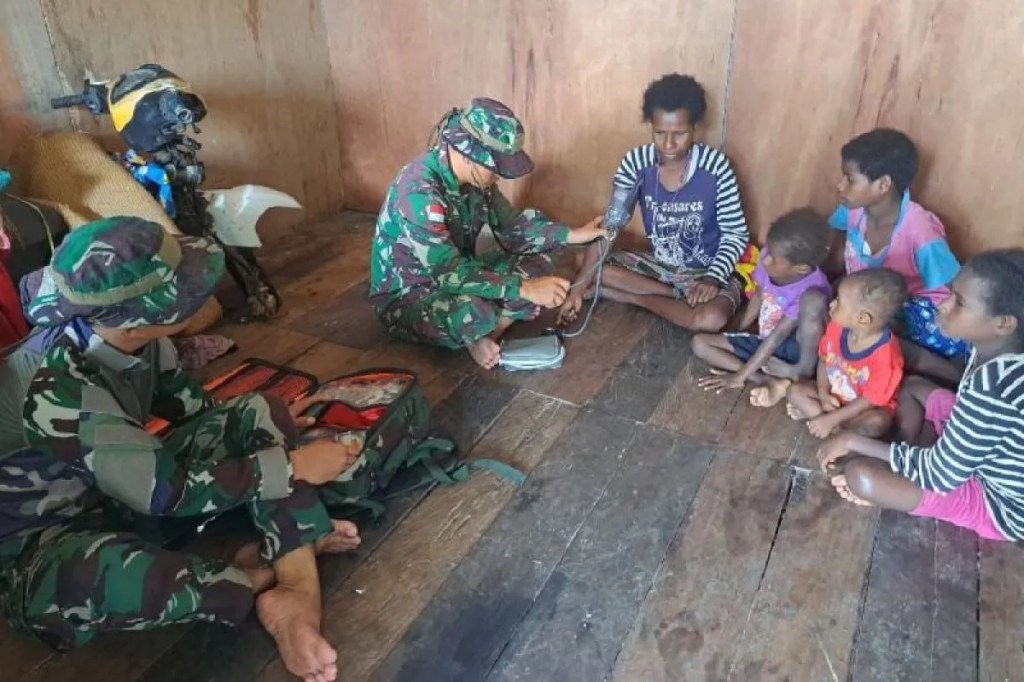
DR BUDI HERNAWAN – WEST PAPUA – “LET’S BULLDOZE AND OCCUPY THEM NOW!”

Live Encounters Magazine Volume One November-December 2024.

“Let’s bulldoze and occupy them now!”: dismantling the logic of outsourcing
in the National Strategic Project for Food Estate and Energy in West Papua 

– by Dr. Budi Hernawan

I was privileged to attend two important events in Jakarta on 16 and 18 October 2024 where representatives of the Malind and Ye tribes from the Southern Papua advocate for their rights to exist in their own land against the encroachment of the so-called Proyek Strategis Nasional Food Estate (the National Strategic Projects for Food Estate, hereafter PSN). The first event occurred in the Office of Indonesian Legal Aid Foundation (YLBHI) and the second in the office of the Indonesian Bishops’ Conference. I am not reporting the details of the events, but I will reflect on the testimonies presented by the indigenous Papuans during the meetings since their narratives encapsulate what the Cameroonian philosopher, Achille Mbembe, calls ‘indirect private governance’ of postcolony (Mbembe 2001: 80) or I would call it outsourcing of West Papua as postcolony.

Mbembe explains that indirect private governance entails “privatisation of state sovereignty performed by private operators for private ends” (Mbembe 2001: 78). The outsourcing of state sovereignty aims not only privatises the means of coercion but also resources and other utilities formerly concentrated in the state. In exercising the state’s coercion against the Papuans, the Indonesian state armed forces remain the main operator on the ground as we will learn from the testimonies below.

However, the absence of a presidential decree that governs a military operation for both combat and non-combat functions as stipulated by Law 34/2004 regarding the Indonesian Military (TNI) demonstrates the ways in which the state has outsourced its power to various units within the Indonesian military without the required legal and legitimate power of the state. As a result, these military units no longer act to protect the nations, the people and the country but the private enterprise.

On the other hand, the privatisation of state power over resources has been translated into encroaching extractive industry that has deeply changed the landscape of Papua and the indigenous Papuans. The state has outsourced its authority to both national and international corporation to dominate the Papuan landscape, body and psyche.

The outsourcing framework is effective to analyse the production of Papua as a postcolony, which Mbembe defines societies that [1] emerged from colonial past and violence. It is [2] chaotic but coherent, governed by [3] political improvisation, and [4] distinctive regime of violence (Mbembe 2001: 102). The postcolony of Papua, however, not only involves a binary opposition of Papua and Indonesia. Rather, it implants ‘the logic of conviviality’ to all Papuans and Indonesians whereby the state, the Papuans and the Indonesians co-exist and share space.

The testimonies

During the two separate meetings, the representatives of the Malind and Yei tribes explained the penetration of PSN to their lives, their land, their forest, their animals in a bitter tone.  They represent some 50,000 indigenous peoples affected by the project (Pusaka Bentala Rakyat 2024: 12). The number is only half size of the population of Setiabudi District, the smallest district in Jakarta[1] but their land that the project has been penetrating is about 10 times larger than Jakarta.

Mama Sinta, a woman elder from Ilwayap District, told the meetings, “We put sasi, coconut leaves, as a sign of blockade but Jhonlin Group [the corporation] doesn’t care. They keep bulldozing our land. We are helpless. We are scared. Jhonlin Group does not acknowledge us. We cannot do anything because the [Indonesian] military are there to protect them. They just shoot at deer randomly. We can only look at from a distance with tears. When we heard that the Regent of Merauke was going to visit us, we told him our rejection of the project.

We told him the destruction and impact that we suffered from the project. We already complained to him but he did nothing. So, we are appalled whom he protects? We reject the corporation, but they already bulldoze our forest, dig up our water fountain, drive away fish, deer, kangaroo, pigs and other animals. So, we came here to Jakarta to raise our concerns to the government ministries here.”

Vincent, another landowner from Jagegob District, continues, “In my area, they plan to grow sugarcane. My clan has already rejected the project. We are a bit better off than Mama Sinta’s situation because we did not deal with the [military] troops. We only deal with Bintara Pembina Desa (Babinsa, low ranking army officers) who go around door to door to tell off people to give up their land. This [action] has caused tension and rift within families. For some families, where brother agrees to receive compensation, his sister opposes or vice versa so they have family fight.”

Simon, the Coordinator of Forum Solidaritas Merauke (Solidarity Forum of Merauke), narrated his story. “Around June-July 2024, we saw a luxury cruise with five decks and helipad belongs to Haji Ihsam harboured in Mariana strait. Towards the end of July 2024, some 100 excavators arrived, and they are now clearing the forest aiming to construct 135 km road with 1 km wide straight from District Ilwayap in the West to District Muting in the East [see the long orange line in the middle of Figure 1]. The excavators are so cruel. They just killed deer by crushing them with their claws just like that. Meanwhile, the army are flying around with choppers and shoot dead at any deer they see are running away from the excavators. Then they collect and bring them to the camp to eat. They never ask for our permission.”Figure 1. Map of Food Estate National Strategic Project in Merauke Regency. Courtesy of Pusaka Bentala Rakyat, 2024.

“The road project is ridiculous. There are many parts on the way are very deep peatland. Boats can even sail through during the rainy season. How come they will build the road? Nonetheless, they already destroy our water. We drink from the swamp. There are lotus flowers and others who filter the water so we can drink it. Now, it’s gone. Other parts are our sacred ancestral ground where not everyone is allowed to enter. They have also been destroyed. So we oppose this project. We already raised this issue with Papua’s People Council (MRP) of South Papua Province but they told us that they know nothing. They confessed that they have never been consulted by the central government or the Regent of Merauke. So, we put sasi adat, symbolic blockade, in every village to tell the corporation that we oppose them.”

Affirming the previous testimonies, Franky Samperante, Director of Pusaka Bentala Rakyat Foundation, explains that the Food Estate project in Merauke is full of secrecy. “We already sent letters to the government of Merauke to request the site plan of the food estate project on the ground of freedom of information. But we only received a list of small companies operating in Merauke unrelated to the food estate projects. They do not comply with free prior informed consent as required. There is no AMDAL (Environmental Impact Analysis), KLHS (Strategic Environment Analysis) and permission of the feasibility of the environment documents”

He also questions the road project that Haji Isam is currently doing [see the long orange line in the middle of Figure 1]. “The road project doesn’t make sense. Where do you find in Indonesia a road with one-kilometre wide? We suspect it’s not only for road but for something else. But we don’t know, and we don’t have information from the government or the contractor because they do not want to tell us. It’s also questionable the role of the military troops with big guns in the field protecting the project”

The testimonies went around for almost 2 hours. At the end, the speakers expressed their gratitude to the audience who paid attention to them because no one in Merauke listened to them. They smile but they are also well aware of that their struggle is far from over.

What is the National Strategic Projects for Food Estate and Energy?

PSN was born in 2016 by Nawacita, the nine vision of the outgoing President Joko Widodo, who was determined to expedite economic development and economic equality in 3T (tertinggal, terdepan, terluar or the most undeveloped, the frontier and the outer) areas through massive infrastructure development (Rasunah et al. 2024: 1). The vision was implemented by various Presidential Decrees and Ministerial Regulations resulted in 341 PSN across 34 provinces in Indonesia during the period of 2016-2024.

The latest Ministerial Regulation No. 8 of 2023 regarding the Fourth Amendment of Ministerial Regulation No. 7 of 2021 regarding the Change of the List of PSN is the one that introduces 10 new mega projects in Papua. Five of them are infrastructure projects, such as Sorong Port, new airport of Nabire, new airport of Siboru and others. The food estate projects in the Regency of Merauke falls under the category of Kawasan Ekonomi Khusus (Special Economy Zone) aiming to produce sugar, bioethanol, and rice (Pusaka Bentala Rakyat 2024: 2).

The logic of the project is not novel. It is a continuation of 2.5 million-hectare MIFEE (Merauke Food and Energy Estate)[2]project introduced by Yudhoyono administration in 2010 but failed to meet its own ambition as initially had claimed. Officially, the government grabbed 1,282,833 hectares (see Figure 2) from the Malind tribe or 25 percent of the territory of Merauke Regency for the project but since it was outsourced to 38 corporations, the size of the occupied land became 1,588,651 hectares (almost ten times the size of London). Nevertheless, the destruction of the Malind’s life is more than real. Half size of MIFEE project was virgin rainforest, which belongs to the Malind tribe. It had been cleared but left abandoned.Figure 2. Map of Merauke Food and Energy Estate (MIFEE). Courtesy of Pusaka Bentala Rakyat, 2024.

A joint investigative report of TEMPO magazine, Pusaka Bentala Rakyat and Trend Asia, “Competing Food Estates in Merauke”, 23 September 2024[3], reveals that Jokowi refused to reuse MIFEE area because he did not want the Democrat Party, Yudhoyono’s political party, would have taken credit, should the project had gone well. Instead, Jokowi expedited the food estate project in Central Kalimantan aiming for food storage and grow casava.

Nonetheless, TEMPO noted that both projects withered away with no result and both Ombudsman and BPK’s audit found huge problems of the project starting from the planning until the implementation stage. The failure of Central Kalimantan projects, however, did not stop Jokowi’s administration. Instead, it prompted Jokowi to issue Presidential Decree No. 15/2024 set up a new task force to expedite self-sufficiency of sugar and bioethanol headed by Minister of Energy and Investment, Bahlil Lahadalia. It did not take too long for Bahlil Lahadalia to act.

He held meeting with various ministries and local government of South Papua and Merauke that outsourced 10 corporations to do the job which resulted in the first planting of sugarcane by Jokowi in Tanah Miring District on 27 July 2024 (Pusaka Bentala Rakyat 2024: 6-7).

But at the same time, then President-elect Prabowo felt that food estate was his idea since 2009 since as the Minister of Defence, he was appointed by President Jokowi as the head of task force of food security. He instructed his Ministry of Defence to find a tycoon who was willing to prefinance the project. They found coal mining entrepreneur Andi Syamsuddin Arsyad also known as Haji Isam, the owner of Jhonlin Group and the cousin of the former Minister of Agriculture Amra Sulaiman. He is the one on the ground now. He is tasked to clear 50,000 -100,000 hectares which costs Rp1 trillion (USD66 millions). Prabowo also revived PT Agra Industry Nasional (Agrinas) which previously failed in the food estate project in Gunung Mas, Central Kalimantan (Pusaka Bentala Rakyat 2024: 10).

In a broader picture of PSN, the recent report of Nalar Institute from Yogyakarta, “Proyek Strategis Nasional: KepentinganSi(apa)? Catatan Kritis Implementasi PSN 2016-2024” (Rasunah et al. 2024) is revealing. Although the report is framed in economic terms, it provides us with in-depth analysis of the inherent contradiction between the Nawacitapromise for economic development and equality and the reality on the ground. The Report argues that construction of infrastructure does not necessarily generate multiplier effects that lead to an increase of people’s welfare. On the contrary, the PSN policy has increased social conflict and environmental destruction. The report from Konsorsium Pembaruan Agraria (KPA/ the Agrarian Reform Consortium) explains that during 2020-2023 there are 115 agrarian conflicts eruption due to PSN, which continues to increase exponentially every year; down streaming process in the mining industry has increased poverty; and food estate project seriously damage the environment (Rasunah et al. 2024: 4).

Further the report explains two major detrimental impacts of PSN: social and environmental. In the social sphere, PSN has caused the decline of people’s economy, the rise of agrarian conflict and dispute over land compensation, disruption of daily life activity, threat of the life of indigenous community, and threat to public health and safety. For instance, the nickel project in Sulawesi Tenggara has impoverished the people from 11,17% (2021) to 11.43% (2023) instead of increasing their welfare whereas the similar nickel project in Obi Island in North Maluku has significantly caused air pollution which led to the increase of perspiration infection disease between 2021-2022 (Rasunah et al. 2024: xx).

Similarly, PSN has caused detrimental impacts on the environment. The report found that the most frequently impact of the infrastructure development is the damage of the green ecosystem. This includes destruction of forest and peatland, and reduction of green space. For instance, the construction of Morowali Industrial Park (IMIP) in Central Sulawesi has sacrificed 8,700 hectares of forest for mining operation and smelter. 90 hectares of forest was cleared to construct Tiu Suntuk dam in the Sumbawa Barat Regency and of course, 2,684,680.68 hectare of forest in the South Papua Province will be destroyed to develop food estate projects as explained above (Rasunah et al. 2024: 4).

If we scrutinise further, the PSN is flawed since its inception since it adopts the logic of outsourcing. The report clearly identifies the flaws in five stages of project design and implementation (Rasunah et al. 2024: 19-21). At the project design stage, PSN failed to meet its promise to redistribute resources. The fact is distribution of resources, and the project puts a heavy emphasis on procedures than substance, which is about people’s consent and participation. The second stage is the agenda setting which lacks legitimate representation of all stakeholders and does not comply fully with AMDAL and KLHS. The third stage, planning and policy formulation of PSN, does not include public consultation, proper dissemination of information to the public, and transparency of information about the project.

The fourth stage of implementation is full of intimidation, blockade from the affected community so the project is delayed which is supposed to be finalised in the beginning of the project. The fifth stage of monitoring indicates corruption of the project funds and there is no follow-up of people’s complaint by the government whereas corporation does not monitor and evaluate of the safety and welfare of employees and implementation of CSR and the environment. In sum, the report argues that the main problem of PSN is all about governance.

Why is it called outsourcing?

If we analyse PSN, the problem not only lies on the failed promise of development, but it is much more disturbing than that. The logic of outsourcing of PSN demonstrates that the Indonesian state treats West Papua as postcolony or no man’s land. The testimonies of the indigenous community shows that they do not exist in the eyes of the government, the corporations and TNI. The indigenous people have told us that they have to accept the dysfunctional state apparatus: Regent of Merauke, the newly established South Papua Province, Papua’s People’s Council (MRP) of the South Papua Province, and the Papua People’s Council (DPRP) of the South Papua Province.

All these institutions have failed to protect them as the legitimate citizens of the South Papua Province. Instead, they have been treated as an alien who does not have any rights to exist. The state has even privatized its sovereignty to the selected corporations to occupy the Malind land and remove their people with the direct assistance of TNI.

The whole policy of PSN is chaotic since the planning stage as the first Mbembe’s criterion of the postcolony characterises. Competing interests to be portrayed as the saviour of food security have been manifested in Yudhoyono’s policy of MIFEE, Jokowi’s policy of PSN and now Prabowo’s PSN follow-up. PSN does not follow the logical and ethical planning, but it has a coherent internal logic, namely growthism and occupation. The promises for economic development and equality of the local community do not match the reality on the ground since the indigenous community have been removed from their ancestral land so the project only benefits corporations as the outsource of the state sovereignty. MIFEE failed but the same logic was adopted in the PSN which only further harm the indigenous community. The policy does not learn from failure in Central Kalimantan or any other parts of Indonesia.

We also found the competing interests among different administrations which resulted in political improvisation to twist regulations as the second Mbembe’s criterion of the postcolony suggests. For instance, the legal requirements of AMDAL, KLHS, permission of feasibility of the environment, prohibition of the involvement of the Indonesian military in civilian affairs, and more importantly, free prior informed consent from the affected community–all have never been fully fulfilled. Yudhoyono, Jokowi, and now Prabowo is determined to be the only game in town so each of them does not tolerate any competition.

Now Prabowo administration is the only one that has a chance to prove. That is why since day one of his administration, various ministeries have declared their determination to make PSN in Merauke a big success. Moreover, Haji Isam, the outsource, is fully mandated and protected to break the ground by constructing 135-kilometre road project to penetrate the Malind land regardless of the opposition of the landowner and serious and permanent destruction to the environment.

Finally, regime of violence, the last criterion of Mbembe’s postcolony, has been manifested in both the massive destruction of the environment and the role of military outside their jurisdiction. Despite all previous failures in other parts of Indonesia, PSN has no hesitation to bulldoze the ancestral land which equals the existence of the Malind while TNI are protecting the PSN, not the people.

The involvement of TNI is not limited to bad apples but as an institution. While such involvement is not novel in the Indonesian history, especially during Suharto’s New Order, it remains disturbing and illegal since Article 17 of Law 34/2004 regarding the Indonesian National Military clearly stipulates that any deployment of the Indonesian Military for non-combat operations requires a presidential decree with the approval of the National Parliament. To date, the continuous TNI’s deployment to West Papua does not comply with the legal requirement and thus poses legality and legitimacy questions.

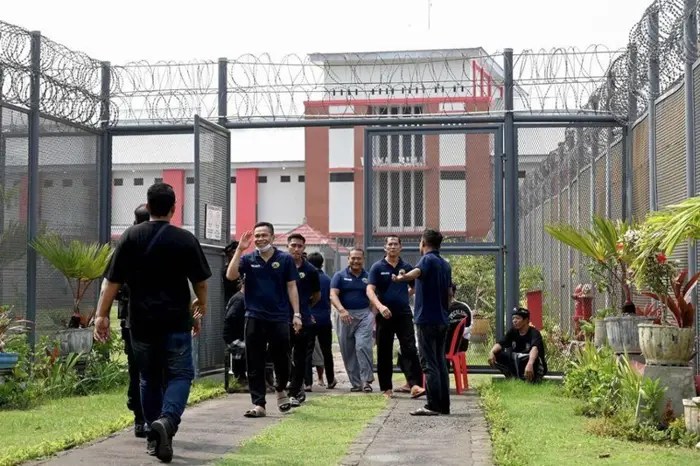
TNI raises five battalions for Papua food resilience program 

 October 2, 2024 20:00 GMT+700 Jakarta (ANTARA) – Commander of the Indonesian National Armed Forces (TNI) General Agus Subiyanto on Wednesday inaugurated five infantry battalions (Yonif) to support the government’s food resilience program in Papua region.

The battalions will be dispatched to five regions of Papua to collaborate with the Agriculture Ministry and local residents to cultivate essential crops, including rice, he said.

“These battalions are specialized in different aspects, such as construction and production. We will carry out agricultural programs in Papua with their help,” he told journalists after the inauguration in the National Monument (Monas) area, Central Jakarta.

The battalions include Yonif 801/Ksatria Yuddha Kentswuri, which will be stationed in Keerom, Papua Province; Yonif 802/Wimane Mambe Jaya, which will be posted in Sarmi, Papua; Yonif 803/Nduka Adyatma Yuddha, which will be sent to Boven Digoel, South Papua; and Yonif 804/Dharma Bhakti Asasta Yudha, which will work in Merauke, South Papua.

Meanwhile, Yonif 805/Ksatria Satya Waninggap will be based in Sorong, Southwest Papua.

Based on data obtained by ANTARA, each infantry battalion consists of 691 personnel drawn from different regional military commands (Kodam) across the country.

Kodam I/Bukit Barisan has dispatched 150 soldiers, Kodam II/Sriwijaya 150 soldiers, Kodam III/Siliwangi 450 personnel, Kodam IV/Diponegoro 400 officers, Kodam V/Brawijaya 230 personnel, and Kodam VI/Mulawarman has fielded 25 officers for the battalions.

Furthermore, Kodam IX/Udayana has contributed 306 soldiers, Kodam XII/Tanjungpura 43 officers, Kodam XIII/Merdeka 157 personnel, Kodam XIV/Hasanuddin 225 soldiers, Kodam XVI/Pattimura 294 officers, Kodam XVII/Cenderawasih 100 soldiers, and Kodam XVIII/Kasuari has sent 20 personnel.

Meanwhile, the Jaya Kodam of Jakarta and Iskandar Muda Kodam of Aceh have contributed 350 and 100 soldiers, respectively, to the special battalions. 

“Human Rights in Indonesia” side event will address crises in West Papua

WCC. 30 September 2024

A side event to the 57th UN Human Rights Council entitled “Human Rights in Indonesia,” hosted by the World Council of Churches (WCC) and partner organizations on 1 October, will address the dire human rights situation in West Papua, with ongoing violations that include extra-judicial killings, internal displacement due to armed conflict, restrictions on civil liberties, and a growing number of cases of land grabbing.

This event will bring together grassroots representatives and experts to explore practical actions that the UN Human Rights Council and national and international actors could take to address the deepening human rights and humanitarian crises in West Papua.

The Permanent Peoples’ Tribunal will also present the findings of its July 2024 public hearings, during which it examined a body of evidence on the environmental impacts of development projects and related human rights violations in the region.

In the first six months of 2024, extra-judicial killings linked to the ongoing armed conflict between the Indonesian security forces and the West Papua National Liberation Army (OPM-TPNPB) have been recorded. A surge in armed conflict has been reported in the period April-June 2024 which has continued to drive internal displacement among the Indigenous Papuan people. As of September 2024, 79,867 people are internally displaced with no access to basic necessities such as food, healthcare services and education, and limited access to employment opportunities. If they return to their villages and homes, they are confronted with a heavy security presence, and constant intimidation and surveillance.

A growing number of cases of land grabbing have been reported from the regencies of Merauke, Mimika, Deiyai, and Sorong in the period April-June 2024, reflecting a growing trend of private investors capturing land and natural resources without obtaining free, prior and informed consent from Indigenous Papuans.

There is an urgent need for the Indonesian government to immediately address the conflict and associated human rights violations, abuses, and impunity through sustainable solutions based on the principles of human rights.

Peter Prove, director of the WCC Commission of the Churches on International Affairs (CCIA), will moderate the discussion. 

“The Indonesian government provides very limited transparency regarding the situation in West Papua, and even less access to the region,” he said. “Accordingly, the WCC is grateful that through cooperation with its civil society partners we can bring information regarding the longstanding humanitarian and human rights crisis endured by the Indigenous Papuan people to the attention of the Human Rights Council, and to the wider international community. We continue to hope that by sharing this information, the long overdue concern of the international community may yet be galvanized.”

Join this event live , Tuesday, 1 October, 13:00 CEST 

(Meeting ID 3353 -CR25  “Human Rights in Indonesia”, Meeting number: 2744 604 7986 Password: ufTQvPJJ877) 

Yahukimo Police intimidate KNPB members in Yahukimo – House search carried out without warrant

Cases / IndonesiaWest Papua / 19 September 2024 

https://humanrightsmonitor.org/case/yahukimo-police-intimidate-knpb-members-in-yahukimo

On 14 August 2024, members of the West Papua National Committee (KNPB) in the Dekai District, Yahukimo Regency, Papua Pegunungan Province, experienced acts of intimidation and unauthorised search by members of the 1715 Kodim (military district command) and Brimob (mobile brigade corps). The operation was led by Yahukimo Police Chief, Commissioner Heru Hidayanto. Six KNPB members were present at their office when the security forces arrived, resulting in a tense confrontation and forceful entry into the KNPB office.

The incident began with surveillance activities on 13 August 20214, with two vehicles monitoring the KNPB office. On August 14, the surveillance intensified. At 3:20 pm, a large contingent of security forces, comprising nine vehicles including armoured cars and patrol vehicles from various units, arrived at the KNPB office. Despite attempts by KNPB members to negotiate and clarify that no demonstrations were planned for 15 August 2024, the security forces forcibly entered the office without providing a warrant. They searched the office and took photographs of the premises. The operation concluded around 3:40 pm when the forces withdrew. 

The incident raises serious concerns about respect for civil liberties, freedom of association, and the use of intimidation tactics against political activists in West Papua, Indonesia.

Security force vehicles approaching the KNPB office in the Dekai District, Yahukimo Regency, on 14 August 2024

Detailed Case Data
name of the location: Dekai (-4.874653772472966, 139.48856096842403)
administrative region: Indonesia, Papua Pegunungan Province, Yahukimo Regency, Dekai District
total number of victims: six
period of incident: 14.08.2024
perpetrator: police, other security forces
perpetrator details: 1715 Kodim and Brimob
Issues: freedom of expression, freedom of peaceful assembly, indigenous peoples, intimidation 
Sources: 
Further HRM News:

NumberName, DetailsGenderAgeGroup AffiliationViolations
6unknownunknownunknownindigenous, activistfreedom of assembly, freedom of expression, intimidation

—————————–

Never mind the quality, feel the words

By Duncan Graham Sep 4, 2024

The paperwork signing late last month by Defence Minister Richard Marles and his Indonesian counterpart Prabowo Subianto in Magelang (Central Java) is being paraded as an extraordinary advance in relationships. It’s not.

Why is this dud deal being sold like a Nobel Prize? Because scores of news outlets here and overseas are cutting-and-pasting press releases. In effect, much media has become a PR team for the government betraying voters.

Some facts to underpin this shameful assertion:

For the past two years, bureaucrats have been to-ing and fro-ing with the Australia-Indonesia Defence Cooperation Arrangement. Now ratified, it has become an “agreement”.

We, the Fourth Estate, aka chooks (as former Queensland Premier, Sir Joh Bjelke-Petersen called us hacks), haven’t had a peep inside the thick covers and so have to take what’s fed.

Something more nutritious may come if independent experts get the full text to decode definitions and reveal what we’ve sold to appease our huge neighbour.

Marles’ media says the deal is about complex joint activities and exercises. The two militaries can “operate from each other’s countries for mutually determined cooperative activities” and swap soldiers for education and training in science and technology, though these are not disciplines where Indonesia is internationally admired.

Much hullabaloo so the lads can don camouflage and play in the same sandpit – something they’ve done before and are doing now.

Through design or coincidence, that signing night ABC Australia telecast the 90-minute documentary Circle of Silence with Indonesian subtitles. It’s the story of the Balibo Five journalists in East Timor, killed in 1975 by Indonesian soldiers who knew the men were reporters.

Marles’ opposite number is also president-elect and will take over in October. He’s a former general with a dark past allegedly involving human rights abuses.

Researcher Pat Walsh, who was involved with the East Timor truth commission report, Chega! wrote: “As a member then a commander of Kopassus, Prabowo undertook at least four tours of duty in East Timor… (he was) anything but an innocent or bit player.

Kopassus is the Indonesian military’s secretive ‘special operations’ force. It specialises in unconventional warfare, counter-insurgency, intelligence gathering and anti-terrorism.

“In plain English, locals are recruited and bribed to do Kopassus’s dirty work and, if necessary, to take the blame.”

(It is not suggested that Prabowo killed the Balibo Five. He has never been charged with war crimes.)

In 1998, he was cashiered for disobeying orders so he ran away to exile in Jordan. That fact has rarely been mentioned since he was convincingly elected in February with a 58% majority.

Ten days before the Magelang signing, Prabowo came to Canberra, ostensibly to approve the “arrangement”. But according to the AFR’s James Curran, his real mission was for “more Australian involvement in the Indonesian economy, especially in agriculture and countering narcotics”.

Apart from watching body language and facial expressions, why did any media bother to front the Canberra show? Journos were told “no questions”, suggesting the ministers fear inquiries and are unable to be straight with their employers, the public.

The men’s minders know any professional would ask Prabowo about blood on his hands, and his resulting fury would destroy the “arrangement”.

Transcribed texts show the two sides are not on the same page.

Marles said it was “profoundly historic” and “the deepest, the most significant agreement that our two countries have ever made”.

Profoundly nonsensical. In 1995, former prime minister Paul Keating secretly signed the Agreement on Maintaining Security with dictator and second president Soeharto.

That was a biggie, though four years later it was shredded by his successor, Bacharuddin Jusuf ‘BJ’ Habibie. He was furious the Australian-led peacekeeping force had entered Timor after the people had voted 8-2 to free themselves from Indonesian control.

Marles and Anthony Albanese said four times that their “arrangement” was about “security”. Prabowo used the word once and prefaced it with “food”. The best label he could muster was a “good neighbour agreement”.

Apart from language slippage, what’s not mentioned in diplomatic back-slaps is often more important. Absent was Australia’s new agreement with the US for their fighters, bombers and spy planes to use NT bases.

Also not in the handouts was Indonesia’s proposed law to let “active-duty personnel hold positions in civilian government ministries and agencies”.

If passed, the Republic will return to the last century dwifungsi (dual function) policy of soldiers controlling domestic departments irrespective of their skills and merits. (In most Western democracies civilian and military affairs are kept apart.)

Also ignored was the Indonesian military’s actions in West Papua, a prolonged and brutal campaign against independence seekers that’s allegedly taken thousands of lives.

Instead, Prabowo stressed that whatever subtexts might be imagined, there would be no revision of the county’s neutrality:

“As you know we are, by tradition, non-aligned. By tradition, our people do not want us to be involved in any geopolitical or military alliances or groupings. I myself, am determined to continue this policy.”

If Indonesians thought their nation was secretly sliding into the US camp through a deal with the region’s “deputy sheriff”, riots would result and Marles’ arrangement trashed.

He’s already crept close. In The Washington Post the Marles reportedly said: “We’re working together (with the US) to deter future conflict and to provide for the collective security of the region in which we live.”

While many elsewhere-based reporters parroted Marles media, The Australian’s Jakarta correspondent Amanda Hodge got her cautions buried on page four but accurately reflected the Jakarta view that the arrangement falls “well short of a mutual security guarantee” and without the weight of a “visiting forces agreement”.

Another realist was the ABC’s Stephen Dziedzic, noting Prabowo only said the two countries had made “great progress” in “ironing out legalistic details” in the arrangement. That’s the job negotiators are paid to perform.

While Marles was in Central Java about 200 Australian troops were dashing around East Java’s north coast in the two-week Super Garuda Shield exercises. Also with the Diggers are almost 2,000 US Marines, supposedly thinking about cyber threats plus toys that go bang.

In the smog of industrial Sidoarjo are sweating soldiers from NZ, Singapore, Canada, France, Thailand and the UK. Not China this time, though the PRC participated in 2009.

Before The Australian implies this means Indonesia is in the Western camp and the signings aimed at “countering growing Chinese threats”, Lachlan Murdoch should know this:

The annual fun-with-guns games have been underway since 2006; next year Beijing’s troops will be starring in yet another “bilateral training exercise”.

If this wasn’t so serious, the idea of Grunts helping Indonesia, then their Chinese equivalents doing the same thing would be a fine film plot. Title suggestion: Dancing with Demagogues.

Duncan Graham 

Duncan Graham has been a journalist for more than 40 years in print, radio and TV. He is the author of People Next Door (UWA Press). He is now writing for the English language media in Indonesia from within Indonesia.
Duncan Graham has an MPhil degree, a Walkley Award, two Human Rights Commission awards and other prizes for his radio, TV and print journalism in Australia. He lives in East Java.

Pope Francis Must Urge Indonesia to Respect Human Dignity and Social Justice in Development

Pope Francis’ visit to Indonesia from 3 to 6 September 2024 should be a momentum to urge Indonesia to stop gross human rights violations and provide redress for past atrocities or injustices resulting from socially and environmentally unfriendly development policies, such as those in Papua and Rempang, Amnesty International Indonesia said today.

“The messages of peace, love, and dialogue that Pope Francis always conveys are highly relevant to a world facing division and intolerance. This visit is crucial to reaffirming every nation’s obligation to uphold the values of human dignity and social justice,” said Usman Hamid, Executive Director of Amnesty International Indonesia.

“Pope Francis is scheduled to meet with the President and other key officials. This is an opportunity to urge Indonesia to fulfil its commitments in the field of human rights, including providing a remedy for past gross human rights violations and protecting communities, including Indigenous Peoples, from misguided economic policies.”

“This visit also provides an important platform to advocate for an end to repressive policies in response to protests and demonstrations, call for peace in Papua, and prevent discriminatory practices against religious minority groups. The assassination of human rights activist Munir, which marks 20 years since his death, also needs attention.”

Indonesia is currently an active member of the United Nations Human Rights Council (UNHRC), but it has yet to implement several key recommendations related to stopping gross human rights violations resulting from development policies and protecting religious minority groups from attacks on their freedom to practice their beliefs and establish places of worship.

Amnesty International Indonesia has recorded several unresolved cases of gross human rights violations, including the 1965/66 mass killings, the 1984 Tanjung Priok incident, the 1989 Lampung incident, the July 27, 1996 attack, the 1997/98 abduction and forced disappearance of activists, the Trisakti, Semanggi I, and Semanggi II shootings, the May 1998 riots, the Munir case, and extrajudicial killings in Papua.

Amnesty has also recorded at least 123 cases of intolerance between January 2021 and July 2024, including the rejection, closure, or destruction of places of worship and physical attacks. The perpetrators are suspected to come from various backgrounds, including government officials, residents, and civil society organizations.

On 30 June 2024, a village head, along with a group of people, stopped a Sunday service at a Pentecostal church in Sidoarjo, East Java. They argued that the church did not have a building permit (IMB). According to the local pastor, the church building was registered as a prayer house on December 7, 2023, and obtaining an IMB is not easy as it takes two years. However, the village head insisted on the IMB requirement.

To build a place of worship, the 2006 Joint Decree of the Minister of Religious Affairs and the Minister of Home Affairs requires the approval of at least 60 local residents, endorsement by the village head, and a written recommendation from the Department of Religious Affairs and the Forum for Religious Harmony. This process has the potential for conflict in areas where minority religious communities face rejection from the local community.

On 5 May 2024, a group of people led by a neighbourhood head attacked a number of Catholic students who were holding a Rosary Prayer event at a house in South Tangerang. They forced the participants to worship in a church instead of at home.

On 2 July 2024, the Garut Regency government in West Java sealed off a place of worship for Ahmadiyah Muslims. Indonesia continues to record cases of restrictions on the rights and freedoms of religious communities.

Amnesty International hopes that Pope Francis’ visit will highlight these issues to ensure the protection of religious freedom in Indonesia.

“The Pope’s visit plays a crucial role in encouraging Indonesia to end intolerance and discrimination against all minority groups. Religious freedom is a right protected by Indonesia’s constitution,” said Usman Hamid.

“This guarantee must be effectively enforced through laws and regulations that are in line with international human rights standards.”

Amnesty also hopes that Pope Francis’s visit to Indonesia will draw attention to the implementation of National Strategic Projects (PSN), which are often carried out using coercive approaches without meaningful consultation with Indigenous Peoples. Many large-scale infrastructure projects under the PSN have had serious impacts on the lives of Indigenous Peoples, whose rights to land, culture, and the protection of Indigenous scientific knowledge are frequently neglected.

Many Indigenous Peoples still do not have their land rights recognized by the government, making them vulnerable to agrarian conflicts and often becoming victims of development projects, as has happened in Rempang, Wadas, and Mandalika.

Meanwhile, Indigenous Peoples who speak out critically against the government in defending their rights in agrarian conflicts often face attacks. Amnesty International Indonesia recorded at least eight cases of attacks against Indigenous Peoples from January 2019 to March 2024, with at least 84 victims, including criminalization, intimidation, and physical violence.

“Pope Francis, who is known for his commitment to social justice, environmental preservation, and the protection of Indigenous rights, is expected to voice his concerns over these violations during his visit to Indonesia,” said Usman.

Call to End Human Rights Violations in Papua

Pope Francis’ visit to Indonesia is also expected to highlight the situation in Papua, where conflict continues, and the rights of Indigenous Papuans and other civilians are under constant threat.

“Papua, which has experienced violence for decades, must be addressed. The escalation of violence, militarization, and suppression of dissent in Papua has resulted in many civilian casualties, displacement, and a humanitarian crisis that requires urgent attention,” said Usman.

Civilians in Papua, including Indigenous Peoples, have suffered due to large-scale military operations resulting in extrajudicial killings by state and non-state armed groups, torture, internal displacement, and other violations.

From 3 February 2018 to 20 August 2024, Amnesty recorded 132 cases of extrajudicial killings resulting in at least 242 civilian deaths. Some of these cases were carried out by security forces (83 cases with 135 victims), while others were by pro-independence armed groups (49 cases with 107 victims).

In addition to local civilians, victims also included a New Zealand helicopter pilot, Glen Malcolm Conning, who was killed while transporting four civilians in Alama District, Mimika Regency, Central Papua, on 5 August 2024. It is still unclear who was responsible for the killing, prompting Amnesty to call for a full investigation.

Another New Zealand citizen, Phillip Mehrtens, has been held hostage since 7 February 2023, by a faction of the pro-independence armed group in Papua. Between January 2019 and February 2024, there were at least 17 cases of torture involving 50 victims, allegedly committed by security personnel and state officials in Papua.

“Therefore, Pope Francis must also emphasize the importance of peaceful dialogue and resolutions that respect human rights and the aspirations of the Papuan people,” said Usman. (*)

Rallies in Papua marking New York Agreement dispersed with teargas, rubber bullets

Jubi Papua – August 15, 2024

Activists from the West Papua National Committee or the KNPB returned to the streets for their 14th action on Thursday August 15, to commemorate the 1962 New York Agreement, the day when power over West Papua was transferred from the Netherlands to Indonesia.

Several locations where demonstrations were to be held, both in Jayapura city and Jayapura regency, were blocked by police. Even though the KNPB claimed to have obtained a permit for the action from police.

As many as 36 protesters emerged from the direction of Buper Waena where they marched in six lines carrying KNPB flags and written demands on A4 carboard placards.

“No room for racism” and “The Indonesian state must be immediately held accountable for human rights violations in Papua” read the placards. The demonstration was tightly guarded by dozens of police officers with water cannons.

KNPB field coordinator Mesias Silak, after negotiating with police, was finally given permission to gives speeches and convey their demands.

The speeches proceeded peacefully, during which the KNPB members remained in line cordoned off by raffia rope. At around 1.45 pm the action was joined by around 50 people who arrived from the direction of the Abe Expo Waena Bridge.

Simultanious rallies by the KNPB marking the New York Agreement were held in several other parts of Papua.

Students in Jayapura protest New York Agreement and racism

Hundreds of students from various universities in Jayapura city held a protest on the Cenderawasih University (Uncen) campus on Thursday in which they took up two main issues: “The injustice of the 1962 New York Agreement and rejecting the racism experienced by the Papuan people”.

Action coordinator Enis Dapla emphasised that the 1962 New York Agreement was legally flawed because it did not involve the Papuan people.

“The agreement became the basis for the annexation of Papua by Indonesia through the 1969 Pepera [The 1969 UN sponsored referendum on West Papua’s integration with Indonesia], which we consider illegal and ridden with manipulation”, said Dapla.

In addition, Dapla also highlighted the issue of racism that continues to be felt by the Papuan people.

“Racism is not only the enemy of Papua, but also the enemy of the world. This action is a form of student resistance against all forms of racism, not only in Papua but throughout the world”, he explained.

The protest action that was initially planned to last until late afternoon was limited by the police to 12 noon, however the students continued the action on the grounds of the Uncen Faculty of Teacher Training and Education (FKIP) secretariat.

“We didn’t violate anyone’s rights, but the police continue to limit the action. In fact they entered the campus area, which should not be allowed according to the law”, said Dapla.

The students emphasised that during the action they conveyed their aspirations peacefully and without anarchic acts. “Freedom of expression and expressing opinions in public is the right of every citizen, including students”, he said.

Laba Heluka, a student activist from the Uncen Faculty of Law, emphasised that the issue of racism was a major focus during the action.

“Racism is a global enemy. We demand that there is no more racial discrimination against the people of Papua, both in the world of education, work and health services”, he said.

Heluka also criticised the restrictions on freedom of expression that continue to occur in Papua, especially with regard to peaceful protest actions. “Even though Law Number 9/1998 guarantees freedom of expression in public, in fact Papuan students are often restricted and silenced”, he said.

Give Papua the right to self-determination

The KNPB along with indigenous Papuan communities and various organisations in Greater Sorong also commemorated the New York Agreement in Sorong city on Thursday.

Wespa Papwes Gombo, a representative of the Independent Indigenous People of Papua (MAI-P) said the action was to remember the New York Agreement which was made unilaterally without involving the Papuan nation which a year earlier, on December 1, 1961, had issued a manifesto of independence to stand alone as a nation and a state.

Gombo said that Indonesia manipulated the mandate of the New York Agreement on self-determination through the 1969 Act of Free Choice. Out of the 809,337 West Papuans who had the right to vote, only around 1,026 people were selected and quarantined, and just 175 people were then forced at gunpoint to vote to join Indonesia.

In Indonesia’s report to the UN, the reason given for this was that Papuan people were still “primitive and backward”. “This racist view was used by Indonesia to gain international support for its colonisation of West Papua”, said Gombo.

A similar view was expressed in a speech by Eskop, a law student from the Sorong Muhammadiyah University, who said that today the Papuan nation is marking 62 years of colonisation by the Indonesian colonialists.

Meanwhile Indonesia is celebrating its 79th anniversary of independence with the spirit of colonising West Papua. Yet on the one hand Indonesia claims to be an anti-colonial country, but on the other it also plays an active role in robbing the Papuan people of their right to self-determination.

Eskop said that Papuan Special Autonomy (Otsus), territorial expansion and all forms of enforced and brutal exploitation in the Land of Papua, were a continuation of racist colonialism that begun with the Trikora operation in 1961, the New York Agreement in 1962 and Pepera in 1969.

Eskop explained that Indonesian colonialism, which is ridden with racism, has resulted in reducing the number of indigenous Papuans to only 2,971,340 people out of a total population 5.4 million.

Even more tragic, the number of non-Papuan residents is now larger, with an annual growth rate 6.39 percent per year. Meanwhile the poverty and low life expectancy of Papuans continue to place Papua in first place in negative indicators for Indonesia.

Meanwhile, from the cities to the villages, migrants with company and military support dominate all productive sectors. “Our customary forests, the last fortresses against the threat of global warming, are now threatened. Of the 34.3 million hectares of primary forests in the land of Papua, 793,623 hectares were lost in 2021-2022 alone”, he said.

Action coordinator Appull Heluka added that Indonesian colonialism with its militarism, continues to massively invade the entire land of Papua. The goal is to secure military businesses and investment.

He said that Indonesia’s colonial military operations had created around 76,919 internally displaced people in seven regions, forcing them to leave their hometowns and live in uncertainty.

“The peaceful solution and humanitarian pause proposed by the Papuan Council of Churches and the ULMWP (United Liberation Movement for West Papua) were rejected by Jakarta, which prefers bloody [military] operations. We demand that they immediately leave our land, West Papua”, he said.

The action proceeded safely and peacefully under the close guard of dozens of police personnel. During the action, the demonstrators read out a number of statements and demands, including rejecting all the forms of colonisation and oppression by the Indonesian colonialists in Papua.

They also asked Indonesia to respect the right of the Papuan people to determine their own future.

Two protesters injured by rubber bullets in Nabire

A KNPB demonstration protesting the New York Agreement in Nabire, Central Papua, on Thursday was confronted with violence by security forces.

KNPB Nabire Regional Management Board Secretary Zadrak Kudiyai told Jubi that two demonstrators, Andrias Gobay (a Dogiyai regional KNPB member) and Yosua Pigome, were struck by rubber bullets fired by security forces.

“They were shot at the resettlement beside the Nabire River, Karang Market. A rubber bullet was found in Andrias Gobay’s thigh and the bullet has been removed, while Yosua Pigome was shot in the calf, the bullet has not been removed yet and he is currently still being operated on at Nabire District General Hospital (RSUD) emergency room”, said Kudiyai on Thursday afternoon.

Kudiyai explained that hundreds of demonstrators who are members of the KNPB throughout the Meepago region held a peaceful demonstration centred in Nabire. “The demonstrators were shot, arrested, shot at with tear gas, and beaten. During the action one police officer was also injured in Siriwini”, he said.

According to Kudiyai, they started the protest at 7 am at several different points. Protesters in front of the Satya Wiyata Mandala University (USWIM) campus were then taken away by police from the Nabire District Police using a crowd control vehicle.

Meanwhile protesters at the SP point were also picked up by police using two crowd control vehicles and taken to the Nabire District Police station.

“Meanwhile the demonstrators at the Siriwini point, police officers fired teargas and dispersed the demonstrators and one KNPB member was arrested by police”, he said.

The protesters who were taken away by the police, said Kudiyai, are still at the Nabire Police station. “They have not been sent home yet”, he added.

According to Kudiyai, the attitude of the police and TNI (Indonesian military) was very indiscriminate in handling the peaceful KNPB mass action. “This is very unreasonable, because this country guarantees democratic freedoms, but that’s not like what we experienced in the field today”, he said.

Protesters in Meepago dispersed with teargas

KNPB members throughout the Meepago region were deployed in a joint action on Thursday centred in Nabire. They came from the Paniai, Dogiyai, Deiyai and Intan Jaya regencies and from Nabire itself.

The protesters, who had gathered at Karang Tumaritis Market in the morning were scheduled to hold a long-march to the Central Papua Regional House of Representatives (DPRD) and the Papua People’s Council (MRP) offices located in Kali Bobo.

Upon arriving in front of the Karang Barat Gel-Gel Workshop, they were stopped by security forces who ordered them to disperse. Shortly after they began firing teargas to disperse the demonstrators.

SD, a resident of Karang Barat who witnessed the incident, said the demonstrators were marching peacefully in rank cordoned off by a rope. “When security forces using two Barracuda and crowd control trucks arrived at the location, [they] fired teargas and the crowd dispersed”, they said.

Then, said SD, the protesters fled into residential alleys and the security forces chased after them firing teargas. “I saw them running away and one person was put in a police car and taken to the Nabire police station”, they said.

Speaking at a cafe in Nabire, Nabire District Police Chief Assistant Superintendent Wahyudi Satrio Bintoro told reporters that based on his observations at several locations the situation was under control.

When Jubi.id asked about the use of rubber bullets and teargas, Bintoro said that police used standard operating procedures (SOP) in accordance with National Police Chief Regulation Number 1/2029 on the Use of Force during Police Actions.

“We implemented this from the start of our presence, right, we made an appeal, conveyed this, we encourage them, but it turns out that their position was to carry out anarchic actions, throwing stones. Even our members who were in position there were hit by stones, injured”, he said, adding that because of this, they used firm but measured actions using teargas.

Police disperse protest in Abepura with water cannon

Police used water cannon to disperse a peaceful action commemorating 62 years since the New York Agreement at the Abepura intersection in Jayapura city.

The action, which took place between 12:30 and 3:21 pm, was coordinated by the KNPB. Police personnel from the Jayapura city district police broke up the action before representatives from the protesters could read out their statements.

KNPB General Chairperson Warpo Sampari Wetipo said their demonstration was peaceful and open, therefore breaking up the action was an example of the practices of colonialism in the land of Papua.

“The colonialists will never give the slightest bit of space (freedom) to the people they colonise. They feel superior so they treat the Papuan nation arbitrarily”, said Wetipo.

However, he continued to call on all Papuan people not to be weak, let alone retreat from the ranks of resistance against this oppression. They must continue to gather their strength and become a new spirit for the struggle of the Papuan nation.

“The Papuan people must not be weak, let alone retreat. (The dispersing of protesters) will (in fact) provide new strength and spirit so that (the Papuan people’s struggle will) become more advanced and radical”, said Wetipo.

Jayapura City Deputy Police Chief Senior Commissioner Deni Herdiana said they broke up the action because in their view the coordinator was unable to control the situation. According to Herdiana, there were indications that the protesters intended to commit vandalism, such as burning used tyres on the road that could disrupt security and public order in Jayapura city.

“We coordinated (agreed) with the korlap (field coordinator), namely giving one to two hours (for the masses to give speeches). However, the korlapwas not committed so we took measured law enforcement efforts”, said Herdiana.

In Jayapura city, around 700 security personnel were deployed to secure the 1962 New York Agreement commemoration events consisting of Indonesian Police (Polri) and TNI personnel.

“Polri and the TNI are safe guarding (securing the action) because it is approaching August 17 (Indonesian Independence Day). Currently, we have not secured (arrested) any demonstrators”, added Herdiana.

— Reporting by Ratty Auparai, Aida Ulim, Gamaliel Kailele, Hengky Yeimo and Pes Yanengga

[Abridged translation by James Balowski based on five articles by Jubi Papua on August 15. The original title of the lead article was “Aksi KNPB Protes New York Agreement Dihadang Pihak Keamanan”.]

Source: https://jubi.id/polhukam/2024/polisi-bubarkan-aksi-protes-perjanjian-new-york-di-abepura/

101 activists released, KNPB says Nabire Police do not provide space for freedom

Last updated: August 17, 2024 12:32 am 

Penulis: Hengky Yeimo Editor: Syofiardi

Nabire, Jubi – Member of the West Papua National Committee or KNPB Gerson Pigai said that there were 101 KNPB activists participating in the demonstration who were arrested by the Nabire Police on Thursday (15/8/2024) morning, including 3 people who were previously arrested while distributing leaflets, all of whom have been released and returned home.

“From all points, we totaled around 101 people who were arrested. On Thursday (15/8/2024) at 11 pm they were released,” he told a number of journalists during a press conference attended by KNPB members and leaders throughout the Meepago Region in Kali Bobo, Friday (16/8/2024).

Meanwhile, 2 KNPB activists who suffered gunshot wounds, Andy Tebay and Yosua Pigome, are still being treated at Nabire Regional Hospital. In addition, Pigai said, 8 KNPB members also suffered serious injuries from beatings by police officers using barreled boots, iron, rattan, and gun butts.

“There were also objects belonging to the demonstrators that were lost at the demonstration site and at the Nabire Police. Items in the form of money, cellphones, belonging to the demonstrators that were taken, we ask the police to return them to their owners immediately,” he said.

Gerson Pigai reported in general the chronology of the action that resulted in mass arrests by the police. The KNPB Meepago Region held a demonstration against the New York Agreement on August 15, 1962 while commemorating August as Racism Month at several points in Nabire on Thursday (8/15/2024) morning.

The demonstrators, said Pigai, gathered at five points, namely Kali Bobo, Siriwini, Pasar Karang, SP, and Jepara II. However, at all points they were approached by police officers from the Nabire Police, the action was disbanded, and they were taken to the Nabire Police Office.

“The masses began to descend to the gathering points at around 7 am. The masses in Kalibobo had been giving speeches for around 10 minutes, and the police immediately came to take them away,” he said.

According to him, the police arrested a large number of the masses. Then they were taken to the Nabire Police Office. “The brutality of the masses was that they were told to take off their clothes and sunbathe in the hot sun,” he said.

The person in charge of the action who is also the Secretary of KNPB Nabire, Zadrak Kudiyai explained, of the five action points, for the action plan at SP 1, the police had already dispersed them before they took action. Meanwhile, in Kalibobo, the masses were already at the location, then arrested by the police. Then in Siriwini, the police dispersed the masses at 12.46 WIT.

“The police dispersed them without negotiating with the field coordinator at the gathering point,” he said. “From the report we received, there were 3 people who were arrested,” he added.

Then the action at Karang Market had reached the action point, when the road reached the Kali Nabire Bridge. “The police blocked them from the direction of Wonorejo and from the direction of Karang Barat, and fired tear gas, so that the masses dispersed,” he said.

Kudiai said that two participants in the action who were shot by security forces were still at the Nabire Regional General Hospital in Siriwini. The two victims were named Andrias Gobay (a member of the KNPB Dogiyai Region) and Yosua Pigome. They were shot in the resettlement beside the Kali Nabire.

“Both victims are in critical condition,” he said. “Andrias Gobay and Yosua Pigome are currently still lacking blood and they still have to be treated at the Nabire Regional Hospital,” he added.

According to Kudiyai, the police’s action in breaking up the KNPB demonstration at five points in Nabire violated the law and the security forces did not provide any room for freedom.

“The police did not carry out security in accordance with applicable laws and regulations, including procedures in accordance with Perkap (Chief of Police Regulation) Number 1 of 2029 concerning the Use of Force in Police Actions,” he said.

Photos circulating on social media show KNPB protesters being ordered to sit in a row without clothes on the Nabire Police grounds. –Jubi/Medsos

Zadrak Kudiyai: There are many interests in Nabire

Regarding the roadblock after the protesters were dispersed at the Kali Nabire Bridge, Kudiyai said that the KNPB was not responsible.

“After the protesters were dispersed, the KNPB protesters from Meepago retreated, so the KNPB is not responsible for the roadblock that started from the side of the Nabire Transat River to the main road in front of the Wonorejo Mosque, the KNPB is not responsible,” he said.

The reason his party is not responsible, said Kudiyai, is because in the second press conference his party has appealed and conveyed that if problems occur during the protest while drunk or carrying sharp tools, the KNPB is not responsible.

“Because we know that in Nabire there are many interests,” he said.

Kudiyai also suspects that the pursuit of immigrants carried out by non-Papuans [or Nusantara citizens] in Wonorejo was fostered by BIN which was scripted to disrupt the KNPB protest and scapegoat the KNPB.

“We are not responsible from the start, we have said that we are not responsible because there are many interests in Nabire. So from Transat to the mosque it is outside our responsibility, because it is outside our chain of command,” he said.

He also highlighted the police’s actions which he considered wrong where all participants of the action before being sent home were told to sign a letter not to carry out any more KNPB actions.

“We consider this very wrong, because the Constitution of the Republic of Indonesia stipulates that every citizen has the right to express their opinion in public,” he said.

KNPB Meepago Region’s statement of position

Kimot Mote, the general field coordinator of the simultaneous KNPB Meepago action on Thursday, August 15, 2024 in Nabire, said that his party carried the theme of the KNPB Meepago region action in Nabire, namely ‘Expel Colonialism Against Racism’.

“We issued a KNPB statement of position yesterday during a joint action by the West Papuan people rejecting the illegal New York Agreement against anti-racism,” he said.

The statement of position contained nine points, namely that Indonesia immediately open up democratic space in the Land of Papua, withdraw the military from West Papua, stop dropping the Indonesian military into West Papua, stop ecocide genocide in West Papua, and reject PT Blok Wabu, PT Somaling, and others in West Papua.

Then stop arresting Papuan Freedom activists, the UN immediately reviews the 1969 Pepera and immediately holds a re-referendum, Indonesia immediately opens up foreign journalists to West Papua, and Indonesia immediately grants the right to self-determination for the West Papuan Nation as a democratic solution.

Police Chief’s Explanation

As previously reported by Jubi.id (Thursday, 15/8/2024), at 14:39 WIT at a cafe in Nabire, Nabire Police Chief AKBP Wahyudi Satrio Bintoro told reporters that the results of his monitoring up to that second were that the situation was safe and under control.

“Yes, there were indeed some small ripples, but we have controlled everything. It has gradually become conducive. Even this was from the Forkompimda, both provincial and district, both checking, the situation can be controlled,” he said.

Jubi.id asked about the shooting and tear gas shooting, the Police Chief said that regarding this problem, his party had used the procedure in accordance with Perkap (Chief of Police Regulation) Number 1 of 2029 concerning the Use of Force in Police Actions.

“We have implemented it starting from our presence, we have given an appeal, conveyed, we encouraged, it turned out that their position was carrying out anarchic actions, throwing stones. Even our members were hit by the throwing too, injured,” he said.

The police chief continued. “There were even motorbikes belonging to residents that were burned. Then on the bridges, the pillars were also all removed. Therefore, we carried out firm, measured action using tear gas,” he said. (*)

Papua independence protestors seek papal intervention after clashes with Indonesian forces

Demonstrations marked the 62nd anniversary of the U.N. agreement enabling Jakarta’s annexation of Papua.

Victor Mambor  2024.08.16

Jayapura, Indonesia

Indonesian security forces fired tear gas and rubber bullets in clashes with protestors marking the 62nd anniversary of a U.N. agreement that paved the way for Jakarta’s annexation of the Papua region. 

At least one protester was wounded by a rubber bullet and 95 people were arrested during the unrest in Nabire, the capital of Central Papua province, said Kimot Mote, one of the protest organizers.  

The demonstrations on Thursday were led by the West Papua National Committee (KNPB), a pro-independence group that opposes Indonesian rule in Papua. Similar protests were reported across several other cities, including Manokwari, Sorong Raya, Wamena, and Yahukimo, activists said.

Protesters are urging international bodies, including the United Nations, the Melanesian Spearhead Group, and the Pacific Islands Forum, to intervene and pressure Indonesia to halt military operations in Papua. 

KNPB chairman Warpo Wetipo issued a direct plea to Pope Francis, asking him to raise awareness about the violence and human rights violations in Papua. 

The head of the Catholic Church is due to visit Indonesia next month, followed by Papua New Guinea, Timor Leste and Singapore.

“We ask the Pope to advocate for an end to the oppression of the Papuan people,” Wetipo said.

While the protest in Nabire started peacefully, tensions escalated when police deployed tear gas and rubber bullets to disperse the crowds, Mote said.

“There was a heavy police presence, with around 100 officers using trucks and crowd-control vehicles to quell the demonstrators,” he told BenarNews. 

Local police chief Wahyudi Satrio Bintoro said security personnel took action after the protestors threw rocks at officers and engaged in vandalism, including setting fire to motorcycles. 

“The Nabire police carried out measured and decisive action,” he said. 

The New York Agreement is a treaty between the Netherlands and Indonesia regarding the administration of Papua, then called Western New Guinea. It stipulates that the United Nations would initially assume control, but if the U.N. permits, Indonesia could take over administration under certain conditions. 

The agreement, negotiated in U.S.-hosted meetings, was signed on August 15, 1962, at the United Nations headquarters in New York City.

However, many Papuans believe the deal was made without their consent, and it paved the way for what they see as Indonesia’s illegitimate annexation of their homeland.

West Papua was formally integrated into Indonesia in 1969 following a controversial referendum, known as the “Act of Free Choice.” Under heavy military presence, a small group of just over 1,000 selected Papuans voted unanimously for integration, a result that many have since disputed.

Since then, the region has been the site of long-running conflict between Indonesian security forces and separatist rebels, with frequent reports of human rights abuses.

Despite efforts to address the economic development of the region, many Papuans continue to push for self-determination, citing decades of discrimination, military violence, and exploitation of their land and resources.

In Jayapura, protesters were denied access to the planned protest site in Abepura. 

“We had secured permission for the protest, but the police still obstructed us,” said KNPB’s Wetipo. 

In Abepura, a group of students gathered under the banner “Students Concerned About Papua,” delivering speeches and calling for attention to Papua’s ongoing struggles.

Jayapura police confirmed the intervention, arguing that the protests were highly disruptive. 

In Nabire, the situation became tense on Thursday when non-Papuan residents, identifying as “Warga Nusantara” (Archipelago Citizens), clashed with protesters, said Taksen Giyai, a local resident. 

“They were armed with iron bars, wood, and machetes, blocking the demonstrators’ path,” he said. No clashes were reported.

Central Papua’s acting governor, Ribka Haluk, called for calm. 

“I urge all parties to ensure safety and security,” she said, adding that grievances should be addressed through appropriate channels rather than violence. 

In other cities, the protests were similarly contained by police. 

In Manokwari, officers set up roadblocks to prevent demonstrators from reaching key areas. Protester Erick Aleknoe said that negotiators attempted to cooperate with police.

“Our negotiators offered to have the police escort the crowd to the location, but it was rejected,” he said.

Peaceful rallies planned in West Papua for 15 August. The New York Agreement . Activists already intimidated

The 15 August   marks  62 years since The New York Agreement and West Papuans  are still suffering  under Indonesian colonial rule. Yes, most of the world recognises Indonesian sovereignty over West Papua at this stage but most also would recognise that the so called act of free choice in 1969 was a sham.

The New York Agreement

In August 1962, an agreement was concluded in New York between the Netherlands and Indonesia. Under this agreement, the Dutch were to leave West New Guinea and transfer sovereignty to UNTEA (the United Nations Temporary Executive Authority). After 7 months the UN transferred power to Indonesia with the provision that a referendum be held to determine Papuan preference for independence, or integration with Indonesia. 

The New York Agreement was a betrayal of the West Papuan people. 

President Thomas Wilson said  “ …that no right anywhere exists to hand peoples about from sovereignty to sovereignty as if they were property”

Joe Collins of AWPA said, “and this is exactly what happened to the West Papuan people. Handed over by one colonial power, The Netherlands to another, Indonesia with a short administration period by the UN as a face-saving compromise for the Dutch and the international community”.

The West Papuan National Committee  ( KNPB) has called for West Papuans to come out and peacefully protest this betrayal and have been handing out flyers (on the 13 August) to inform about the upcoming rallies on the 15 August. 

In an act of  intimidation up to 60 activists were taken by the police to the Doyo police Station in Sentani. 

Joe Collins said ,” this is to intimate civil society groups into not taking part in the proposed rallies on the 15 August.  Hopefully, there will not be a repeat of previous years where  the security forces have cracked down in their usual heavy-handed approach on  peaceful demonstrators”.

Photos posted on AWPA FB Page. (KNPB informing public about upcoming rallies).

 “ West Papuan civil society groups regularly hold events and rallies on days of significance in their history,  to try and bring attention to the world, of the injustices they suffer under Indonesian rule. And this is what Jakarta fears most , international scrutiny  on the ongoing human rights abuses in the territory”.

Also of concern is that the 17 August is Indonesian Independence Day.

The Indonesian Security  forces can use the day to take propaganda  photos of Papuans supporting their Independence day. It is now 5 years since the West Papua uprising when thousands of West Papuans took to the streets in all the major cities and towns across West Papua.  The demonstrators were  protesting against the arrest and racial abuse against West Papuan students in Surabaya, Indonesia.

The arrest of 43 students in Surabaya occurred because it had been reported that an Indonesian flag had been vandalised near the students dormitory.

At the time, The Jakarta Post (19 August) reported that security personnel and members of Indonesian organisations launched physical and verbal attacks on the Papuan students accusing them of refusing to celebrate Indonesia’s 74th Independence Day, and that an “angry mob arrived at the dormitory after they found a discarded Indonesian flag near the building. During the incident, they reportedly threw stones at the dormitory while shouting racial abuse and chanting “Kick out the Papuans!” and “Slaughter the Papuans!” 

The mob also called the students monkeys, pigs and dogs, shouting “don’t you come out. We are waiting for you here”.  As they stormed the building the Police fired tear gas into the building and arrested 43 students. The students were later released after questioning. They had denied any knowledge of the damaged flag. However, this incident triggered rallies across West Papua in a show of support for the students and in protest against the discrimination and injustices that West Papuans suffer daily under Indonesia rule.

It is estimated that up to 60 people died , including 35 indigenous West Papuans  and  hundreds injured with  over 20,00 civilians displaced during the Uprising period. 

Joe Collins said, “hopefully this year the Indonesian security forces  will allow the West Papuan people  to hold their peaceful rallies without interference . 

“Canberra,  along with the two regional organisations , the  Melanesian Spearhead Group (MSG) and the Pacific Islands Forum (PIF)  should be strongly  urging Jakarta to allow the UN High Commissioner for Human Rights to visit West Papua to investigate the human rights situation in the territory. Jakarta should also be urged to allow  a joint PIF- MSG fact finding mission to the territory”.

Ends