Indonesian Police Go on Killing Spree, as Crackdown Escalates in West Papua  

BY PAUL GREGOIRE PUBLISHED ON 11 APR 2026

Members of the occupying Indonesian police went on a murderous rampage in the West Papuan village of Moanemani, located in Dogiyai Regency at around 10 am on 31 March 2026, which involved officers firing randomly into a local marketplace, prior to the police assault shifting to neighbouring Ikebo village, where officers started indiscriminately shooting upon Papuan houses.

The number of people injured is unknown, however, five West Papuans were shot dead. The Indonesian police commenced applying collective punishment to the villagers of Moanemani and Ikebo, after the body of a murdered police officer, who was an Indigenous West Papuan, was found in front of Ebenezer Church in Moanemani. And no one is sure who killed the officer.

This callous attack on villagers comes at a time when Indonesian president Prabowo Subianto has been cracking down on West Papuans within their own Melanesian homelands, particularly in the regencies of Yahukimo, Intan Jaya, Paniai, Maybrat, and now Dogiyai. This marks an escalation of attacks on villages that commenced in Nduga regency in 2018, under the former Jokowi government.

Indonesia commenced administering West Papua in 1963, following the former Netherlands colonisers exiting and the UN brokering a deal, which was to permit the West Papuans to hold a referendum on independence. But in seeking to maintain control of the resource rich region, Indonesia held a 1969 vote where 1,026 Papuans voted to remain with Jakarta at gun point.

The recent random shootings on the part of Indonesian police reveals the circumstances that West Papuans have lived under since the 1960s, and the escalation in violence against the locals is in keeping with a Prabowo presidency, as the former Suharto-era army general earnt himself a reputation for perpetrating war crimes against the East Timorese and West Papuans.

Escalating occupier aggression

Footage of the recent incident supplied by the United Liberation Movement for West Papua (ULMWP), shows armed and heavily uniformed Indonesian police emerging from a police van and chasing unarmed West Papuan civilians deeper into a residential area, shots can be heard and buildings can be seen ablaze in the distance.

Those gunned down and killed, included 19-year-old Siprianus Tibakoto, 20-year-old Yosep You, 60-year-old Ester Pigai, who suffered from paralysis, along with 14-year-old Martinus Yobee and 19-year-old Angkian Edowai. And on 1 April, 14-year-old Maikel Waine and 11-year-old Maikel Pekei continued to be in a critical condition, after being shot by Indonesian police.

“Indonesia’s actions in Dogiyai are both a crime against humanity – a grave act of colonial violence – and a breach of international law,” insisted West Papuan provisional government president Benny Wenda. “Shooting indiscriminately into homes and a public market is a form of collective punishment, while the intentional killing of civilians is a war crime.”

This latest incident comes after Jakarta had been dropping bombs upon a makeshift refugee camp in Puncak’s Kembru District, causing West Papuans, who were already displaced to have to relocate once more. And there are currently 105,000 West Papuan villagers displaced in the highlands, due to the ongoing attacks on these unarmed people living in the planet’s third largest rainforest.

“What the carnage in Dogiyai demonstrates is that Indonesia views all West Papuans as legitimate targets,” Wenda further set out. “Elders, women, and children: no one is safe from the murderous vengeance of the Indonesian security state. The massacre triggered a wave of internal displacement, as terrified civilians fled into the mountains and surrounding villages.”

EU priorities profit over rights

A key issue for West Papua achieving its independence is due to the reluctance of other nations to raise the issue of the occupied Melanesian peoples, so as to not rock the boat with Jakarta. And Wenda recently pointed to the International Parliamentarians for West Papua (IPWP) analysis of the September 2025 established EU–Indonesia Free Trade Agreement (FTA) as an example.

IPWP considers that in signing off on the FTA, the European Union has effectively approved the ongoing environmental destruction and rights abuses caused by Indonesia in the Melanesian region. The West Papuan environment and its people’s rights were not considered during negotiations, yet a fair amount of LNG, palm oil and metals are sourced from West Papua by EU nations.

Prabowo first paid a visit to West Papau after becoming president in November 2024, with a key part of his tour being a visit to Merauke district, which is the site of the world’s largest deforestation project, with the clearing of an eventual 2 million hectares set to take place in order to facilitate giant sugarcane plantations.

In its assessment of the EU-Indonesia FTA, IPWP pointed out that the sustainability impact assessment of the free trade agreement with Indonesia made no mention of West Papua whatsoever, and this is while unprecedented deforestation and environmental destruction are being perpetrated in the Melanesian region.

The IPWP further charged the EU with failing to take the plight of the West Papuan people into any consideration when finalising the trade agreement. The parliamentarians pointed to the fraudulent 1969 UN-brokered referendum, which saw a little over 1,000 Papuans vote to stay with Indonesia, and they wondered why this was not an issue for European negotiators.

United in denial of self-determination

Wenda questioned in February, why, despite the fact that Indonesia has been carrying out attacks on unarmed West Papuan villages for coming on eight years now, Indonesia’s permanent representative to the United Nations, Sidharto Reza Suryodipuro, was appointed to the position of president of the UN Human Rights Council in January.

The UN was further presented with a copy of the West Papuan People’s Petition back in 2019. This is a document that calls upon the UN to facilitate a new and legitimate vote on self-determination. The petition has been signed by 1.8 million West Papuans, or 70 percent of that Indigenous population. And yet, there has been no movement on this issue ever since.

“I reiterate our demand for Indonesia to allow the UN High Commissioner for Human Rights to visit West Papua,” said Wenda, who has been exiled from his homeland for decades. “Over 110 countries – a clear majority of the UN member states – have now demanded this visit, but Indonesia continues to refuse.”

“Dogiyai is not an isolated incident: every day brings a new atrocity,” the president of the West Papuan provisional government in waiting made clear in ending.

“How long will the world allow this to continue before Indonesia is made to suffer genuine diplomatic consequences for their refusal?”

PAUL GREGOIRE 

Paul Gregoire is a Sydney-based journalist and writer. He’s the winner of the 2021 NSW Council for Civil Liberties Award For Excellence In Civil Liberties Journalism. Prior to Sydney Criminal Lawyers®, Paul wrote for VICE and was the news editor at Sydney’s City Hub.

The humanitarian cost of Indonesia’s refusal to allow a UN Human Rights visit to West Papua 

Indonesia has refused the UN High Commissioner for Human Rights access to West Papua since 2019. This round-up details the human rights abuses Indonesia has committed in West Papua during that time. 
______________________________________________________________________

The ULMWP urges world leaders to renew the outstanding demand for UN High Commissioner for Human Rights visit to West Papua, in the wake of the Dogiyai massacre of six West Papuans, including two minors, by the Indonesian police.

Since 2019, 111 UN member states – a clear majority of the UN General Assembly – have demanded a visit to West Papua by the UN High Commissioner for Human Rights (OHCHR). The first of these demands was made in August 2019 by the Pacific Islands Forum (PIF), who labelled West Papua ‘the festering human rights sore’ of the Pacific region. Despite this pressure, Indonesia has consistently and deliberately blocked UN access to West Papua.

More than six years have passed since the initial state-level demand for a UN visit was made. To underscore the urgency of a UN High Commissioner for Human Rights visit, the ULMWP has provided a breakdown of how the human rights situation in West Papua has deteriorated since 2019.

Displacement:

  • At least 107,039 West Papuans are currently displaced by Indonesian military operations – perhaps one in fifteen West Papuans has been a refugee since 2019;
  • More than 20,000 West Papuans were displaced in 2025 alone;
  • A minimum of 1110 West Papuans have died as a result of internal displacement, from disease, malnutrition, or as a result of inadequate medical facilities;
  • Only localised or temporary returns home have been documented, such as 353 returnees in Maybrat in 2022;
  • Some IDPs have been displaced more than once, such as 900+ in Intan Jaya who were forced to leave their homes a second time in mid-2025;
  • Indonesia has at times bombed makeshift refugee camps in West Papua, including in Puncak in February 2026.

Extra-judicial killings:

  • It is impossible to verify the true number of West Papuans killed by Indonesian security forces, due to Indonesia’s strict media and NGO reporting ban, and routine misinformation spread by the Indonesian state in the wake of killings;
  • However, it is likely that at least 653 West Papuans have been killed since December 2018 (the numbers below are minimum estimates);
    • 2019: 278
    • 2020-2021: 93
    • 2022: 33
    • 2023: 81
    • 2024: 40
    • 2025-2026: 128 so far
  • Mass killings are common and accountability is effectively non-existent. Emblematic mass killings during this period include:
  • Fifteen civilians massacred in Soanggama village, Intan Jaya, in October 2025;
  • Up to fifteen civilians executed during a military raid in Intan Jaya in May 2025;
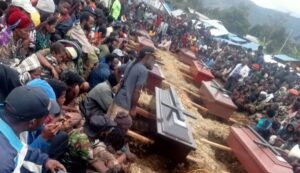
  • ‘Bloody Wamena’: Ten Papuans murdered by security forces (pictured above) in Wamena in February 2023;
  • Ten Papuan civilians massacred in Yahukimo and Fakfak in September 2023;
  • Fifteen killed in Kiwirok in 2021.

Militarisation:

  • As of December 2025, at least 83,177 security forces were stationed in West Papua, roughly one for every twenty-two Indigenous Papuans;
  • This figure includes 56,517 soldiers and 26,660 police, but does not include forces temporarily deployed to West Papua from other regions of Indonesia, so the real number is likely to be higher;
  • At least 40,000 additional troops have been deployed to West Papua since 2019;
  • Hundreds of military posts have been established in West Papua during this time; while no hard figure is available for the entire territory, we know that 31 checkpoints were established between July and September 2025 in Intan Jaya alone;
  • Indonesia is using a range of technologically advanced weaponry on West Papuans, including Brazilian‑made EMB‑314 Super Tucano fighter jets, Chinese blowfish drones, and UK-made sniper rifles.

Environmental destruction:
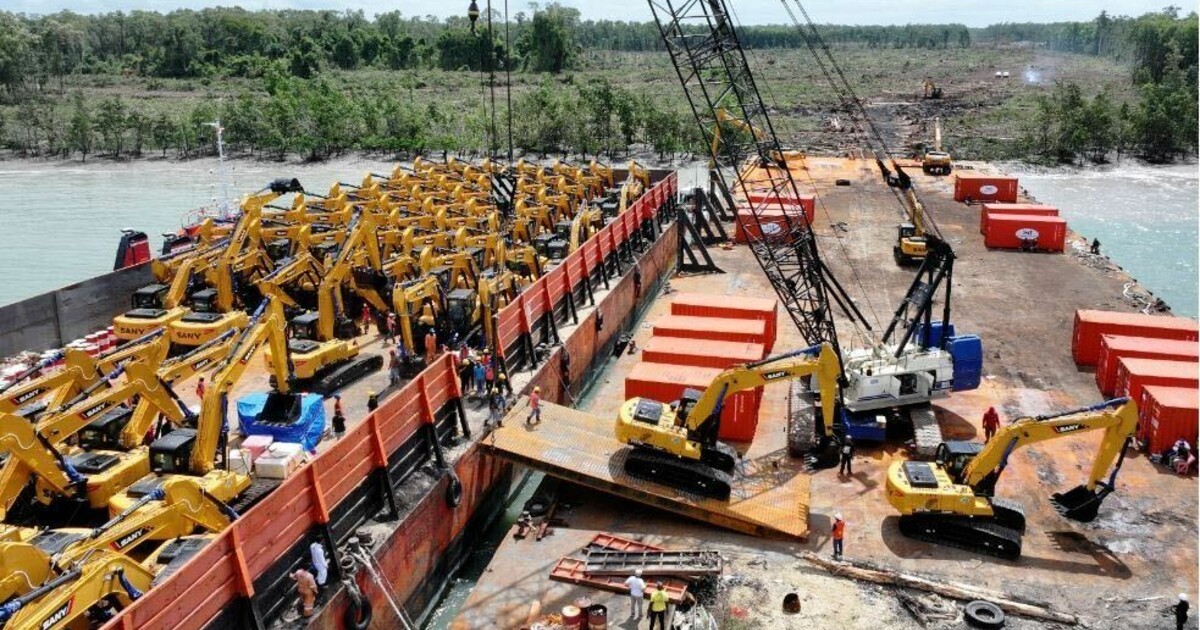
Douglas Gerrard | The World's Largest Deforestation Project

  • Ecocide in occupied West Papua has increased dramatically since 2019, as Indonesia seeks to use West Papua to secure its future food and energy security;
  • Indonesia launched the largest deforestation project in human history in West Papua in 2024 – a 3-million-hectare rice and sugarcane food estate in Merauke (pictured above), since expanded to the entire South Papua Province;
  • The Merauke food estate – covering an area the size of Wales – is set to release an additional 780 million tonnes of CO2 into the atmosphere, more than doubling Indonesia’s existing emissions;
  • Wabu Block, a 1.8-million-hectare gold mine in Intan Jaya, has been under construction since 2021, and continues to displace communities and militarise the Papuan highlands;
  • In 2024, BP completed an expansion of its Tangguh gas field in West Papua, which will now supply 35% of Indonesia’s entire gas supply.

Secrecy is the key weapon Indonesia uses to maintain its genocidal and ecocidal rule over West Papua. By keeping its occupation hidden from the world, Indonesia is able to get away with its crimes with near total impunity, while continuing to expropriate West Papua’s huge mineral wealth. Only international intervention, beginning with a UN Human Rights visit, can stop this suffering. Indonesia must face serious diplomatic consequences until the UN High Commissioner access to West Papua is finally allowed to visit West Papua.

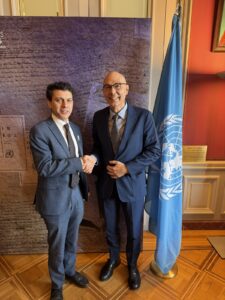
IPWP Chair Alex Sobel with UN High Commissioner for Human Rights Volker Turk

Indonesia’s democracy faces a quiet return of military power 

April 10, 2026Signs of renewed military involvement in civilian life are raising concerns that Indonesia may be drifting back towards the authoritarian practices of its past.

Imagine you’ve seen a street skirmish and call the police. A brief chat reveals the brawlers are off-duty soldiers. They continue to throw punches and rocks. The cops drive away.

The policy was dwifungsi (an adopted loanword), and it ran throughout Indonesia during the 32-year authoritarian rule of the second president, Soeharto, a former general.

At the top was the army – at the bottom the police.

Dwifungsi was dismantled during the Reformation in 2000 by the fourth President, Abdurrahman Wahid (Gus Dur), now deceased.

A liberal Islamic scholar, he understood the importance of restricting the military to defence and separating it from the police role of domestic peacekeeping.

It hasn’t been an easy transition. Turf wars, access to power and rivalries continue.

Khairul Fahmi, a military analyst at the Institute for Security and Strategic Studies_,_ attributed the recurring clashes between the two forces to “institutional arrogance, a culture of superiority, sectoral egotism, and festering jealousies, dynamics that have grown unchecked.

“Much of the rivalry stems from competition for ‘fertile grounds’ of influence across civil society, bureaucracy, and even parliament.”

Stories of inter-service punch-ups had become ho-hum till a street acid-attack last month in Jakarta on prominent human rights activist Andrie Yunus as he left a legal aid office.

He was badly burned on his face, hands, and chest, covering 24 per cent of his body. He’s been in intensive care, and his family is in protection.

The UN High Commissioner for Human Rights, Volker Turk, said he was “deeply concerned” with the attack. Four soldiers from an intelligence unit have allegedly been detained, according to military police commander Yusri Nuryanto.

A decade earlier, a former policeman turned corruption investigator, Novel Baswedan, was walking home from his local mosque in North Jakarta when two men threw acid at his face. He lost an eye.

After more than two years of investigation and a presidential order to find the assailants, he was reported as saying the police were “not really serious in handling his case.”

Two active police officers were convicted and jailed for a year. Novel’s supporters said they were scapegoats and the Mr Big had escaped identification.

Inquiries into the March attack on Andrie suggested the two assailants on a motorbike were soldiers and ordered to send a warning to civilian critics of the return of dwifungsi.

  According to the nation’s leading daily, Kompas, “the shadow of the military’s return to dominance in civilian governance is now increasingly apparent. A total of 2,500 active TNI (Military) personnel have quietly taken up civilian positions, a figure that exceeds the limits set by law.

“If the revision of the TNI Law currently being discussed by the DPR (Parliament) is passed, the last barrier to military involvement in civilian bureaucracy will collapse.

“Not only that, but soldiers will also be given the opportunity to engage in business activities, blurring the clear line that has long separated the military from economic and political interests.”

The California-based Asia Sentinel magazine is warning of “the Darkening Face of Indonesia’s Democracy.

“Reports of intimidation and terror directed at activists, legislative initiatives widely seen as constraining press freedom, and, perhaps most strikingly, the reactivation of military command structures at the regional level.

“… these developments evoke the territorial military influence that defined Indonesia’s authoritarian past, raising urgent questions about whether the country is gradually retreating from the democratic gains achieved since 1998.”

The present President Prabowo Subianto is the former son-in-law of the late Soeharto. He’s known to want the military in civil affairs, as soldiers are trained to follow orders and not challenge.

Personal loyalty is critical in the armed forces; fine in a firefight, though not in professional administrations demanding impartiality.

After the acid splash, Prabowo told some selected journos (not this one) that the attack on Andrie Yunus was a “barbaric act of terrorism” that demands a comprehensive investigation into its masterminds.

“This is terrorism. This is a barbaric act. We must pursue it. We must investigate it! We must find out who ordered it, who paid for it.”

He explicitly guaranteed that no “impunity” would be granted if security personnel are found complicit, vowing that legal proceedings will be conducted strictly and impartially.

Sounds like the right response, except this is Indonesia. The two previous incumbents of the Presidential Palace said much the same thing about the most blatant assassination since the Reformation.

In  2004, lawyer Munir Said Thalib, founder of KontraS, the Commission for Missing Persons and Victims of Violence, was poisoned on a Garuda flight while heading to Utrecht University to study for a master’s degree in international law and human rights.

A post-mortem found he died from arsenic in an orange drink. He perished before landing. Then President Susilo Bambang Yudhoyono (another former general) promised Munir’s widow, Suciwati, that the assassination would be thoroughly investigated. It wasn’t.

KontraS is struggling to reopen the case, but there’s no political commitment. This is not a time for Indonesian activists to move about unprotected. Correction: It never has been.The views expressed in this article may or may not reflect those of Pearls and Irritations.

Duncan Graham has been a journalist for more than 40 years in print, radio and TV. He is the author of People Next Door (UWA Press). He is now writing for the English language media in Indonesia from within Indonesia. Duncan Graham has an MPhil degree, a Walkley Award, two Human Rights Commission awards and other prizes for his radio, TV and print journalism in Australia. He lives in East Java.

———————————–

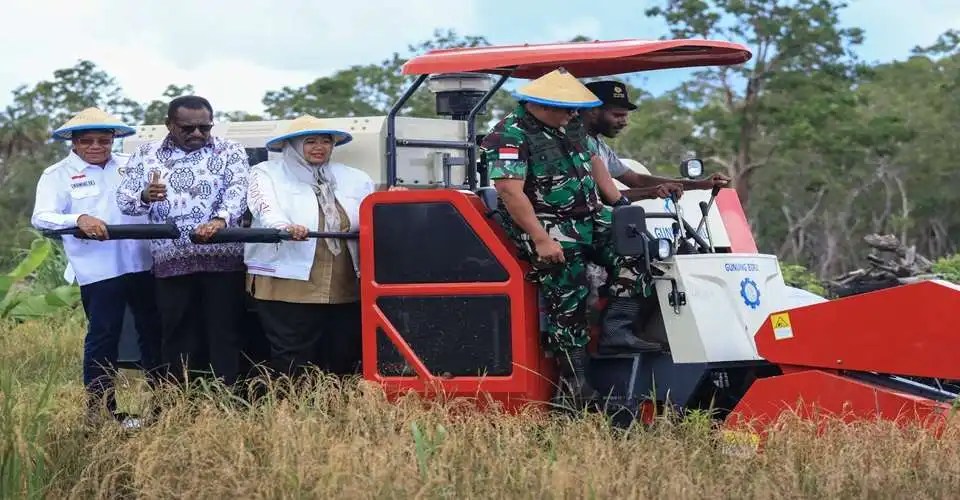
IIndonesia’s claims of rice self-sufficiency clash with import deals, opaque data and the growing political control of the food system.

Rice isn’t just a meal for half the world. In Indonesia it’s also an essential ingredient in national sovereignty – and big money deals. Mao Zedong was wrong about “all political power growing out of the barrel of a gun.” In Indonesia it grows in the paddy.

Are all Indonesians now dining on their own home-grown rice with not one imported grain, as the government says? If so, it’s a stunning achievement towards self-sufficiency directed by President Prabowo Subianto and a great boost to national pride.

It should also lead to lower prices.

But is it true?

The rice trade is controlled by the State-owned monopoly and public corporation, Bulog, Badan Urusan Logistik (Logistics Affairs Agency). It runs grain depots around the country and sets the floor price, currently Rp 6,500 (AUD 52 cents) a kilo.

Overall Indonesia produces about 55 million tonnes a year and is the world’s fourth largest grower.

Bulog is the principal source of data on crops, plantings and deliveries. It’s an agency with a record of alleged corruption, mainly concerning illegal sales.

This year it “absorbed” the equivalent of 840,000 tonnes of rice – representing a 2,000 per cent increase from the same period last year. This happened despite major flooding, particularly in Sumatra.

Even assuming yields have been boosted by better cultivation, new varieties and fertilisers, this figure is so astonishing that it deserves scrutiny. So far, the Indonesian media and academic researchers have found better meals elsewhere.

Apart from keeping food on the table, there’s another agenda: to manage everything in the food business and put the Prez in charge without waving a weapon.

Bulog, formerly a civilian agency, is now being run by the Army. Major General Ahmad Rizal Ramdhani was appointed last year. He said his job was to “transform the state-owned food company into a major autonomous body directly under the President.

“The hope is that, in line with the President’s wishes, Bulog will return to its former glory, like it did in (the Soeharto era). Bulog shouldn’t just be managing rice, but managing everything, so as to guarantee food self-sufficiency.”

Soeharto, Indonesia’s second president, died in 2008. He was also a former general. For a time his son-in-law was Prabowo.

Last year Ahmad’s predecessor Lieutenant Novi Helmi Prasetya lasted four months as Bulog’s boss. No reason was given for his return to the ranks.

Bulog’s warehouses reportedly hold 2.4 million tonnes, a figure that could rise to three million by the end of the month, potentially marking a new national record. New depots are planned.

The Indonesian NGO Prakarsa (Initiative), “an institution for research and policy advocacy” in Jakarta , reported that in the Agreement on Reciprocal Trade signed with the US in February, Indonesia had “committed to importing 1,000 tonnes of rice.

“Quantitatively, the figure appears small … however, this commitment has sparked controversy. Indonesia, while claiming a rice surplus, is locking in rice imports from countries that are not major global rice producers.

“This is where the question arises: does the food import commitment in the trade agreement erode the food self-sufficiency and sovereignty that has been touted so far?”

In 2024, Indonesia imported 4.52 million tons of rice, a 47 per cent increase from more than three million tonnes the previous year.

A sudden surplus of more than four million tonnes in 2025 looks curious, particularly when credited to Prabowo during his first year in office.

Former presidents also promised – and failed – to make the nation self-sufficient in foods.

Since 2008, when the population was 240 million, Indonesia has imported rice, mainly from Vietnam and Thailand, to ensure the staple ingredient is always available.

Any dearth could lead to food riots, as at the turn of the century, when the nation’s crops were damaged by the El Niño drought.

The other factor in poor harvests at the time was Krismon – the economic crisis caused by student riots and the dethroning of the autocratic second president, Soeharto.

The population is now 285 million. Land available for cultivating the grain has shrunk as roads, industry, and housing have moved onto the flattest areas in an archipelago of mountains.

According to Indonesia Corruption Watch_,_ Bulog originally served as a food provider and distributor for the people.

“With broader authority, including price stabilisation, supplier selection, and food security, Bulog has become a cash cow. Trillions of rupiah can flow into Bulog at any time.

“Its position as an institution directly under the president allows Bulog to access non-budgetary funds outside the state budget … This makes it difficult for the House of Representatives or the Supreme Audit Agency to access Bulog.

“(Two) former Bulog heads were only able to be investigated after President Soeharto left power. Both were tried and convicted after being found guilty of corruption.

“Bulog had to disburse Rp 40 billion (AUD 3,300) from a non-budgetary account, allegedly for Golkar Party campaign expenses. Bulog will always be a magnet for various political parties and the ruling elite to compete for.”

This month, Bulog claimed its warehouses held 2.4 million tonnes and had enough to start exporting. The often unhusked grain is held in 50 kg sacks and usually has to be lugged on the backs of youths dashing up swaying planks to load trucks. Mechanisation is rare.

It’s then sold to private companies for cleaning, refining and marketing under brands and retailed in five and ten-kilo plastic bags.

During the rule of the first President, Soekarno, Indonesia exported rice with a reputation for high quality. Those glory days are regularly recalled by politicians claiming the nation can be food self-sufficient again.

It has now apparently achieved that goal and given Prabowo’s reputation a big tick.

The views expressed in this article may or may not reflect those of Pearls and Irritations.

Duncan Graham

Duncan Graham has been a journalist for more than 40 years in print, radio and TV. He is the author of People Next Door (UWA Press). He is now writing for the English language media in Indonesia from within Indonesia. Duncan Graham has an MPhil degree, a Walkley Award, two Human Rights Commission awards and other prizes for his radio, TV and print journalism in Australia. He lives in East Java.

John Menadue

Support our independentndonesia’s rice bowl gets bigger