TEMPO.CO, Jakarta – President Joko Widodo or Jokowi visited Sermayam Village, Tanah Miring District, Merauke Regency, South Papua Province, on Tuesday, July 23, 2024. During the visit, Jokowi stressed the government’s commitment to supporting sustainable initiatives in the fields of agriculture and the environment.
In Sermayam Village, Jokowi planted the first sugarcane at PT Global Papua Abadi (GPA). He also inspected several of the company’s existing facilities and infrastructure. These include tissue culture laboratories, sugarcane nurseries, sugarcane plantations, and conservation plant nurseries.
The Sermayam Sugarcane Plantation was a National Strategic Project to support the acceleration of national sugar self-sufficiency and bioethanol as biofuel. The plantation managed by PT Global Papua Abadi covers 506 hectares of land with an investment value of Rp53.8 trillion.
The Presidential Secretariat, in a written statement, said that the food and energy sector will also be the focus of President-elect Prabowo Subianto’s administration.
Jokowi said sugarcane planting was a strategic step in responding to the global food crisis due to extreme climate change. “Food independence, food security, and food sovereignty must be prioritized,” said Jokowi.
The Sermayam Sugarcane Plantation Megaproject will build five sugar factories to process sugar cane. To support this, GPA built laboratory facilities at the nursery location, which supports research and tissue culture to produce sugarcane seeds and functions as a sugarcane research center.
The Sugarcane Seed Research and Laboratory Area in Sermayan research into the growth and development of sugarcane seed varieties from Australia. GPA collaborates with Sugar Research Australia and P3GI (Indonesian Sugar Plantation Research Center) to obtain suitable seeds for development in Merauke.
Selected seeds are grown and propagated in the main garden in the GPA Plantation area in the Jagebob area which is expected to start operating in 2027.
Activists have warned of wide-ranging environmental and social impacts from a plan to establish 2 million hectares (nearly 5 million acres) of sugarcane plantations in Merauke district, in Indonesia’s Papua region.
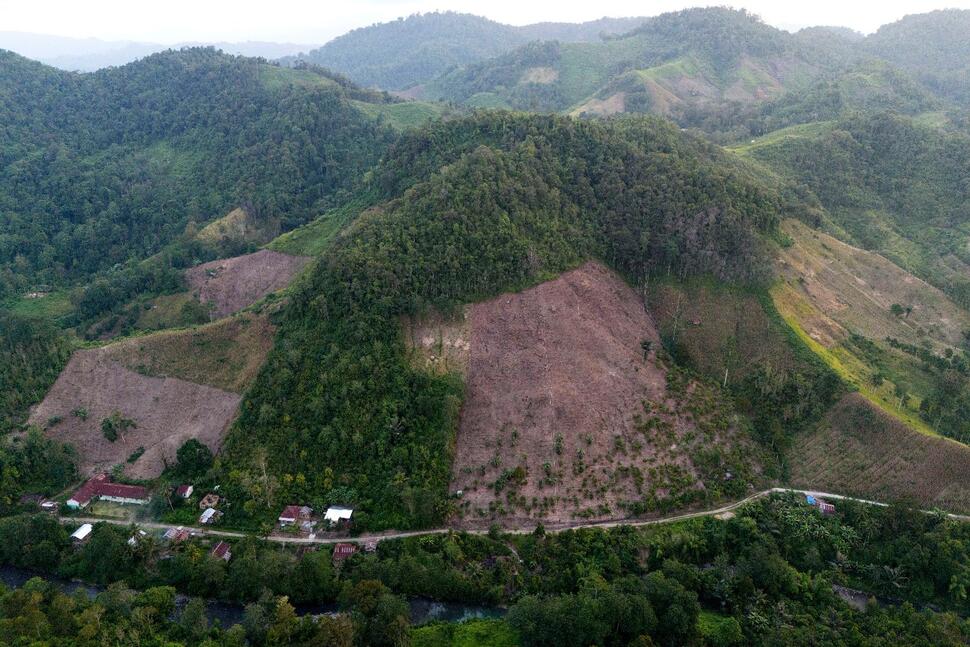
The plan calls for deforesting an area six times the size of Jakarta, even as the government touts the green credentials of the project in the form of the bioethanol that it plans to produce from the sugar.
Activists have also warned that the project risks becoming yet another land grab that deprives Indigenous Papuans of their customary lands and rights without fair compensation.
They add the warning signs are all there, including close parallels to similarly ambitious projects that failed, the alleged involvement of palm oil firms, and government insistences that this richly forested region of Indonesia doesn’t have much forest left.
JAKARTA — The Indonesian government plans to establish 2 million hectares, or nearly 5 million acres, of sugarcane plantations in the eastern region of Papua, home to the last great expanse of rainforest in Southeast Asia.
The country’s investment minister, Bahlil Lahadalia, said the land, spanning an area 30 times the size of Jakarta, was available in Merauke district. He denied that this biodiverse landscape constituted “natural forest,” and justified clearing it in the interest of weaning Indonesia off sugar imports entirely by 2027. The government also has plans to develop cane-derived bioethanol as part of its transition away from fossil fuels.
“Our country is one of the world’s largest in size. But [when] sugar price increases, we always import. We keep importing [sugar],” Bahlil said in Jakarta on April 29.
Bahlil leads a task force formed by President Joko Widodo to allocate land for the project and streamline the licensing process for interested companies. To date, five consortiums, consisting of Indonesian and foreign companies, are confirmed to be participating in the 130 trillion rupiah ($7.9 billion) project, with roles ranging from developing sugarcane plantations and processing mills, to building the power plants to run them.
One of the first orders of business is to rezone 419,000 hectares ( million acres) of forested area, six times the size of Jakarta, into non-forest area, thereby allowing it to be deforested — legally. In South Papua province alone, this amounts to 25,654 hectares (63,392 acres) of intact forest that’s been approved for clearing, according to Auriga Nusantara, an environmental NGO.
“These 25,654 hectares of natural forests are likely to disappear because the areas have been rezoned,” said Auriga campaigner Hilman Afif.
The large-scale deforestation to make way for sugarcane plantations will be at the expense of wildlife habitat and biodiversity, said Dini Hardiani Has, a forest management lecturer at Satya Terra Bhinneka University in North Sumatra. Papua’s rainforests are also among the most biodiverse on Earth, home to at least 20,000 plant, 602 bird, 125 mammal and 223 reptile species.
“Species which need vast habitats to migrate, look for food and mate will be affected,” Dini said. “The wildlife will also compete [with each other for food] if their habitats are shrinking.”
‘Consent’ in the presence of security forces
Activists have also raised concerns about the impact on Indigenous Papuans, many of whom remain highly dependent on forests for their livelihoods, and who, as a group, have often been sidelined from consultation on development projects. This is expected to be the case with the sugarcane project too, given that it’s been designated a project of strategic national importance, which under Indonesian law gives the government eminent domain rights to evict entire communities, including Indigenous groups.
Franky Samperante, director of the Pusaka Foundation, an NGO that works with Indigenous peoples in Papua, said the Indigenous communities should be involved in the decision-making process, and not just notified after the fact.
He said that while some of the companies in the participating consortiums had begun negotiating with Indigenous communities over the land acquisition process in 2023, they were accompanied by security forces — an intimidating sign in a region where the Indonesian state has for decades maintained a heavy military and police presence ostensibly to combat a low-level insurgency.
This means that even if the communities agreed at these meetings to sell or lease their lands for the project, they did so without their free, prior and informed consent (FPIC), Franky said. As such, he added, there’s the potential that this project, like many others before it, is displacing Indigenous peoples from their lands and robbing them of their rights.
Petrus Kaize, a member of the Kaize clan in Merauke, told local media that his people were among those that hadn’t struck an agreement with the developers of the sugarcane project. In 2012, a company approached the clan and offered them 2 billion rupiah ($214,000 at the time), he said. Petrus described this payment as a form of tali asih, a local term used to show goodwill, rather than the actual payment for the lease of the clan’s lands.
“At that time, there were verbal discussions [about the lease of the lands with the company], but there’s no written agreement yet,” Petrus told local media.
Bahlil said the government and the project developers would ensure the protection of the Indigenous peoples’ rights, including their FPIC and fair compensation rights. He also said they would benefit from the plantations through the profit-sharing scheme known as plasma, in which a fifth of the plantation area would be allocated to community smallholders. These farmers would receive training and support from the plantation companies, which would also buy their harvests at a guaranteed price.
But the plasma promise is just that — a promise — according to Greenpeace Indonesia forest campaigner Nicodemus Wamafma, citing the long history of the scheme’s failure to benefit communities.
Despite the plasma scheme being mandatory for plantation companies operating in Indonesia, a 2022 investigation by Mongabay, BBC News and The Gecko Project revealed that numerous palm oil companies are stiffing local communities in plasma schemes throughout Indonesia. The investigation estimated that Indonesian villagers are losing out on hundreds of millions of dollars each year because palm oil producers are failing to comply with the plasma scheme, with villagers not receiving the profits they were promised and falling deeper into debt.
That means there’s no guarantee the plasma scheme will work as intended in the sugarcane project, Nicodemus said.
“Indigenous peoples in Merauke aren’t used to work that requires intensive labor, including managing sugarcane plantations,” he told local media.
The choice of sugarcane rather than food crops that are native to Papua also underscores the government’s lack of consideration for the rights and cultures of Indigenous peoples in the planning of the project, said Primus Peuki, director of the Papuan chapter of the Indonesian Forum for the Environment (Walhi).
“Why should it be sugarcane? The tribes of Marind, Mandobo and Awyu [in South Papua] don’t eat sugarcane. They eat sago. They still live with nature, hunting [in the forests] and fishing in the rivers,” he told local media.
Blueprint for a failed project
Then there’s the question of whether the sugarcane project will turn into yet another boondoggle like many before it. Merauke district was the site of a similar megaproject, the Merauke Integrated Food and Energy Estate (MIFEE), initiated by Widodo’s predecessor, Susilo Bambang Yudhoyono, in 2011 to turn the district into the “future breadbasket of Indonesia.”
The MIFEE project was earmarked for rice and sugarcane plantations to shore up national food security — the same justifications being touted by Widodo administration officials today. But within just three years of the project’s launch, most of the concessions granted by the government were planted with commodity crops meant for export, such as oil palm and pulpwood, belying the claim that the estate would boost domestic supplies of food crops. Permits issued for sugarcane plantations in the MIFEE site were instead planted with oil palms.
Besides being used as cover to establish oil palm and pulpwood plantations, the MIFEE project also became a “textbook land grab,” activists say. Under the project, companies acquired large swaths of customary lands without FPIC and without providing adequate compensation to communities.
Activists also blamed the project for the more than 11,000 fire hotspots detected there in 2015 as a result of burning to clear vegetation — a common practice in the palm oil industry in Sumatra and Borneo.
The failure of the MIFEE should have sent the government a clear message to not force large-scale plantation projects in Papua, Nicodemus said.
“Previous food estate projects run by the government have proven to fail and cause unmitigated disasters, like the mega rice project [in Borneo], the MIFEE, and the cassava food estate project [in Borneo],” he said.
However, Bahlil, the investment minister, blamed the failure of the MIFEE project on the fact that its developers planted seeds unsuited to the soil in Merauke. He said the government had learned from past mistakes and wouldn’t repeat them again.
He also labelled those who critics the sugarcane project as being anti-development.
“There are groups or other countries that don’t want Indonesia to develop. Do you know how many sugars do we import? 5 tons,” Bahlil said during a press conferenceon June 7. “What will this country become if there are people who already protest [us] anytime we want to develop something for our own needs?”
The long shadow of palm oil
Activists say it’s doubtful lessons are being learned, citing the palm oil affiliations of at least one of the companies now involved in the Merauke sugarcane project, and the fact that the seeds being planted now still aren’t native to Papua.
PT Global Papua Abadi (GPA) is one of the companies that’s already started planting seeds on its concession in Merauke. The seeds in question were imported from Australia and will take an estimated 11 months to grow to maturity. GPA ultimately plans to produce 2.6 million metric tons of sugar per year.
The company, established in 2012, had approached the Indigenous Marind tribe in Merauke as early as 2014, according to a 2022 report on the sugarcane industry in eastern Indonesia by the NGO EcoNusa. Official notary act shows that the majority of GPA’s shares (99.9%) are owned by a company called PT Mega Makmur Semesta, which in turn is owned by individuals identified as Sulaidy and Hui Tin.
Sulaidy has been linked multiple times to the billionaire Fangiono family, which owns one of the world’s largest palm oil producers, First Resources. A recent investigation published by The Gecko Project, a London-based investigative journalism outlet, found corporate records that pointed to a string of long-running connections between Sulaidy and the Fangionos.
GPA’s notary act also listed an individual identified as Angelia B. Sudirman as the only director of the company. Franky of Pusaka said Angelia is believed to be a member of the Fangiono family.
This indicates that GPA might be a part of First Resources, which has a history of clearing rainforests for oil palm plantations, he said.
First Resources has been linked to plantation company PT Ciliandry Anky Abadi (CAA), which cleared orangutan habitat in Central Kalimantan, a province on the island of Borneo. CAA’s subsidiaries also allegedly cleared hundreds of hectares of rainforests in the district of Sorong in Southwest Papua province in 2022.
In a statement in 2018, First Resources denied having links to CAA, saying the company is not a subsidiary, associated company, or related party of First Resources, and that First Resources doesn’t have any financial or operational relationship with CAA.
However, Franky said First Resources’ long history of alleged ties to deforesting palm oil operators should have prompted the government to be more cautious about involving GPA in the sugarcane project.
“The government should be more diligent and evaluate the companies [involved] because they don’t obey [environmental standards],” he said.
Responding to the allegations, First Resources said it had no affiliations with GPA.
“First Resources’ principal activities are within the palm oil sector, with operations across Riau, East Kalimantan, and West Kalimantan provinces of Indonesia. We would like to clarify that PT Global Papua Abadi is not a subsidiary of and has no relations with First Resources,” the company told Mongabay.
‘No forests to clear’
Deforestation for government programs like the Merauke sugarcane project is part of the larger “food estate” project announced by President Widodo in 2020, where large-scale forest clearing is legitimized under the cover of strategic national importance.
Among the “food hubs” designated under the project are the Papuan districts of Merauke, Mappi and Boven Digoel, where a combined 2.7 million hectares (6.7 million acres) — an area almost the size of Belgium — of land has been identified as potential plantation areas.
The purported strategic importance of the food estate project essentially means that any deforestation for the sugarcane plantations in Merauke will have been designed and legitimized by the government, according to Anggi Putra Prayoga, a campaign manager at watchdog group Forest Watch Indonesia (FWI).
“Natural forests in Papua are deliberately destroyed to be converted into plantations, including sugarcane,” he said.
Furthermore, the sugarcane project and the food estate program are also further legitimized by being included in the government’s emission reduction strategy and climate policies, as the crops they produce will be also used as energy, such as bioethanol in the case of sugarcane, Anggi said.
I Getut Ketut Astawa, a deputy at the National Food Agency, said the government would mitigate the environmental impact of the sugarcane project by avoiding forested areas as much as possible. However, Bahlil, denied there was much natural forest left in Merauke, and that the sugarcane project’s environmental impact would thus be minimal.
“There’s no [natural forests] that we will clear,” Bahlil said. “In fact, the establishment of sugarcane [plantations] will create drainage to improve the environment. Unless, there’s still merbau trees, natural timbers and big vegetations. But there’s no such things [in Merauke]. So I think there’s no problem [of deforestation].”
Yet the fact is that Papua is home to 38% of Indonesia’s remaining rainforests, the largest in the country, and the third-largest swath of continuous tropical rainforest on Earth, after the Amazon and the Congo Basin. This amounts to 33.8 million hectares (83.5 million acres) of forests, an area the size of Florida.
Unlike the forests of Sumatra and Borneo, which have been largely depleted by the same industrial agricultural forces now eyeing Papua, the latter’s forests have remained largely intact due to its remoteness; the region’s largest city, Jayapura, is two time zones and more than five hours by plane from Jakarta. Furthermore, a dearth of infrastructure such as roads, electricity, telecommunications and piped water have long rendered the region the least developed and most impoverished in Indonesia.
Astawa said initiatives like the sugarcane project aim to address this. “The challenge lies in the distance [between Merauke and other parts of Indonesia],” he told Mongabay. “If there are already factories there, then [the supply chain] will be integrated. We just need to strengthen the distribution [to the rest of Indonesia].”
Campaigners are taking legal action to stop four palm oil companies from clearing vast tracts of forest for plantations.
The Awyu and Moi say they want to stop the plantations for the benefit of their community and future generations. [Bay Ismoyo/AFP]
By Al Jazeera Staff Published On
28 May 2024
Indigenous activists from the Indonesian province of West Papua have held traditional ceremonies outside the country’s Supreme Court in Jakarta calling for their traditional land and forests to be protected from palm oil plantations.
Representatives of the Awyu and Moi communities held prayers and performed dances in front of the Supreme Court building on Monday as the court was reviewing an appeal in relation to their efforts to revoke permits for four palm oil companies whose proposed plantations threaten their customary forests. Indonesia began legally recognising customary forests in 2016.
“We have taken the long, difficult and expensive path from Tanah Papua [Papua homeland] to end up here in Indonesia’s capital Jakarta, asking the Supreme Court to restore our rights, and the land that was snatched from us when these palm oil companies were issued permits over it,” said Hendrikus “Franky” Woro, an Awyu Indigenous man.
Woro filed an environmental and land rights lawsuit in the Papuan capital of Jayapura challenging the plan by a Malaysian-owned palm oil company to clear tens of thousands of hectares of previously untouched West Papuan forest, including traditional Indigenous land.
Environmental campaign group Greenpeace said the potential emissions from clearing the 26,326 hectares (65,053 acres) of primary forest in its concession would amount to about 23 million tonnes of CO2, equivalent to 5 percent of Indonesia’s annual carbon emissions expected in 2030.
The Awyu have also intervened in appeals taken by two other palm oil companies against a decision by the minister of environment and forestry to cancel permits that it had previously issued for them to clear Indigenous lands. The revocation has the potential to save 65,415 hectares (161,644 acres) of pristine rainforest, six times the area of the city of Paris, Greenpeace said.
The Supreme Court is the communities’ last chance to defend their customary forest and generations of ancestral heritage.
“We have been tormented for years by the threat of our traditional forests being replaced by palm oil plantations. We want to raise our children with the help of nature, and the food and materials we harvest from the forest. Palm oil will destroy our forests, we reject it,” said Rikarda Maa, an Awyu Indigenous woman.
The Moi Indigenous community, meanwhile, is fighting to protect thousands of hectares of customary forest that has also been earmarked for palm oil. The company involved had its permits revoked amid community opposition but lower courts later ruled in favour of the planter.
“The judicial panel needs to prioritise aspects of the case that relate to environmental and climate justice, the impact of which will not only be felt by the Awyu and Moi but the entirety of the Indonesian people,” Tigor Hutapea, a member of the legal team from Pusaka Bentala Rakyat, said in a statement.
Global Forest Watch, a monitoring platform run by the World Resources Institute, said last month that since 1950, more than 74 million hectares (183 million acres) of Indonesian rainforest — an area twice the size of Germany — had been logged, burned or degraded for the development of palm oil, paper and rubber plantations, nickel mining and other commodities.
Indonesia is the world’s biggest producer of palm oil, and Malaysia number two. Indonesia is also a major exporter of commodities such as coal, rubber and tin.
JAKARTA, Indonesia (AP) — From trees felled in protected national parks to massive swaths of jungle razed for palm oil and paper plantations, Indonesia had a 27% uptick in primary forest loss in 2023 from the previous year, according to a World Resources Institute analysis of deforestation data. But the loss is still seen as historically low compared to the 2010s, it said.
“Deforestation has been declining from six or so years ago, when there were peak rates,” said Rod Taylor, global director of the forests program at WRI. “It’s good news and commendable for Indonesia.”
But others saw cause for concern in the uptick, and tied some of the more recent deforestation to the world’s appetite for mining Indonesia’s vast deposits of nickel, which is critical for the green energy transition.
The latest data from the University of Maryland’s Global Land Analysis and Discovery laboratory was shared on Global Forest Watch — a platform run by WRI that provides data, technology and tools for monitoring the world’s forests.
A vast tropical archipelago stretching across the equator, Indonesia is home to the world’s third-largest rainforest, with a variety of endangered wildlife and plants, including orangutans, elephants and giant forest flowers. Some live nowhere else.
Since 1950, more than 74 million hectares (285,715 square miles) of Indonesian rainforest — an area twice the size of Germany — have been logged, burned or degraded for development of palm oil, paper and rubber plantations, nickel mining and other commodities, according to Global Forest Watch. Indonesia is the biggest producer of palm oil, one of the largest exporters of coal and a top producer of pulp for paper. It also exports oil and gas, rubber, tin and other resources.
Expansion of industrial plantations occurred in several locations adjacent to existing palm oil tree and pulp and paper plantations on the tropical islands of Kalimantan and West Papua, according to the analysis.
The Indonesian Ministry of Environment and Forestry said the expansion occurred in concessions granted before the current administration took office in 2014.
The Indonesian Ministry of Environment and Forestry did not respond to questions and a request for comment sent by The Associated Press.
Global Forest Watch’s data on Indonesia’s loss of primary forests — which are old-growth forests typically high in stored carbon and rich in biodiversity — are higher than the official Indonesian statistics. That’s because much of the primary forest loss in Indonesia, according to the analysis, is within areas that Indonesia classifies as secondary forest — areas that have regenerated through largely natural processes after human actions such as agriculture clearing or timber harvest. Secondary forests typically have reduced capacity for storing carbon than primary forests.
Deforestation linked to the mining industry occurred in Sumatra, Sulawesi, Mlauku and Kalimantan, according to the analysis.
Indonesia has the world’s largest reserves of nickel — a critical material for electric vehicles, solar panels and other goods needed for the green energy transition. And part of this deforestation can be directly linked to the expansion of Indonesia’s nickel industry, said Timer Manurung, director of Auriga Nusantara, a nongovernmental conservation organization based in Indonesia.
Manurung said it’s not clear exactly how much of Indonesia deforestation is due to mining. But he called it a “significant driver,” and said the government’s rapid development of the country’s mining and nickel industry — including more than 20 new smelters to process the nickel ore — is “repeating Indonesia’s oil palm and pulpwood mistakes” of increasing deforestation.
But Taylor noted that deforestation done on a massive scale seems to be shrinking, compared to the past.
In the 2010s there was gargantuan oil palm, timber and large-scale plantation expansion across Indonesia. Research in the Nature Climate Change journal found that the deforestation rate doubled to approximately 2 million hectares per year during 2004-2014.
In 2023, primary forest loss in patches greater than 100 hectares made up just 15% of the loss, according to the analysis.
Taylor attributes this lack of large-scale deforestation patches to the reputational risks that companies face if they are found to be razing trees. In recent decades nongovernmental organizations, consumers and governments — including the European Union — have pushed for companies to move away from deforestation practices.
In 2018 Indonesian President Joko Widodo put a three-year freeze on new permits for palm oil plantations. And the rate of deforestation slowed between 2021-2022, according to government data.
But small-scale primary forest loss was still prevalent throughout the country, including within several protected areas such as Tesso Nilo National Park and Rawa Singkil Wildlife Reserve on the island of Sumatra. Both areas are home to critically endangered animals such as tigers and elephants.
A wetter than usual El Nino — which usually leads to less rainfall and higher temperatures that can cause rapid spread of fires set to clear land for agriculture — contributed to a quieter than expected fire season, Taylor said. So did investments made by the Indonesian government in fire prevention capabilities, as well as efforts to suppress fire by local communities.
During Indonesia’s last El Nino in 2015-2016, fires intentionally started to clear land for agriculture rapidly spread, sending haze across Southeast Asia. Several Indonesian provinces declared states of emergencies, respiratory illnesses spiked and thousands of Indonesians had to flee their homes.
“The good news in Indonesia is that the fire prevention measures are much more sophisticated than they were in years past,” said Taylor. “It’s really making a difference.”
___ Associated Press climate and environmental coverage receives support from several private foundations. See more about AP’s climate initiative here. The AP is solely responsible for all content.–