60 Years of diplomatic relations with Indonesia: black marks on the record card

GUEST BLOG: Maire Leadbeater – 60 Years of diplomatic relations with Indonesia: black marks on the record card

By   /   February 27, 2018  /   No Comments

TDB recommends Voyager – Unlimited internet @home as fast as you can getThe Ministry of Foreign Affairs has a snazzy theme to promote the 60th anniversary of the establishment of diplomatic relations with Indonesia: ‘60 years as friends for good’.

The Ministry of Foreign Affairs has a snazzy theme to promote the 60th anniversary of the establishment of diplomatic relations with Indonesia: ‘60 years as friends for good’.

I’m all for friendship with the Indonesian people, but the diplomatic relationship has been badly marred over the years by our complicity and silence in the face of a long list of human rights crimes.  The 24 year Indonesian occupation of East Timor is a well-known example, but there are other egregious examples including  the matter of the 1965 massacres, when the ‘New Order’ regime set about killing half a million people accused of  ‘communist sympathies’.  New Zealand officials were well-informed about the scale and arbitrary nature of killings,  but they welcomed Suharto’s rise to power and one diplomat told a  1967 parliamentary committee that the transfer of power had been ‘surprisingly peaceful’.   At that time New Zealand’s diplomatic representation in Jakarta was upgraded from a Legation to a full Embassy.

New Zealand’s diplomatic relations with Indonesia began in 1958 when Dr A. Y. Helmi, Indonesia’s Canberra based Ambassador,  was accredited to New Zealand, and in 1961 New Zealand’s Colombo Plan office in Jakarta was upgraded to a Consulate General.   Back then there was a strong focus on New Zealand aid – especially educational and technical training support.

One of the first clouds on the horizon came in 1960.   The future of Netherlands New Guinea, as it was at the time, was at a crossroads. The Dutch were preparing the territory for eventual independence, but Indonesia was insisting that it should be incorporated into the Indonesian Republic.  The other half of the New Guinea island –today’s Papua New-Guinea- was administered by Australia under UN mandate.  New Zealand’s Prime Minister, Walter Nash, put forward a proposal that the two halves of the New Guinea Island should be placed under joint trusteeship and prepared for eventual independence as one country.  Nash put forward his initiative in The Hague in May 1960 and this prompted a trip across the Tasman by Dr Helmi.  Declassified reports show that Dr Helmi’s attempt to sway Mr Nash from his position wasn’t successful. Nash said that the people of New Guinea might need more time to get ready, but one day, like people everywhere, they would want to be independent.

Nash underestimated the forces against him – the United States and Australia had come to the conclusion that Indonesia mattered more to them than the people of West Papua,  and were quietly letting the Dutch know that they would be on their own should Indonesia carry out its threats of force.  But he was on the right track and over the years Papuan leaders have often upheld the idea of one united country: ‘from Sorong to Samarai’.

Unfortunately, New Zealand soon fell into line, burying its qualms about the way the 1962 US brokered ‘New York agreement’ handed the territory to Indonesia on a plate.   Our Ambassador observed part of the subsequent 1969 so-called ‘Act of Free Choice’, and described a stage-managed process, but his critical report did not prompt any action.  During the UN debate that followed, New Zealand stayed silent, leaving it to newly independent African nations to speak up for the West Papuan people .

New Zealand acquiesced to Indonesia’s 1975 invasion of East Timor and helped Indonesia to cover up subsequent crimes even as the death toll approached  200,000. Three New Zealanders died in East Timor at the hands of the Indonesian military or militia during the Indonesian occupation:  photo-journalist Gary Cunningham in 1975, human rights activist Kamal Bamadhaj in 1991 and peacekeeper Leonard Manning in 2000.  Notwithstanding, New Zealand has worked hard to develop and maintain a close bilateral relationship with Indonesia – and because the military is so influential in Indonesian affairs that has included defence ties.  Military training ties were suspended in 1999 after the cataclysmic violence in East Timor but resumed again in 2007 in the absence of any indication that the military had changed its spots or been held accountable for its crimes in East Timor.

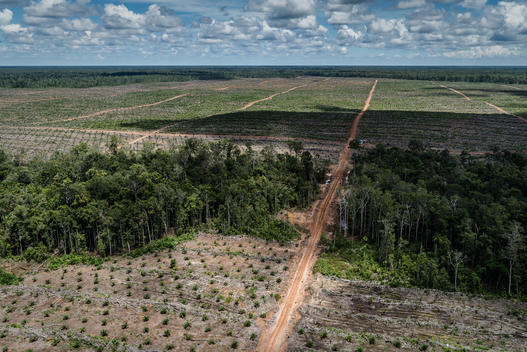
Sadly, this is very much an ongoing issue as New Zealand says as little as possible about Indonesia’s ongoing crime of ‘slow genocide’ in West Papua.  In January it emerged that dozens of children of  the  Asmat tribe had died of measles exacerbated by widespread malnutrition. The Asmat,  famed for their elaborate carving and wood sculptures, struggle to preserve their way of life and diet against the predations of forestry, palm oil plantations and mining. Yet they live, metaphorically speaking,   in the shadow of the Freeport  McMoran gold and copper mine, Indonesia’s largest taxpayer.

The Papuans are calling for their right to self-determination to be respected but for successive New Zealand governments that is an ‘s’ word, never to be uttered for fear of offending Indonesia.   Sixty years yes, for good – hardly.


Maire Leadbeater is one of NZs leading human rights activists. Currently her focus is the human rights abuses in West Papua.

ULMWP Can Pass Muster: Foreign Minister

ULMWP Can Pass Muster: Foreign Minister

http://dailypost.vu/news/ulmwp-can-pass-muster-foreign-minister/article_bf4c30a1-de70-561e-bd14-9f38b1d1e54d.html


In a brief message yesterday, Vanuatu Foreign Minister Ralph Regenvanu responded to an Indonesian spokesman’s claims by Indonesia’s First Secretary for Political Affairs in Australia that West Papua’s ‘game is up’.

Radio New Zealand reported earlier this week that Mr Sade Bimantara said that the “United Liberation Movement for West Papua’s bid to be a full member of the Melanesian Spearhead group has reached a dead end.”

In the interview with RNZI’s Johnny Blades, Mr Bimantara opined “I don’t think they qualify to be a full member of the MSG. They are not a state, and as opposed to Kanaks, they are not on the C24 (UN) Decolonisation Committee, they are not on the list, West Papua. And also the separatist group does not obtain full support from all the West Papuans. And West Papua and Papua is also politically free, so there’s no reason for the MSG to accept them as full members.”

This was disputed yesterday by Vanuatu’s Foreign Minister. In an email exchange with the Daily Post, Mr Regenvanu wrote, “Well, that’s for the MSG Leaders to decide once the application is presented to them.

“Technically, the ULMWP can meet the new criteria just agreed upon.”

The issue, he wrote, would not be decided by the technicalities outlined by Indonesia’s spokesman. “The question is only whether a political compromise can be achieved by the MSG Leaders before the next Summit at which the application for membership will be considered.”

“Vanuatu is working on achieving this political compromise,” he concluded.

Mr Regenvanu has been an outspoken supporter of West Papuan Independence movement. One of his last acts as Lands Minister before he took up the Foreign Affairs portfolio was to facilitate a grant of land to provide the United Liberation Movement for West Papua a permanent headquarters in Port Vila.

A ULMWP statement following the announcement of Mr Regenvanu’s appointment to the portfolio said that it “is certainly a very effective state policy closely linked to the direction of the effective support of… Vanuatu for the West Papuan independence struggle.”


INDONESIA: Environment activists in Tumpang Pitu sentenced to 10-month imprisonment

ASIAN HUMAN RIGHTS COMMISSION – URGENT APPEALS PROGRAMME

Urgent Appeal Case: AHRC-UAU-001-2018

8 February 2018

[RE: AHRC-UAC-101-2017: Mining operations in Tumpang Pitu result in environmental damage and fabricated charges; AHRC-UAU-006-2017: Tumpang Pitu villager in mining operations is the victim of a fabricated case]
———————————————————————
INDONESIA: Environment activists in Tumpang Pitu sentenced to 10-month imprisonment

ISSUES: Environmental damages, fair trial, impunity, remedy, due process of law, Rule of Law, fabricated case, human rights defenders
———————————————————————

Dear Friends,

The Asian Human Rights Commission (AHRC) has received updated information regarding the Banyuwangi district court’s sentence of Mr. Heri Budiawan alias Budi Pego, an environment activist, to 10-months imprisonment. In addition, three other activists as well as community members also have been named as suspects, and an investigation is still going on. Budi Pego along with the local community of Sumberagung village conducted advocacy efforts to stop the mining operation in Tumpang Pitu, Banyuwangi regency, East Java province. They called for the protection of the environment, but were criminally charged with crimes against the State. Budi and the other three activists /community members were falsely accused of putting and circulating the Communism logo (hammer and sickle) on their anti-mining banners.

UPDATED INFORMATION:

On Tuesday, 23 January 2018, the judges of Banyuwangi district court sentenced Mr. Heri Budiawan (also known as Budi Pego) on the charges of spreading Communist ideology. The judges sentenced him to 10-month imprisonment, a much lower sentence than the prosecutor’s petition of seven years.

The case began on 4 March 2017, when Budi Pego and the local community of Sumberagung village, Pesanggrahan sub-district organized a peaceful protest, displaying banners of “reject mining” against the Bumi Suksesindo Company (PT. Bumi Suksesindo/PT BSI) in Tumpang Pitu, Banyuwangi regency. Budi Pego and the local community displayed the banners along the road of Pulau Merah until the Pesanggrahan sub-district office. Suddenly, at 12 p.m., five unknown persons carrying cameras approached the community members, and gave two banners to them. The unknown persons requested the community to display these two banners as well, and then took some pictures of them.

According to some witnesses, it is impossible for Budi Pego or the locals to put the Communist hammer and sickle logo on the banners, as the police officers guarding the protest would immediately have arrested them. This did not occur.

Moreover, the public prosecutor was not able to present the two Communist banners as evidence during the trial process in Banyuwangi district court. The judges have ignored this lack of evidence and merely considered the expert testimony presented by the public prosecutors, while ignoring the expert testimony presented by the public defenders. The expert presented by the public defenders stated that the hammer and sickle in the banner shown in the court through video is not enough and cannot be included as a proper evidence without the two original banners. The expert added that the local community involved in the peaceful anti-mining protest had not said a single word about Communism or Marxism.

Besides Mr. Budi Pego, in total there are three more local environment activists who have been named as suspects: Mr. Cipto Andreas, Mr. Trimanto and Ms. Dwiratnasari. The police charged them using article 107a of Law No 27 of 1999 on the revision of the Criminal Law related to crimes against the State. In Article 107 a, it states that “Anyone who publicly violates the law with oral, written and/or through any media, disseminates or teaches Communism/Marxism-Leninism in any kind of forms is punishable by a maximum of 12 (twelve) years imprisonment.”

ADDITIONAL INFORMATION:

Communism is still used as a tool to restrict or even criminally charge human rights defenders who critique and advocate against the government policy not in favor of human rights and rule of law. Last year the AHRC also noted human rights violations committed by anti communist mobs against human rights groups, for instance forced dissolution and brutal attack against public discussion organized by the Indonesian Legal Aid Foundation, Jakarta Legal Aid and association of victims and family of victims 1965-1966 massacre (AHRC-UAC-130-2017). We also documented and reported harassment and forced dissolution of movie screenings and workshops organized by civil society in some provinces of Indonesia such as West Java, Yogyakarta and East Java province.

SUGGESTED ACTION:

Please write to the authorities listed below. Ask them to ensure that all criminal charges against Mr. Heri Budiawan, known as Budi Pego, an environment activist and a villager of Sumber Agung village, Banyuwangi, East Java Province, must be evaluated by the High Court of East Java province and the Supreme Court under fair trial principles. We also urge the police to stop any criminal charges against three other environment activists and also local community members, considering that under Indonesian law number 32 of 1999 on Environmental Protection, article 66 states, “Everybody struggling for a right to proper and healthy environment may not be charged with criminal or civil offense.” Furthermore, the government must immediately conduct legal audit upon the mining company operated in Tumpang Pitu, and the audit must be transparent, accountable and accessible for public (in particular local community) and media. Local community’s input and information about environmental damages due to mining operation in Tumpang Pitu must also be considered by the government.

The AHRC will write a separate letter to the UN Special Rapporteur on the Independence of Judges and Lawyers and the Independent Expert on the issue of human rights obligations relating to the enjoyment of a safe, clean, healthy and sustainable environment, calling for their intervention into this matter. Continue reading

Jokowi to send critics to monitor condition in Asmat

Jokowi to send critics to monitor condition in Asmat Illustration. Residents are waiting for queue when they seek treatment at a community health center in Bayiwpinam village, Akat District, Asmat District, Papua. (ANTARA/M Agung Rajasa) ()


Situbondo, E Java (ANTARA News) – President Joko Widodo (Jokowi) has expressed his wish to send students to monitor the condition in Asmat, in the eastern province of Papua, after they criticized him over the situation.

“Perhaps, later, I will send the chairmen and members of Student Executive Board (BEM) from the top state University of Indonesia (UI) to Asmat,” he said, after attending an event in Salafiyah Safi`iyah Islamic boarding school in Sukorejo, Situbondo, East Java, on Saturday.

The chief of BEM of UI, Zaadit Taqwa, raised a yellow book to warn Jokowi over the recent spread of measles and malnutrition, which have claimed lives in Asmat, after the president gave a speech at an event to mark the university`s anniversary on Friday.

“Let them check the situation there for themselves and the big problems that we are facing in regions, especially Papua,” Jokowi noted.

He added that he had no problem with the student`s action. “Such a dynamic is common. He is a young activist. It is something common. I think it is good that there is someone to remind us,” he remarked.

BEM UI has demanded three things from the president. The first is related to the malnutrition problem in Papua, the second is connected to the idea of naming active police officers as acting governors, and the third is about the student organization, which is considered to limit students` movement.

Jokowi has sent a team to help measles patients, conduct vaccination programs, and prepare measures to deal with the post-outbreak condition. More than 71 children have died due to the measles outbreak in Asmat.

The president has also offered to relocate the people of Asmat to enable them to have better access to health facilities.

Reported by Desca Lidya Natalia
(H-YH/INE)
EDITED BY INE/a014
(T.SYS/B/KR-BSR/A014) 

We will lose everything : A Report on a Human Rights Fact Finding Mission to West Papua


Pictures from AWPA (SA) inc’s West Papua Public Forum 2nd November 2017


Dr Jim Elmslie  , Academic specialist  on West Papua with Rex Rumakiek , Executive member of the United Liberation Movement for West Papua who spoke at the Forum .

Rex discussed the presentation of a petition signed by 1.8 million West Papuans to the United Nations in September 2017  also spoke about the campaign to get more countries to sign up in support of West Papua and the call to have a democratic vote of Papuans about self determination.


Rosemary McKay , Chairing the Forum


Crowd scene from the Forum


Felix Patrikeef , Associate Professor , University of Adelaide and the Australian Institute of International Affairs , S.A. Branch, talking to the meeting


Peter Arndt, Executive officer , Catholic Justice & Peace Commission of Brisbane

Below is a link  to the report Peter and Sister Susan Connelly prepared about Human Rights abuses in West Papua when they visited recently . It is only 24 pages long but contains very hard hitting and valuable information .

we-will-lose-everything-may-2016(1)

Joint Oral Statement at the 36th regular session of the Human Right Council

Joint Oral Statement at the 36th regular session of the Human Right Council

Item 4: General Debate – human rights situations that require the Council’s attention.


September 19, 2017                                                                                     Delivered by: Andrzej Owca


Mr. President


VIVAT International, Franciscans International, International Coalition for Papua and Westpapua Netzwerk would like to draw the Council’s attention to the human rights situation in West Papua, Indonesia, in particular regarding the cases of extra-judicial killings of the indigenous Papuans.


Information coming out of West Papua, since many years, has been of great concern to us. We have documented numerous cases throughout the past years, in which the behavior of the security force members has intensified the conflict escalations and resulted in the unnecessary use of fire arms.

The majority of cases of extra-judicial kilings in West Papua reveals that the victims are indigenous Papuans, including minors. This shows that the indigenous population is more likely at risk of  becoming  victims of state violence. Often they suffer from racial discriminative prejudices amongst Indonesian security forces in West Papua and being accused of supporting groups of separatists.


We would like to mention a few examples. Cases from Timika, Paniai and Sugapa reaffirm that the promises made at national and international level by state agencies and law enforcement bodies to address such cases and hold perpetrators accountable have not been fulfilled.


The last reported case took place on August 1st this year in Oneibo Village, Deiyai Regency of Papua Province where one indigenous Papuan was allegedly killed by the Indonesian Police Special Forces and ten others were seriously injured by bullets, among them five minors.


Therefore, we recommend that the Government of Indonesia:

  1. Engage on the request for a political dialogue between the conflict parties on the basis of mutual trust with the people of Papua for the long-term settlement of the conflict and violence in West Papua.


  1. Address the cases of extrajudicial killings of indigenous Papuans without delay and uphold transparency in the justice system to keep accountable the perpetrators of such crimes.


  1. Invite the UN Special Rapporteur on the Extrajudicial, summary or arbitrary execution to make a country visit to Indonesia including West Papua.


Thank you, Mr. President


Cosponsored by:

  1. Franciscans International (FI)
  2. International Coalitien for Papua (ICP)
  3. Westpapua Netzwerk (WPN)

Please download the delivered statement here : https://www.propapua.org/nieuws


www.propapua.org

Wrist-Slap for Indonesian Police Killing in Papua

 Wrist-Slap for Indonesian Police Killing in Papua

September 11, 2017 7:00PM EDT


Panel Rejects Criminal Prosecution for Deadly Shooting

Andreas Harsono Indonesia Researcher


“The life of a native Papuan is worth only an apology. This is the law in Indonesia.”

That lament, posted on Facebook by Papuan newspaper editor Victor Mambor, expresses the dismay felt by many Papuans at the official response to the latest police killing of an ethnic Papuan youth.

That’s because the police officers implicated in the August 1 killing of 28-year-old Yulius Pigai won’t face criminal charges. An Indonesian National Police ethics panel inquiryinto the circumstances behind police opening fire on protesters in West Papua’s remote Deiyai region ruled that four officers were guilty of “improper conduct” by deliberately firing on the crowd with live ammunition, but should not face criminal prosecution. Instead, the ethics panel ruled that punishment of the four should be limited to demotions and public apologies.

The original police account of the incident was that officers opened fire using rubber bullets on rock-throwing protesters who “ran amok” and ignored repeated demands to disperse. Police said three other protesters were wounded in the incident, allegedly sparked by the refusal of PT Putra Dewa Paniai construction company workers to transport a local villager to a hospital.

Papuan villagers at the scene said police opened fire on the protesters without warning and that, in addition to killing Pigai, they wounded seven people, including two children. After the incident, Papuan social media was rife with photographs of shell casings found on the scene of the shooting, challenging the police account that they fired only rubber bullets.

The administrative wrist-slap for the officers underscores the chronic lack of accountability for abuses by Indonesian security forces in Papua. The impunity is compounded by the government’s chokehold on the ability of both Indonesian media and foreign correspondents to access and freely report from Papua. Until President Joko “Jokowi” Widodo delivers on his promises to address human rights abuses in Papua, expect apologies, not justice, for future police killings of Papuans.

Historic swim delivers Free West Papua petition across Lake Geneva to the United Nations

Historic swim delivers Free West Papua petition across Lake Geneva to the United Nations

September 3, 2017

On 28th August at 08:30 in the morning, at the far shores of Lake Geneva, 6 swimmers departed across a 69km journey that lasted over 28 hours. With them, they symbolically carried both the West Papuan People’s Petition and the Global Petition in solidarity with the people of West Papua.

These are petitions calling on the United Nations to do what is right. To right the wrongs of past injustices. They call for the restoration of West Papua’s fundamental rights, including the fundamental right to self-determination.

They are petitions people around the world have given their mind, body and soul to. Petitions which speak to us all in our common humanity. They read:

“We call on you to urgently address the human rights situation in West Papua and to review the UN’s involvement in the administration of West Papua that led to its unlawful annexation by Indonesia ‐- and the human rights abuse that continues today. We call upon you to: – appoint a Special Representative to investigate the human rights situation in West Papua; – put West Papua back on the Decolonisation Committee agenda and ensure their right to self‐determination ‐- denied to them in 1969 -‐ is respected by holding an Internationally Supervised Vote (in accordance with UN General Assembly Resolutions 1514 and 1541 (XV)).”

Background

In January 2017, the people of West Papua, in collaboration with 6 swimmers launched the Global Petition for West Papua at the British Parliament in Westminster. This was then followed by the West Papuan People’s Petition, hand signed by thousands upon thousands of people inside West Papua. It was envisaged that the swim team would carry both petitions across Lake Geneva as a means of raising awareness and support for West Papua.

Since then, the petition has made a monumental journey around the world and across Lake Geneva.

Swim for West Papua

As the Swim for West Papua team landed in Geneva on Sunday 27th August, they were given a traditional West Papuan welcome by members of Free West Papua Campaign – Netherlands who came to Geneva to show their support.

After this moving welcome, the swimmers were driven to the far shore of Lake Geneva at Montreaux and were then given a traditional West Papuan send off with a tabura/conch shell played by Free West Papua Campaign – Netherlands Coordinator Oridek Ap, the son of legendary West Papuan musician Arnold Ap who was assassinated by the Indonesian Special Forces in 1984.

The swimmers then departed in a boat flying the West Papuan flag, followed by a dinghy as the first swimmer Abby dived into the water. They got off to a great start amid hot weather and fair winds and kept up a livestream of the journey throughout day and night.

Back in West Papua, thousands of people gathered in the capital city of Port Numbay/Jayapura to watch the swim on a makeshift big screen and cheered on the swimmers!

The swim continued through the night and continued to make good progress. At 23:47 in the night, Swim for West Papua uploaded this photo to show the incredible effort of the team.

“Tom smashed out his first night swim, Carey is now in the water, Joel is up next…”

Arrival of the swimmers

At approximately 12:30, the swimmers, led by team captain Joel Evans arrived at the shores of Lake Geneva, greeted by West Papuan people signing and dancing with flags and drums.

It was a truly emotional moment for everyone as the swimmers were presented with garlands and embraced by the welcoming party.

The West Papuan People’s Petition, in tandem with the Global Petition for West Papua was then displayed at the beach and shared between the swim team and West Papuan Independence Leader Benny Wenda.

Image may contain: 2 people, people standing, sky and outdoor

Benny Wenda gave a moving speech in which he described the truly historic significance of the petition arriving on the shores of Lake Geneva, representing the bones of the West Papuan people and as direct expressions of their voices, hopes and aspirations.

March to UN

The next day on 31st August 2017, the Free West Papua Campaign, joined by the swim team marched the petition to the United Nations in Geneva. It was a powerful march full of signing and chanting as the rain beat heavily down. Oridek Ap proudly described how it was raining because the ancestors of the West Papuan people were crying.

Image may contain: one or more people, people standing and outdoor

Banners were unveiled in front of the United Nations Headquarters, reading “Swim for West Papua petition to the UN for an Internationally Supervised Vote” and “Save the People of West Papua”.

As the rain beat harder, Benny Wenda gave an emotive speech with a suitcase sheltering the petition in his hands. He stated: “Today, we carry the bones. There is 500,000 bones of West Papuans that have been killed by Indonesia over the last 50 years. Now we are carrying this burden. We stand here. We will carry these bones to the United Nations.”

Celebration

That night, the swim team was honoured to a West Papuan feast with more music and dancing. Benny Wenda each presented them with an award and a traditional bilum bag, symbolising their care for the people of West Papua and the people of West Papua’s care for them.

Submission of the petition

The West Papuan People’s Petition was then privately submitted to the United Nations by Benny Wenda along with a physical copy of the Global Petition as it stood on 26th August with 156,933 signatures from 185 countries.

The petition will continue to be run online until mid-September when it will be submitted along with another physical copy of the West Papuan People’s Petition to the United Nations in New York.

Messages of thanks and respect

The Free West Papua Camagn would like to convey it’s deepest and most heartfelt thanks and respct to all those who heped this historic petition and swim to happen. The amount of work that went into the collection of signatures inside West Papua and outside of West Papua was absolutely phenomenal and has officially been non-stop since January and effectively non stop since June 2016 when the idea began.


To everyone who singed the petition, you did so much more than simply add your name to a petition. You gave a voice to the voiceless and helped to shine a light on a people long forgotten suffering a genocide long neglected.
Rest assured, YOUR efforts have made this petition one of the most powerful tools the people of West Papua have to push forwards down the long rod to freedom.

And finally to all the Swim for West Papua team, no amount of words can ever describe the incredible thanks and gratitude from the Free West Papua Campaign and the people of West Papua. It takes true courage and determination to dedicate so much time and effort in such a worthy cause that pushes people’s minds and bodies to the limit. We will never be able to express how much of an honour it was and is to send you off and welcome you all back to the shores of Lake Geneva and back into the Free West Papua Campaign family. From all of us, wa wa wa.


Big thanks to all of you who took action to #BackTheSwim to #LetWestPapuaVote!

Continue reading

Four police officers found guilty over fatal Deiyai shooting ordered to apologise


Four police officers found guilty over fatal Deiyai shooting ordered to apologise


CNN Indonesia – August 31, 2017


Martahan Sohuturon, Jakarta — Four Indonesian police (Polri) officers have been found guilty in relation to a clash that took place in Bomou village, South Tigi district, Deiyai regency, Papua, in early August. Their only punishment however is that they must issue a verbal apology and will be transferred.


Those found guilty are former sectoral Police Chief Inspector Maing Raini and Mobile Brigade (Brimob) platoon commander (Danton) Iptu Aslam Djafar along with two of his subordinates Second Deputy Inspector Esra Sattun and Sergeant Victor Manggaprouw.


Papua regional police public relations chief Senior Commissioner Ahmad Musthofa Kamal said Wednesday that the four offices were sentenced to making a verbal apology by a hearing of the Indonesian Police Code of Ethics Commission (KKEP) and will be demoted and transferred to different posts for one year.


“The result of the ethics hearing was that the four were declared guilty of deplorable [tercela] actions”, said Kamal when sought for confirmation on Thursday August 31.


He said that the Code of Ethics hearing declared Maing guilty of failing to report to his superiors and going to the location of the incident without wearing a uniform.


In addition to this the hearing found that Maing failed to follow the directions of his superior and should have gone to the location of the incident with his officers without bringing Brimob personnel.


Maing was found to have failed to control his officers, abandoned officers conducting negotiations with the community and leaving the location of the incident without paying attention to officers who were still confronting protesters.


According to Kamal, Maing’s actions violated Article 7 Paragraph 1 Subsections b and c and Article 13 Paragraph 1 Subsection e of Police Regulation Number 14/2011 on the Indonesian Police Professional Code of Ethics.


“Indonesian police officers are obliged to maintain an image of solidarity, the credibility, reputation and respect of Polri and are obliged to carry out their duties in a professional manner. Polri officers are prohibited from misusing their powers in carrying out their duties as police”, he said.


Meanwhile the ethics commission found that Iptu Aslam Djafar had deployed Brimob officers as security at the company without permission from his superiors.


Djafar was also found to have failed to comprehend the situation and should have allowed the sectoral police to first resolve the problem and should have followed the instructions of the sectoral police chief as the head of operational control (kodal) at the time.


At the time, said Kamal, the sectoral police chief ordered police to withdraw because conditions were unfavorable. Djafar however only withdrew slowly and as a result the protesters pushed forward approaching and attacking the officers.


He said that Djafar as the platoon commander should not have allowed the protesters to get too close to the police officers.


Meanwhile Kamal said that the ethics commission declared Esra Sattun and Victor Manggaprouw guilty of deciding to use live ammunition without orders from their superiors and directing fire above and below the protesters without due consideration.


“This is what possibly resulted in victims falling, specifically the one that was hit by live rounds”, he said.


Kamal added that the ethics commission found five other Brimob officers not guilty because they carried out their duties as police in accordance with standard operational procedures as stated under Article 15 Paragraph 3 of National Police Regulation 1/2009 on The Use of Force in Police Actions.


The clash in Deiyai, which occurred on August 1, 2017, was triggered by dissatisfaction on the part of local people because a company building a bridge in the Oneibo river area refused to help them.


The residents had asked the company to transport a person in a critical condition to hospital after they had drowned in the river but the company refused to provide a vehicle.


Local people eventually obtained a vehicle from elsewhere and took the person to hospital but they were unable to be saved. The angry residents then returned to the encampment at the bridge construction and vandalized a work post.


Brimob and Tigi Sectoral Police officer immodestly went to location. The crowed went on a rampage and police fired shots. One person was shot dead and eight others wounded (wis)


[Translated by James Balowski for the Indoleft News Service. The original title of the article was “Penembakan di Deiyai, Empat Polisi Divonis Minta Maaf”.]


Source: https://www.cnnindonesia.com/nasional/20170831162855-12-238698/penembakan-di-deiyai-empat-polisi-divonis-minta-maaf/


—————————————————————

Serious violations of human rights in Papua should be investigated

 Serious violations of human rights in Papua should be investigated

http://www.humanrights.asia/news/ahrc-news/AHRC-STM-099-2017


August 17, 2017

The Asian Human Rights Commission (AHRC) urges the Indonesian Authorities to ensure that cases of human rights violations that occurred in Papua must be investigated properly, under fair trial principles and the Rule of Law. In the last two months, the AHRC has documented and reported some three cases of serious human rights violations, as follows: #1. Ruthless shooting and violence committed by the Paniai Police Mobile Brigade in South Tigi District, Deiyai Regency, resulting in the death of one indigenous Papuan; #2. Cruel assault of 15-year-old Albert Nawipa, an indigenous Papuan teenager; #3. The torture of Mr. Niko Hisage, an indigenous Papuan. He was assaulted by Army personnel from the sub-district military command of Wamena city.

In addition, the AHRC very recently documented and reported the case of arbitrary arrest and detention of Mr. Yanto Waine, a member of the National Committee for West Papua (KNPB). He was illegally detained in the Nabire Police Station (Polres Nabire) after distributing statements on the street. Besides this case, the AHRC also notes the forced dissolution and arbitrary arrest of 29 Papuan student activists. They were brought to the Yogyakarta Police Station after conducting a peaceful protest. They were denouncing the New York agreement concerning the legitimacy of the 1969 Referendum in Papua. It resulted in Papua’s becoming part of the Republic of Indonesia until the present day. There were 32 student activists in Jakarta and 46 student activists in Semarang who were also arrested for holding peaceful protests. Despite the fact that they have been released without criminal charges laid on them, the illegal arrest and forced dissolution had the following effect. It caused trauma by breaching the Rule of Law and the Principles of Democracy. Indonesia, in its Constitution, has recognized democracy and the freedom of opinion.

The AHRC has learned about and monitored the criminal justice system in Indonesia, in this case, Papua. To put it simply, it does not really function. Human right cases and even alleged gross violations of human rights such as the Paniai case remain unaddressed. On the contrary, the Government under President Joko Widodo is mainly concerned about infrastructure and economic development in the country. Local indigenous Papuans, on many occasions, have questioned this limited development focus. Does this development increase the living standard of the ordinary Papuan, or does it foster the expansion of multi-national corporations and mining exploitation in Papua?

So far, the Government does not have a strong policy of human rights protection in Papua. It tends to simplify problems. An example would be the statement by Mr.Wiranto the Coordinating Minister of Politics, Law and Security (Menkopolhukam). After a vicious shooting by the Police in Deiyai Regency, and without proper investigation, he stated through the Media, that the case was not one of a violation of human rights. Of course, this kind of utterance undermines the legal standing of victims seeking justice and redress. In the Papua, Deiyai Regency shooting incident, the Police used lethal force. They attacked indigenous Papuans, resulting in the death of one man and injuries to at least ten other indigenous Papuans.

Massive and frequent human rights violations in Papua are caused by the security approach used. The Government had been reluctant to evaluate and audit the present Security Forces in Papua. The AHRC also learned that since Papua had been divided into two Provinces namely West Papua and Papua, the number of security forces increased due to the development of new military offices and facilities. Media and public access to Papua is still difficult, especially in remote areas. President Widodo had declared that the international media were allowed to enter Papua but, in fact it is very difficult to obtain the required permit. This matter had become a serious concern of the World Press Freedom Day Conference, held in Indonesia recently. Many journalists who attended the event questioned the Police concerning press freedom in Papua. Lack of journalistic access to Papua is worsening the human rights situation in Papua.

Therefore, the AHRC calls on the Government and Law Enforcement Agencies to seriously and promptly investigate the cases of human rights violations which took place in Papua. The Government should not hide behind the focus of infrastructure and economic development. Infrastructure and economic development will be nothing without law enforcement and justice. It is clear that Papua is waiting for justice, waiting for a serious Indonesian Government to take on the pending human rights cases guaranteeing human rights protection for Indigenous Papuans.

On August 17, 2017 Indonesia is celebrating 72 years of independence from Dutch colonialism. The Government should reflect that 72 years is more than enough to ensure that the State / the Government is present at ground level to protect its citizens, including indigenous Papuans. In order to protect human rights, law enforcement must be carried out, legal certainty should be presented, impunity must go, and no further recurrences of the same crimes.

Document Type :

Statement

Document ID :

AHRC-STM-099-2017

Countries :

Indonesia

Campaigns :

End Violence in West Papua

Issues :

Administration of justiceArbitrary arrest and detention,DemocracyEnforced disappearances and abductions,Freedom of expressionHuman rights defendersInhuman and degrading treatmentInstitutional reformJudicial system,Prosecution systemRight to fair trialRight to lifeRule of law