Unknown's avatar

About AWPA Adelaide administrator

AWPA Adelaide site manager

Out of touch: Why an increase in politicians’ allowances triggered mass protests

On Monday 25 August, protestors took to the streets outside the House of Representatives (DPR) building in Jakarta under the banner of ‘dissolve the DPR’ (bubarkan DPR). These demonstrations were sparked by anger following an announcement by Deputy House Speaker Adies Kadir that national lawmakers would receive a new monthly housing allowance of Rp50million (approximately AUD4,700). These protests have continued through the week.

Turning violent with protestor throwing Molotov Cocktails, police have responded with tear gas, water cannons and tactical vehicles. That an online taxi motorcycle driver in close proximity to the protests was brutally killed by being run over by a police tactical vehicle has only fuelled public discontent.

The rationale for the new allowance was that legislators in the current term [2024-2029] were not receiving government housing, unlike in previous years, and were therefore entitled to compensation. This was further justified by the fact that many legislators are not from Jakarta and have to pay for accommodation when they are in town. The previously existing DPR housing complex where they received free accommodation was decommissioned in 2024 due to quality complaints from residents.

The allowance announcement led to outrage for many reasons. First, the amount of Rp50 million was seen as outrageously high—much more than what ‘ordinary Indonesians’ earn—and a poor use of taxpayers’ money. This was further exacerbated by a viral moment in which Kadir gave a nonsensical calculation for how the Rp50million amount had been determined, defended it as being insufficient to find suitable accommodation in the vicinity of the legislative complex. He claimed that around Rp78million would be required every month and so legislators would still be out-of-pocket.

While a charitable interpretation would be that Kadir misspoke, the fact that his calculations were wildly incorrect led to ridicule and undermined the rationale of the allowance. Responding to pressure, Deputy House Speaker Sufmi Dasco Ahmad clarified on 26 August 2025 that the allowance would only be applicable for one year, from October 2024-October 2025, and that it could only to be used for housing, dismissing claims that it was a salary increase. However, this explanation has done little to address the underlying concerns that prompted public anger in the first place.

So, what do these protests say about current attitudes towards politicians, their work and their lifestyles in Indonesia? Following on from the recent One Piece flag phenomenon, the critiques that have unfolded reflect much deeper issues regarding Indonesians’ perceptions of politicians. Not only are they seen as out of touch with the concerns of everyday people but also the decisions they make about government spending are made without transparency and accountability.

The housing allowance: is it justified?

One reason the new Rp50 million (AUD4,700) monthly housing allowance was such a shock to Indonesians is that it stands in stark contrast to the minimum wage rate (Upah Minimum Regional, UMR) for Jakarta, which currently sits at Rp5,396,791 (approximately AUD500) per month. As the minimum wage is government-sanctioned, the fact that another government body came out so publicly with wildly different calculations for housing, let alone other costs associated with surviving in Jakarta, hit a raw nerve.

Online media forum Kok Bisa compared the buying power of politicians and ordinary citizens. It found that on a politician’s wage it would take 2 years and 1 month to afford a house, whereas it would take 38 years and 7 months for someone on minimum wage to do the same. Furthermore, politicians do not personally pay tax on their earnings, as the state covers it for them.

There have also been calls for more transparency on how the DPR decided on the allowance amount in the first place. Defending the decision, House Speaker Puan Maharani said that the determination was thoroughly evaluated and took into account ‘the conditions and prices in Jakarta.’ A cursory scan of property websites in Indonesia such as rumah123 and lamudi.co.id, list a wide range of accommodation available for rent around the Senayan area which surrounds the legislative complex. Yes, the area is central and highly desirable, but fully-furnished 2-bedroom apartments can still be found for under Rp10 million per month. Considerably larger houses at the low-end of the price spectrum can be found for Rp20 million per month.

Of course, there are other neighbourhoods close by that offer comparable options at significantly lower prices. The previous accommodation for DPR members was in Kalibata, a neighbourhood around 10 kilometres away from the DPR offices. This does beg the question of how legislators landed on the allowance sum of Rp50million per month in the first place, and whether politicians’ entitlements are too high.

Indonesia Corruption Watch (ICW) and the Indonesian Institute have framed the debate in terms of what politicians already earn, highlighting that their compensation is already generous and their accommodation should not be further subsidised with public funds. In the aftermath of the announcement, several politicians have made public their earnings. Puan Maharani and Dasco Ahmad have both stated that their take home pay is around Rp100 million per month (AUD9,381), including base wages, allowances and higher duty benefits.

But the Indonesian Forum for Budget Transparency (Forum Indonesia untuk Transparansi Anggaran (Fitra) has claimed it to be closer to Rp230million (AUD21,578). For reference, the Central Statistics Agency (Badan Pusat Statistik, BPS), put the average monthly salary for managers in Jakarta at Rp14,329,826 (AUD1,341) (August 2024).

Other discourses that have emerged include comparing Indonesian politicians salaries to other countries around the world, including other ASEAN countries and many European states like Sweden. In a more local example, DPR salaries have been contrasted with those of teachers (particularly non-formal teachers or guru honorer), who receive between Rp1-2million (AUD93,81-187,64) per month—although there are reports of them receiving much less, particularly in rural areas.

Politicians out of touch

With politicians’ salaries way above average pay rates in Jakarta, politicians have been accused of being unworthy of such high salaries and out of touch with the concerns of everyday Indonesians.

Netizens have flocked to social media to complain, including by posting comedic videos about how much they survive on in Jakarta. Some link their complaints to recent viral videos of politicians dancing (berjoget) and singing during legislative sessions, while another netizen compiled images of politicians asleep during debates. The underlying message is clear—what are you actually doing to earn your keep?

The public response of some politicians has added further fuel to the fire. Accused of being out of touch, KBR.ID have called the situation an ‘empathy test‘ for politicians, which several seem to have failed. Project Multatuli compiled a list of quotes which exemplified the haughty retorts of politicians.

In some choice examples, PDI-P member Deddy Sitorus was quoted as saying that comparing legislators to becak drivers or workers is a ‘logical fallacy’, while Nasdem member Ahmad Sitori stated that people calling for the dissolution of the DPR ‘are the dumbest people in the world.’ Nasdem member Nafa Urbach refuted criticism of the housing allowance, arguing that due to traffic her commute to the DPR from outer suburb Bintaro was ‘’extreme” (luar biasa) so she needed the allowance to live closer to work. Kompas, in a sly lampooning of this argument, calculated that by taking public transportation and walking she could be at work within 35 minutes.

Online discourse criticising the decision has drawn much from ideas about the appropriate use of public funds and that, as taxpayers, Indonesians should have a say in how politicians are compensated. Much has been made about Indonesia’s economic situation which led to drastic cross-sectoral funding cuts earlier in 2025, including to the education and health budgets, and regional fund transfers. In an economic context where the government has been forced to take drastic measures and promote ‘efficiency’ within the national budget, a high additional allowance for lawmakers seems like a poor use of already limited funds.

Attempts to silence criticism have further angered the public. Reminiscent of the political debate surrounding flying the One Piece flag on Indonesia’s national day, the Deputy Minister for Communication and Digital, Angga Raka Prabowo, called on social media platforms TikTok and Meta to assist with deplatforming ‘provocative content.’ In their attempts to mediate online channels, places where citizens can post their political complaints and critique government policies, politicians have only intensified the perception they believe that they should be above criticism.

Questioning the position of politicians

The protests and commentary on the housing allowance, both online and offline, reflect a revived spotlight on debate about the role of politicians and public expectations of them.

While the announcement of the housing allowance provided an impetus for outrage, the issues subsequently discussed are reflective of a much deeper dissatisfaction with the way the government is run. These August 2025 protests are part of a more recent history of protests stemming from the Dark Indonesia (Indonesia Gelap) movement, which aimed to highlight a plethora political complaints.

One of the fundamental reasons that the housing allowance has triggered anger is related to public perceptions of politicians and their role as representatives of citizens’ interests. Arguments that since politicians’ salaries are funded by public money, they should be beholden to the public fuels these complaints.

Indonesians are used to politicians falling short of expectations, evidenced by the high number of politicians embroiled in the corruption scandals flooding national news. But the housing allowance was particularly jarring because people could directly compare it to what they earn themselves.

This has opened the floodgates for a more intense focus on politicians’ salaries and, more importantly, whether they are worthy of them. Here, the argument is that if politicians do not understand what it is like to live as an ordinary person in Indonesia, how can they possibly represent ordinary people’s interests?

These complaints are not new. They reflect a long-existing divide between political elites and everyone else within Indonesian society. But with increasing social media commentary and debate, Indonesians are better able to connect across grievances and mobilise, both online and offline. The call for accountability and increasingly vocal demands that politicians answer to the public are reflective of an rising sense of dissatisfaction with the status quo, which, if not resolved, might lead to an ever-rising number of protests in the future.Analysis, Policies, Politics
West Papuan journalists call for Pacific solidarity  

August 20, 2025 _  Ema Ganivatu

IN exile but unbroken, three West Papuan journalists are in Fiji calling on the Pacific to stand with them against Indonesia’s ongoing media blackout and human rights abuses.

Their visit is part of a broader effort to forge solidarity with Pacific neighbours, through media partnerships, university collaborations, and joint advocacy for human rights and self-determination.

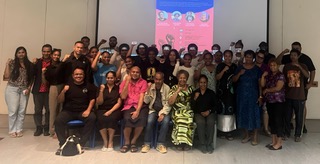
Speaking after the screening of their latest documentary film “Pepera 1969: A Democratic Integration” at the University of the South Pacific, the team including Victor Mambor, co-founder of Jubi Media Papua, Yuliana Lantipo, senior journalist and editor, and Dandhy Laksono, Jakarta-based investigative filmmaker shared their personal experiences of reporting from inside one of the most heavily militarised and censored regions in the Pacific.

“We are here to build bridges with our brothers and sisters in the Pacific,” said Mambor.

“There is no hope from the Asian side,” added Laksono. “That’s why we are here, to reach out to the Pacific. We need new audiences, new support, and new understanding.”

The team urged Pacific people to push for greater awareness of the West Papuan situation and to challenge the dominant narratives propagated by the Indonesian government.

“Don’t just listen to what Jakarta says,” said Mambor. “Speak to Papuans. Listen to our stories. Raise our voices.”

“We want to bring West Papua back to the Pacific — not just geographically, but politically, culturally, and emotionally.”

Mambor described the continued targeting of Jubi Media staff, including attacks on their office and vehicles, as part of an escalating crackdown under Indonesia’s new President.

“Two of our operational cars were destroyed. Our journalists are constantly intimidated. Yet we continue to report the truth.”

The situation for press freedom in West Papua is dire. Foreign journalists are barred entry, internet access is often restricted during periods of unrest, and local reporters — especially Indigenous one’s risk arrest or violence for covering politically sensitive stories.

“If you report on deforestation or culture, maybe it’s allowed. But if you report on human rights or the military, there is no tolerance,” said Laksono.

Laksono, who is not Papuan himself but has long worked to expose injustices in the region, added:
“Much of Indonesia has been indoctrinated through school textbooks and media into believing a false history. Our film tries to change that by offering the truth, especially about the so-called Act of Free Choicein 1969, which was neither free nor a genuine act of self-determination.”

Journalist Yuliana Lantipo spoke of the daily trauma faced by communities caught between the Indonesian military and the West Papua National Liberation Army.

“Every day we receive reports: killings, displacement, families fleeing villages, children out of school, no access to health care. Women and children are the most affected,” she said.

As one of the few Indigenous female journalists reporting from conflict zones, Lantipo also highlighted how her identity both enables and complicates her work.

“Sometimes, as a woman, I can access conflict areas more easily, especially when traveling with elders or family members. But Indigenous male journalists, especially those with dreadlocks or visible Papuan identity, are often turned away or arrested.”

Despite the personal risks, Lantipo and her colleagues remain committed to their role.

“People need us to speak the truth. That is our responsibility. That is our profession.”

Jubi Media Papua

Founded in 2001 by West Papuan civil society, Jubi Media has become one of the most trusted and independent sources of information from the territory. With more than 30 reporters and 50 staff, the media house has built a reputation for fearless journalism.

Jubi means ‘to speak the truth’,” said Mambor. “We created a special section just to tell Pacific stories — to remind our people that we are not alone, and to reconnect West Papua with our Pacific identity.”

Who is clearing Indonesia’s forests — and why?

  • Most tropical countries are experiencing record-high deforestation rates, but in Indonesia, forest loss is slowing.
  • But nearly half of the forest cleared in 2024 can’t be linked to an identifiable driver, raising red flags about speculative land clearing, regulatory blind spots and delayed environmental harm.
  • Land is often cleared but not immediately used; research shows that nearly half of deforested lands in Indonesia remain idle for more than five years.
  • Experts say these trends signal regulatory failure, as the government issues permits widely and concession holders face few consequences for clearing forest and abandoning the land, creating a cycle of destruction without accountability.

JAKARTA — While most tropical countries experienced record-high deforestation rates in 2024, Indonesia’s forest loss is slowing, bucking a global trend.

But beneath the headline figures lies a troubling mystery: Nearly half of the forest cleared last year can’t be linked to any identifiable driver, raising red flags about speculative land clearing, regulatory blind spots and delayed environmental harm.

This uncertainty complicates supply chain accountability under laws like the EU Deforestation Regulation, and raises questions about who’s really clearing Indonesia’s forests — and why.

In 2024, Indonesia lost 242,000 hectares (598,000 acres) of primary forest, down 14% from 279,000 hectares (689,000 acres) in 2023, according to an analysis by TheTreeMap, a technology consultancy behind the Nusantara Atlas forest monitoring platform.

Annual Deforestation in Indonesia (2001-2024). Image courtesy of TheTreeMap.

TheTreeMap used satellite and time-series imagery to attribute deforestation to known drivers. They are logging (18%), industrial oil palm (13%), pulpwood/timber plantations (6%), mining (5%), food estate projects (3%) and fires (2.3%).

Together, these drivers explain just 47.3% of Indonesia’s 2024 primary forest loss — leaving the majority unattributed, which experts say reflects both data limitations and deeper governance failures.

What explains this gap in attribution? A likely reason is that land is cleared but not immediately used.

A study published in 2024 in the journal Proceedings of the National Academy of Sciences (PNAS) found that nearly half of all deforested land in Indonesia remained idle for at least five years — meaning it wasn’t converted to plantations, agriculture or any observable land use.

These areas are often eventually converted to agriculture — usually oil palm — but the long delay obscures who cleared the land and why, TheTreeMap noted.

There are many examples of these across Indonesia, said Timer Manurung, the director of the environmental NGO Auriga Nusantara.

In Riau and Bengkulu provinces on the island of Sumatra, for example, natural forests in some selective logging concessions have been cleared, and yet the permit owners seem to have abandoned the concessions.

As a result, oil palm investors moved in years later and began planting, Timer said.

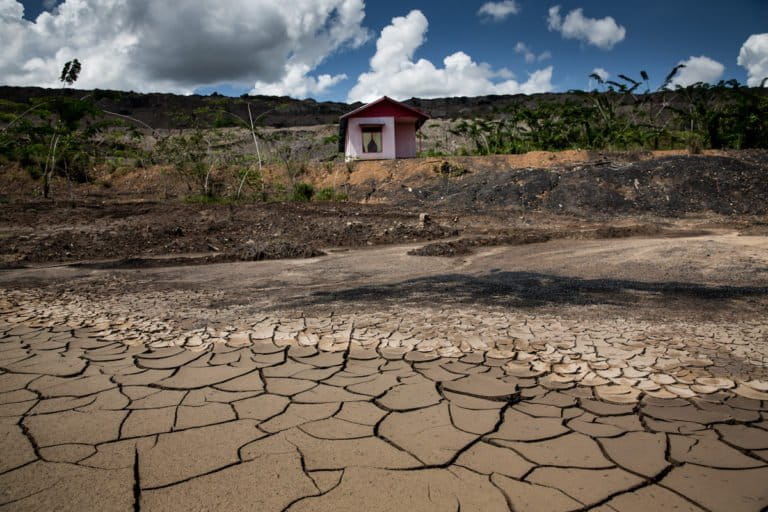
A lone house is left standing at an abandoned village after a nearby mining concession degrades the surrounding environment. Image by Kemal Jufri/Greenpeace.

The deeper roots of idle land

While nearly half of Indonesia’s primary forest loss in 2024 remains unexplained, experts say this absence of clear attribution is not simply a data gap — it may be a warning sign of deeper governance issues.

One leading explanation is speculative clearing, when companies clear forests without immediately converting the land to plantations or infrastructure. According to Arief Wijaya, managing director of World Resources Institute (WRI) Indonesia, this pattern has persisted since the 1990s, when companies obtained forestry or plantation permits, extracted valuable timber and left the land idle. In many cases, this was deliberate: either a lack of capital to proceed or part of a long-term land banking strategy.

These behaviors point to regulatory failure, as the issue of abandoned land is closely tied to the “reckless issuance of permits” by the government, said Boy Jerry Even Sembiring, the director of the Riau chapter of the country’s largest green group, Walhi.

Concession holders face few consequences for clearing forest and abandoning the land, creating a cycle of destruction without accountability. The result is a patchwork of degraded forestland, legal ambiguity and lost oversight — fertile ground for future land conflict, encroachment, opportunistic development and fires.

In an effort to address this, Indonesia’s Ministry of Forestry earlier this year revoked 18 inactive forestry concessions covering more than 526,000 hectares (1.3 million acres). Minister Raja Juli Antoni framed the move as part of a broader push to reclaim unproductive concessions and reassert state control over idle forestland.

But Arief warned that the recent revocations barely scratch the surface.

“If we look at the broader picture, this land speculation has been happening for over 30 years,” he told Mongabay.

Without a systematic approach to identify, map and resolve the status of idle lands, the problem will persist — quietly fueling environmental degradation, sparking community conflict and undermining efforts to clean up supply chains, Arief said.

Once land is cleared and left idle, communities often move in and begin farming, sometimes triggering future land disputes, especially when the land is later contested by concession holders or targeted for development, he added.

Idle land is also prone to fires, activists say.

Boy of Walhi Riau said abandoned lands consistently burn during the dry season.

“After being cleared, they [idle lands] often burn, yet there’s no proper accountability or follow-up review process for these incidents,” he said.

Burning within Tesso Nilo National Park.
Between 2001 and 2021, Indonesia lost more than 28 million hectares (69 million acres) of forest. However, since peaking in 2016, forest loss in Indonesia has continued to decline. Image by Rhett A. Butler/Mongabay.

Turning idle land into opportunity

Therefore, Arief called on the government to come up with a targeted and comprehensive strategy.

The first order of action is to map where the idle lands are and identify their owners and jurisdictions. If during the mapping it turns out that communities have already controlled the land and conflicts have emerged, then the government needs to resolve the conflicts first, Arief said.

After that, the government and other stakeholders should develop a plan for how to use these lands — whether through rehabilitation, community use or reallocation, he said.

One option is to mandate the rehabilitation of the idle lands, if they are located within concessions.

Yuliusman, the director of Walhi South Sumatra, said concession owners need to be held responsible for the land they control, including when these lands are cleared and burned.

That’s why the government needs to make land ownership data available to the public so landowners can be held accountable, he said.

Another option is to grant communities rights to manage these idle lands through the social forestry scheme.

The program, initiated by President Prabowo Subianto’s predecessor, former President Joko Widodo, is one of the largest socioenvironmental experiments of its kind, aiming to reallocate 12.7 million hectares (31.4 million acres) of state forest to local communities and give them the legal standing to manage their forests.

By granting social forestry permits to communities with a clear business plan, the government could empower small farmers while bolstering food security at the same time, Arief said.

This aligns with the platform of Prabowo, who has prioritized achieving both food and energy self-sufficiency as cornerstones of his administration, he added.

Since his election campaign in late 2023 and early 2024, Prabowo has emphasized the need for Indonesia to achieve sovereignty in these critical sectors to bolster economic resilience and national security.

In December 2024, Minister Raja Juli announced the government had identified 20 million hectares (50 million acres) of forest area for potential conversion into “food and energy estates.”

The announcement raised concerns over new deforestation, especially if the areas include intact forests. But Arief said the plan could be positive — if those hectares are truly idle lands that have already been cleared and remain unproductive.

“If we already know there are 20 million hectares of low-productivity land, and we have a food security program, then we can map which crops are suitable — maybe some areas for rice paddies, others for water conservation, others for energy,” he said. “That’s where we need a road map.”

Recognizing the rights of communities to manage their lands could also help prevent fires, according to Rod Taylor, the global director of WRI’s forests program.

“I think some of the success in Indonesia [in mitigating fires] can be put down to really good collaboration between companies and communities, to not only prepare for big fires and a lot of enforcement of no burning laws, but also really fast response mechanism to spot and take action against fires before they can spread too far,” he said.

Having a road map that puts community rights at the forefront is also critical to resolving lingering land conflicts, said Timer of Auriga Nusantara.

It’s also necessary to address Indonesia’s deep-rooted structural injustice in land ownership. Today, 68% of the country’s land is controlled by just 1% of the population, as the state prioritizes concessions to large corporations over community land rights.

These large-scale infrastructure and resource extraction projects have pushed marginalized groups such as farmers, Indigenous communities and fisherfolk off of their lands.

Between 2015 and 2024, more than 3,200 agrarian conflicts broke out across 7.4 million hectares of land (18.3 million acres) — affecting 1.8 million households.

Timer warned against using the existence of idle land as a pretext to expand industrial agriculture, which he said would only deepen Indonesia’s land conflicts.

“We must avoid justifying the planting of monoculture commodities on deforested land in the name of ‘what’s already happened,’” he said. “If these areas must be converted, then they should be turned into social forestry zones — and owned by local communities, not corporations.”

Citation:

Parker, D., Tosiani, A., Yazid, M., Sari, I. L., Kartika, T., Kustiyo, … Hansen, M. C. (2024). Land in limbo: Nearly one third of Indonesia’s cleared old-growth forests left idle. Proceedings of the National Academy of Sciences, 121(28). doi:10.1073/pnas.2318029121

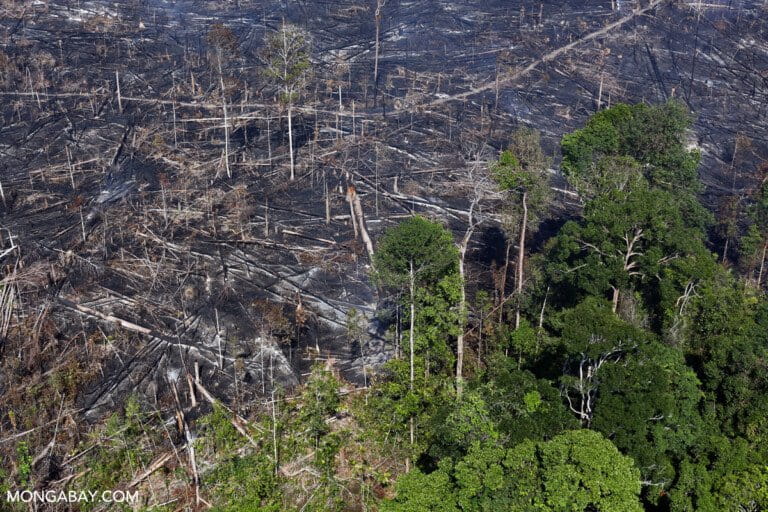
Banner image: Peatlands destruction in Riau, 2014. While Indonesia has in the past been a major carbon emitter due to land-use change, deforestation, forest fires and peatland destruction, the recent decline in deforestation is seen as a positive sign. Image by Rhett A. Butler/Mongabay.

The World’s Largest Deforestation Project

Douglas Gerrard

Share on BlueskyShare on FacebookEmailPrint

In the West Papuan regency of Merauke, close to the border with Papua New Guinea, Indonesia is rapidly clearing land in the world’s largest ever deforestation project: three million hectares for sugarcane and rice production. Within three years, Indonesia plans to convert an expanse of forest roughly the size of Belgium into profitable monoculture. The ambition and destructiveness of the development distinguish it from previous mining or agribusiness initiatives in West Papua, which has been under Indonesian occupation since the 1960s. 

At a ground-breaking ceremony in June 2024, Indonesia’s then president, Joko Widodo, described Merauke as Indonesia’s future ‘food barn’. He also touted the potential of converting sugarcane into bioethanol fuel. (On the Raja Ampat islands meanwhile, Papuan activists are fighting plans to exploit nickel reserves for electric vehicle batteries.)

Since formalising its control of West Papua in a fraudulent 1969 referendum, Indonesia has carried out genocidal military assaults – up to a quarter of West Papuans have been killed under occupation – and ‘transmigration’ settlement programmes that have reduced the Indigenous population to a minority. 

In the nine months since he took office, Indonesia’s new president, Prabowo Subianto, has both restarted the transmigration programme and accelarated deforestation in West Papua. Widodo designated Merauke a ‘National Strategic Project’ (PSN), giving the state eminent domain powers to expel civilians. Fifty thousand Indigenous Papuans face displacement over the project’s lifespan; already, people are finding vast tracts of their customary land have been closed to them, with wooden stakes signalling the expropriation by the Indonesian military.

The human costs of the PSN, while severe, are eclipsed by its possible environmental consequences. The destruction of Merauke is set to release over 780 million additional tons of CO2 into the atmosphere, more than doubling Indonesia’s yearly emissions and leading to irreversible ecosystem collapse in one of the world’s most biodiverse regions. Officials have pressed on with the development while trying to conceal its impact. The energy minister, Bahlil Lahadalia, in charge of parcelling out land to developers, has claimed there is ‘no forest in the middle of Merauke … only eucalyptus, swamps and savannahs’. But though the sago and paperbark mangroves that cover much of the Merauke landscape may appear sparse from above, they store up to 381 tons of carbon per hectare – a higher concentration than the Amazon rainforest. 

The PSN is not Indonesia’s first attempt to convert Merauke into profitable farmland. In the 2010s, huge swathes of the rainforest were razed to make way for a palm oil mega-project, the Merauke Integrated Food and Energy Estate (MIFEE). It has been described by one researcher as effecting an ‘ecologically-induced genocide’ of the Marind tribe, whose gardens and hunting grounds also extend into the territory now threatened by the PSN. As their forest recedes, the Marind are forced to rely on remittances from the corporations that have seized their land. Rice and instant noodles are replacing traditional sago cultivation. 

In her book In the Shadow of the Palms, Sophie Chao describes the warping effects that MIFEE has had on both the environment and the Marind worldview. Before palm oil arrived, the forest provided a rich network of relationships between people, plants and animals. Under the monocrop regime, everything is ‘abu-abu’ – grey, uncertain. In a new documentaryabout Merauke, a Yei tribesman describes the transformation of his land in similarly alienated terms: ‘Before, when I went there [to the forest], I could catch deer, pigs, fish … Now it’s like I’m half dead.’

MIFEE was intended not only to boost Indonesia’s food security, but also to make it a net exporter of rice and palm oil – to ‘feed Indonesia, then the world’. The profit motive is harder to identify in the Merauke PSN. Its advocates have instead emphasised national self-sufficiency, partly in response to the precarity of global supply chains exposed by the Covid pandemic. Even a staunch rightwinger like Prabowo can sound like an anti-colonial nationalist when discussing the project: ‘How can a country be independent if it cannot feed its people?’ he asked in 2023, when he was defence minister. 

During Indonesia’s three decades of dictatorship under Suharto (Prabowo’s father-in-law), more than a third of its national revenue came from West Papua, much of it from the world’s largest gold mine, which was operated until 2017 by the US company Freeport McMoran. But while the Freeport mine primarily enriched foreign and domestic elites, the Merauke PSN is designed to insulate ordinary Indonesians from food and energy shocks – caused by a climate crisis that the PSN will drastically worsen. Both ventures aimed to secure the future of the regime, though in different ways. West Papua has gone from being Indonesia’s gold mine to its larder.

Where private interests are involved in the PSN, the principal beneficiaries are not foreign corporations but politically connected Indonesian entrepreneurs. Co-ordinating the project is the palm oil magnate Andi Syamsuddin Arsyad, also known as Haji Isam (or the ‘new poster boy of Indonesia’s oligarchy’). Isam owns the Jhonlin Group, which has bought two thousand excavators from a Chinese company to begin the deforestation. His cousin, Amran Sulaiman, is the agriculture minister. 

The military role in the development of the PSN goes far beyond their normal land-grabbing and security remit. Following a large recruitment drive in Java, more than three thousand additional troops have been deployed to Merauke, where they are directly engaged in felling and crop cultivation. Instagram posts show fresh-faced soldiers playing at farmers, ineptly watering crops or operating Isam’s excavators. 

Sulaiman has insisted that ‘the military support is there because of a lack of manpower’ – but while most of the soldiers deployed to Merauke may be new recruits, photographs have also surfaced of some sporting the insignia of Yonif Raiders, an elite combat unit notorious among West Papuans for their brutality. In August 2022, a troop of Raiders murdered four Papuan villagers and dumped their dismembered bodies in a local river. Such atrocities are commonplace in the West Papuan highlands, where the armed resistance movement is strongest and international scrutiny all but non-existent. 

Merauke is a lowlands region, which may be one reason the PSN hasn’t yet been met with violence from its opponents. Nonetheless, resistance has been immediate and widespread: there have been mass protests throughout West Papua, while a coalition of NGOs and Indigenous groups has drawn the UN’s attention to the project. A UN fact-finding mission has long been a demand of the United Liberation Movement for West Papua (ULMWP), a proto-governmental organisation uniting the three most significant independence factions, operating under the stewardship of the exiled leader Benny Wenda (I have worked with them). 

While the forces arrayed against the ULMWP are forbidding – not least a decades-long ban on foreign media that has kept West Papua from international attention – the climate crisis gives their liberation struggle a global dimension. The New Guinea rainforest is the world’s third largest, after the Amazon and the Congo. Uniquely, tribal struggles for land rights in West Papua form part of a wider revolutionary movement that seeks to replace military-corporate domination with Indigenous sovereignty and a ‘green state’. Wenda has urged environmental activists to ‘accept climate catastrophe or fight for a free West Papua’. Merauke will determine their choice. 

West Papua political representatives put on notice following arrests 

Andrew Mathieson – August 8, 2025 National indigenous times

Indonesian forces in West Papua have arrested 42 Papuan liberation activists, including a prominent 74-year-old tribal chief, during an independence separatist meeting.

Police detained all of the activists, who spent one night in jail before they were placed under house arrest for the next eight months, to curb the opportunities of further assembly together.

Tribal chief John Wenggi was arrested at his Waropen residence in the Papua province of Indonesia during the political meeting.

Wenggi was reportedly later beaten in custody, according to West Papua sources.

He was returned to his own residence last week for house arrest and is said to currently be on an intravenous (IV) drip from his injuries sustained in custody.

United Liberation Movement for West Papua leader and chairman, Benny Wenda, denounced the arrests on Wednesday, specifically taking aim at the alleged targeted beating of Mr Wenggi.

The arrests follows ongoing reports of violent clashes between the Indonesian military and West Papua civilians.

“On behalf of the people of West Papua (independence movement), I condemn the arrest of the 42 United Liberation Movement for West Papua representatives last week by the Indonesian police,” Mr Wenda said.

“Indonesia has proven once again that fundamental human rights do not exist in West Papua.

“What possible justification is there for this vicious repression?

“Under international law, the United Liberation Movement for West Papua has the right to assembly and to peacefully advocate for democracy in our own land.

“This was a private political meeting held in the home of a widely-respected West Papuan Elder.

“I call on international non-government organisations and solidarity groups to pressure your governments to condemn these arrests and to call for the release of all remaining Papuan political prisoners.”

Indonesia’s latest crackdown on the West Papuan political movement is seen as a further response to the United Liberation Movement for West Papua’s Legislative Council’s first plenary session – a deliberative assembly to mark the region’s unrecognised provisional government – a month earlier in July.

Indonesia, in the same week of the arrests, released six unnamed West Papuan political prisoners on Friday after they were granted clemency among 1,778 other inmates following an earlier announcement from the nation’s President, Prabowo Subianto, to pardon approximately 44,000 detainees fighting against the state.

West Papua’s historic meeting of more than 2000 members had been inaugurated to its Legislative Council across West Papua’s six customary, historic regions – as opposed to the six different provinces the Indonesian administration imposed on West Papua.

Those moves have sparked Indonesian House of Representative MP Oleh Soleh to deliver a warning that a “new wave of repression” would target West Papua while also calling the United Liberation Movement for West Papua nothing more than a “political criminal group”.

“These groups that disrupt the Unitary State of the Republic of Indonesia, groups that will disrupt unity, must be resolved immediately and effectively without problems or casualties because this is a burning fire,” Mr Soleah said.

“If this continues, it will certainly be dangerous.”

Mr Wenda said the words are a clear threat to all “peaceful activities” of the United Liberation Movement for West Papua-backed provisional government.

The United Liberation Movement for West Papua chairman, who lives in exile in the United Kingdom, has urged West Papuans to protect other high-profile independence leaders on the ground, naming West Papua Prime Minister Edison Waromi and West Papua Legislative Council Chair Buchtar Tabuni as crucial in its struggle towards independence.

“I call on our allied legal, political, and solidarity groups to do all they can to protect United Liberation Movement for West Papua representatives from arrest and/or imprisonment,” Mr Wenda said.

“They are at serious risk as Indonesia intensifies its crackdown.”

West Papua’s head of state, President Jacob Rumbiak, is reportedly exiled in Australia.

Mr Wenda has reportedly told Indonesia the United Liberation Movement for West Papua is the legitimate representatives of West Papuans to act on behalf of its Indigenous peoples.

“The strategy that has been formulated in the Indonesian parliament and by the Indonesian police is now coming to fruition,” he said.

“But in their desperation to destroy United Liberation Movement for West Papua’s peaceful mission for liberation, Indonesia shows just how weak their hold on West Papua truly is.

“The United Liberation Movement for West Papua now has roots in every city, every town, and village throughout West Papua.

“We are a government-in-waiting and are ready to engage with the world.

“Indonesia is terrified of our growing strength.

“Indonesia must realise that no number of arrests will crush the West Papuan desire for independence.”

Despite Mr Wenda adding “we are already prisoners in our land“, in concession to Indonesia, the United Liberation Movement for West Papua is inviting President Prabowo to meet to discuss an internationally mediated referendum on independence.

“Ultimately, this is the only true path to a peaceful resolution in West Papua,” he said.

——————————————-

Indonesia on Watchlist as President Prabowo’s Government Crushes Civic Freedoms

  • Violent arrests and attacks on protesters by security forces
  • Journalists and human rights defenders intimidated with surveillance and threats
  • Quick expansion of repressive laws sidestepping democracy

Johannesburg, 30 July 2025 – Indonesia is added to CIVICUS Monitor Watchlist amid widespread state intimidation, legal manipulation, and violent crackdowns on dissent, pushing civic space to a precarious point. Nine months into President Prabowo Subianto’s administration, dozens of activists have been attacked, intimidated or arrested. Authorities have crushed protests with violence, harassed human rights groups and journalists, and introduced restrictive legal revisions.

The CIVICUS Monitor currently rates Indonesia as “obstructed”, indicating serious challenges to the freedoms of expression, peaceful assembly, and association. Indonesia joins Kenya, El Salvador, Serbia, Turkey, and the United States on the latest Watchlist of countries where there has been a notable decline in the state of civic freedoms.

“Speaking out is becoming a dangerous act in Indonesia’s tightening environment,” said Josef Benedict, CIVICUS Monitor Asia researcher. “Anyone who criticises the government is being forced into silence through fear, violence, and intimidation.”

Silencing Human Rights Defenders and Stifling Protests

In the first six months of 2025, more than 100 human rights defenders have faced arrest, criminalisation, intimidation, or physical attacks, according to civil society. This includes land and environmental activists, student organisers, academics, labour advocates, and anti-corruption campaigners.

The crackdown is particularly evident at protests. In March, police and military units violently dispersed public demonstrations opposing military law revisions, which dramatically expanded military influence over civilian life and weakened oversight. Security forces assaulted several journalists covering the protests and forced them to erase footage of police violations.

During a peaceful protest on International Labor Day, police arrested 14 people, including paramedics, and physically assaulted 13 of them, resulting in serious injuries. No one was held accountable. Security forces also deployed tear gas and water cannons on demonstrators without provocation.

In Papua, police met student-led demonstrations in April with tear gas, arrests, and assaults. In May, police violently shut down a peaceful protest at Cenderawasih University (UNCEN) over rising tuition fees.

Authorities targeted the Commission for the Disappeared and Victims of Violence (KontraS), a leading human rights group, with sustained harassment and surveillance from March to May. Intimidation tactics included attempted break-ins at its Jakarta office, unknown vehicles loitering outside its premises, and calls flooding its lines including from a number allegedly linked to intelligence services.

Independent journalism faces growing hostility and intimidation too. One journalist from the critical Tempo outlet received a severed pig’s head in the mail, was doxxed, and her relatives received online harassment and threats. Parliament also introduced a new regulation in March requiring foreign journalists to obtain police clearance prior to reporting inside Indonesia.

“In Indonesia today, human rights defenders, protesters, and journalists are being treated like enemies of the state. Even paramedics at protests risk being beaten by security forces. This isn’t just a failure to protect people’s rights. It reinforces the climate of impunity in the country,” said Benedict. “This is how civic space, including press freedom and the right to protest, dies. Not in one dramatic moment, but in a hundred acts of intimidation and retaliation.”

Besides the military law revisions, legislative proposals for the Criminal Procedure Code (KUHAP) and the National Police Law could further empower law enforcement agencies without strengthening accountability mechanisms or protecting victims’ rights.

Moreover, in June, the government entered a wiretapping agreement with four major telecommunications operators, dramatically increasing risks of mass surveillance and arbitrary data collection. Authorities also continue to wield the Electronic Information and Transactions Law to stifle online dissent.

“The pace and secrecy of these new repressive revisions show that Indonesia’s government is sidestepping democratic processes,” said Benedict. “These legal changes are designed to consolidate power, not safeguard citizens.”

The Prabowo government must stop targeting activists and hold those involved in attacks against them to account. It must ensure that legal revisions passed meet international laws and standards. The processes must be transparent and include participation of civil society.

Adding Indonesia to the CIVICUS Monitor watchlist reflects warnings civil society groups in Indonesia have been flagging on dwindling civic freedoms since Prabowo took office. The international community must call out these blatant violations, demand progress on civic freedoms, and stand in solidarity with civil society,” said Nadine Sherani from KontraS.

The CIVICUS Monitor highlights countries with notable declines in civic freedoms, based on analysis from research partners, grassroots activists, and human rights defenders. CIVICUS Monitor currently rates Indonesia’s civic space as “obstructed”, indicating serious challenges to the freedoms of expression, peaceful assembly, and association

NOTES TO THE EDITOR:

On Indonesia’s civic space rating of Obstructed:

This rating is typically given to countries where civic space is heavily contested by power holders, who impose a combination of legal and practical constraints on the full enjoyment of fundamental rights (see full description of ratings). See Frequently Asked Questions about the Watchlist here.

There are a total of 35 countries in the world with this rating (see all).

About the CIVICUS Monitor Watchlist:

The new watchlist is released by the CIVICUS Monitor, an online platform that tracks the latest developments to civic freedoms, including the freedoms of expression, association and peaceful assembly, across 198 countries and territories.

The ratings are categorised as either ‘closed,’ ‘repressed,’ ‘obstructed,’ ‘narrowed’ or ‘open,’ based on a methodology that combines several data sources on the freedoms of association, peaceful assembly and expression.

Over twenty organisations collaborate to provide an evidence base for action to improve civic space on all continents.

For more information or to arrange an interview, please contact: media@civicus.org

Security members recorded pressuring indigenous community in Beoga to pay social funds

By Documentation Centre / 1 August 2025 

On 17 July 2025, members of the Indonesian security forces, including the Beoga Police Chief and personnel from the Indonesian Armed Forces (TNI), were captured on video engaging in the illegal collection of community funds from village heads in Beoga District, Puncak Regency, Central Papua Province. The recording (see video below, source: independent HRD) reveals a police officer, apparently in command, orchestrating and directing the unlawful redistribution of BLT (Direct Cash Assistance) funds, including orders to transfer money to armed personnel. The total amount allegedly extorted from all nine villages in the district is estimated at Rp. 450,000,000 (approx. € 24,000).

The 90-second recording, reportedly made on 17 July 2025, shows armed TNI officers and a high-ranking police officer addressing several village heads about the distribution of Direct Cash Assistance (BLT) funds. During the conversation, the officer suggests that part of the funds should be handed over to personnel from the TNI task force, Koramil, and Polsek as a form of “security” compensation. His statements imply an orchestrated and coercive appropriation of public aid funds by security forces.

In the exchange, one village head confirms that such a process had occurred previously and volunteers to facilitate the distribution. Another village leader, dressed in a red shirt, expresses concern and requests that the funds first be presented to traditional leaders for oversight. The police officer disregards the concern and insists that the handover be completed swiftly. The environment of the exchange, taking place in the presence of fully armed and uniformed personnel, added an element of intimidation.

Following the incident, community members reported that security forces forcibly collected Rp. 50,000,000 from nine villages. The total amount allegedly extorted reached Rp. 450,000,000. From 17 to 22 July 2025, the Papua Justice and Human Integrity Foundation (YKKMP) received complaints from residents, describing the incident as extortion under duress by members of the security apparatus.

On 22 July 2025, the Papua Coalition for Law Enforcement and Human Rights (KPH HAM Papua), comprising several civil society organisations, issued a Press Release in Jayapura, calling for a thorough investigation and for those responsible within the police and military forces to be held legally accountable.

The following day, 23 July 2025, KPH HAM Papua addressed official complaints to the Attorney General of Indonesia, the Papua High Prosecutor, and the Nabire District Prosecutor. They demanded legal proceedings against the alleged perpetrators for the misuse of social aid funds, illegal levies, and abuse of power carried out under the guise of state authority.

Human rights analysis

This incident constitutes a serious violation of economic and social rights, particularly the right to social protection as enshrined under Article 9 of the International Covenant on Economic, Social and Cultural Rights (ICESCR), to which Indonesia is a State Party. The direct coercion of civilian representatives under military and police presence represents a blatant abuse of power and an infringement on the principle of free and informed access to state-sponsored social assistance.

The use of military force and full armament during civil aid distribution also violates the principle of civil-military distinction and may amount to state-led intimidation and coercion of indigenous populations, contravening protections outlined in United Nations Declaration on the Rights of Indigenous Peoples (UNDRIP), particularly Article 21 and Article 22.

Moreover, this case indicates a potential pattern of corruption, intimidation, and militarisation of public administration in West Papua, exacerbating the vulnerability of conflict-affected communities and undermining lawful governance and local autonomy.

Video showing TNI officers and a police chief addressing village leaders in Beoga District, Puncak Regency, on 17 July 2025

Detailed Case Data
Location: 5CPF+2RP, Unnamed Road, Nungai, Beoga, Kabupaten Puncak, Papua 98972, Indonesia (-3.8149074, 137.4245889) Beoga District
Region: Indonesia, Central Papua, Puncak, Beoga
Total number of victims: hundreds

#Number of VictimsName, DetailsGenderAgeGroup AffiliationViolations
1.hundreds 

diverseunknown Indigenous Peoples

Period of incident: 17/07/2025 – 17/07/2025
Perpetrator: , Indonesian Security Forces

Perpetrator details: Beoga Police Chief and personnel from the Indonesian Armed Forces (TNI)

Issues: indigenous peoples

———————————————

analysis

The events at PT PMP raise serious concerns under Indonesian labour law and international human rights standards, particularly ILO Convention No. 87 (Freedom of Association) and No. 98 (Right to Organise and Collective Bargaining), as well as the right to just and favourable conditions of work under Article 7 of the International Covenant on Economic, Social and Cultural Rights (ICESCR), to which Indonesia is a State Party.

The alleged non-payment of BPJS contributions and inadequate severance pay fall short of the protections guaranteed under Indonesian Law No. 13/2003 on Manpower and subsequent amendments. Moreover, the imposition of excessively long working hours without clear consent or renegotiation of contracts, especially without due consultation with the affected workers or their representatives, may amount to exploitative labour conditions and breach standards for decent work.

Detailed Case Data
Location: 5F8J+8VV, Istikem, Moskona Barat, Teluk Bintuni Regency, West Papua 98455, Indonesia (-1.834134, 132.4821843) PT. Putera Manunggal Perkasa
Region: Indonesia, Southwest Papua, South Sorong
Total number of victims: dozens

#Number of VictimsName, DetailsGenderAgeGroup AffiliationViolations
1.dozens 

diverseunknown Labourer

Period of incident: 01/06/2025 – 31/07/2025
Perpetrator: Private Company

Perpetrator details: PT Putera Manunggal Perkasa (PT PMP)

Issues: business, human rights and FPIC ——————————————————

Amnesty International Indonesia documented 104 attacks against human rights defenders in the first half of 2025

Human Rights News / Indonesia / 1 August 2025 

Amnesty International Indonesia released a troubling report on 14 July 2025, documenting attacks against at least 104 human rights defenders across 54 separate cases during the first six months of the year. The peak of violence occurred in May 2025, when 35 human rights defenders became victims of attacks, highlighting what Amnesty International Indonesia Executive Director, Mr Usman Hamid, described as “the government’s failure to respect efforts to protect human rights in Indonesia.

The report reveals that more than half of the attacks targeted indigenous community members fighting for land rights and journalists covering sensitive issues, with 36 indigenous community members and 31 journalists among the victims. Other affected groups included community leaders, fishers, human rights activists, student activists, environmental advocates, academics, farmers, and anti-corruption campaigners. Law enforcement officers emerged as the primary perpetrators, with police suspected in 20 of the 53 documented cases. This figure was significantly higher than attacks committed by private companies, government employees, military personnel, or public order agencies.

Amnesty International identified five distinct forms of persecution: police reporting, arrests, criminalization, intimidation, physical violence, and attacks on human rights institutions. The civil society organisation attributes this surge in violence to the rise in authoritarian practices and policies, as well as the militarisation of civilian space, calling for immediate government action. Neither Human Rights Minister Natalius Pigai nor National Police spokesperson Inspector General Sandi Nugroho responded to requests for comment regarding the report’s findings.

Amnesty International Indonesia documented 104 attacks against human rights defenders in the first half of 2025

Human Rights News / Indonesia / 1 August 2025 

Amnesty International Indonesia released a troubling report on 14 July 2025, documenting attacks against at least 104 human rights defenders across 54 separate cases during the first six months of the year. The peak of violence occurred in May 2025, when 35 human rights defenders became victims of attacks, highlighting what Amnesty International Indonesia Executive Director, Mr Usman Hamid, described as “the government’s failure to respect efforts to protect human rights in Indonesia.

The report reveals that more than half of the attacks targeted indigenous community members fighting for land rights and journalists covering sensitive issues, with 36 indigenous community members and 31 journalists among the victims. Other affected groups included community leaders, fishers, human rights activists, student activists, environmental advocates, academics, farmers, and anti-corruption campaigners. Law enforcement officers emerged as the primary perpetrators, with police suspected in 20 of the 53 documented cases. This figure was significantly higher than attacks committed by private companies, government employees, military personnel, or public order agencies.

Amnesty International identified five distinct forms of persecution: police reporting, arrests, criminalization, intimidation, physical violence, and attacks on human rights institutions. The civil society organisation attributes this surge in violence to the rise in authoritarian practices and policies, as well as the militarisation of civilian space, calling for immediate government action. Neither Human Rights Minister Natalius Pigai nor National Police spokesperson Inspector General Sandi Nugroho responded to requests for comment regarding the report’s findings.

New interactive mapping platform exposes accelerating environmental destruction in West Papua

Human Rights News / IndonesiaWest Papua / 30 July 2025 

Groundbreaking satellite data analysis and interactive mapping tools have revealed the unprecedented scale of deforestation and ecosystem destruction across West Papua, with the National Strategic Projects driving 24% of the forest loss in 2024. A comprehensive new study published by Nusantara Atlas has unveiled a detailed analysis of land clearing trends across West Papua, revealing alarming acceleration in environmental destruction driven by government mega-projects and corporate expansion. The research introduces powerful new data visualization tools that allow interactive monitoring of ecological changes across one of the world’s last intact tropical wilderness areas.

The research methodology combines multiple data sources, including satellite imagery analysis, land-use planning documents obtained through information requests, and ground-based verification, to create a comprehensive picture of environmental change across West Papua. The publication’s combination of scientific analysis and accessible data visualisation tools marks a new era in environmental monitoring, providing the evidence base necessary for urgent policy intervention to protect one of Earth’s most biodiverse regions.

The Nusantara Atlas publication represents a breakthrough in environmental transparency by opening public access to civil society organisations, researchers, and policymakers with sophisticated tools previously available only to government agencies and large corporations. The interactive mapping platform allows public access to environmental monitoring data, enabling real-time tracking of ecological destruction and corporate accountability.

New data platform transforms environmental monitoring

The publication introduces “Papua Watch,” an interactive story map that provides unprecedented access to satellite-based monitoring of land clearing activities across 13 key locations in West Papua. The platform combines high-resolution satellite imagery, land-use planning data, and comparative analysis tools to track the ongoing expansion of food estates, oil palm plantations, mining operations, and infrastructure development in the region.

The mapping application’s most significant innovation lies in its ability to provide comparative satellite imagery analysis, allowing users to observe environmental changes over time with precision previously unavailable to the public. Users can visualize the exact locations where deforestation occurred, identify which ecosystems were affected, and track the companies responsible for the destruction.

Key data visualisation features include:

  • Time-series satellite imagery comparison showing before-and-after environmental changes
  • Detailed mapping of forest loss by driver and geographic location
  • Interactive overlay of protected areas, indigenous territories, and development projects
  • Real-time tracking of road construction and infrastructure expansion
  • Ecosystem-specific analysis distinguishing between primary forest, swamp forest, savanna, and grassland conversion

Alarming acceleration of environmental destruction

The research reveals that primary forest loss in West Papua rose 10% from 2023 to 2024, reaching 25,300 hectares, with preliminary 2025 data indicating the pace is accelerating further. Most significantly, the Merauke National Strategic Project (PSN) emerged as the top driver of deforestation in 2024, resulting in the loss of 5,936 hectares of primary forest. This figure equals 24% of all recorded forest destruction.

The satellite data shows that from January 2024 to June 2025, the Merauke PSN cleared 22,272 hectares of natural ecosystems, including primary forest (9,835 ha), Melaleuca swamp forest, natural savanna, and grassland. This represents only a fraction of the project’s ultimate target of converting up to 3 million hectares for rice fields and sugarcane plantations.

Interactive tools reveal corporate networks behind destruction

The mapping platform’s corporate tracking capabilities expose the key players driving environmental destruction in West Papua. The analysis identifies the Jhonlin, Fangiono, and Salim groups as the three primary actors. The interactive data allows users to trace specific concessions to their corporate owners and track their clearing activities over time.

Major findings through the mapping analysis revealed that PT Global Papua Abadi (linked to the Fangiono family) cleared 11,751 hectares between January 2024 and June 2025. Land clearings associated with the oil palm expansion in the first half of 2025 are already equal to those of all of 2024, indicating an accelerating pressure on land and resources. According to the satellite imagery analysis on the infrastructure development, 40 km of a planned 135 km access road have been completed, opening new areas for exploitation that have previously been inaccessible.

Mining threats exposed through island-specific analysis

The research platform also provides a detailed analysis of mining impacts on West Papua’s ecologically sensitive small islands, particularly in Raja Ampat. The mapping reveals that PT Gag Nikel cleared 35 hectares between January 2024 and June 2025, while PT Kawei Sejahtera Mining cleared an additional 35 hectares on Kawe Island.

The platform’s ecosystem-specific analysis demonstrates why island mining poses exceptional risks. Smaller islands are home to globally significant biodiversity, which cannot regenerate once damaged by industrial operations due to their geographical limitation and their exposure to various forms of erosion.

Infrastructure development catalyses environmental destruction

The mapping shows that completion of planned infrastructure will inevitably increase accessibility to protected areas, including Danau Bian and Bupul Nature Reserves, facilitate speculative land clearing as road access increases land values, and enable expansion of transmigration sites with associated population pressure.

The platform’s road network analysis reveals the strategic nature of current development. The new PSN road, when completed, will connect to the existing Trans-Papua Highway and MIFEE road networks, creating a continuous corridor across southern Papua’s wilderness. The mapping illustrates that this corridor ends less than 1 km from the Danau Bian Nature Reserve, putting this protected ecosystem at immediate risk.

The comparative satellite imagery supports the observation that road construction acts as a catalyst for broader environmental destruction, with clearing expanding along transport corridors and facilitating industrial access to previously protected areas.

Scientific validation of environmental concerns

The research validates concerns about the environmental suitability of current projects through detailed ecosystem analysis. The mapping reveals that much of the targeted area consists of acidic peat soils and seasonally flooded wetlands, conditions that have caused similar food estate projects to fail elsewhere in Indonesia.

The platform’s soil and climate data integration shows that Merauke’s tropical wet-dry savanna climate, combined with naturally occurring annual wildfires and highly acidic soils, creates conditions “far from ideal for rice cultivation.” The research notes that while the Indonesian government claims a successful first rice harvest on a 4-hectare plot in May 2025, initial yields often succeed due to residual soil nutrients before productivity typically declines as tropical soils become increasingly acidic and nutrient-poor.

International implications and conservation priorities

The research platform positions West Papua’s environmental crisis within global conservation priorities, noting that the region represents one of the world’s last intact tropical wilderness areas. The mapping demonstrates that without urgent intervention, such as Indigenous land rights recognition, science-based land use planning, and a permanent halt to the Merauke Strategic National Project, West Papua is at high risk of losing irreplaceable ecosystems.

Interestingly, the study warns that continued destruction could jeopardize Indonesia’s 2030 net-zero emissions target, as the clearing of carbon-rich peat forests and wetlands releases significant greenhouse gases into the atmosphere.

Urgent call for policy response

The research concludes with specific policy recommendations based on the mapping analysis. Recommendations include implementing a moratorium on forest conversion to oil palm, banning mining on small islands, recognizing Indigenous land rights, and adopting science-based land use planning. The interactive platform provides policymakers with the precise geographic and temporal data needed to implement targeted conservation measures.

Military members accused of fatally torturing Papuan youth in Intan Jaya for wearing a t-shirt with Morning Star

CasesHuman Rights News / IndonesiaWest Papua / 25 July 2025 

On the evening of 17 July 2025, members of the Indonesian National Armed Forces (TNI) reportedly tortured and executed Mr Obert Mirip, an 18-year-old student, inside the Titigi Military Post, Sugapa District, Intan Jaya Regency, Papua Tengah Province (see photo on top, source: Jubi). The incident occurred after Obert was accused of being a member of the West Papua National Liberation Army (TPNPB) for wearing a shirt displaying the Morning Star Flag and the Papua New Guinea flag. Multiple reports affirm that Mr Mirip was not affiliated with any armed group but was summarily executed in military custody. His body was later returned to his village by order of the local TNI commander, without formal investigation or due process.

According to reports from multiple independent sources, TNI personnel deployed drone surveillance over Ndugusiga Village on 17 July 2025, at approximately 7:00 pm. After identifying Mr Obert Mirip based on his clothing, TNI soldiers reportedly descended from their post, forcibly arrested him at his home, and escorted him to the Titigi military post. That same night, he was allegedly tortured and eventually succumbed to the injuries he sustained as a result of torture. The next day, TNI soldiers informed nearby villagers that a TPNPB member had been shot and demanded that the body be collected for burial. Upon verification, community members confirmed that the deceased was Mr Obert Mirip.

The TPNPB Central Headquarters released a statement according to which Obert Mirip was not associated with the TPNPB and condemned the killing as a deliberate act of intimidation aimed at suppressing civilians. Local civil society actors denounced the TNI’s narrative as disinformation and accused state authorities of violating the civil and political rights of the indigenous population. The dissemination of false claims labeling Mr Obert Mirip as a TPNPB member was widely criticised as a defamatory tactic aimed at justifying unlawful violence against civilians.

Relatives and civil society representatives have called upon Indonesian authorities to conduct an independent, impartial, and transparent investigation into the killing of Mr Obert Mirip and to ensure that all perpetrators, including those with command responsibility, are held accountable. The Indonesian National Human Rights Commission (Komnas HAM) should monitor the situation in Intan Jaya and other conflict areas and timely investigate allegations of grave human rights violations in West Papua.

Background

The killing of Obert Mirip underscores the urgent need for the Indonesian state to demilitarise West Papua and to guarantee the right to freedom of expression, cultural identity, and political opinion without fear of retaliation or violence. The Titigi area already became an area of conflict in April 2023, as Indonesian security forces conducted raids on four villages in the Intan Jaya Regency of West Papua, covering an area of 2.7 square kilometres. The raids destroyed at least 28 houses. Security forces reportedly killed four civilians and injured three others, including two minors. More than 3,000 indigenous Papuans were internally displaced   as a result of these operations, facing dire living conditions without access to adequate food, healthcare, or education

Legal analysis

This incident constitutes a grave violation of international humanitarian and human rights law, notably the right to life, the prohibition of torture, and the protection of civilians under the Fourth Geneva Convention. The summary execution of an unarmed civilian without judicial process is a potential crime against humanity under Article 7 of the Rome Statute of the International Criminal Court (ICC), especially in the context of a widespread and systematic attack against the civilian population.

Photo of Mr Obert Mirip’s body taken on 18 July 2025, after being tortured by TNI members in Titigi, Intan Jaya