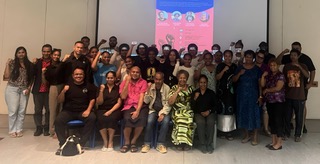
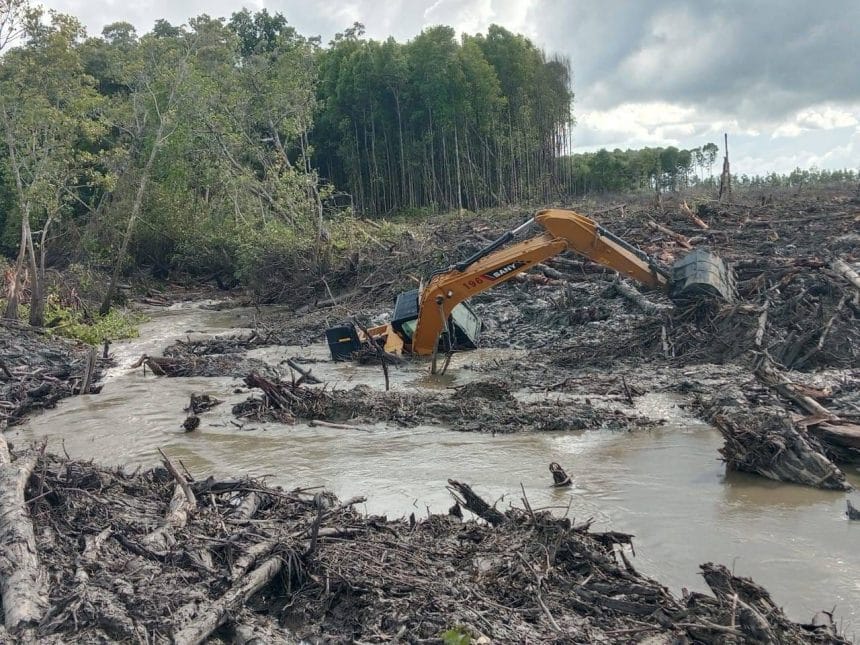
During the military operation the security forces conducted house to house searches and opened fire in an indiscriminate fashion resulting in 15 deaths. According to community sources soldiers buried most of the bodies with some still to be found.
Human Rights Monitor
Joe Collins of AWPA said, “as with previous military operations local people fled in fear of their lives. In this case up to 145 residents fled from Soanggama, Janamba, and Kulapa. There are now over 100,000 displaced people in West Papua. Many are malnourished and children are missing out on their education”.
The security forces claimed that the dead were members of the West Papua National Liberation Army (TPNPB) and they were killed in a firefight.
However, TPNPB Spokesperson Sebby Sambom reported only three of the dead were TPNPB members.
Local church leaders and civil society groups also disputed the official narrative. The Intan Jaya Conflict Mediation Team stated that not all 15 victims were affiliated with the TPNPB, identifying at least nine civilians, including a deaf man and a housewife who died while fleeing.
The Head of the Intan Jaya Conflict Mediation Team, Yoakim Mujizau, said that his team had visited Soanggama Village and identified the victims and gathered information from residents who witnessed the incident. The team also received information from members of the Indonesian National Armed Forces (TNI) stationed there.
The latest information is that all the victims have been buried by the Task Force in different locations. Two victims were buried in Soanggama Hamlet in front of the Protestant Church. Six people were buried in Dusandigi Hamlet, Soanggama Village, and one woman was buried in Jembatan Hamlet, on the Wuisiga River.
Meanwhile, the bodies of the other six victims have not yet been found.
“The security forces are still unwilling to provide information. Where are the shooting victims? And where are they buried? So we are still investigating the whereabouts of the bodies, and we have not yet identified them,” he said.
Collins said, “we have statements from the Indonesia military saying it reclaimed/ liberated a village from the TPNPB when the only liberation that needs to be done is the liberation of West Papuans from the oppression of the Indonesian security forces”.
Joe Collins said,” we have a massacre of Papuan civilians on our doorstep and there is no comment from Canberra on the incident. No concern about the ongoing human rights abuses, the military operations or the death of civilians in the territory”.
All Canberra does “is to train and exercise with the Indonesian military. Sign a defence treaty with PNG and build up bases for US forces in the north. All to prepare for some imaginary invasion from China. Australia has always been concerned about stability in the region to our north, but the West Papua issue is the one issue that could cause the very instability the Canberra fears.
The West Papuan issue is not going away. Time for Canberra to become involved and put pressure on Jakarta to control its military in West Papua, as a first small step.
Ends
Sources
Jubi, Human Rights Monitor and Civil society reports
On 23 September 2025, police officers from the Jayapura Police arbitrarily detained thirteen members of the West Papua National Committee (KNPB) in the Sentani area while they were distributing leaflets to announce an upcoming peaceful demonstration marking International Farmers’ Day (24 September 2025). According to local reports, at 10:08 am, police officers stopped the activists at the old Sentani Market (Pasar Lama) and detained them after 20 minutes of tense negotiations. The police seized the leaflets and transported the KNPB activists to the local police station for questioning. They were allowed to leave later that day.
In the afternoon, around 3:30 pm, KNPB members in Abepura and Kamkey, Jayapura City, continued distributing the same leaflets at strategic public points. The police again intervened, seizing the leaflets and detaining several individuals in police vehicles. In response, other KNPB members and residents marched to the Abepura Police Station to protest the arbitrary detention and demand an explanation.
Human rights analysis
This incident demonstrates a continuing pattern of repression of peaceful political expression in West Papua. The arrests of non-violent activists for merely distributing informational materials represent a violation of the rights to freedom of expression, peaceful assembly, and association, as guaranteed under Articles 19 and 21 of the International Covenant on Civil and Political Rights (ICCPR), to which Indonesia is a State Party. The use of police force to silence non-violent activists highlights the shrinking democratic space in West Papua and perpetuates an atmosphere of fear among civil society organisations. The events underscore the urgent need for systemic reform of policing practices in West Papua to prevent and reduce human rights violations.
IN exile but unbroken, three West Papuan journalists are in Fiji calling on the Pacific to stand with them against Indonesia’s ongoing media blackout and human rights abuses.
Their visit is part of a broader effort to forge solidarity with Pacific neighbours, through media partnerships, university collaborations, and joint advocacy for human rights and self-determination.
Speaking after the screening of their latest documentary film “Pepera 1969: A Democratic Integration” at the University of the South Pacific, the team including Victor Mambor, co-founder of Jubi Media Papua, Yuliana Lantipo, senior journalist and editor, and Dandhy Laksono, Jakarta-based investigative filmmaker shared their personal experiences of reporting from inside one of the most heavily militarised and censored regions in the Pacific.
“We are here to build bridges with our brothers and sisters in the Pacific,” said Mambor.
“There is no hope from the Asian side,” added Laksono. “That’s why we are here, to reach out to the Pacific. We need new audiences, new support, and new understanding.”
The team urged Pacific people to push for greater awareness of the West Papuan situation and to challenge the dominant narratives propagated by the Indonesian government.
“Don’t just listen to what Jakarta says,” said Mambor. “Speak to Papuans. Listen to our stories. Raise our voices.”
“We want to bring West Papua back to the Pacific — not just geographically, but politically, culturally, and emotionally.”
Mambor described the continued targeting of Jubi Media staff, including attacks on their office and vehicles, as part of an escalating crackdown under Indonesia’s new President.
“Two of our operational cars were destroyed. Our journalists are constantly intimidated. Yet we continue to report the truth.”
The situation for press freedom in West Papua is dire. Foreign journalists are barred entry, internet access is often restricted during periods of unrest, and local reporters — especially Indigenous one’s risk arrest or violence for covering politically sensitive stories.
“If you report on deforestation or culture, maybe it’s allowed. But if you report on human rights or the military, there is no tolerance,” said Laksono.
Laksono, who is not Papuan himself but has long worked to expose injustices in the region, added: “Much of Indonesia has been indoctrinated through school textbooks and media into believing a false history. Our film tries to change that by offering the truth, especially about the so-called Act of Free Choicein 1969, which was neither free nor a genuine act of self-determination.”
Journalist Yuliana Lantipo spoke of the daily trauma faced by communities caught between the Indonesian military and the West Papua National Liberation Army.
“Every day we receive reports: killings, displacement, families fleeing villages, children out of school, no access to health care. Women and children are the most affected,” she said.
As one of the few Indigenous female journalists reporting from conflict zones, Lantipo also highlighted how her identity both enables and complicates her work.
“Sometimes, as a woman, I can access conflict areas more easily, especially when traveling with elders or family members. But Indigenous male journalists, especially those with dreadlocks or visible Papuan identity, are often turned away or arrested.”
Despite the personal risks, Lantipo and her colleagues remain committed to their role.
“People need us to speak the truth. That is our responsibility. That is our profession.”
Jubi Media Papua
Founded in 2001 by West Papuan civil society, Jubi Media has become one of the most trusted and independent sources of information from the territory. With more than 30 reporters and 50 staff, the media house has built a reputation for fearless journalism.
“Jubi means ‘to speak the truth’,” said Mambor. “We created a special section just to tell Pacific stories — to remind our people that we are not alone, and to reconnect West Papua with our Pacific identity.”
The report reveals that more than half of the attacks targeted indigenous community members fighting for land rights and journalists covering sensitive issues, with 36 indigenous community members and 31 journalists among the victims. Other affected groups included community leaders, fishers, human rights activists, student activists, environmental advocates, academics, farmers, and anti-corruption campaigners. Law enforcement officers emerged as the primary perpetrators, with police suspected in 20 of the 53 documented cases. This figure was significantly higher than attacks committed by private companies, government employees, military personnel, or public order agencies.
Amnesty International identified five distinct forms of persecution: police reporting, arrests, criminalization, intimidation, physical violence, and attacks on human rights institutions. The civil society organisation attributes this surge in violence to the rise in authoritarian practices and policies, as well as the militarisation of civilian space, calling for immediate government action. Neither Human Rights Minister Natalius Pigai nor National Police spokesperson Inspector General Sandi Nugroho responded to requests for comment regarding the report’s findings.
Amnesty International Indonesia documented 104 attacks against human rights defenders in the first half of 2025
The report reveals that more than half of the attacks targeted indigenous community members fighting for land rights and journalists covering sensitive issues, with 36 indigenous community members and 31 journalists among the victims. Other affected groups included community leaders, fishers, human rights activists, student activists, environmental advocates, academics, farmers, and anti-corruption campaigners. Law enforcement officers emerged as the primary perpetrators, with police suspected in 20 of the 53 documented cases. This figure was significantly higher than attacks committed by private companies, government employees, military personnel, or public order agencies.
Amnesty International identified five distinct forms of persecution: police reporting, arrests, criminalization, intimidation, physical violence, and attacks on human rights institutions. The civil society organisation attributes this surge in violence to the rise in authoritarian practices and policies, as well as the militarisation of civilian space, calling for immediate government action. Neither Human Rights Minister Natalius Pigai nor National Police spokesperson Inspector General Sandi Nugroho responded to requests for comment regarding the report’s findings.
On the evening of 17 July 2025, members of the Indonesian National Armed Forces (TNI) reportedly tortured and executed Mr Obert Mirip, an 18-year-old student, inside the Titigi Military Post, Sugapa District, Intan Jaya Regency, Papua Tengah Province (see photo on top, source: Jubi). The incident occurred after Obert was accused of being a member of the West Papua National Liberation Army (TPNPB) for wearing a shirt displaying the Morning Star Flag and the Papua New Guinea flag. Multiple reports affirm that Mr Mirip was not affiliated with any armed group but was summarily executed in military custody. His body was later returned to his village by order of the local TNI commander, without formal investigation or due process.
According to reports from multiple independent sources, TNI personnel deployed drone surveillance over Ndugusiga Village on 17 July 2025, at approximately 7:00 pm. After identifying Mr Obert Mirip based on his clothing, TNI soldiers reportedly descended from their post, forcibly arrested him at his home, and escorted him to the Titigi military post. That same night, he was allegedly tortured and eventually succumbed to the injuries he sustained as a result of torture. The next day, TNI soldiers informed nearby villagers that a TPNPB member had been shot and demanded that the body be collected for burial. Upon verification, community members confirmed that the deceased was Mr Obert Mirip.
The TPNPB Central Headquarters released a statement according to which Obert Mirip was not associated with the TPNPB and condemned the killing as a deliberate act of intimidation aimed at suppressing civilians. Local civil society actors denounced the TNI’s narrative as disinformation and accused state authorities of violating the civil and political rights of the indigenous population. The dissemination of false claims labeling Mr Obert Mirip as a TPNPB member was widely criticised as a defamatory tactic aimed at justifying unlawful violence against civilians.
Relatives and civil society representatives have called upon Indonesian authorities to conduct an independent, impartial, and transparent investigation into the killing of Mr Obert Mirip and to ensure that all perpetrators, including those with command responsibility, are held accountable. The Indonesian National Human Rights Commission (Komnas HAM) should monitor the situation in Intan Jaya and other conflict areas and timely investigate allegations of grave human rights violations in West Papua.
On the night of 12 July 2025, joint security forces consisting of Navy’s Marine Corps, Police Mobile Brigade (Brimob), and the local police raided the secretariat of the West Papua National Committee (KNPB) in Dekai, Yahukimo Regency, Papua Pegunungan Province, and arbitrarily arrested the four KNPB members, Mr Sinduk Enggalim, Mr Deko Kobak, Mr Hulu Amosoho, and Mr Ronal Kobak. The four activists were subjected to severe physical abuse during and after their arrest, amounting to torture. They were released two days later, on 14 July 2025, in a physically injured state and without charges filed against them.
On 12 July 2025, at 10:35 pm, police forces arrived at the KNPB office in a patrol vehicle and remained parked on the main road for approximately 20 minutes. At 10:55 pm, joint security forces entered the KNPB office compound. Three police officers approached two activists sitting on the veranda, followed by dozens of Brimob and military personnel. Security forces entered the building and started searching the office while devastating the interior. Witnesses reported hearing cries of pain from inside the secretariat.
The four activists were then apprehended, their hands bound behind their backs, their eyes blindfolded with duct tape, and loaded onto a military vehicle. The activists testified they were severely beaten while en route to the Koramil military post, causing two of them to urinate involuntarily. Upon arrival, they were thrown onto the ground and subjected to a six-hour torture session that included burning of skin, electrocutions, beatings with hard objects to the head and body, and being submerged in drums filled with water, in an attempt to force confessions regarding alleged affiliations with the West Papua National Liberation Army (TPNPB). Mr Hulu Amosoho was separated from the group and tortured in isolation.
On 13 July 2025, around 06:00 am, they were transferred to the Yahukimo Police Station, where the torture continued. Police officers reportedly burned their hair and beards. Despite a subsequent visit to the hospital, only minimal treatment was provided following instructions from military personnel. All four were released on 14 July 2025, at 3:00 pm, due to the lack of incriminating evidence.
Legal and human rights analysis
The arrest and detention of the four activists constitute grave violations of international human rights law, including the prohibition of torture under the Convention Against Torture (CAT), to which Indonesia is a party. The arrest was carried out without a warrant, at night, and in the absence of any visible or declared legal basis, violating Article 18 of Indonesia’s own Criminal Procedure Code (KUHAP), which mandates due process safeguards.
Moreover, the involvement of military personnel in civilian law enforcement, particularly in the arbitrary arrest and inhumane treatment of political activists, further constitutes a breach of the principle of civilian supremacy and violates Article 9 of the International Covenant on Civil and Political Rights (ICCPR), which guarantees the right to liberty and security of person.
The prolonged incommunicado detention, denial of access to legal counsel and family members, and the lack of judicial oversight strongly suggest the presence of enforced disappearance-like practices during the initial hours of detention.
The Indonesian government is obliged under international human rights law to launch an independent investigation into acts of torture and arbitrary arrest committed by state agents, ensuring that those responsible will face criminal prosecution. The Indonesian Government should refrain from the use of military personnel in civilian law enforcement roles, particularly against political actors. All victims of arbitrary arrest and torture must receive comprehensive medical treatment, psychosocial support, and reparations, including compensation and rehabilitation in accordance with international standards.
Table of KNPB activists arrested and tortured during police detention in Dekai on 12 July 2025
No
Name
Age
Affiliation
Additional information
1
Sinduk Enggalim
28
Chairman, KNPB Yahukimo
Beaten, could not sit or stand for extended periods
2
Deko Kobak
25
Activist, KNPB Yahukimo
Chin laceration requiring stitches, unable to eat; he was beaten with a blunt object to the face, sustained a cut above the left eye
3
Hulu Amosoho
23
Activist, KNPB Yahukimo
Head and facial injuries required stitches
4
Ronal Hiben Ris Kobak
23
Activist, KNPB Yahukimo
Beaten, suffered from inability to sit or stand for long
Photos showing the physical condition of four KNPB activists after being tortured in Yahukimo
Video testimony by four KNPB activists after being released on 14 July’25
In the past months, the situation surrounding the National Strategic Project (PSN) in Merauke, Papua Selatan Province, has further escalated. In the Soa Village, Tanah Miring District, indigenous women from 75 families have collectively opposed the land encroachment by PT. Global Papua Abadi, which received a government concession for an energy project without the community’s free, prior, and informed consent (FPIC). This project threatens to destroy their natural sources of livelihood and violates their rights to land and self-determination. Similarly, on 23 June 2025, indigenous land belonging to the Kwipalo clan in Kakyo Village, Semangga District, was reportedly seized by the military for the construction of a post without consent or legal process, constituting a grave act of militarisation and forced dispossession.
According to the CSOs, the government’s reply reflected a broader institutional reluctance to engage meaningfully with international human rights norms. They pointed out that the Indonesian state has failed to comply with recommendations made by Komnas HAM, as well as with constitutional and international legal standards safeguarding indigenous peoples’ rights. Furthermore, they underscored that permits and business licences had been granted to companies in areas with customary land claims, without community consent or proper consultation. The coalition urged the UN Special Rapporteurs to conduct direct monitoring in Merauke and called for the immediate suspension of PSN implementation to prevent the continued expansion of human rights and environmental violations.
The PSN’s implementation in Merauke reflects a deeper failure of democratic governance and environmental responsibility. It undermines constitutional protections and international legal obligations, particularly under the UN Declaration on the Rights of Indigenous Peoples. The Indonesian government’s response to concerns raised by UN Special Rapporteurs has been criticised as evasive and dishonest. Indigenous leaders and civil society continue to demand the immediate suspension of all PSN activities, restoration of customary lands, adequate reparations, and a UN-led investigation. Without urgent corrective action, the PSN will inevitably destroy the ecological, cultural, and spiritual fabric of West Papua’s indigenous communities.
The military seized land belonging to the Kwipalo Clan in the Kakyo Village, Semangga District, without consent or legal process
The international watchdog group, Human Rights Monitor (HRM), has spoken out about human rights defenders in West Papua, Indonesia, being put under surveillance.
Tineke Rumkabu was questioned by security force officials, wearing full military gear, at the end of a church service in Biak, Papua in late January.
The officials, according to HRM, claimed that the supposed church meeting was a gathering in support of independence.
Rumkabu, a human rights defender in Papua, denied this and viewed the confrontation as an act of intimidation.
HRM said the arbitrary actions of the security forces raise concerns about violations of human rights, particularly the right to safety and freedom from harassment.
Rumkabu and her family have faced intimidation from the security forces before – in 2023, after she spoke via Zoom to a conference in London, in which she testified about state violence in West Papua and the plight of internally displaced people.
Prabowo Subianto Djojohadikusumo, a former Army general, won the presidential election in February 2024. Prabowo was implicated in grave rights violations while he was in military service that had led to his dismissal. His running mate, Gibran Raka, is the eldest son of outgoing President Joko “Jokowi” Widodo.
In August, street protests erupted in at least 16 cities in Indonesia, including the capital, Jakarta, after Jokowi’s ruling coalition attempted to tamper with the election law to allow candidates below age 30 to run for office in local elections. The protesters accused the government of nepotism because there was only one candidate under 30: Kaesang Pangareb, Jokowi’s youngest son. Earlier, Jokowi had helped Gibran Raka to become Prabowo’s running mate.
Indonesia’s parliament passed a new criminal code in December 2022, containing provisions that seriously violate international human rights law and standards.
Indonesian authorities committed or condoned numerous human rights abuses involving discrimination on religious, ethnic, social, gender, and sexual orientation grounds.
Authorities failed to address longstanding racial discrimination against Indigenous Papuans despite protests across 33 cities in 2019, after an attack on Papuan university students by security forces in Surabaya, Indonesia’s second largest city. This includes denial of their rights to health, livelihood, and education.
While at least 245 people were convicted for participating in protests, including 109 for treason, they were given much shorter prison terms due to international and domestic pressure. Most had been released by 2024 because they had already served much of their term in pre-trial detention. Three fishermen from Manokwari, who were convicted of treason for unfurling the Morning Star and holding a protest prayer meeting in October 2022, were released in September.
A video posted in March on social media showed three Indonesian soldiers brutally beating Definus Kogoya, a young Papuan man, whose hands were tied behind him and who had been placed inside a drum filled with water, taunting him with racial slurs. While the army apologized and promised an investigation, there have been no prosecutions.
The fighting between pro-independence Papuan insurgents and the Indonesian security forces contributed to the deteriorating human rights situation in West Papua. The insurgents are implicated in the killings of migrants and foreign workers. They held a New Zealand pilot, Philip Mehrtens, hostage between February 2023 and September 2024, releasing him after 594 days on “humanitarian grounds.”
The 2006 regulation continued to empower religious majorities to veto activities by minority religions including Christians, Shia Muslims, Hindus, Buddhists, and Confucians or to stop them from constructing houses of worship. Smaller minorities, including Ahmadiyah, Bah’ai, and Indigenous faiths, continue to face even harsher treatment.
Indonesian authorities did too little to stop Islamic groups attacking or harassing religious minorities or to hold those responsible to account. For instance, in March, dozens of Muslim extremists attacked a religious service held by a Christian group in Tangerang, claiming it had “no permit” to conduct services.
In September, Pope Francis visited Jakarta as part of a 12-day tour of the Asia-Pacific region. He visited the Istiqlal grand mosque and met the grand imam, signing a declaration of interfaith friendship.
In a step forward for freedom of religion and belief in Indonesia, in January, citizens from smaller religious groups were permitted to change the religious identity on their identity cards, with the introduction of a new category, kepercayaan (belief), alongside the six recognized religions.
Women’s and Girls’ Rights
Local authorities continued to enforce 73 mandatory hijab regulations since they were first introduced in West Sumatra in 2001, with sanctions ranging from verbal warnings, expulsion from school or work, to jail terms of up to three months. Many girls and women who refused to comply with the rules, including non-Muslims, faced expulsion or pressure to withdraw from school. In several cases, female civil servants, including teachers and university lecturers, lost their jobs or had to resign for refusing to comply with the rules.
The new criminal code maintains criminalization of abortion with exceptions, and now criminalizes distributing information about contraceptives to children, and providing information about obtaining an abortion to anyone.
Restrictions on Civil Society and Media
In June, a journalist who had exposed an army officer for allegedly backing online gambling was killed in a deadly arson attack. Rico Sempurna Pasaribu, 47, of the Medan-based Tribata TV, and three members of his family were found dead inside their small wooden house in Kabanjahe. Media organizations said they feared a cover-up in the investigations.
In March, Indonesian authorities signed an agreement ending the requirement that defamation disputes with student media should be referred to the police or public prosecutors. Instead, the national Press Council will now mediate all defamation disputes involving student journalists and publications.
Disability Rights
People with real or perceived psychosocial disabilities continued to be shackled—chained or locked in confined spaces—due to stigma, as well as inadequate support and mental health services. The 2024 US State Department annual human rights report stated that the Indonesian government prioritized eliminating the practice of shackling. The number of people living in chains was approximately 4,300.
A shooting incident involving the Indonesian military (TNI) occurred in Dogiyai Regency, Central Papua (Papua tengah) Province, on 16 December 2024, leaving three civilians injured. The incident began around 10:00 AM following a traffic accident and subsequent confrontation.
According to local residents’ reports, the sequence of events unfolded as follows:
The incident was triggered by a collision between a vehicle reportedly belonging to security personnel and a motorcyclist in the Dogomo area of Nabire SPC. Although the motorcyclist was conscious after the accident, local residents were dissatisfied with the driver’s response and demanded accountability.
The situation escalated when the driver fled to a nearby military command post seeking refuge from angry residents. In response to residents throwing objects at the location where the driver was sheltering, military personnel reportedly responded by firing live ammunition, resulting in injuries to three civilians – two men and one woman.
The victims have been identified as:
Agustinus Kotouki from Digikebo Village, South Kamu District, who sustained a gunshot wound to the back of his thigh
Alo Mote from Puweta I Village, South Kamu District, who suffered severe blunt force trauma to the front of his head and upper spine
Agustina Adii from Puweta I Village, South Kamu District, who sustained head injuries from blunt force trauma
All three victims are currently receiving medical treatment at Paniai Hospital in Madi, where doctors performed procedures to remove bullet projectiles. Their conditions are reported to be improving.
Local residents have strongly condemned what they describe as excessive use of force by security personnel in handling the situation. The incident has added to ongoing concerns about human rights violations against civilians in Papua.
The reports are based on accounts from local residents and human rights defenders (HRDs). The incident has highlighted tensions between security forces and civilians in the region, with residents calling for accountability and appropriate action regarding the use of force in civilian areas.